What Is A Merv Rating On Furnace Filters
Are you experiencing uneven heating or cooling throughout your home? Perhaps your energy bills are inexplicably high, or your furnace seems to be working harder than usual? One common culprit behind these issues is a neglected or incorrect furnace filter. While often overlooked, the filter plays a vital role in maintaining your HVAC system's efficiency and the air quality in your home. A key factor in filter performance is its MERV rating. Let's dive into what MERV ratings are and how they impact your system.
Understanding MERV Ratings
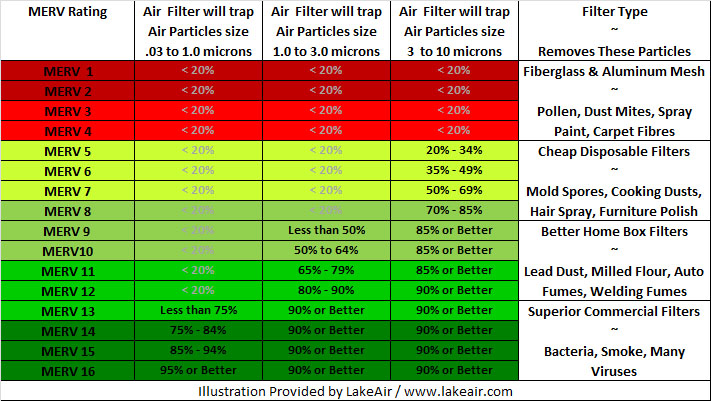
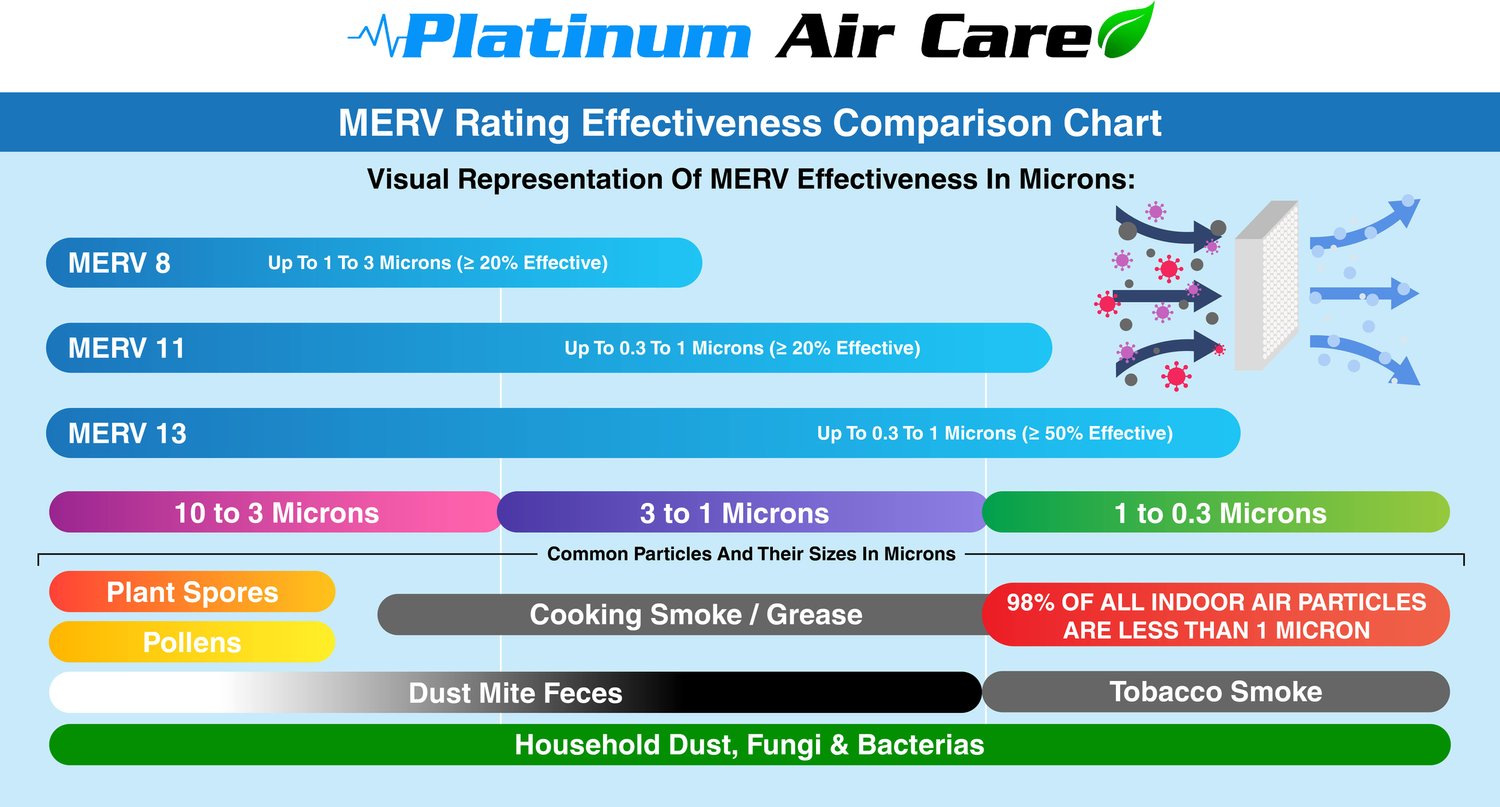
MERV stands for Minimum Efficiency Reporting Value. It's a standard measurement used to rate the effectiveness of air filters in capturing particles of different sizes. The higher the MERV rating, the smaller the particles the filter can trap. Think of it like a net; a net with very small holes (high MERV) will catch more than a net with large holes (low MERV).
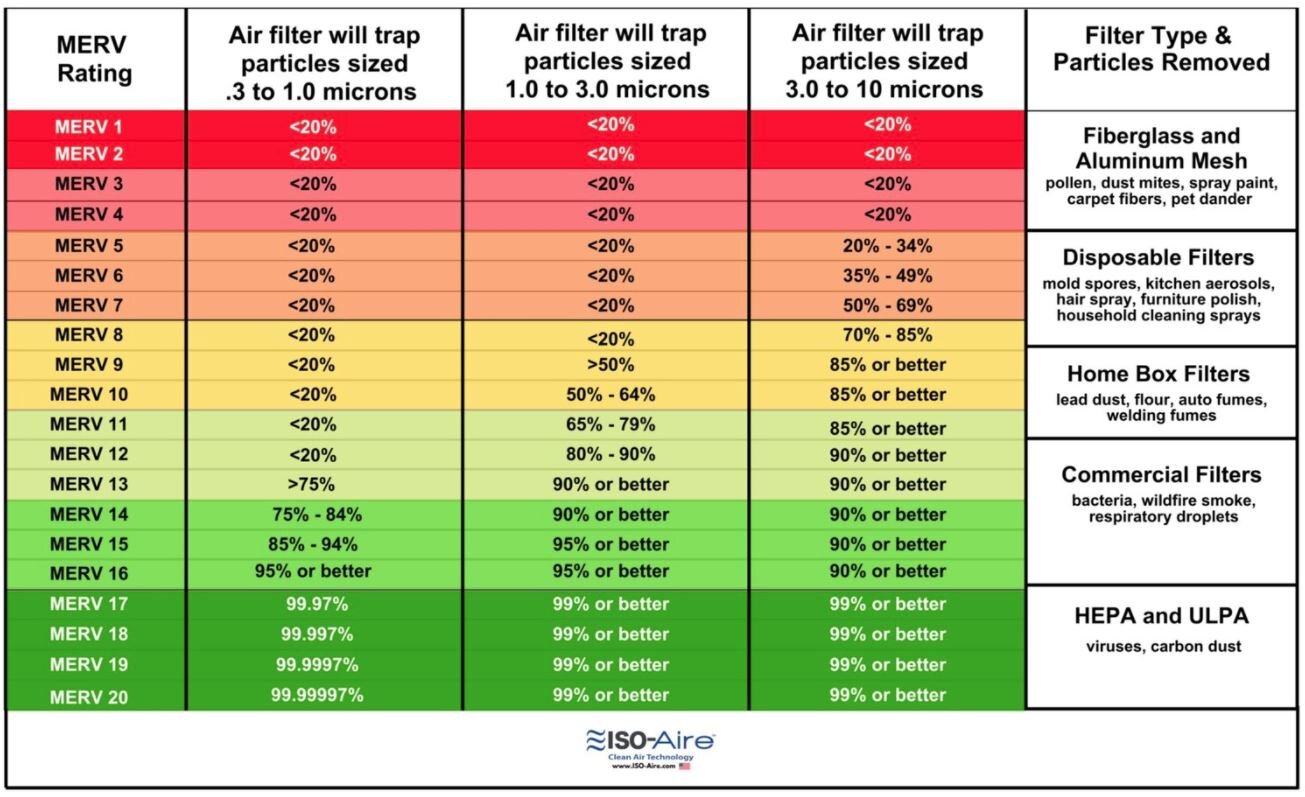
MERV ratings range from 1 to 20. Here's a general breakdown:
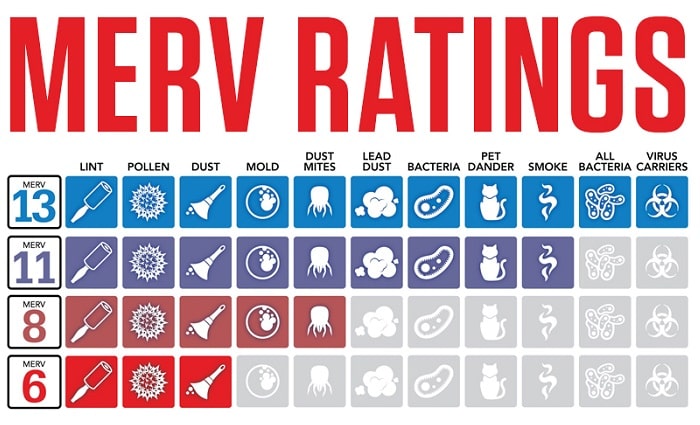
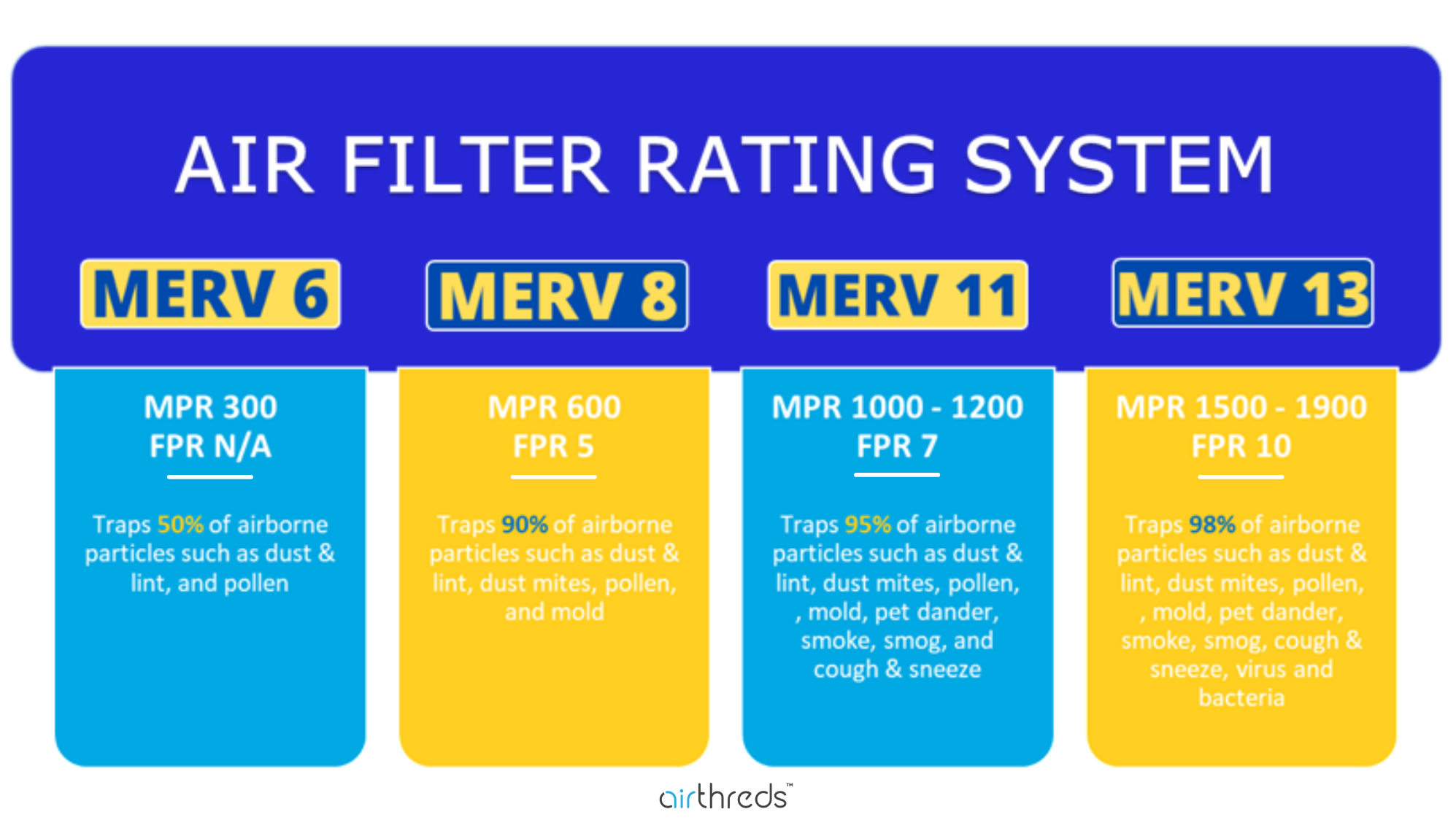
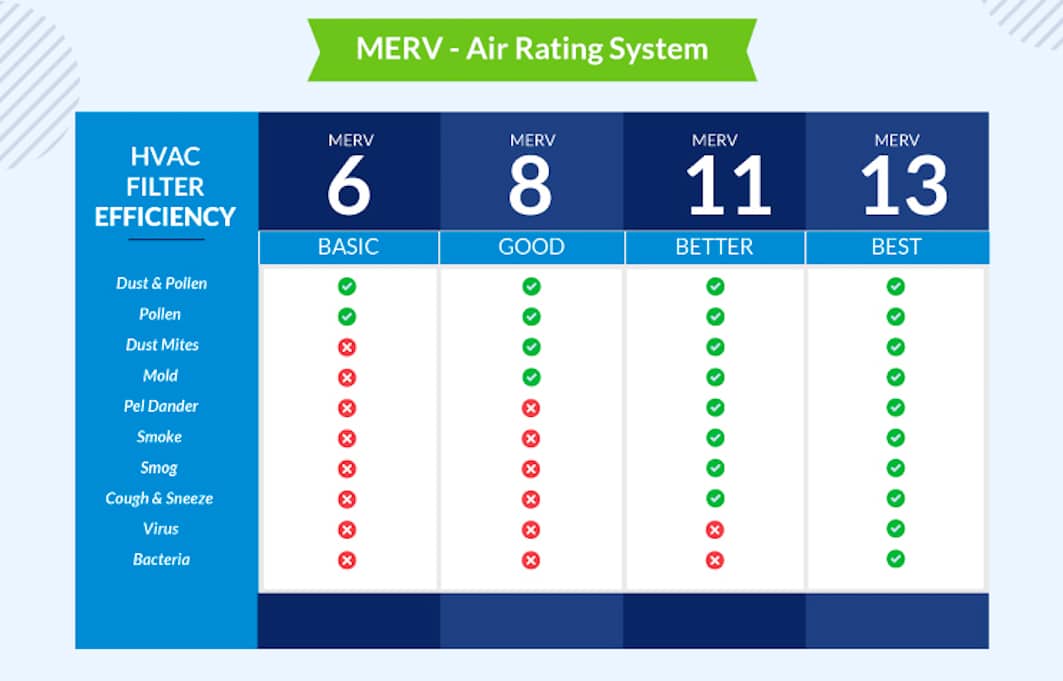
* MERV 1-4: These are the most basic filters, typically made of fiberglass. They primarily capture large particles like dust, pollen, and lint. Think of these as protecting the furnace itself more than cleaning the air. They are inexpensive but offer minimal air filtration. * MERV 5-8: These filters offer a better level of filtration, capturing smaller particles like mold spores and pet dander in addition to the larger particles. They are a good balance between cost and performance for many homes. * MERV 9-12: These are considered high-efficiency filters and can capture even smaller particles like smog and some bacteria. They are a good choice for people with allergies or asthma. * MERV 13-16: These filters are often used in hospitals and commercial buildings. They can capture very small particles, including viruses. They are the most expensive and can restrict airflow in some home HVAC systems. * MERV 17-20: These are specialized filters used in environments requiring ultra-clean air, such as operating rooms and cleanrooms. They are not typically used in residential settings.Troubleshooting Heating & Cooling Issues Related to Furnace Filters
Here’s a methodical approach to diagnose if your furnace filter is contributing to your heating or cooling problems:
Step 1: Identify the Symptoms
Start by clearly defining the problems you’re experiencing. This helps narrow down the potential causes.
* Uneven Heating or Cooling: Some rooms are too hot or too cold, while others are comfortable. * High Energy Bills: A sudden and unexplained increase in your heating or cooling costs. * Reduced Airflow: Weak airflow from vents. * Furnace Runs Constantly: The furnace cycles on and off frequently or runs continuously without reaching the desired temperature. * Noisy Operation: Unusual noises coming from the furnace. * Allergy Symptoms: Increased allergy or asthma symptoms despite being indoors.Step 2: Perform a Visual Inspection (No Tools Required)
The first and easiest step is a visual inspection of your furnace filter.
* Locate the Filter: The filter is typically located in the furnace itself, in a slot or housing where the return air duct connects. It can also be located in a wall or ceiling vent. Consult your furnace manual if you're unsure. * Remove the Filter: Carefully remove the filter and observe its condition. * Check for Dirt and Debris: Is the filter visibly dirty, clogged with dust, pet hair, or other debris? A severely clogged filter is a major red flag. * Note the MERV Rating: Look for the MERV rating printed on the filter frame. Is it the correct rating for your system and needs? Is it a very high MERV and potentially restricting airflow? * Check the Filter Size: Ensure the filter is the correct size for your furnace. The dimensions are usually printed on the filter frame. An improperly sized filter can allow air to bypass it, reducing its effectiveness. * Smell Test: Does the filter have an unusual odor, such as mold or mildew?Step 3: Assess Airflow (No Tools Required Initially, Then Thermometer)
Restricted airflow is a common symptom of a clogged filter. Here’s how to assess it:
* Feel the Airflow: Turn on your furnace or air conditioner and feel the airflow coming from the vents in different rooms. Is the airflow weak in some or all rooms? * Compare Airflow: Compare the airflow from vents in different areas of your home. Is there a noticeable difference in the strength of the airflow? * Measure Temperature Difference (Requires Thermometer): If you have a thermometer, measure the temperature of the air coming out of a vent near the furnace when the system is running. Then, measure the temperature of the return air going *into* the furnace. A large difference (more than 20 degrees Fahrenheit) could indicate airflow issues. Safety Note: Do not place the thermometer *inside* the duct. Only measure the air right at the opening. * Listen to the Furnace: Pay attention to the sound of your furnace. Is it working harder than usual? Is it making any unusual noises, such as a rattling or whistling sound? These sounds can indicate restricted airflow.Step 4: Evaluate Your MERV Rating (No Tools Required, Requires Research)
The MERV rating of your filter is critical for both air quality and system performance.
* Check Your Furnace Manual: Consult your furnace manual for the manufacturer's recommended MERV rating range. This is the most important step! Using a filter with too high of a MERV rating can restrict airflow and damage your furnace. * Consider Your Needs: Do you have allergies or asthma? If so, a higher MERV rating (8-12) may be beneficial. Do you have pets? A filter that captures pet dander (MERV 5-8) might be a good choice. * Research Airflow Impact: Understand that higher MERV ratings increase resistance to airflow. Some older or less powerful furnaces may not be able to handle high-MERV filters. * Online Resources: Numerous online resources provide guidance on selecting the appropriate MERV rating for your home and HVAC system. Search for "MERV rating guide for home HVAC" to find helpful articles and charts. * Local Climate: Consider your local climate and the level of outdoor air pollution. If you live in an area with high levels of smog or pollen, a higher MERV rating may be necessary.Step 5: Basic DIY Actions (Safe and Simple)
Based on your observations, here are some simple DIY actions you can take:
* Replace the Filter: If the filter is dirty, replace it with a new filter of the correct size and MERV rating. This is the most common and often the most effective solution. Always turn off the furnace before replacing the filter. * Use the Correct Filter Size: Ensure that the new filter is the exact size specified in your furnace manual. An improperly sized filter can allow air to bypass it, reducing its effectiveness. * Verify Filter Orientation: Make sure you install the filter with the airflow arrow pointing in the correct direction (usually towards the furnace). This ensures that the filter is capturing particles effectively. * Lower MERV Rating (Experiment): If you suspect the MERV rating is too high, try using a filter with a lower MERV rating (but still within the recommended range in your furnace manual) and see if the airflow improves. Monitor your system closely after making this change. * Clean the Filter Housing: Before installing the new filter, use a vacuum cleaner to remove any dust or debris from the filter housing. This will help prevent the new filter from becoming contaminated quickly.When to Call a Professional HVAC Technician
While some filter-related issues are easily resolved with DIY actions, other problems require the expertise of a qualified HVAC technician. Call a professional if:
* You're Uncomfortable Working with Your Furnace: If you're not comfortable working with your furnace or unsure about any of the steps outlined above, it's best to call a professional. * The Problem Persists After Replacing the Filter: If you've replaced the filter and the heating or cooling problems persist, there may be a more serious underlying issue. * You Suspect a Mechanical Problem: If you hear unusual noises coming from the furnace, such as a rattling or banging sound, it could indicate a mechanical problem that requires professional attention. * You Notice a Burning Smell: A burning smell coming from the furnace is a serious safety concern and should be addressed immediately by a qualified technician. Turn off the furnace and call for help immediately. * You Suspect a Gas Leak: If you smell gas near your furnace, evacuate your home immediately and call your gas company or the fire department. * You See Signs of Mold: If you see signs of mold or mildew in your ductwork or around your furnace, it's important to have it professionally removed to prevent health problems. * You Have Ductwork Issues: If you suspect your ductwork is leaking or damaged, a professional can inspect and repair it to improve efficiency. This usually requires specialized equipment and training. * Complex System Issues: Issues beyond the filter, such as refrigerant leaks, faulty components, or problems with the blower motor, require specialized knowledge and equipment to diagnose and repair. * The Furnace is Old or Hasn't Been Serviced Recently: Older furnaces may require more frequent maintenance and repairs. If your furnace is old or hasn't been serviced recently, it's a good idea to have it inspected by a professional to ensure it's operating safely and efficiently.Safety First!
* Always turn off the power to the furnace at the breaker box before performing any maintenance. * Never attempt repairs that you are not comfortable with. * If you smell gas, evacuate the building immediately and call your gas company or the fire department. * Wear safety glasses and gloves when working with your furnace to protect yourself from dust and debris. * Consult your furnace manual for specific instructions and safety precautions.By understanding MERV ratings and following these troubleshooting steps, you can proactively address common heating and cooling issues, maintain a healthy indoor environment, and extend the life of your HVAC system. Remember, when in doubt, consult with a qualified HVAC professional for assistance.