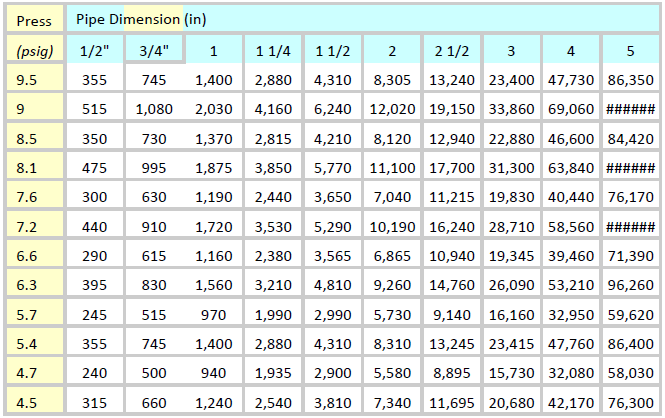
2 Psi Natural Gas Pipe Sizing Chart Btu
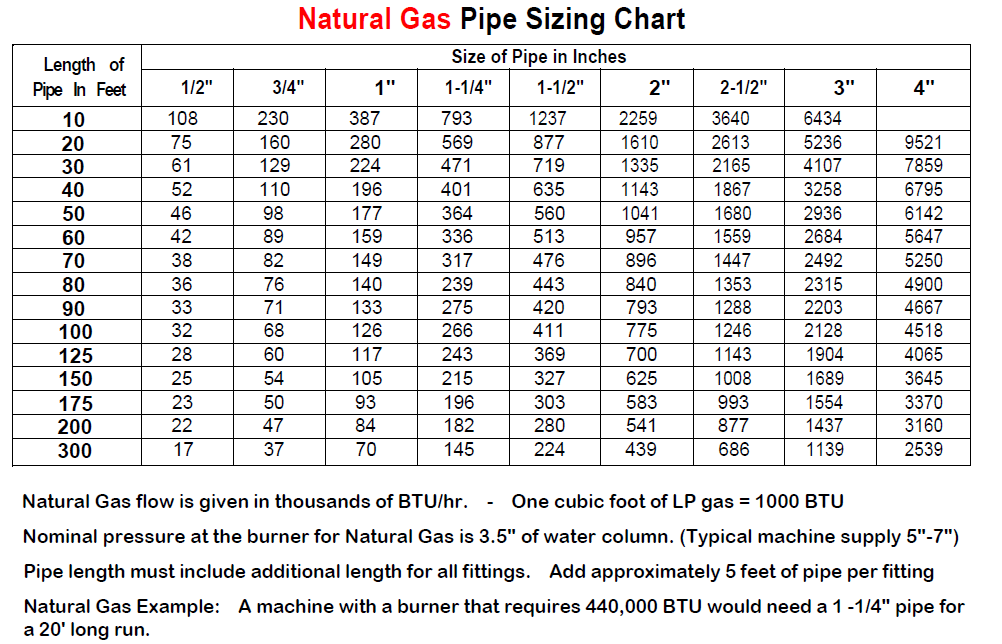
Understanding natural gas pipe sizing is crucial for ensuring the safe and efficient operation of your gas-powered appliances. A properly sized gas pipe delivers the correct amount of fuel to each appliance, preventing issues like insufficient heating, inconsistent appliance performance, and potentially dangerous situations. This guide focuses on pipe sizing for low-pressure (2 psi) natural gas systems and how to use BTU (British Thermal Units) ratings to determine the appropriate pipe diameter.
Why is Proper Gas Pipe Sizing Important?
Adequate gas supply is essential for the correct functioning of gas appliances. If the pipe is too small, it restricts gas flow, leading to:
- Appliance Starvation: Appliances may not receive enough gas to operate at their rated capacity. This can manifest as a weak flame in a furnace, a stove burner that struggles to heat, or a water heater that takes longer to heat water.
- Inefficient Operation: Under-fueled appliances work harder and consume more gas to achieve the desired output, increasing your energy bills.
- Potential Safety Hazards: Incomplete combustion due to insufficient gas can lead to the production of carbon monoxide (CO), a deadly odorless and colorless gas.
Conversely, an oversized pipe is less of a safety concern but can still lead to:
- Increased Cost: Larger pipes are more expensive to purchase and install.
- Unnecessary Space: Larger pipes require more space for installation.
Therefore, selecting the correct pipe size is a balance between ensuring sufficient gas flow and avoiding unnecessary costs and installation complications.
Understanding BTU (British Thermal Unit)
A BTU is a standard unit of measurement for heat energy. It represents the amount of energy required to raise the temperature of one pound of water by one degree Fahrenheit. In the context of gas appliances, the BTU rating indicates the amount of gas the appliance consumes per hour at its maximum output. Higher BTU ratings mean higher gas consumption.
You can usually find the BTU rating of an appliance on its nameplate or in its user manual. Common examples include:
- Furnaces: 40,000 - 120,000 BTU/hr
- Water Heaters: 30,000 - 60,000 BTU/hr
- Stoves: 6,000 - 12,000 BTU/hr per burner
- Fireplaces: 20,000 - 40,000 BTU/hr
- Clothes Dryers: 20,000 - 30,000 BTU/hr
To accurately size your gas pipes, you need to know the total BTU demand of all appliances that will be connected to the gas line. This is simply the sum of the BTU ratings of all appliances.
Example: If you have a furnace rated at 80,000 BTU/hr, a water heater at 40,000 BTU/hr, and a stove with a total rating of 30,000 BTU/hr, the total BTU demand is 80,000 + 40,000 + 30,000 = 150,000 BTU/hr.
2 PSI Natural Gas Systems Explained
Natural gas is typically delivered to homes at a higher pressure than appliances can safely handle. Therefore, a pressure regulator is used to reduce the pressure to a lower, more manageable level. While many homes use very low pressure systems (measured in inches of water column - "WC"), a 2 PSI system uses a slightly higher intermediate pressure.
Why use 2 PSI? Using a slightly higher pressure allows you to use smaller diameter pipes over longer distances. This can be advantageous in larger homes or where appliances are located far from the gas meter. After the gas travels through the smaller pipes at 2 PSI, another regulator *near each appliance* reduces the pressure to the standard appliance operating pressure (typically 4-7 inches of water column). Think of it like a highway system: the 2 PSI line is the highway allowing more gas to travel further, then the individual regulators act like off-ramps reducing speed/pressure at the point of use.
Important Note: 2 PSI systems require careful planning and installation by a qualified professional. Incorrect installation or regulator malfunction can lead to dangerous over-pressurization of appliances.
Using a 2 PSI Natural Gas Pipe Sizing Chart
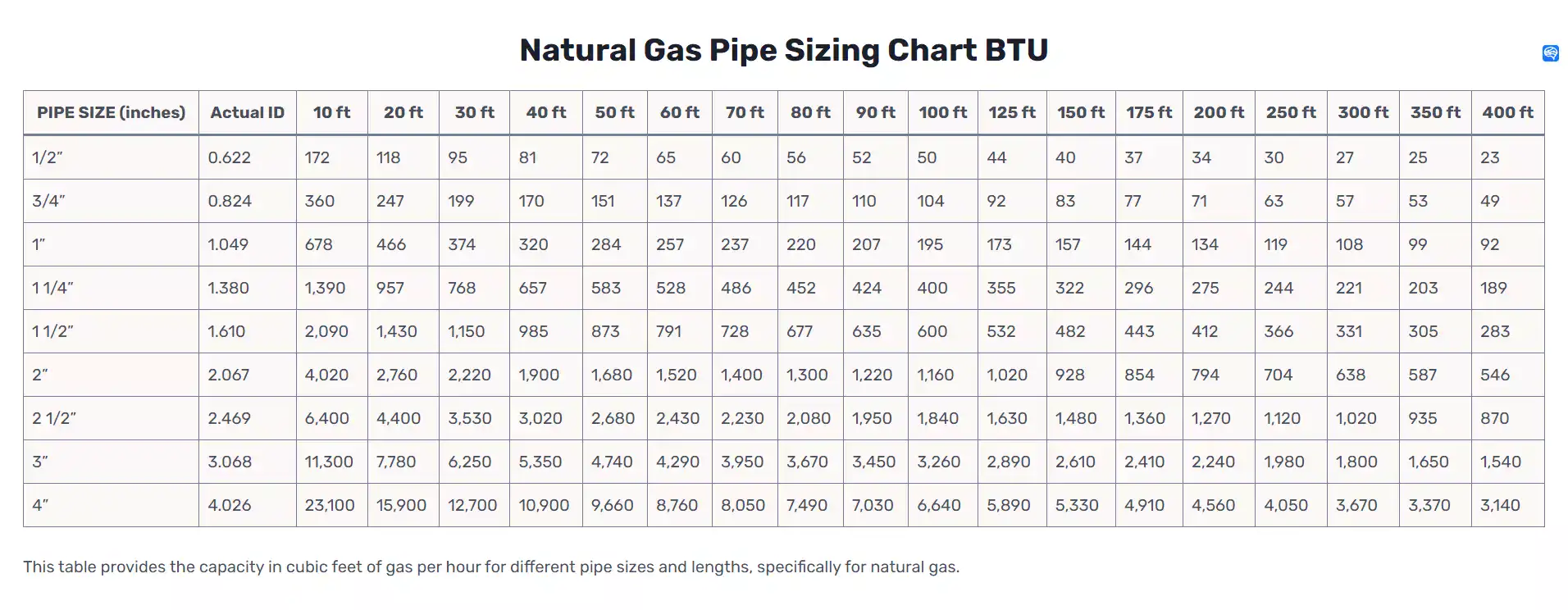
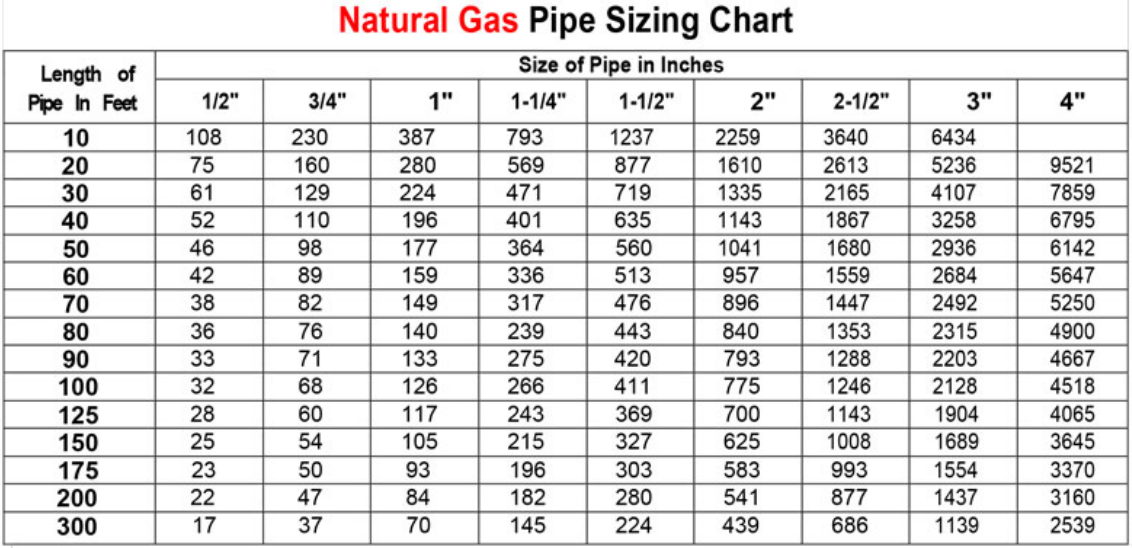
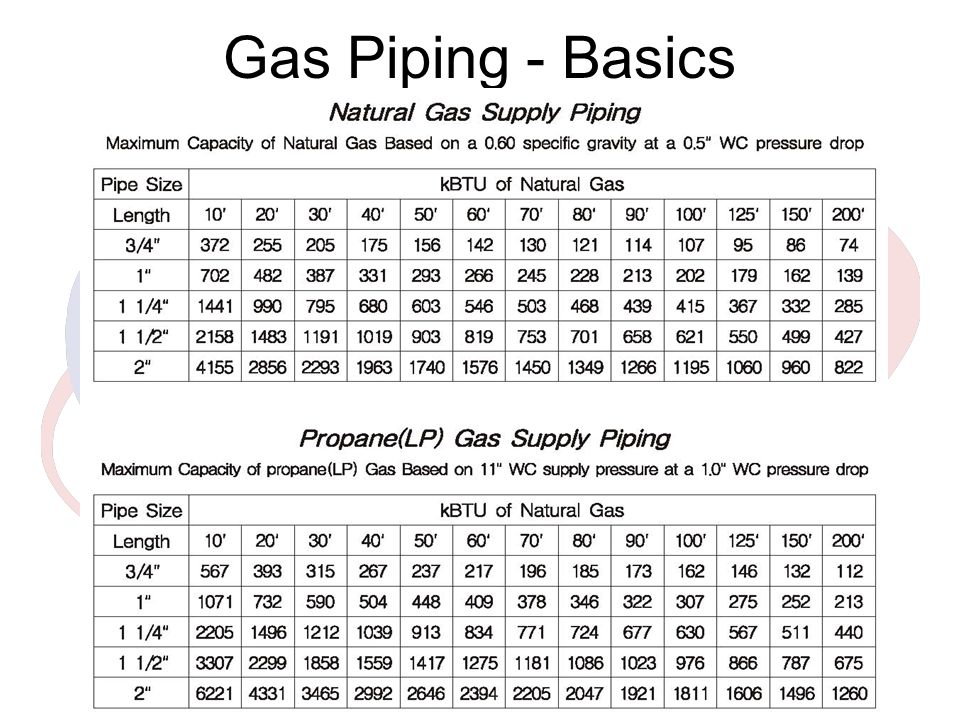
A gas pipe sizing chart is a table that provides the appropriate pipe diameter based on the following factors:
- Total BTU Demand: The combined BTU rating of all appliances connected to the pipe.
- Pipe Length: The distance from the gas meter or regulator to the furthest appliance.
- Gas Pressure: In this case, 2 PSI.
- Specific Gravity of the Gas: Natural gas typically has a specific gravity of around 0.6. This value is often pre-set in the chart assumptions.
- Allowable Pressure Drop: This represents how much the gas pressure is allowed to decrease along the length of the pipe. 2 PSI charts typically incorporate a predetermined and acceptable pressure drop.
Here's a simplified example of what a portion of a 2 PSI natural gas pipe sizing chart might look like. Note: This is for illustrative purposes only. Always consult a certified professional and a complete, approved chart for actual installations.
Example Chart (2 PSI, Specific Gravity 0.6, Allowable Pressure Drop Pre-Calculated):
| Pipe Length (Feet) | Maximum BTU Capacity for 1/2" Pipe | Maximum BTU Capacity for 3/4" Pipe | Maximum BTU Capacity for 1" Pipe |
|---|---|---|---|
| 10 | 120,000 | 250,000 | 480,000 |
| 20 | 85,000 | 180,000 | 350,000 |
| 30 | 65,000 | 140,000 | 280,000 |
| 40 | 55,000 | 120,000 | 240,000 |
| 50 | 45,000 | 100,000 | 200,000 |
How to Use the Chart:
- Determine the Total BTU Demand: As calculated earlier, add up the BTU ratings of all appliances connected to the gas line.
- Measure the Pipe Length: Measure the distance, in feet, from the gas meter or the 2 PSI regulator to the furthest appliance. Be sure to account for all bends and fittings, as these add to the equivalent length of the pipe. As a rule of thumb, add 50% to the direct measured length to account for bends and fittings.
- Consult the Chart: Find the row corresponding to the pipe length. Then, look across the row to find the smallest pipe size that can handle your total BTU demand.
Example: Let's say your total BTU demand is 90,000 BTU/hr and the pipe length is 30 feet.
- Looking at the example chart, a 1/2" pipe can only handle 65,000 BTU/hr over 30 feet.
- A 3/4" pipe can handle 140,000 BTU/hr over 30 feet.
- Therefore, you would need to use a 3/4" pipe for this application.
Important Considerations and Cautions
- Always Consult a Professional: Gas pipe sizing is a critical safety issue. Never attempt to size or install gas pipes yourself unless you are a qualified and licensed professional. Incorrect sizing or installation can lead to gas leaks, explosions, and carbon monoxide poisoning.
- Use Approved Materials: Only use gas pipes and fittings that are approved for natural gas service. Common materials include black iron pipe, polyethylene (PE) pipe (for underground use), and corrugated stainless steel tubing (CSST).
- Consider Future Expansion: If you anticipate adding more gas appliances in the future, it's wise to size the gas pipes to accommodate the future load.
- Local Codes and Regulations: Always comply with local codes and regulations regarding gas pipe sizing and installation. These codes may have specific requirements or restrictions.
- Pressure Drop Calculations: While pipe sizing charts simplify the process, they are based on certain assumptions about pressure drop. In complex systems or long pipe runs, a professional may need to perform more detailed pressure drop calculations.
- Appliance Regulators: Remember that in a 2 PSI system, each appliance *must* have its own dedicated regulator to reduce the pressure to the appliance's operating level.
- Elevation: At higher elevations, the density of natural gas decreases, which can affect pipe sizing. Consult a professional for adjustments in high-altitude locations.
Conclusion
Sizing gas pipes for a 2 PSI natural gas system involves determining the total BTU demand of your appliances, measuring the pipe length, and consulting a pipe sizing chart. While this guide provides a basic understanding of the process, it is crucial to consult a qualified professional for accurate sizing and safe installation. Incorrect gas pipe sizing can have serious consequences, so it's always best to err on the side of caution and seek expert assistance. By understanding the principles of gas pipe sizing and working with a qualified professional, you can ensure the safe and efficient operation of your gas appliances for years to come.

.jpg)