2 Psi Natural Gas Pipe Sizing Chart
.jpg)
Ensuring a reliable and safe supply of natural gas to your appliances, whether it's a residential furnace or a commercial boiler, hinges on proper pipe sizing. When dealing with 2 psi natural gas systems, understanding and correctly applying the appropriate sizing chart is crucial. This article provides a comprehensive guide to 2 psi natural gas pipe sizing, catering to homeowners, HVAC technicians, and facility managers alike.
Understanding 2 Psi Natural Gas Systems
Unlike typical low-pressure (inches of water column) natural gas distribution systems commonly found in homes, 2 psi systems operate at a higher pressure. This higher pressure allows for longer pipe runs and smaller pipe diameters while still delivering the required BTU (British Thermal Unit) capacity to appliances. 2 psi systems are often used in larger homes, multi-family dwellings, commercial buildings, and industrial facilities where appliances are located further from the gas meter or require a substantial gas supply. A regulator is then used near the appliance to reduce the pressure back to the appliance's required operating pressure (typically 4-7 inches of water column).
Advantages of 2 Psi Systems
- Longer Pipe Runs: 2 psi systems excel in situations where appliances are located a significant distance from the gas meter.
- Smaller Pipe Diameters: Compared to low-pressure systems, 2 psi systems can utilize smaller diameter pipes for the same BTU capacity, reducing material costs and installation complexity.
- Increased Capacity: These systems can deliver a larger volume of gas over longer distances, accommodating multiple high-demand appliances.
Key Factors Affecting Pipe Sizing
Several factors influence the correct pipe size for a 2 psi natural gas system. Accurately determining these factors is essential for safe and efficient operation.
- BTU Load: The most critical factor is the total BTU input required by all appliances connected to the system. This information is typically found on the appliance's nameplate. You must calculate the total connected load.
- Gas Specific Gravity: Natural gas is primarily methane, but its specific gravity (relative density to air) can vary slightly. Most sizing charts are based on a specific gravity of 0.60. Adjustments may be necessary for gases with significantly different specific gravities.
- Pipe Length: The total length of the pipe run from the regulator to the furthest appliance is a crucial consideration. Longer runs result in greater pressure drops.
- Number of Fittings: Fittings like elbows and tees introduce resistance to gas flow, effectively increasing the pipe length. These must be accounted for by adding an equivalent length to the actual pipe length.
- Allowable Pressure Drop: The acceptable pressure drop between the regulator and the appliance affects the pipe size. A larger allowable pressure drop allows for smaller pipes, but excessive pressure drop can starve appliances of gas. A common pressure drop used for 2 psi systems is 1 psi.
- Pipe Material: The type of pipe material (e.g., steel, copper) affects its internal roughness and, consequently, the friction loss. Sizing charts are typically based on specific pipe materials.
Understanding the 2 Psi Natural Gas Pipe Sizing Chart
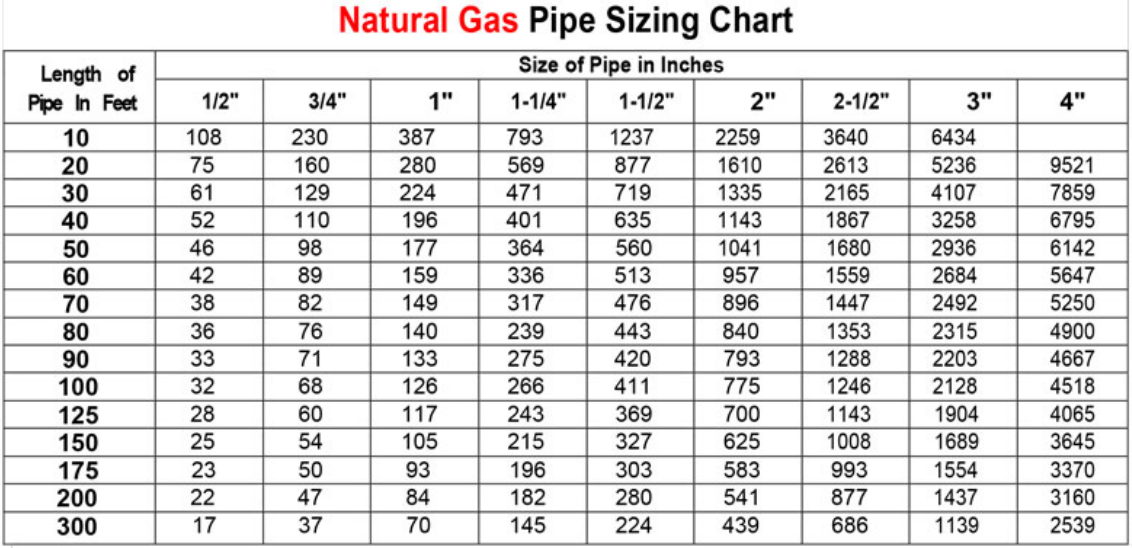
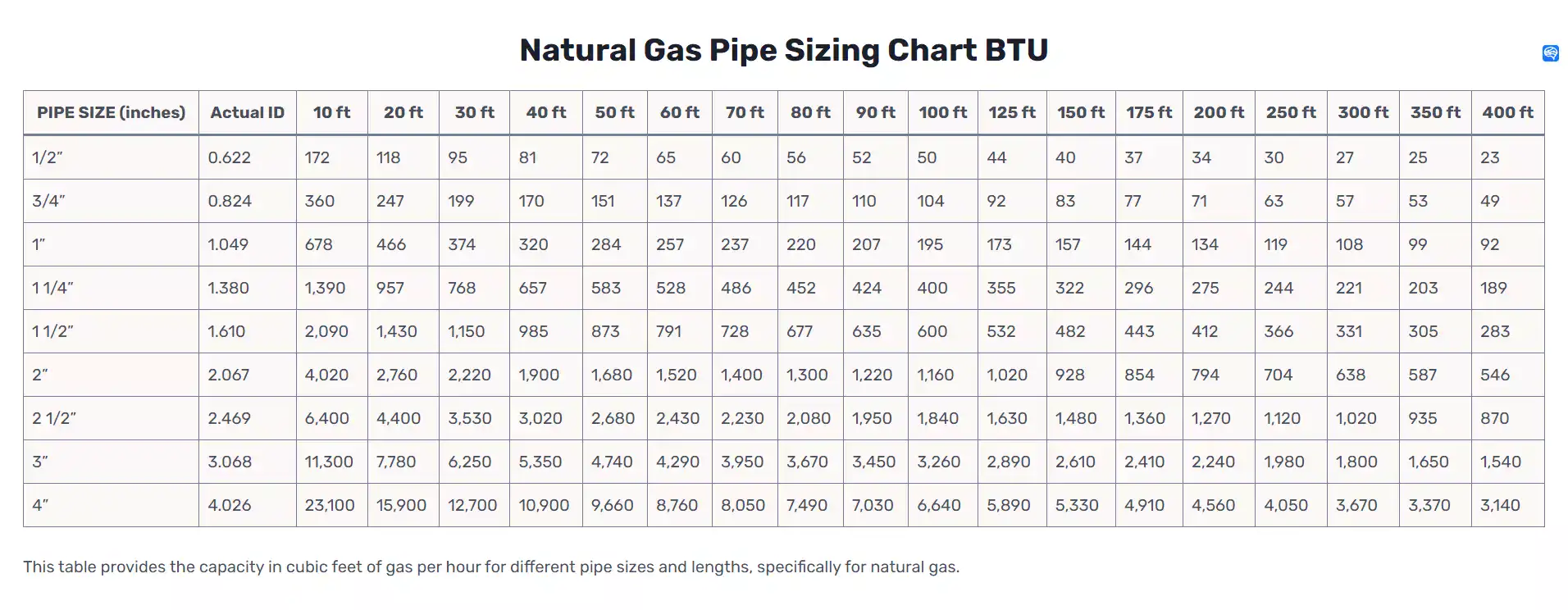
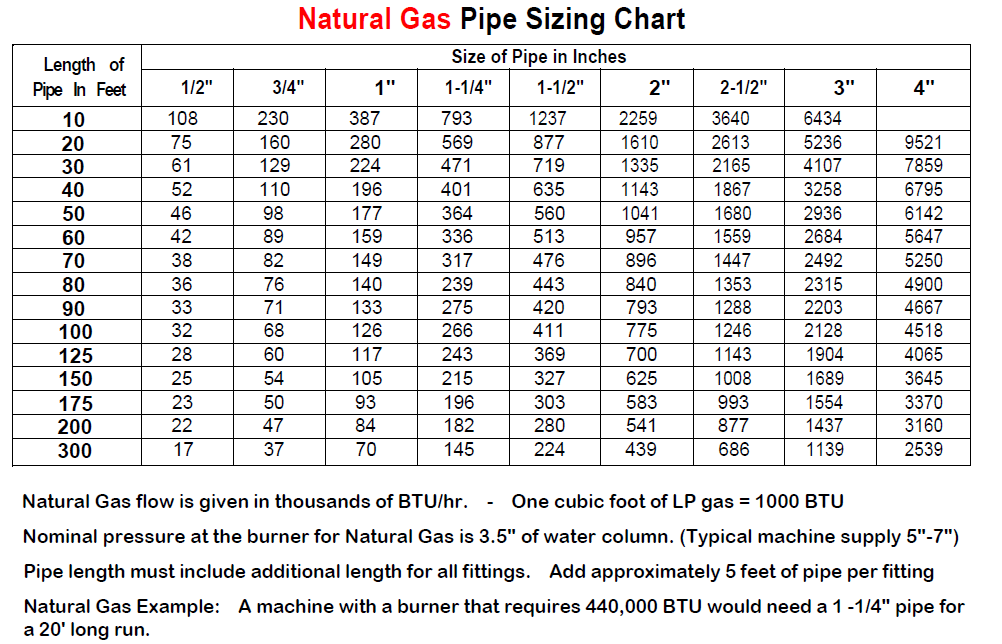
A 2 psi natural gas pipe sizing chart is a table that correlates pipe size with BTU capacity, pipe length, and allowable pressure drop. These charts are based on calculations derived from fluid dynamics principles. Most charts assume standard conditions and a specific gas gravity (usually 0.60). Consult your local gas utility or a qualified engineer if you suspect significant variations in gas gravity.
How to Use a Sizing Chart
- Determine the Total BTU Load: Add up the BTU input ratings of all appliances connected to the system. For example, a furnace rated at 100,000 BTU/hr and a water heater rated at 40,000 BTU/hr have a combined load of 140,000 BTU/hr.
- Measure the Longest Pipe Run: Measure the actual length of the longest pipe run from the gas regulator to the most distant appliance.
- Calculate Equivalent Length for Fittings: Determine the number of fittings (elbows, tees, etc.) in the longest run and add their equivalent length to the actual pipe length. Equivalent length values are available in engineering handbooks or online resources. For example, a ½-inch 90-degree elbow might have an equivalent length of 2 feet. If the longest run has five ½-inch elbows, add 10 feet to the actual length.
- Select the Allowable Pressure Drop: Choose an acceptable pressure drop (typically 1 psi for 2 psi systems).
- Consult the Sizing Chart: Locate the appropriate pipe sizing chart for the pipe material being used (e.g., steel pipe). Find the row corresponding to the calculated pipe length and the column corresponding to the desired BTU capacity. The intersection of these values will indicate the minimum required pipe size.
Example:
Let's assume a total BTU load of 200,000 BTU/hr, a longest pipe run of 75 feet, an equivalent length for fittings of 15 feet (total pipe length 90 ft), an allowable pressure drop of 1 psi, and using Schedule 40 steel pipe. Consulting a 2 psi pipe sizing chart for steel pipe, you might find that a 1-inch pipe is sufficient to handle the load. However, ALWAYS refer to a reputable pipe sizing chart; this is an illustrative example only.
Importance of Professional Installation and Verification
While understanding the principles of pipe sizing is helpful, it is crucial to have a qualified and licensed HVAC technician or plumber perform the actual installation and verification of a 2 psi natural gas system. Improper sizing can lead to several problems:
- Insufficient Gas Supply: Undersized pipes can restrict gas flow, causing appliances to malfunction or shut down, especially when multiple appliances are operating simultaneously. This can manifest as flickering flames or reduced heating output.
- Excessive Pressure Drop: Significant pressure drops can damage appliances and create safety hazards.
- Gas Leaks: Improperly installed or undersized pipes can be prone to leaks, posing a serious fire and explosion risk.
A professional will not only ensure correct pipe sizing but also conduct pressure testing to verify the integrity of the system and ensure that all connections are leak-free. They will also be familiar with local codes and regulations governing natural gas installations.
Cost Considerations
The cost of installing a 2 psi natural gas system varies depending on factors such as the size of the building, the length of the pipe runs, the type of pipe material, and local labor rates. While smaller pipe diameters in 2 psi systems can potentially reduce material costs compared to low-pressure systems, the need for regulators at each appliance adds to the overall expense. It's essential to obtain multiple quotes from qualified contractors and carefully review the scope of work before making a decision. Also, consider the long-term cost benefits of a properly sized system, including improved appliance efficiency and reduced maintenance.
Maintenance and Safety
Regular maintenance is essential for ensuring the safe and reliable operation of any natural gas system, including 2 psi systems. This includes:
- Periodic Inspections: Have a qualified technician inspect the system annually for leaks, corrosion, and other potential problems.
- Leak Detection: If you suspect a gas leak (e.g., a rotten egg smell), immediately evacuate the premises and contact your gas utility or emergency services.
- Appliance Maintenance: Ensure that all gas-burning appliances are properly maintained and serviced according to the manufacturer's recommendations.
- Carbon Monoxide Detectors: Install and maintain working carbon monoxide detectors throughout the building.
Conclusion
Accurate 2 psi natural gas pipe sizing is vital for the safe and efficient operation of natural gas appliances in residential, commercial, and industrial settings. By understanding the key factors affecting pipe sizing and utilizing the appropriate sizing charts, homeowners, HVAC technicians, and facility managers can ensure a reliable gas supply and prevent potential hazards. While this guide provides a comprehensive overview, it is crucial to consult with qualified professionals for installation and verification to ensure compliance with local codes and regulations and guarantee the safety and performance of the system. Remember that safety should always be the top priority when dealing with natural gas systems.