2 Stage Vs 1 Stage Furnace
Are you experiencing uneven heating throughout your home, or perhaps your furnace seems to be running constantly without adequately warming the space? Understanding the difference between single-stage and two-stage furnaces can be the first step toward diagnosing and potentially resolving these common heating issues. This article will provide a practical guide to troubleshooting your furnace, helping you identify the problem and determine whether a DIY fix is possible, or if it’s time to call a professional HVAC technician.
Understanding 1-Stage vs. 2-Stage Furnaces
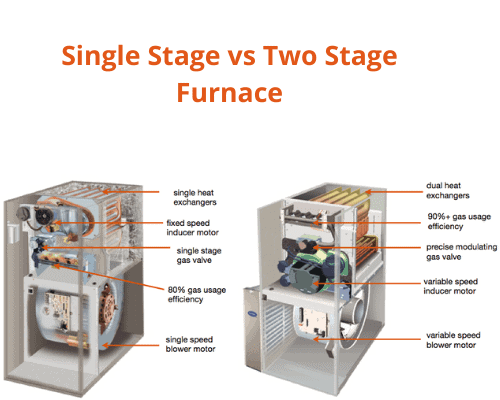
Before diving into troubleshooting, let's quickly define the key difference between these two types of furnaces:
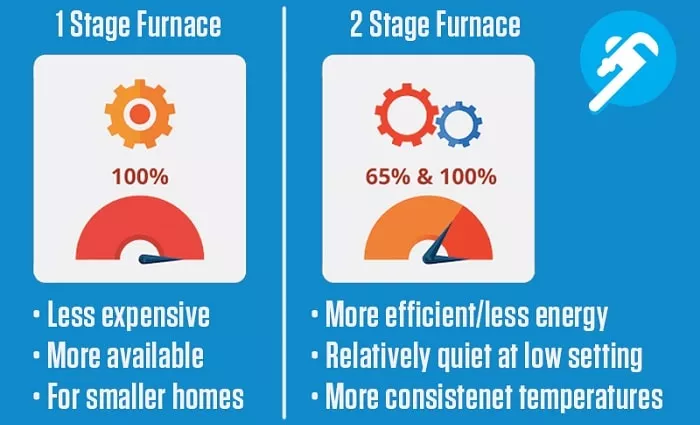
- 1-Stage Furnaces: These furnaces operate at a single, fixed speed – 100% of their capacity whenever they're running. They turn on full blast until the thermostat reaches the set temperature, then shut off completely.
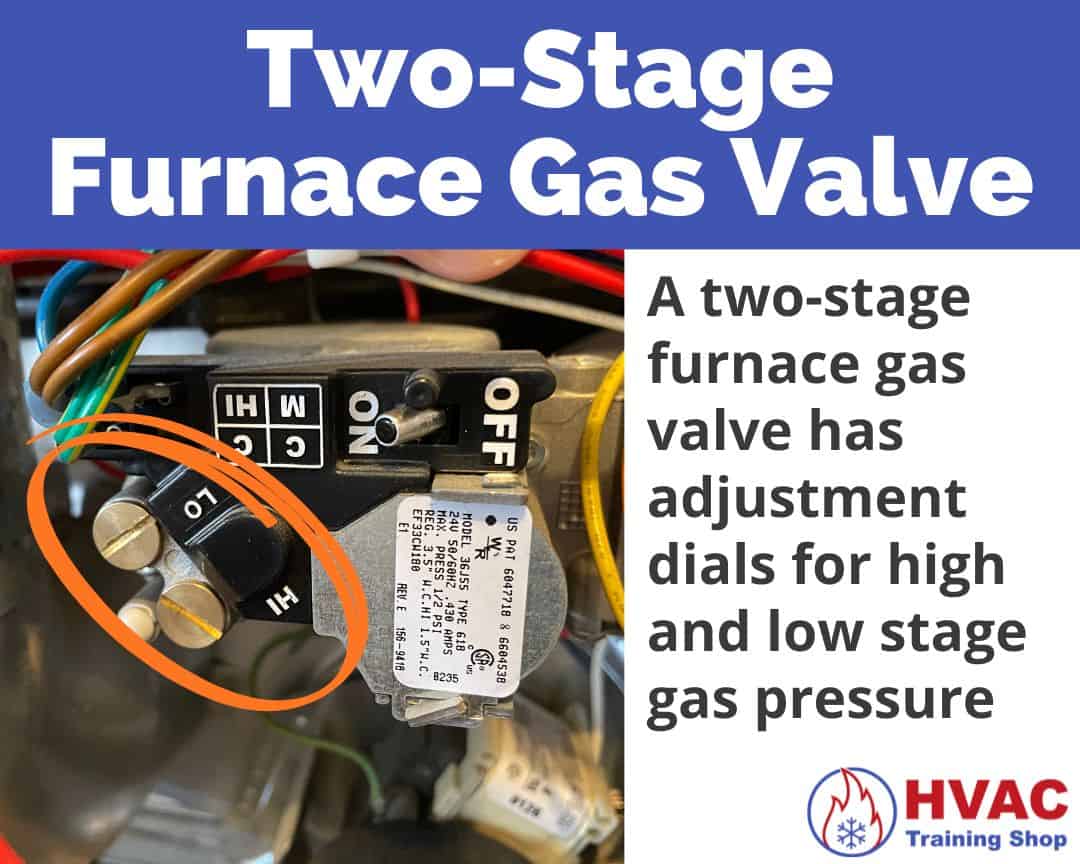
- 2-Stage Furnaces: These furnaces have two speeds: a lower setting (around 60-70% capacity) for milder conditions and a higher setting (100% capacity) for colder weather. This allows for more consistent heating and potentially lower energy bills.
Knowing which type of furnace you have is crucial for accurate troubleshooting. Look for model numbers on the furnace itself (usually on a sticker inside the access panel) and search online to confirm its specifications. Also, consider the age of your furnace. 2-Stage furnaces are more technologically advanced, so it is likely that your older model is a single stage furnace.
Troubleshooting: Common Heating Problems & Solutions
Let's address some frequent heating complaints and walk through a logical troubleshooting process.
Problem 1: Furnace Isn't Producing Heat
This is a serious issue and needs immediate attention. Here’s a step-by-step approach:
Step 1: No-Tools Check
- Check the Thermostat: Ensure it's set to "Heat" mode and the temperature is set above the current room temperature. It sounds obvious, but it's a common oversight!
- Check the Circuit Breaker: Locate the circuit breaker panel (usually in the basement, garage, or utility room) and check if the breaker for the furnace has tripped. If it has, flip it to the "Off" position, wait a few seconds, and then flip it back to the "On" position. If it immediately trips again, do not keep resetting it. This indicates a more serious electrical problem.
- Check the Emergency Shut-Off Switch: Most furnaces have an emergency shut-off switch located near the unit. Make sure it's in the "On" position. It often looks like a light switch and can be easily bumped accidentally.
- Check the Gas Supply: If you have a gas furnace, ensure the gas valve near the furnace is open. The handle should be parallel to the gas pipe. Also, verify that your gas company hasn't temporarily shut off service in your area.
Step 2: Basic Tool Check (Requires Screwdriver & Multimeter)
- Check the Flame Sensor (Gas Furnaces Only): This step requires some caution. First, turn off the power to the furnace at the circuit breaker. The flame sensor is a small, metallic rod located near the burner. Remove it (usually held in place by a single screw). Clean the rod with fine steel wool or sandpaper to remove any carbon buildup. Reinstall the sensor and restore power to the furnace. A dirty flame sensor is a common cause of furnace malfunction. If your furnace has a viewing window, you can observe the flame. If it flickers and goes out quickly, it might be the flame sensor, which is relatively inexpensive and easy to replace. However, if you are not comfortable working with gas appliances, call a professional.
- Check the Igniter (Gas Furnaces Only): After confirming that the flame sensor is clean, you can visually inspect the igniter. There are two types: Hot Surface Igniters and Spark Igniters. A Hot Surface Igniter will glow a bright orange before the gas ignites. If it does not glow, it may be cracked or broken and need replacing. The Spark Igniter generates a spark at the burner. You may hear the clicking sound of the spark generator. If either are not working, they need to be replaced.
- Check the Furnace Filter: A clogged filter restricts airflow, which can cause the furnace to overheat and shut down. Remove the filter and hold it up to the light. If you can't see light through it, it needs to be replaced. Replace it with a filter of the correct size and MERV rating for your furnace.
When to Call a Pro:
- If the circuit breaker trips repeatedly.
- If you smell gas. Evacuate the area immediately and call your gas company.
- If you suspect a gas leak.
- If you are uncomfortable working with gas or electricity.
- If you've checked all the above and the furnace still isn't producing heat.
- If you suspect issues with the gas valve, manifold or any other major component.
Problem 2: Furnace is Running Constantly
If your furnace runs constantly, but the house never reaches the set temperature, or the cycles are very short, here's what to investigate:
Step 1: No-Tools Check
- Check the Thermostat Settings: Is the thermostat set to a reasonable temperature? Is it possible someone accidentally changed the settings? Also check that the thermostat is level and correctly mounted on the wall. A misaligned thermostat can provide incorrect readings.
- Check for Air Leaks: Feel around windows, doors, and any other potential sources of drafts. Sealing air leaks with weather stripping or caulk can significantly improve heating efficiency.
- Check Vents and Registers: Ensure that all vents and registers are open and unobstructed. Closed vents can restrict airflow and cause the furnace to work harder. Also, make sure that they are clean of dust and debris, which can accumulate and block the airflow.
Step 2: Basic Tool Check (Requires Thermometer)
- Check the Temperature Differential: Use a thermometer to measure the temperature near a supply vent (where hot air comes out) and a return vent (where cold air goes back in). The difference between these two temperatures is the temperature differential. A healthy furnace typically has a temperature differential of 15-25 degrees Fahrenheit. If the differential is significantly lower, it indicates that the furnace isn't producing enough heat.
Specific to 2-Stage Furnaces:
A two-stage furnace that runs constantly, especially in milder weather, may be stuck in its high-fire mode. This could be a problem with the thermostat or the furnace's control board. While a 2-stage furnace is often designed to run for long periods, if it’s running at 100% capacity continuously, it’s not operating as intended. Try to force your furnace to stage 1 by lowering the setpoint temperature to a few degrees below the current room temperature. After a while, increase the temperature again. The furnace should now be running on low fire (stage 1). Check if the flame is as high as before. If the flame is still as high, then it may be stuck in high fire. When to Call a Pro:
- If you suspect the thermostat is faulty or miscalibrated.
- If you suspect a problem with the furnace's control board.
- If the temperature differential is consistently low, despite no obvious air leaks or obstructions.
- If your 2-stage furnace seems to be stuck in high-fire mode.
- If the furnace is short cycling frequently. Short cycling is when the furnace turns on and off in short bursts.
Problem 3: Uneven Heating Throughout the House
This is a common complaint, especially in homes with multiple stories. It often results in certain rooms being significantly colder or warmer than others.
Step 1: No-Tools Check
- Check Vents and Registers (Again!): Make sure all vents and registers are open in the rooms that are too cold and partially closed in the rooms that are too warm. This helps balance the airflow.
- Check for Blocked Return Vents: Return vents are responsible for pulling cold air back to the furnace to be reheated. Make sure they're not blocked by furniture or rugs.
- Check for Air Leaks (Yep, Again!): Air leaks can exacerbate uneven heating. Pay special attention to windows and doors in the coldest rooms.
Step 2: Simple DIY Actions
- Adjust Damper Settings (If Applicable): Some ductwork systems have dampers, which are adjustable metal plates inside the ducts that control airflow to different zones. Experiment with adjusting the damper settings to direct more airflow to the colder rooms. Be sure to take pictures of the settings beforehand, so you can reset them if your adjustments don't help!
- Use a Fan: A simple box fan can help circulate air and even out the temperature in a room or between floors. Place the fan in a doorway to blow warm air into a colder room, or cold air into a warmer room.
When to Call a Pro:
- If your ductwork system is poorly designed or undersized.
- If your insulation is inadequate.
- If you suspect a significant air leak in the ductwork itself (difficult to diagnose without specialized equipment).
- If adjusting damper settings doesn't improve the situation.
- If you have tried everything mentioned above and the problem is not solved.
Important Safety Considerations
Always turn off the power to the furnace at the circuit breaker before performing any maintenance or repairs.
Never work on gas lines or electrical components if you are not qualified and comfortable doing so. Gas leaks are extremely dangerous and can cause explosions or carbon monoxide poisoning.
Always follow the manufacturer's instructions for your specific furnace model.
If in doubt, call a qualified HVAC technician. Your safety and the proper functioning of your furnace are paramount.
Final Thoughts
Troubleshooting furnace problems can seem daunting, but by following a systematic approach and prioritizing safety, you can often identify and resolve simple issues yourself. Understanding the differences between single-stage and two-stage furnaces, and knowing when to call a professional, will empower you to keep your home comfortable and your heating system running efficiently. Remember, preventative maintenance, such as regularly changing your furnace filter, can significantly reduce the likelihood of encountering problems in the first place. Stay warm and stay safe!