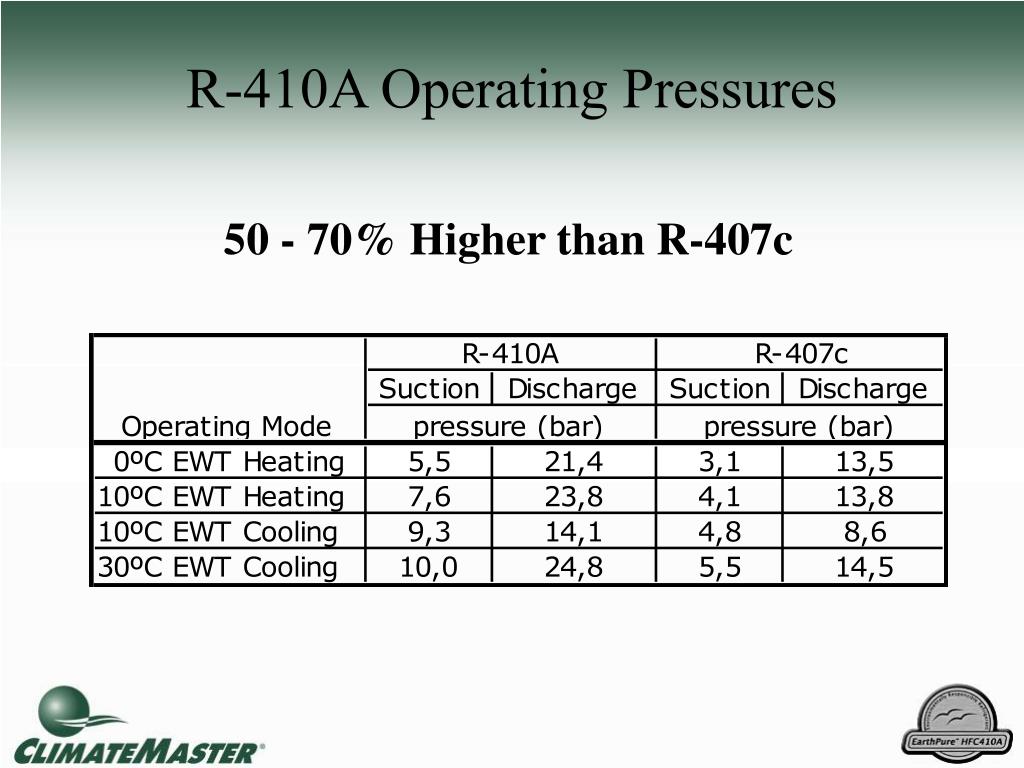
410a Pressure Chart High And Low Side

Understanding refrigerant pressures is crucial for maintaining efficient and reliable air conditioning and heat pump systems. This article delves into the specifics of R-410A, a common refrigerant, and provides detailed pressure charts for both the high and low sides of the system. This information is valuable for homeowners, HVAC technicians, and facility managers alike.
Understanding R-410A Refrigerant
R-410A, often marketed under brand names like Puron, is a hydrofluorocarbon (HFC) refrigerant that replaced R-22 in many residential and commercial HVAC systems. It's known for its higher operating pressures and improved energy efficiency compared to its predecessor. However, it's essential to understand that R-410A operates at significantly higher pressures than R-22, requiring specialized equipment and knowledge for safe handling and servicing.
Key Differences from R-22:
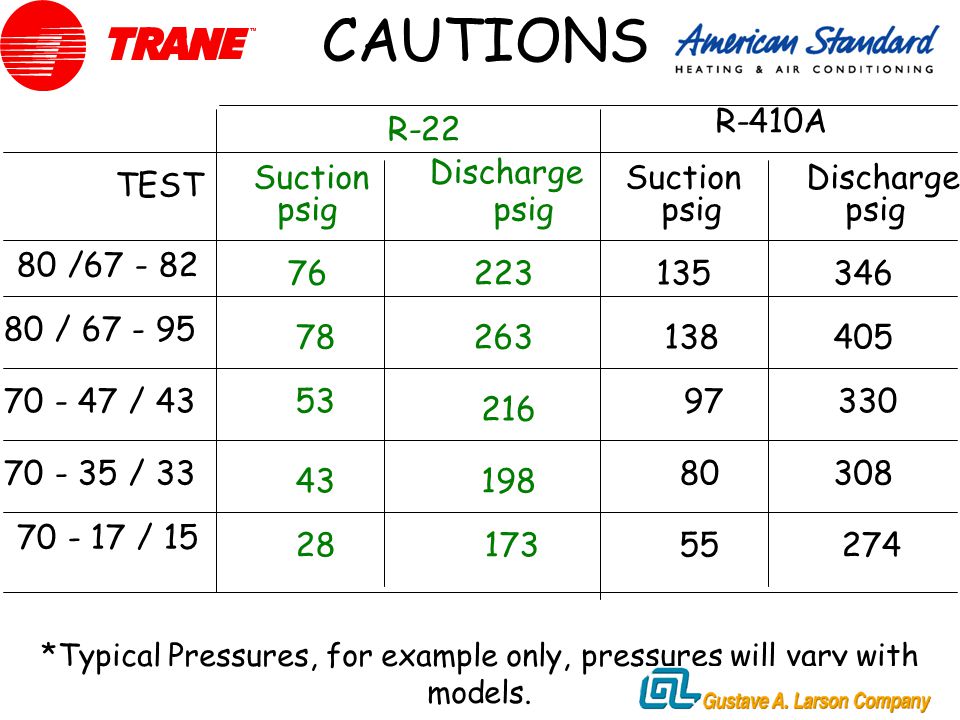
- Higher Operating Pressures: R-410A systems run at pressures approximately 50-70% higher than R-22 systems.
- Improved Efficiency: R-410A generally offers better energy efficiency, leading to lower energy bills.
- Different Oil Type: R-410A systems typically use polyolester (POE) oil, which is hygroscopic, meaning it readily absorbs moisture. This necessitates careful handling to prevent contamination.
- No Retrofitting: R-22 systems cannot be directly retrofitted with R-410A due to the different operating pressures and oil requirements.
The High and Low Sides of an HVAC System
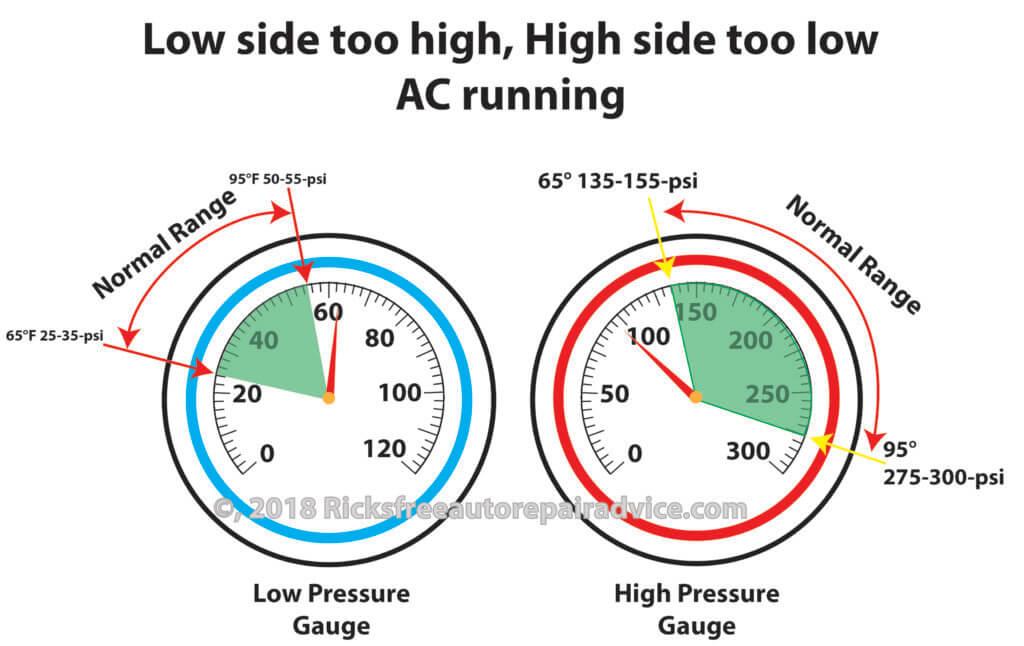
An air conditioning or heat pump system has two distinct pressure sides: the high side and the low side. Understanding these is fundamental to understanding refrigerant pressures.
Low Side (Suction Line): This side of the system includes the evaporator coil (typically inside your home), the suction line (the larger copper pipe connecting the evaporator to the compressor), and the compressor inlet. The low side operates at lower pressures and temperatures, allowing the refrigerant to absorb heat from the indoor air.
High Side (Liquid Line): This side includes the compressor outlet, the condenser coil (typically located outside), and the liquid line (the smaller copper pipe connecting the condenser to the metering device). The high side operates at higher pressures and temperatures, allowing the refrigerant to release heat to the outdoor air.
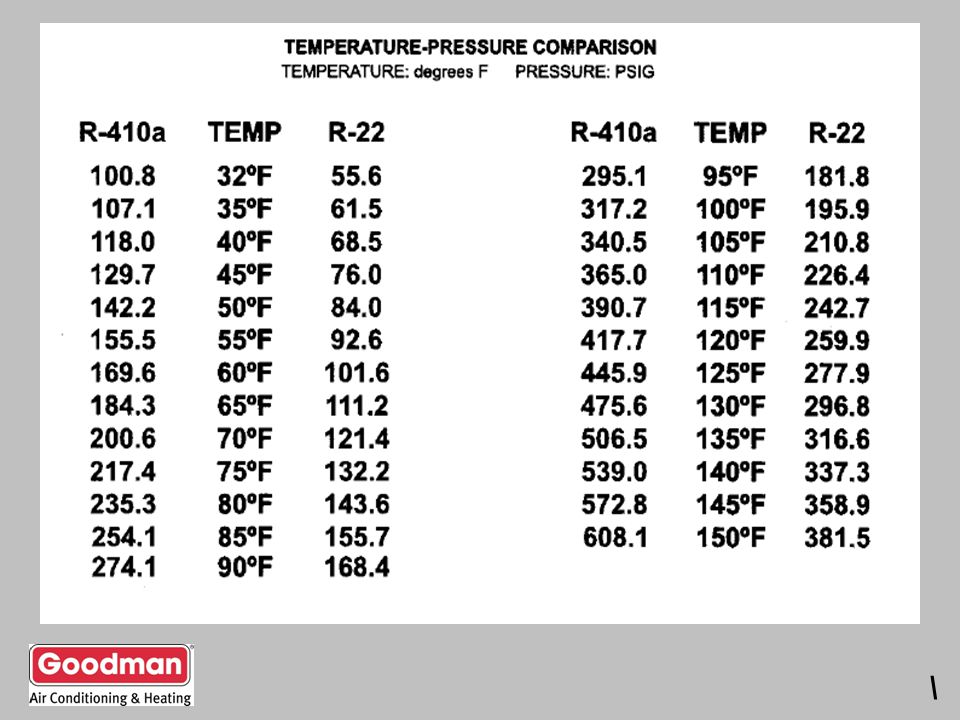
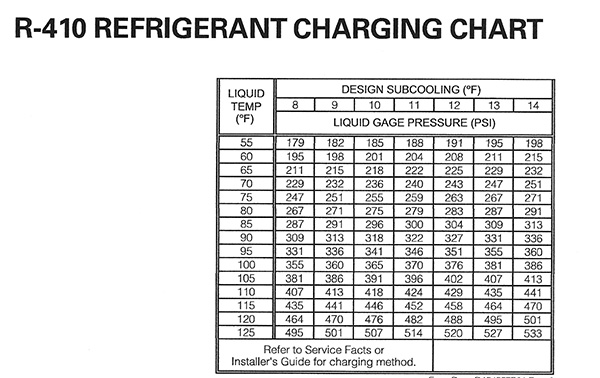
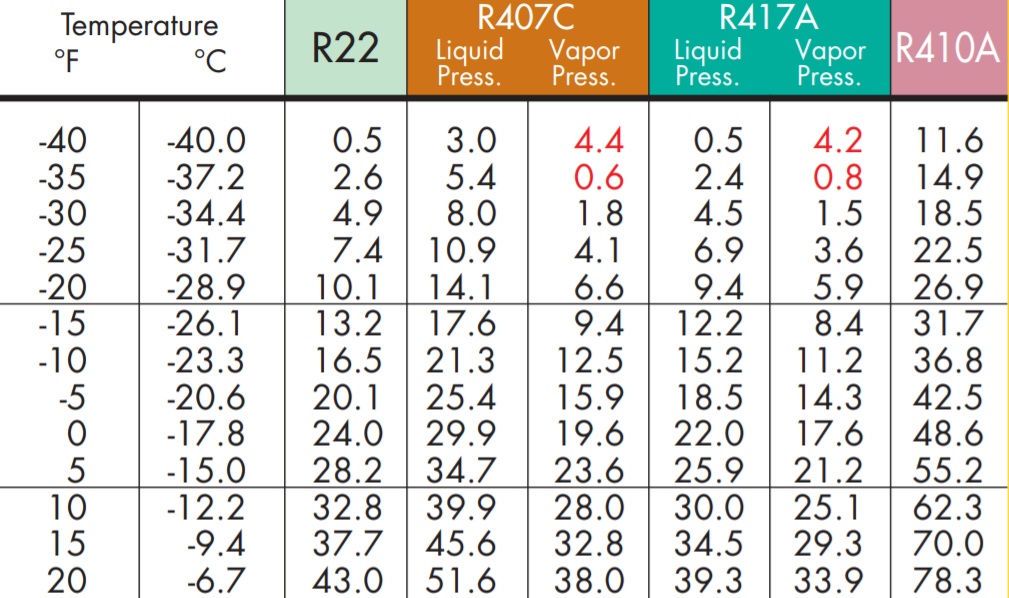
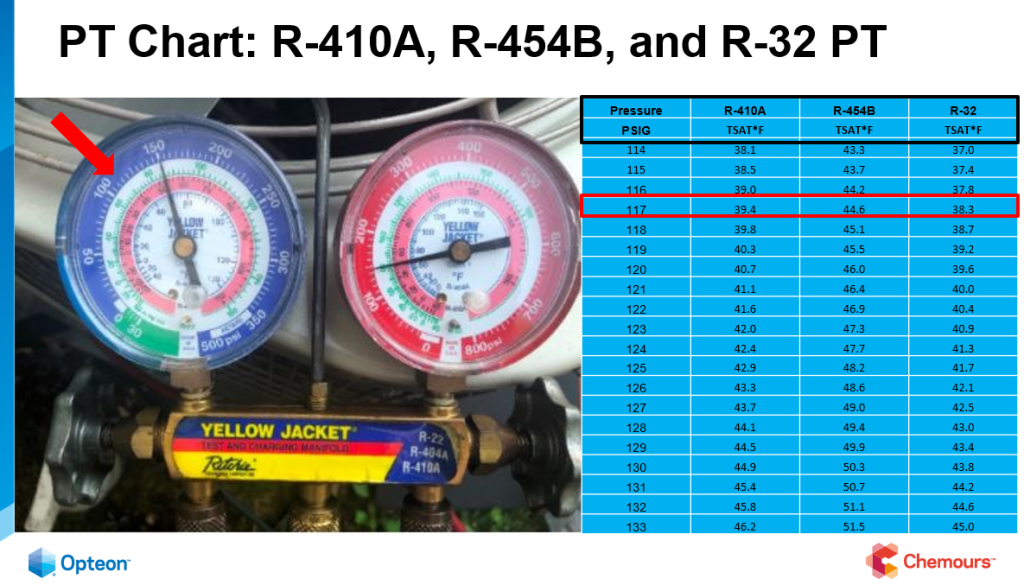
R-410A Pressure Chart: A General Guide
The following pressure chart provides a general guideline for R-410A pressures at various temperatures. It is crucial to understand that these are approximate values and can vary depending on the specific system, operating conditions, and altitude. Always refer to the manufacturer's specifications for the specific equipment you are working with.
Important Considerations:
- Ambient Temperature: The outdoor ambient temperature significantly affects the pressures in the system.
- Indoor Temperature: The indoor temperature and humidity also influence the low-side pressure.
- Load on the System: The amount of heat being removed from the building affects the pressures.
- Airflow: Proper airflow across both the evaporator and condenser coils is essential for accurate pressure readings. Restricted airflow can significantly impact pressures.
- System Cleanliness: Clean coils ensure optimal heat transfer and proper pressures.
Approximate R-410A Pressure Chart (Sea Level)
This chart provides estimated pressures for a system operating at sea level. Adjustments may be needed for higher altitudes.
| Outdoor Temperature (°F) | Approximate Low-Side Pressure (PSIG) | Approximate High-Side Pressure (PSIG) |
|---|---|---|
| 75 | 118-138 | 250-290 |
| 80 | 128-148 | 270-310 |
| 85 | 138-158 | 290-330 |
| 90 | 148-168 | 310-350 |
| 95 | 158-178 | 330-370 |
| 100 | 168-188 | 350-390 |
Disclaimer: This chart is for informational purposes only and should not be used as a substitute for proper diagnostic procedures and manufacturer's specifications. Always consult a qualified HVAC technician for system diagnosis and repair.
Interpreting Pressure Readings
When analyzing pressure readings, consider the following:
Low Low-Side Pressure:
- Refrigerant Leak: A common cause is a refrigerant leak.
- Restricted Metering Device: A clogged or restricted metering device (TXV or orifice) can reduce refrigerant flow to the evaporator.
- Low Airflow Across Evaporator Coil: A dirty air filter, blocked vents, or a malfunctioning blower motor can restrict airflow, leading to lower evaporator temperatures and pressures.
- Undercharge: The system may simply be undercharged with refrigerant.
High Low-Side Pressure:
- Overcharge: Too much refrigerant in the system.
- Restricted Airflow Across Condenser Coil: Dirty condenser coils, obstructions around the outdoor unit, or a malfunctioning condenser fan motor can impede heat rejection.
- Non-Condensables in the System: Air or other non-condensable gases in the system can raise pressures.
- Metering Device Malfunction: A stuck-open TXV can flood the evaporator with refrigerant.
Low High-Side Pressure:
- Undercharge: Insufficient refrigerant in the system.
- Restricted Metering Device: A partially clogged metering device can starve the condenser of refrigerant.
- Low Ambient Temperature: In cooler weather, the high-side pressure will naturally be lower.
High High-Side Pressure:
- Overcharge: Too much refrigerant in the system.
- Restricted Airflow Across Condenser Coil: Dirty condenser coils or obstructions.
- Non-Condensables in the System: Air or other gases.
- Compressor Issues: A failing compressor can cause excessively high pressures.
Troubleshooting Tips for Technicians
When troubleshooting R-410A systems, HVAC technicians should follow these best practices:
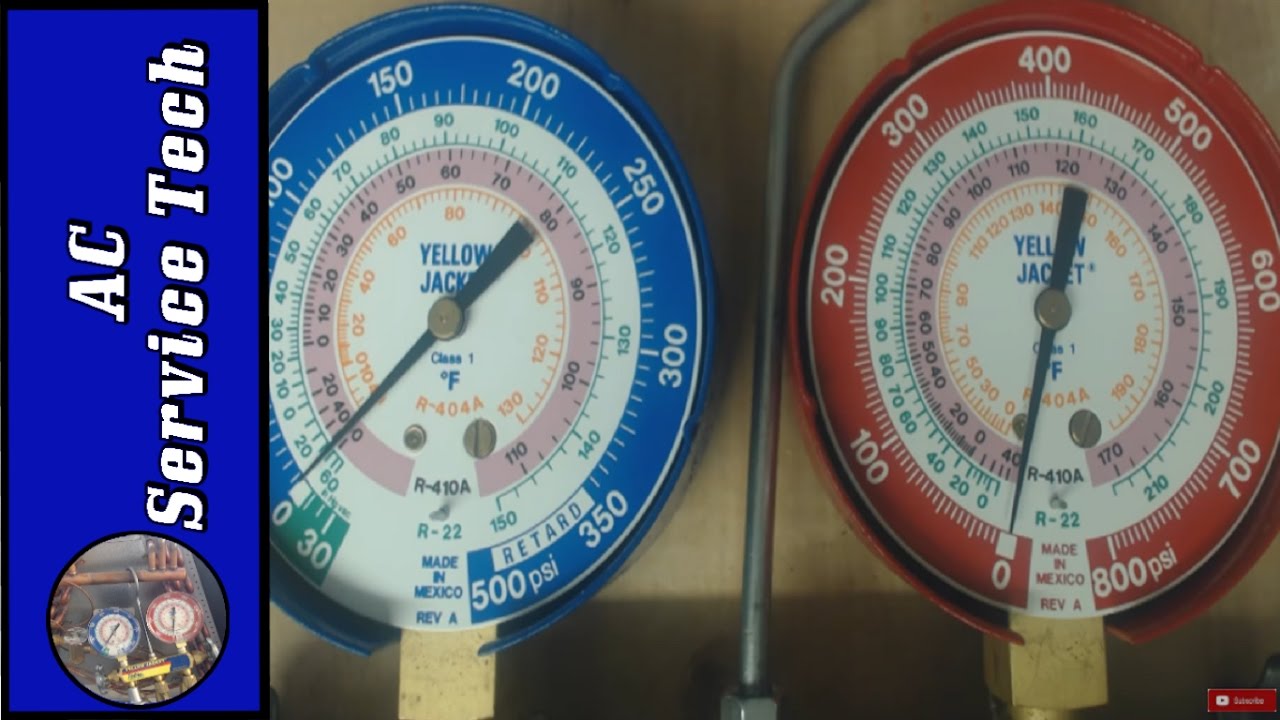
- Use Proper Gauges: Always use gauges specifically designed for R-410A.
- Superheat and Subcooling: Measure superheat and subcooling to accurately diagnose refrigerant charge and system performance.
- Check Airflow: Verify proper airflow across both the evaporator and condenser coils.
- Inspect Coils: Thoroughly inspect coils for cleanliness and damage.
- Leak Detection: Use an electronic leak detector or soap bubbles to locate refrigerant leaks.
- Recover Refrigerant: Properly recover refrigerant before making any repairs.
- Vacuum System: Evacuate the system to remove moisture and non-condensables before recharging.
- Charge Correctly: Charge the system to the manufacturer's specifications, using superheat and subcooling as guides.
Preventative Maintenance for Optimal Performance
Regular preventative maintenance is crucial for ensuring the longevity and efficiency of R-410A HVAC systems. Homeowners and facility managers should consider these steps:
- Regular Filter Changes: Change air filters regularly (typically every 1-3 months) to maintain proper airflow.
- Coil Cleaning: Schedule professional coil cleaning at least once a year to remove dirt and debris.
- Inspect Ductwork: Check ductwork for leaks and damage, and seal any leaks to improve efficiency.
- Professional Tune-Ups: Schedule annual HVAC tune-ups with a qualified technician to inspect and maintain the system.
Conclusion
Understanding R-410A pressure charts and system dynamics is essential for maintaining efficient and reliable HVAC systems. While this article provides a general overview, it is crucial to consult manufacturer's specifications and engage qualified HVAC professionals for accurate diagnosis, repair, and maintenance. By following these guidelines, homeowners, technicians, and facility managers can ensure optimal performance and longevity of their R-410A HVAC systems.