Air Conditioner Blower Fan Not Working

Air Conditioner Blower Fan Not Working: Troubleshooting and Repair Guide
Is your air conditioner blowing warm air, or not blowing any air at all? The problem might be with your blower fan, a critical component responsible for circulating cool air throughout your home. This guide will walk you through troubleshooting common issues, offering DIY solutions where possible, and helping you understand when it’s time to call a professional HVAC technician.
Safety First!
Before you start any HVAC troubleshooting, always turn off the power to the air conditioning unit at the breaker box. Label the breaker to avoid confusion. Safety is paramount when working with electrical components.
Tools You'll Need
Here’s a list of tools you might need for troubleshooting your air conditioner blower fan:
- Screwdrivers (Phillips head and flat head)
- Multimeter
- Voltage tester
- Pliers
- Wire strippers
- Wire connectors
- Work gloves
- Safety glasses
- Flashlight or work light
Common Causes of a Non-Functional Blower Fan
Here’s a breakdown of the usual suspects when your blower fan refuses to cooperate:
- Tripped Breaker or Blown Fuse: This is the simplest and most common cause.
- Faulty Capacitor: The capacitor provides the initial jolt of power needed to start the motor.
- Bad Blower Motor: The motor itself might be burned out or have worn bearings.
- Dirty Air Filter: A clogged filter restricts airflow, causing the motor to overheat and potentially fail.
- Frozen Evaporator Coil: Ice buildup can restrict airflow and strain the blower motor.
- Loose Wiring: Wires can become disconnected or corroded, interrupting the electrical current.
- Faulty Control Board: The control board manages the blower motor's operation.
- Stuck Blower Wheel: Debris can obstruct the blower wheel's movement.
Step-by-Step Troubleshooting
Follow these steps to diagnose the problem with your blower fan:
1. Check the Breaker and Air Filter
First, go to your electrical panel and check the breaker for the air conditioner. If it's tripped, reset it. Also, inspect your air filter. A dirty filter restricts airflow, causing the motor to overheat and potentially fail. Replace it with a clean filter.
2. Inspect the Capacitor
The capacitor is a cylindrical component, usually located near the blower motor. Discharge the capacitor before touching it! Use a screwdriver with an insulated handle to short the terminals (carefully!). Look for signs of bulging, leaking, or corrosion. If you see any of these, the capacitor needs to be replaced.
Replacing a Capacitor:
- Take a picture of the wiring to ensure you reconnect the new capacitor correctly.
- Disconnect the wires from the old capacitor.
- Connect the wires to the new capacitor, matching the original configuration.
Warning: Capacitors store a dangerous electrical charge, even when the power is off. Discharge the capacitor before handling it.
3. Test the Blower Motor
Using a multimeter, you can test the blower motor for continuity. First, locate the motor leads. Disconnect them from the capacitor or control board. Set your multimeter to the ohms setting (resistance). Touch the probes to the motor leads. If you get a reading of infinity (or "OL" on some multimeters), the motor is likely bad.
Important Note: Testing the motor for continuity only indicates whether the windings are broken. It doesn't necessarily mean the motor is fully functional. A motor with worn bearings can still show continuity but fail under load.
4. Examine the Wiring
Visually inspect the wiring around the blower motor, capacitor, and control board. Look for loose connections, frayed wires, or signs of corrosion. Use a voltage tester to confirm that power is reaching the motor. Tighten any loose connections and replace damaged wires.
5. Check for a Frozen Evaporator Coil
If your evaporator coil is frozen, it will block airflow and cause the blower motor to work harder. Turn off the air conditioner and let the ice melt completely (this can take several hours). Once the ice is gone, restart the unit and monitor it. If the coil freezes again, you may have a refrigerant leak or airflow problem that requires professional attention.
6. Inspect the Blower Wheel
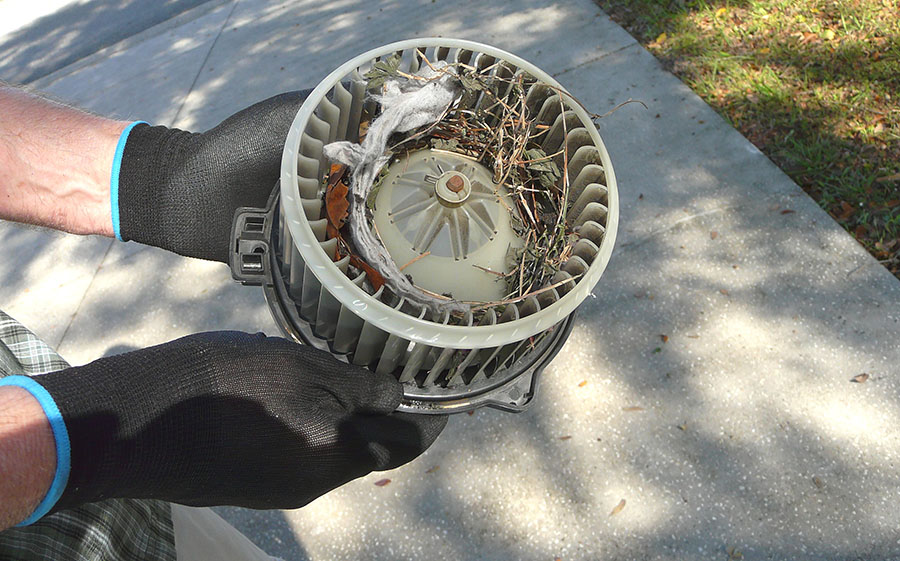
Access the blower wheel and check for any obstructions, such as debris or insulation. Clean the blower wheel thoroughly. Also, ensure the blower wheel spins freely. If it's stuck or difficult to turn, the motor bearings may be failing.
7. Control Board Issues
The control board is the brains of the air conditioning system. If you suspect a problem with the control board, it's best to call a professional. Testing and repairing control boards requires specialized knowledge and equipment.
When to Call a Professional
While some blower fan issues can be resolved with DIY repairs, there are situations where it's best to call a qualified HVAC technician:
- If you're uncomfortable working with electricity.
- If you suspect a refrigerant leak.
- If you've tried troubleshooting and the blower fan still isn't working.
- If you suspect a problem with the control board.
- If you lack the necessary tools or expertise.
Estimated Repair Costs
Here are some approximate costs for common blower fan repairs:
- Air Filter Replacement: $10 - $30
- Capacitor Replacement: $75 - $200 (including labor)
- Blower Motor Replacement: $300 - $800 (including labor)
- Control Board Replacement: $400 - $1000 (including labor)
Note: These are just estimates. The actual cost will vary depending on your location, the complexity of the repair, and the HVAC technician's rates.
Preventative Maintenance Tips
Regular maintenance can help prevent blower fan problems and extend the life of your air conditioning system:
- Replace your air filter every 1-3 months.
- Schedule annual HVAC maintenance with a qualified technician.
- Keep the area around your outdoor unit clear of debris.
- Consider a programmable thermostat to optimize energy efficiency.
Understanding Blower Motor Types
There are primarily two types of blower motors used in HVAC systems:
- Permanent Split Capacitor (PSC) Motors: These are the most common type and are known for their reliability and affordability. They typically have multiple speed settings.
- Electronically Commutated Motors (ECM): These motors are more energy-efficient and offer variable speed control. They are often found in newer, high-efficiency systems. ECM motors are more expensive to replace.
Troubleshooting Specific Symptoms
Blower Fan Runs Constantly: This could indicate a problem with the thermostat, control board, or a stuck relay. Blower Fan Runs But No Air Comes Out: Check for a blocked duct, a closed damper, or a disconnected duct. Blower Fan is Noisy: This could be due to worn bearings, a loose blower wheel, or debris in the blower housing.
By following these troubleshooting steps and understanding the common causes of blower fan problems, you can diagnose and potentially fix the issue yourself. Remember to prioritize safety and don't hesitate to call a professional when needed. Regular maintenance is key to keeping your air conditioning system running smoothly and efficiently.