Air Conditioner Running But Not Lowering Temperature

It's a frustrating situation: your air conditioner is running, humming along, but the temperature inside your home stubbornly refuses to drop. You're paying for the electricity, hearing the noise, but not getting the relief you need. This guide will help you diagnose the potential reasons why your AC isn't cooling properly and offer practical solutions.
Understanding How Your AC Works
Before we dive into troubleshooting, let's briefly review the basics of how an air conditioner cools your home. Your AC unit doesn't *create* cold air; it removes heat from inside and transfers it outside. This process involves a few key components:
- Refrigerant: Think of refrigerant as the "blood" of your AC system, carrying heat from inside to outside. It cycles between liquid and gaseous states, absorbing heat in the evaporator coil (inside) and releasing it in the condenser coil (outside).
- Evaporator Coil: Located inside your air handler, the evaporator coil absorbs heat from the indoor air that's blown across it. The refrigerant inside this coil turns into a gas as it absorbs heat.
- Condenser Coil: Located in the outdoor unit, the condenser coil releases the heat absorbed by the refrigerant. As the hot refrigerant gas cools, it turns back into a liquid.
- Compressor: This is the heart of the system, responsible for compressing the refrigerant gas and circulating it throughout the system.
- Blower Fan: This fan blows air across the evaporator coil to cool it and then circulates that cooled air throughout your home via ductwork. There is also a fan in the outside unit to help dissipate heat from the condenser coil.
If any of these components malfunction, or if there's an obstruction in the airflow, your AC won't be able to effectively remove heat, leading to the problem of running without lowering the temperature.
Common Reasons Why Your AC Isn't Cooling
Here are some of the most common reasons why your air conditioner might be running but not cooling your home:
1. Dirty Air Filter
This is the most frequent culprit. A dirty air filter restricts airflow to the evaporator coil. When airflow is restricted, the evaporator coil can't absorb heat effectively. This can lead to the coil freezing up (more on that later) or simply reducing the AC's cooling capacity. A dirty filter also makes your unit work harder, increasing energy consumption and potentially damaging components over time.
Solution: Replace your air filter immediately. Aim to replace it every 1-3 months, or more often if you have pets, allergies, or live in a dusty environment. Check the filter monthly and replace it when it looks dirty.
2. Frozen Evaporator Coil
As mentioned above, restricted airflow (often due to a dirty filter) can cause the evaporator coil to freeze. When the coil is covered in ice, it can't absorb heat from the air, and therefore, no cooling occurs. Low refrigerant levels can also cause the evaporator coil to freeze.
Solution:
- Turn off the AC: The first step is to turn off your AC unit and allow the ice to melt. Just turn it off - do not turn it on again to "help" it.
- Change the air filter: Replace the dirty air filter (see above).
- Run the fan only: Once the ice has melted, run the AC fan only for several hours to help dry the coil.
- Check for leaks: If the freezing recurs frequently, suspect a refrigerant leak and call a professional.
3. Refrigerant Leaks
Refrigerant is essential for transferring heat. If your AC has a refrigerant leak, it won't be able to cool effectively, no matter how long it runs. Refrigerant leaks are almost always not something a homeowner can fix. They require special equipment, tools, and licensing.
Signs of a refrigerant leak:
- AC runs constantly but doesn't cool well.
- Ice buildup on the evaporator coil (as mentioned above).
- Hissing or bubbling sound coming from the AC unit.
- Higher than normal energy bills.
Solution: Call a qualified HVAC technician to locate and repair the leak. They will also need to recharge the refrigerant to the proper level.
4. Dirty Condenser Coil
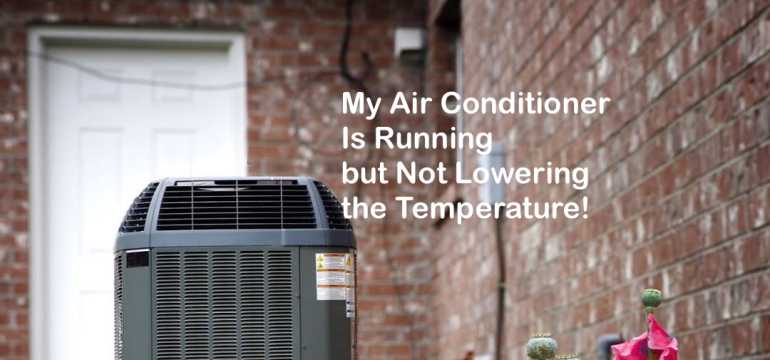
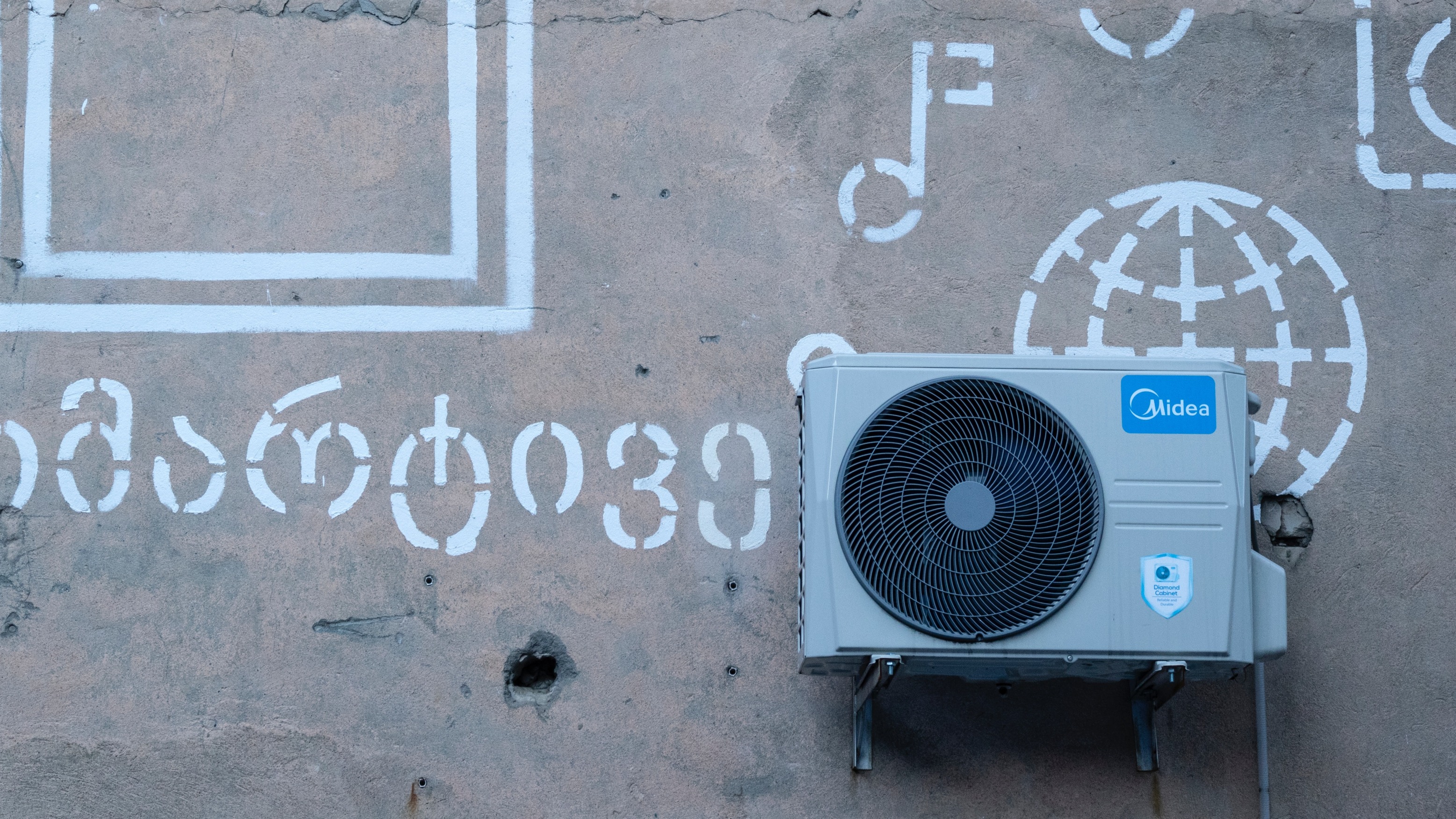
The condenser coil, located in the outdoor unit, releases the heat extracted from your home. If this coil is covered in dirt, dust, leaves, or debris, it can't effectively dissipate heat. This causes the AC to work harder and less efficiently, resulting in poor cooling.
Solution:
- Turn off the AC unit: Before cleaning, turn off the power to the unit at the breaker.
- Remove debris: Remove any visible leaves, twigs, or other debris from around the unit.
- Clean the coil: Use a garden hose with a gentle spray nozzle to clean the condenser coil. Spray from the inside out to avoid bending the fins. Be careful not to use too much pressure, as you could damage the fins. Never use a pressure washer.
- Straighten bent fins: If the fins are bent, use a fin comb to gently straighten them.
5. Ductwork Leaks
If your ductwork has leaks, the cool air produced by your AC will escape into unconditioned spaces like attics, crawl spaces, or walls. This significantly reduces the amount of cool air reaching the rooms you want to cool.
Signs of ductwork leaks:
- Uneven cooling throughout your home.
- High energy bills.
- Dust accumulation near duct joints.
Solution:
- Inspect ductwork: Visually inspect accessible ductwork for obvious tears, gaps, or disconnections.
- Seal leaks: Seal any leaks with duct tape (though metal tape is better) or mastic sealant. For larger leaks or difficult-to-reach areas, consider hiring a professional to seal your ductwork.
- Insulate ductwork: Insulating your ductwork can also help to prevent heat gain or loss, improving efficiency.
6. Thermostat Issues
A malfunctioning thermostat can prevent your AC from running properly. If the thermostat is set incorrectly, not calibrated correctly, or is failing, it may not be accurately sensing the temperature in your home.
Solution:
- Check the settings: Ensure the thermostat is set to "cool" mode and that the temperature is set lower than the current room temperature.
- Check the batteries: If your thermostat is battery-powered, replace the batteries.
- Calibrate the thermostat: Some thermostats allow you to calibrate the temperature reading. Consult your thermostat's manual for instructions.
- Consider replacement: If your thermostat is old or malfunctioning, consider replacing it with a new, programmable thermostat.
7. Undersized AC Unit
If your AC unit is too small for the size of your home, it will struggle to cool the space effectively, especially during hot weather. An undersized unit will run constantly without ever reaching the desired temperature.
Solution: Have an HVAC professional perform a load calculation to determine the appropriate size AC unit for your home. Factors considered will include square footage, insulation levels, window size and orientation, and climate. If your current unit is undersized, you will need to replace it with a larger unit.
8. Compressor Problems
The compressor is the heart of your AC system. If the compressor is failing, it won't be able to circulate refrigerant effectively, leading to poor cooling. Compressor problems are often expensive to repair.
Signs of a compressor problem:
- AC runs but doesn't cool.
- Loud or unusual noises coming from the outdoor unit.
- The compressor is not running at all.
Solution: Compressor issues are best left to a qualified HVAC technician. They can diagnose the problem and recommend the best course of action, which may involve repairing or replacing the compressor. In many cases, replacing the entire outdoor unit is more cost-effective than repairing a faulty compressor.
9. Blocked Vents or Registers
Make sure that vents are not blocked by furniture, rugs or drapes. Blocked vents prevent the free flow of cool air into the room.
Solution: Clear anything blocking the vents.
10. Poor Insulation
Poor insulation in your walls, attic, or windows can allow heat to enter your home, making it difficult for your AC to keep up. Air will leak out just as easily.
Solution: Consider improving the insulation in your home. Insulating the attic is generally the most cost-effective way to improve energy efficiency. You can also seal air leaks around windows and doors.
When to Call a Professional
While some of the issues described above can be addressed with simple DIY solutions, others require the expertise of a qualified HVAC technician. You should call a professional if:
- You suspect a refrigerant leak.
- The evaporator coil freezes repeatedly.
- You suspect a compressor problem.
- You are not comfortable working with electrical components.
- You are unsure about the cause of the problem.
Attempting to repair complex AC issues without proper training and equipment can be dangerous and could potentially void your warranty.
Preventive Maintenance
The best way to avoid AC problems is to perform regular preventive maintenance. Here are some tips:
- Change your air filter regularly (every 1-3 months).
- Clean the outdoor condenser coil annually.
- Schedule an annual AC tune-up with a qualified HVAC technician.
- Keep the area around the outdoor unit clear of debris.
- Consider a service contract.
By taking these steps, you can help ensure that your AC runs efficiently and effectively for years to come.