
Air Conditioning Tonnage Chart

Selecting the right air conditioning system for your home or building is crucial for maintaining comfort and efficiency. One of the most important factors to consider is the system's tonnage. This article will serve as a comprehensive guide to understanding air conditioning tonnage, its significance, and how to determine the appropriate size for your needs.
Understanding Air Conditioning Tonnage
The term "ton" in air conditioning refers to the amount of heat an air conditioner can remove from a space in one hour. Specifically, one ton of cooling capacity is defined as the amount of heat required to melt one ton (2,000 pounds) of ice in 24 hours. This equates to 12,000 British Thermal Units (BTUs) per hour. Therefore:
1 Ton of Cooling = 12,000 BTU/hr
A higher tonnage rating indicates a more powerful air conditioner capable of cooling a larger area. However, bigger isn't always better. An oversized unit can lead to short cycling, where the unit turns on and off frequently. This results in:
- Poor dehumidification
- Uneven temperatures
- Increased energy consumption
- Reduced lifespan of the equipment
Conversely, an undersized unit will struggle to maintain the desired temperature, especially during peak summer months, leading to:
- Constant operation
- High energy bills
- Potential for overheating and premature failure
Air Conditioning Tonnage Chart: A General Guide
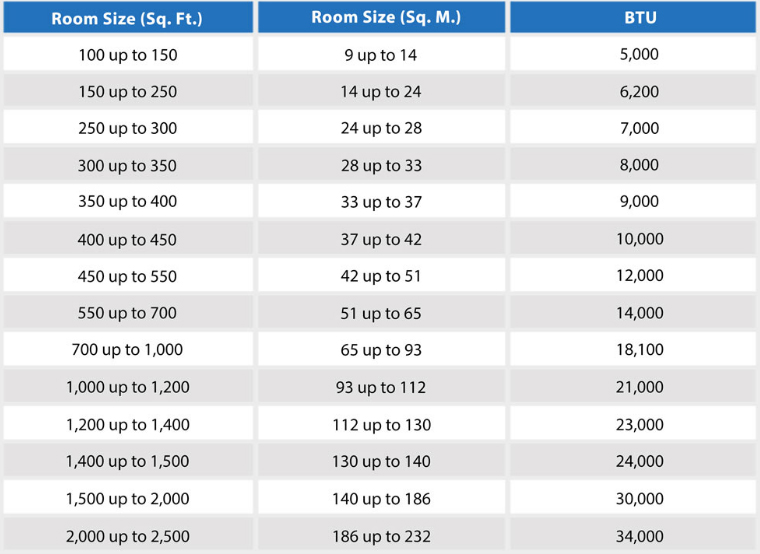
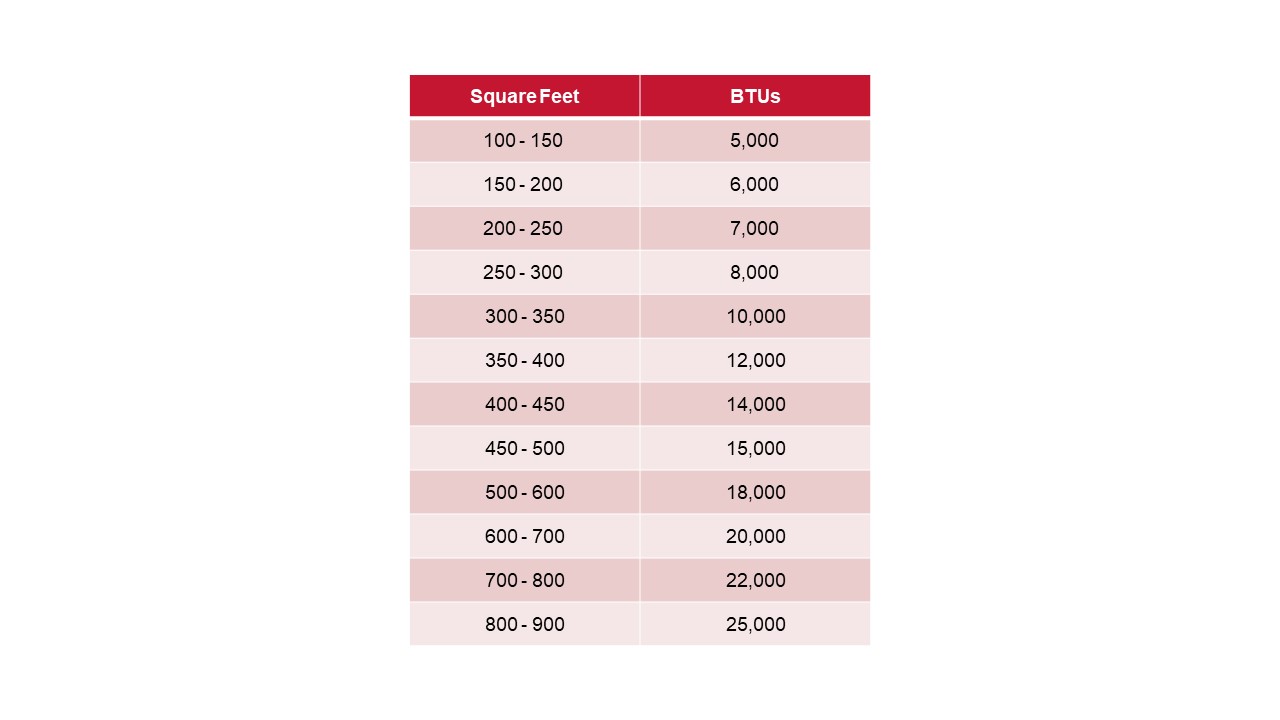
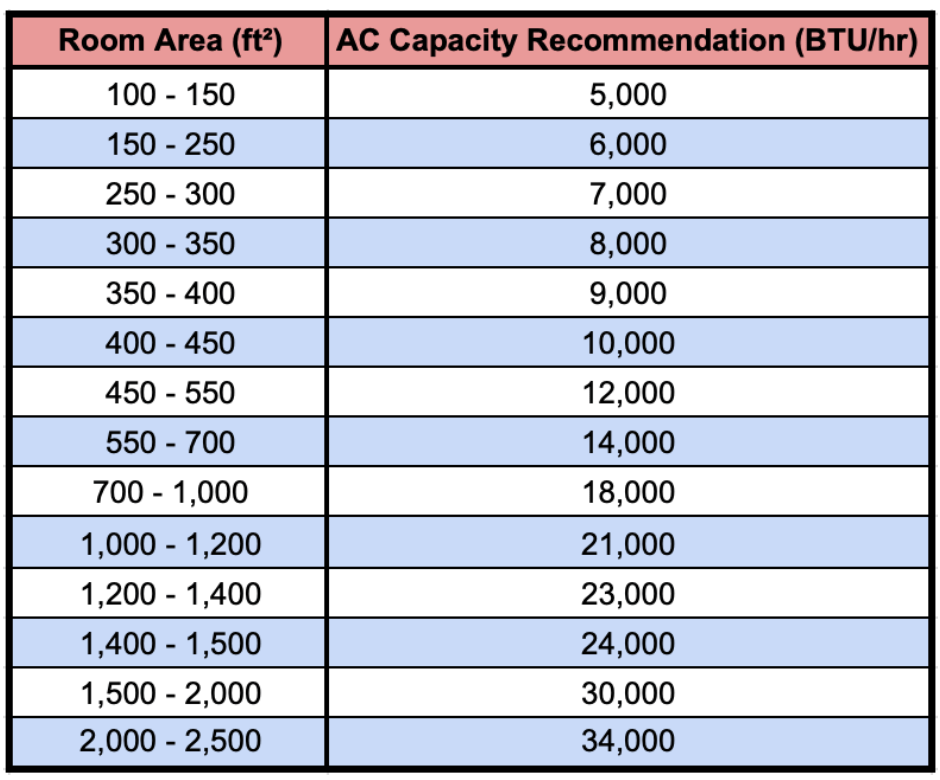
While a professional load calculation is always recommended, the following chart provides a general guideline for selecting air conditioning tonnage based on square footage. Keep in mind that these are estimates and various factors can influence the actual cooling requirements.
| Square Footage | Tonnage (Approximate) |
|---|---|
| 600 - 750 sq ft | 1.5 Tons |
| 750 - 1,000 sq ft | 2 Tons |
| 1,000 - 1,200 sq ft | 2.5 Tons |
| 1,200 - 1,500 sq ft | 3 Tons |
| 1,500 - 1,800 sq ft | 3.5 Tons |
| 1,800 - 2,100 sq ft | 4 Tons |
| 2,100 - 2,400 sq ft | 4.5 Tons |
| 2,400 - 2,700 sq ft | 5 Tons |
Disclaimer: This chart is for estimation purposes only. Actual tonnage requirements may vary. Consult with a qualified HVAC professional for an accurate assessment.
Factors Affecting Tonnage Requirements
The square footage of a space is a primary factor, but other variables significantly impact the cooling load. These include:
Climate
Regions with hotter and more humid summers require higher tonnage air conditioners compared to milder climates. Consider the average temperature and humidity levels during the hottest months of the year.
Insulation
Proper insulation in walls, ceilings, and floors reduces heat transfer into the building, decreasing the cooling load. Poorly insulated homes require larger air conditioners.
Windows
The size, type, and orientation of windows affect the amount of solar heat gain. South-facing windows, in particular, can contribute significantly to the cooling load. Using energy-efficient windows and window treatments can reduce heat gain.
Occupancy
The number of people occupying a space affects the cooling load because each person generates heat. Higher occupancy rates require greater cooling capacity.
Appliances and Lighting
Heat-generating appliances like ovens, computers, and lighting fixtures contribute to the cooling load. Energy-efficient appliances and LED lighting can help reduce this load.
Building Orientation and Shading
Buildings shaded by trees or other structures require less cooling than those exposed to direct sunlight. The orientation of the building also plays a role, with east- and west-facing walls receiving more intense sunlight during certain times of the day.
Air Leakage
Air leaks around windows, doors, and other openings allow conditioned air to escape and unconditioned air to enter, increasing the cooling load. Sealing air leaks can significantly improve energy efficiency and reduce the required tonnage.
Performing a Load Calculation: Manual J
For accurate tonnage determination, a professional load calculation is essential. The industry standard for residential load calculations is Manual J, developed by the Air Conditioning Contractors of America (ACCA). Manual J takes into account all the factors mentioned above to determine the precise cooling and heating requirements for a specific building.
A Manual J calculation involves a detailed assessment of the building's characteristics, including:
- Square footage of each room
- Window sizes, types, and orientations
- Insulation levels in walls, ceilings, and floors
- Air leakage rates
- Occupancy levels
- Appliance and lighting loads
- Climate data
Based on this information, the Manual J calculation provides a precise estimate of the required cooling and heating capacity, ensuring that the selected HVAC system is appropriately sized.
The Importance of Professional Installation
Even with an accurately sized air conditioner, proper installation is crucial for optimal performance and efficiency. A poorly installed system can suffer from:
- Reduced airflow
- Improper refrigerant charge
- Leaky ductwork
- Inadequate insulation
These issues can significantly reduce the system's cooling capacity and increase energy consumption. Therefore, it's essential to hire a qualified and experienced HVAC contractor for installation.
Energy Efficiency and SEER Ratings
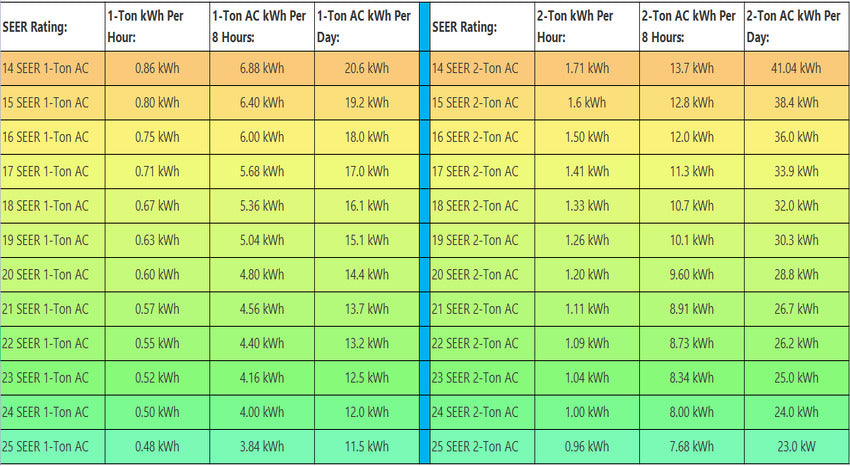
When selecting an air conditioner, it's important to consider its energy efficiency rating, known as the Seasonal Energy Efficiency Ratio (SEER). The SEER rating indicates how efficiently the unit converts electricity into cooling power. A higher SEER rating means greater energy efficiency and lower operating costs.
The minimum SEER rating currently mandated by the U.S. Department of Energy (DOE) is 14 SEER in most regions. However, many high-efficiency air conditioners have SEER ratings of 16 or higher. While these units may have a higher initial cost, they can save significant money on energy bills over the lifespan of the equipment.
Costs and Lifespan
The cost of an air conditioning system depends on several factors, including tonnage, SEER rating, brand, and installation complexity. Generally, higher tonnage and higher SEER ratings result in higher initial costs. As of late 2024, a typical central air conditioning system installation can range from $3,000 to $7,000, but that range can increase based on equipment and installation variables. Get multiple quotes from local contractors.
The lifespan of an air conditioner typically ranges from 15 to 20 years, provided it is properly maintained. Regular maintenance, such as cleaning the coils, changing the air filter, and inspecting the refrigerant charge, can extend the lifespan of the equipment and ensure optimal performance. Ignoring regular maintenance can lead to premature failure and costly repairs.
Conclusion
Selecting the right air conditioning tonnage is a critical step in ensuring comfort, efficiency, and longevity of your HVAC system. While general guidelines and tonnage charts can provide a starting point, a professional load calculation is essential for accurate sizing. By considering all the factors that influence the cooling load and working with a qualified HVAC contractor, you can choose an air conditioner that meets your specific needs and provides years of reliable performance.



:max_bytes(150000):strip_icc()/air-conditioning-chart-1152654_final-02-c37c8b4fdf08432baf378e8f0cb9d8e0.jpg)