Air Cooled Chiller And Water Cooled Chiller
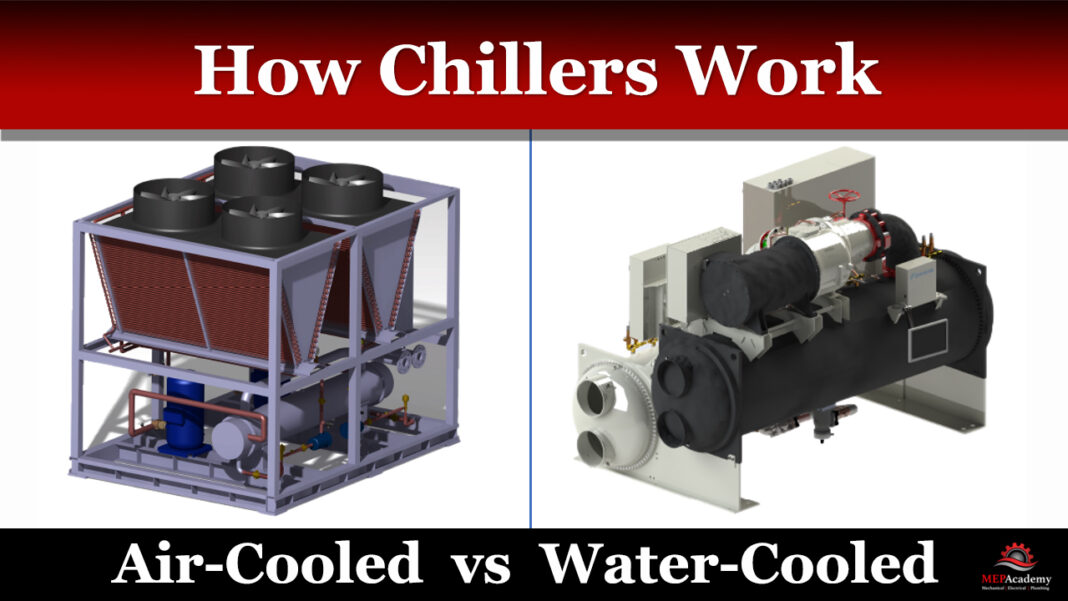
When it comes to cooling large residential or commercial buildings, chillers stand out as the champions of efficient temperature regulation. But within the world of chillers, two primary types dominate: air-cooled chillers and water-cooled chillers. Understanding the nuances of each is crucial for making informed decisions about your HVAC system, whether you're a homeowner, a seasoned HVAC technician, or a facility manager overseeing a sprawling complex.
How Chillers Work: A Simplified Explanation
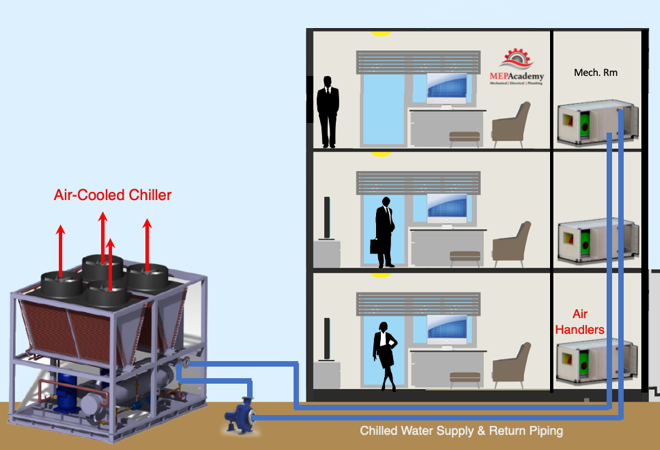
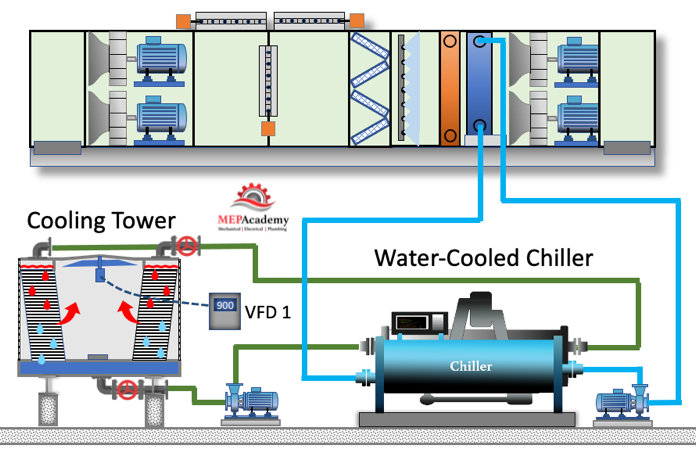
Before diving into the specifics, let's establish a fundamental understanding of how chillers operate. At their core, chillers are refrigeration systems designed to cool a fluid – typically water or a water-glycol mixture. This chilled fluid is then circulated throughout the building to air handling units (AHUs) or fan coil units, where it absorbs heat from the air, effectively lowering the temperature in the occupied spaces. The warmed fluid returns to the chiller, where the cooling process repeats.
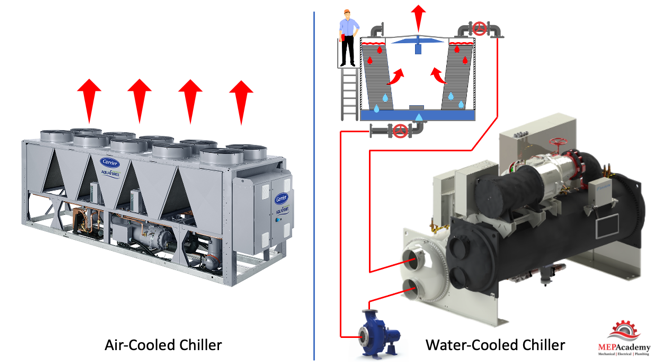
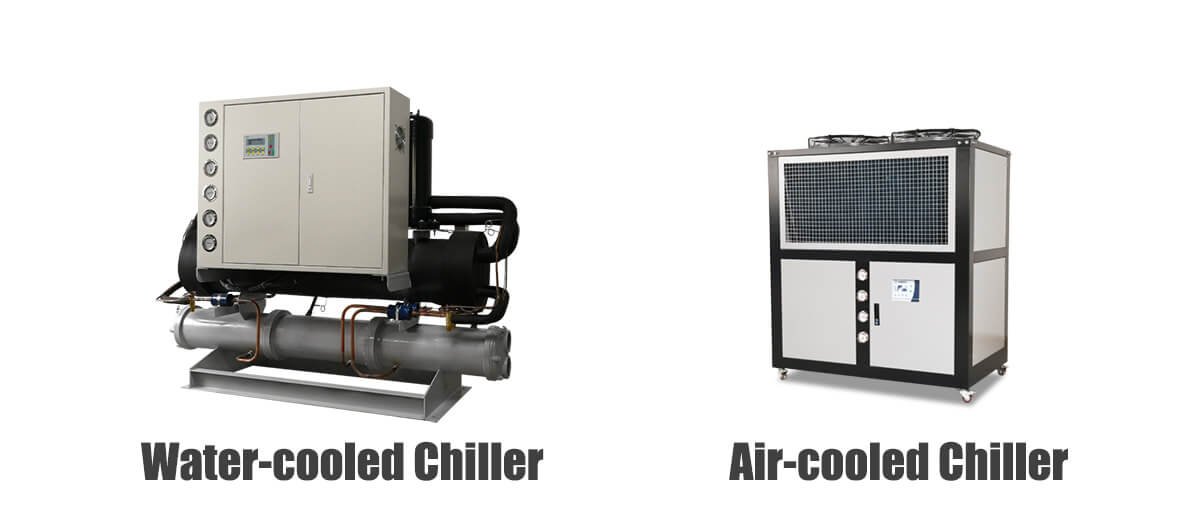
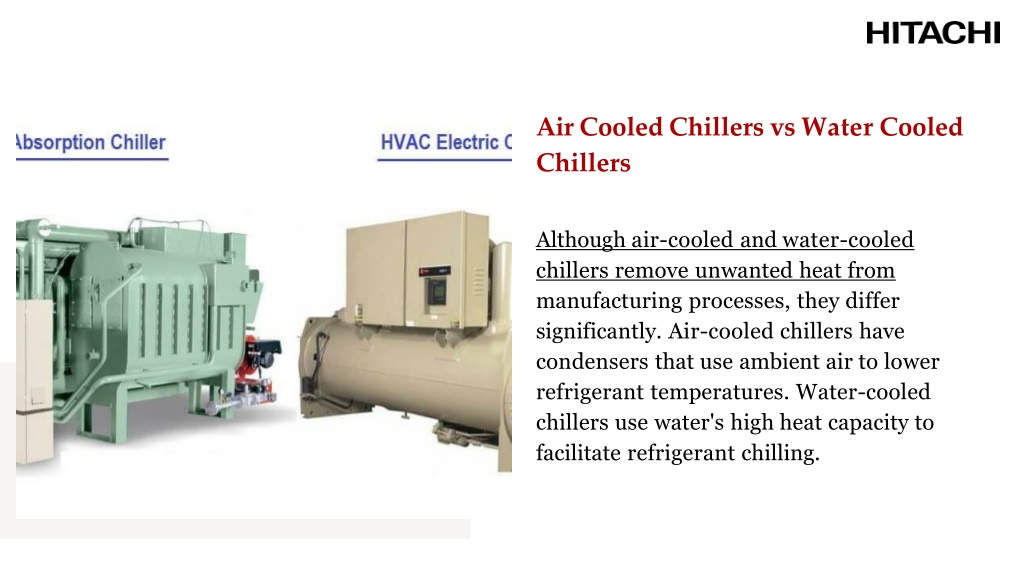
The key difference between air-cooled and water-cooled chillers lies in how they reject the heat absorbed from the building. This heat rejection process is essential for the continuous operation of the chiller.
Air-Cooled Chillers: Direct Heat Rejection to the Atmosphere
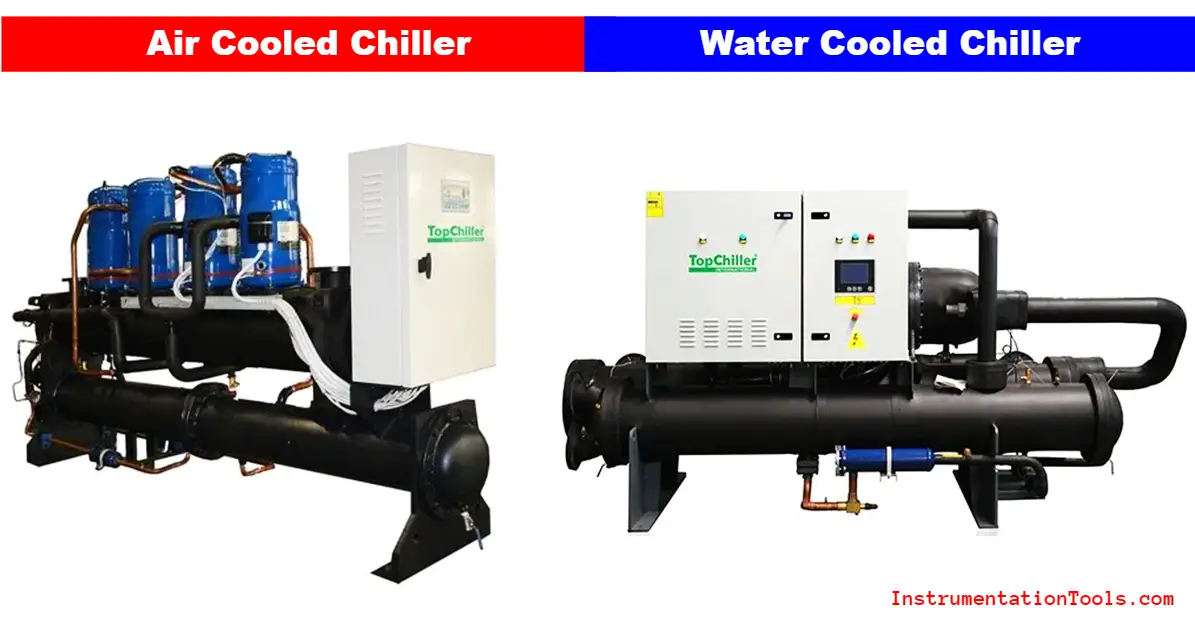
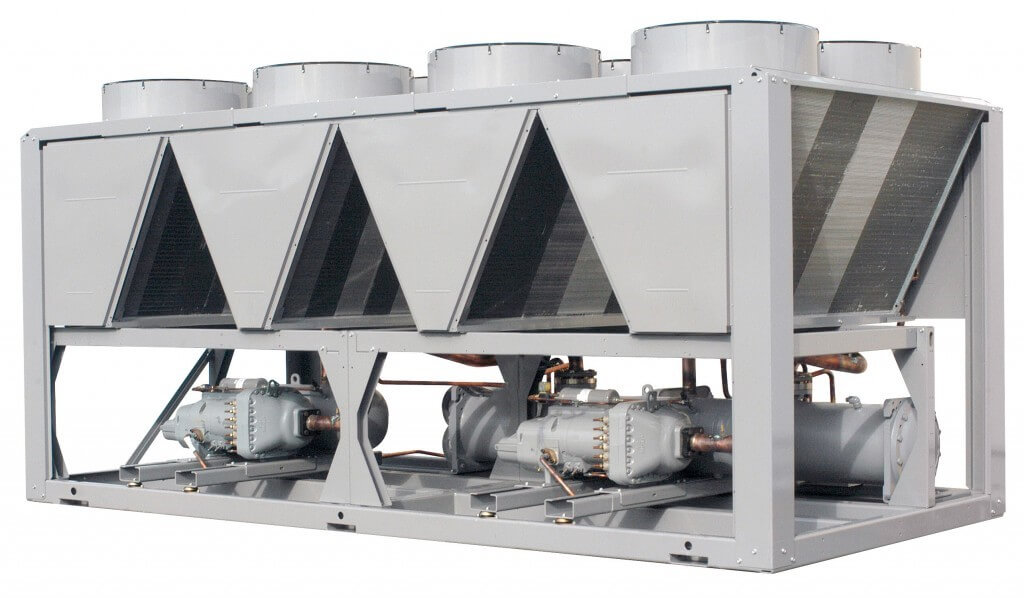
Air-cooled chillers, as the name suggests, reject heat directly into the surrounding air. They achieve this using a condenser coil and one or more fans. The refrigerant, after absorbing heat from the chilled water loop, enters the condenser as a hot, high-pressure gas. As air is forced across the condenser coil by the fans, the refrigerant cools and condenses back into a liquid, releasing heat into the atmosphere.
Advantages of Air-Cooled Chillers:
- Simpler Installation: Air-cooled chillers generally require less complex installation than their water-cooled counterparts. They don't need a cooling tower or extensive piping for water circulation. This simplicity translates to lower upfront costs and faster installation times.
- Lower Maintenance Costs: With fewer components and no cooling tower to maintain, air-cooled chillers typically have lower ongoing maintenance costs.
- Ideal for Smaller Buildings: Air-cooled chillers are well-suited for smaller commercial buildings, data centers, and even large residential applications where space constraints or water availability are concerns.
Disadvantages of Air-Cooled Chillers:
- Lower Efficiency: Air-cooled chillers are generally less energy-efficient than water-cooled chillers, especially during periods of high ambient temperatures. The warmer the air, the harder the chiller has to work to reject heat.
- Higher Noise Levels: The large fans required for heat rejection can generate significant noise, which may be a concern in noise-sensitive environments.
- Ambient Temperature Dependence: Their performance is directly affected by ambient air temperature. On hot days, their cooling capacity can be reduced.
- Larger Footprint: For the same cooling capacity, air-cooled chillers often require a larger physical footprint compared to water-cooled chillers.
Example: A small office building with limited space on the roof might opt for an air-cooled chiller due to its simpler installation and lower maintenance requirements. However, the building owner should be aware that the chiller's efficiency might decrease on extremely hot days.
Water-Cooled Chillers: Utilizing Water for Efficient Heat Rejection
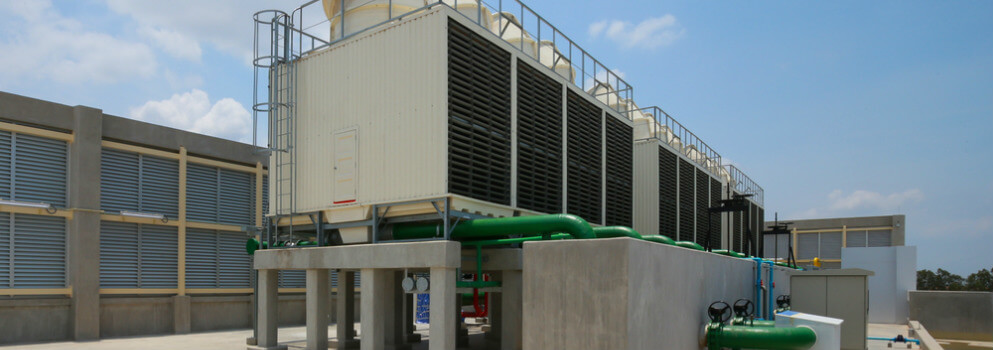
Water-cooled chillers, on the other hand, use water to absorb and reject heat. In this system, the refrigerant, after absorbing heat from the chilled water loop, transfers this heat to a condenser water loop. This condenser water is then circulated to a cooling tower, where it is cooled through evaporation before being returned to the chiller. The evaporation process releases the heat into the atmosphere.
Advantages of Water-Cooled Chillers:
- Higher Efficiency: Water-cooled chillers are generally more energy-efficient than air-cooled chillers, particularly in warmer climates. Water is a more effective medium for heat transfer than air.
- Consistent Performance: Their performance is less affected by ambient air temperature variations. The cooling tower provides a consistent source of cool water for heat rejection.
- Quieter Operation: The chiller itself is typically quieter than an air-cooled chiller, as the fans are located in the cooling tower, often away from occupied spaces.
- Smaller Footprint (Chiller Unit): The chiller unit itself can be smaller than an air-cooled unit with the same cooling capacity.
Disadvantages of Water-Cooled Chillers:
- More Complex Installation: Water-cooled chillers require a more complex installation, including a cooling tower, pumps, and extensive piping.
- Higher Installation Costs: The added complexity results in higher upfront installation costs.
- Higher Maintenance Costs: Cooling towers require regular maintenance to prevent scale buildup, algae growth, and other issues. Water treatment is also necessary.
- Water Consumption: Cooling towers consume significant amounts of water through evaporation, which can be a concern in water-scarce regions.
- Potential for Legionella Growth: Cooling towers can be a breeding ground for Legionella bacteria if not properly maintained.
Example: A large hospital complex would likely benefit from a water-cooled chiller due to its higher efficiency and consistent performance, especially given the hospital's critical need for reliable cooling year-round. However, the facility manager must prioritize proper cooling tower maintenance to prevent Legionella and minimize water consumption.
Comparing Costs: Initial Investment vs. Long-Term Savings
The initial cost of an air-cooled chiller is typically lower than that of a water-cooled chiller due to the simpler installation requirements. However, the long-term operating costs, primarily driven by energy consumption, can be significantly higher for air-cooled chillers, especially in hot climates. Water-cooled chillers, despite their higher upfront costs, often offer lower lifecycle costs due to their superior energy efficiency. A thorough lifecycle cost analysis, considering factors like energy rates, maintenance costs, and equipment lifespan, is essential for making an informed decision.
Beyond energy costs, consider water usage. In areas with high water rates or water restrictions, the operational costs of a water-cooled chiller can increase significantly. Air-cooled chillers eliminate water consumption, making them an attractive option in such situations, despite their lower efficiency.
Efficiency Ratings: EER, SEER, and IPLV
Understanding efficiency ratings is crucial for comparing the performance of different chillers. Common metrics include:
- EER (Energy Efficiency Ratio): This measures the cooling output in BTU per hour divided by the electrical input in watts at a specific operating point.
- SEER (Seasonal Energy Efficiency Ratio): Primarily used for residential air conditioners, SEER represents the total cooling output during a typical cooling season divided by the total electrical energy input during the same period. While less common for chillers, it provides a broader perspective on seasonal performance.
- IPLV (Integrated Part Load Value): This metric represents the energy efficiency of a chiller operating at various part-load conditions, which is more representative of real-world operating scenarios than a single-point EER rating. Look for IPLV values for a more accurate comparison of chiller efficiency.
When comparing chillers, pay close attention to the IPLV ratings. A higher IPLV indicates better energy efficiency at part-load conditions.
Lifespan and Maintenance: Ensuring Long-Term Reliability
Both air-cooled and water-cooled chillers, when properly maintained, can have a lifespan of 15-25 years or even longer. Regular maintenance is crucial for maximizing equipment lifespan and ensuring optimal performance. For air-cooled chillers, regular coil cleaning is essential to remove dirt and debris that can impede airflow and reduce efficiency. Water-cooled chillers require more comprehensive maintenance, including cooling tower cleaning, water treatment, and pump maintenance. A well-defined preventative maintenance program is key to long-term reliability for both types of chillers.
Making the Right Choice: A Decision-Making Framework
Choosing between an air-cooled and water-cooled chiller depends on a variety of factors, including:
- Building Size and Cooling Load: Larger buildings with high cooling loads often benefit from the higher efficiency of water-cooled chillers.
- Climate: In hot climates, water-cooled chillers generally offer better performance and energy savings.
- Space Availability: Air-cooled chillers require less space for installation, while water-cooled chillers need space for the cooling tower.
- Budget: Air-cooled chillers have lower upfront costs, but water-cooled chillers can offer lower lifecycle costs.
- Water Availability and Costs: Water-cooled chillers consume water, which can be a concern in water-scarce areas.
- Noise Sensitivity: Air-cooled chillers can be noisier than water-cooled chillers.
- Maintenance Capabilities: Water-cooled chillers require more complex maintenance.
Consulting with an experienced HVAC professional is highly recommended to assess your specific needs and determine the most suitable chiller for your application. A professional can conduct a thorough analysis of your building's cooling load, energy consumption, and other relevant factors to provide a well-informed recommendation.
Ultimately, the choice between an air-cooled chiller and a water-cooled chiller is a strategic decision that requires careful consideration of various factors. By understanding the advantages and disadvantages of each type, you can make an informed choice that optimizes energy efficiency, minimizes operating costs, and ensures reliable cooling for your building.