Alcohol Drunk Driving Character Letter For Dui
Let's talk about something a little different: crafting a compelling alcohol drunk driving character letter for DUI. While not a physical repair like fixing a broken appliance, this "repair" focuses on repairing perceptions and advocating for someone facing serious consequences. It's about providing context, demonstrating remorse, and highlighting positive character traits. This article will guide you through the process, focusing on the key elements that make such a letter effective, ethical, and impactful.
Understanding the Purpose of a Character Letter
A character letter in a DUI case isn't about excusing the offense. It's about providing a more complete picture of the individual beyond the single incident. The letter aims to:
- Offer context: Provide insights into the person's life, values, and contributions to the community.
- Demonstrate remorse: Reinforce the idea that the person understands the seriousness of their actions and feels genuine regret.
- Highlight positive attributes: Showcase their responsible behavior in other areas of their life, such as work, family, and volunteer activities.
- Support rehabilitation: Express belief in their ability to learn from their mistake and become a productive member of society again.
Key Elements of an Effective Character Letter
1. Introduction: Clearly State Your Relationship
Begin by clearly stating your relationship to the individual. Are you a family member, friend, colleague, or community leader? Be specific and honest. This establishes your credibility and provides context for your perspective.
Example: "My name is Sarah Miller, and I am writing this letter as a close friend and neighbor of John Smith for the past 10 years."
2. Acknowledge the Offense
Do not try to minimize or excuse the DUI. Acknowledge that it happened and that it was a serious mistake. This demonstrates that you understand the gravity of the situation and that the individual is taking responsibility for their actions.
Example: "I am aware that John Smith was arrested for driving under the influence, and I understand the seriousness of this offense."
3. Focus on Character, Not Excuses
This is the core of the letter. Provide specific examples of the individual's positive character traits. Avoid general statements like "He's a good person." Instead, illustrate their qualities with concrete anecdotes.
- Responsibility: Describe instances where they have demonstrated responsibility in other areas of their life. This could be at work, in their family, or in the community. Example: "John has always been a dedicated and responsible employee at ABC Company, where he has worked for the past 8 years. He consistently goes above and beyond to meet deadlines and support his colleagues."
- Integrity: Share examples of their honesty, trustworthiness, and ethical behavior. Example: "I have always known John to be a man of high integrity. He is always honest and fair in his dealings with others. I recall an instance where he found a lost wallet and immediately went to great lengths to return it to its owner."
- Compassion: Highlight their acts of kindness, empathy, and concern for others. Example: "John is a compassionate and caring individual who is always willing to help those in need. He volunteers regularly at the local soup kitchen and is always the first to offer assistance to anyone struggling."
- Commitment: Show their dedication to their family, friends, or community. Example: "John is a devoted father and husband. He is actively involved in his children's lives, coaching their sports teams and attending school events. He is also a dedicated member of our community, volunteering his time at the local community center."
Crucially, tailor your examples to the specific person. Generic descriptions will lack impact. Think deeply about their unique qualities and find compelling stories to illustrate them.
4. Address the Issue of Alcohol
If the individual has taken steps to address their relationship with alcohol, such as attending counseling or support groups, mention this in your letter. This demonstrates a commitment to rehabilitation and a desire to prevent future incidents.
Example: "I am aware that John has enrolled in a DUI education program and is attending regular AA meetings. He seems genuinely committed to addressing the underlying issues that may have contributed to this incident."
Do not suggest that the DUI was a one-time event or that the individual doesn't have a problem with alcohol if that is not the case. Honesty is crucial.
5. Express Your Belief in Their Rehabilitation
Conclude the letter by expressing your belief in the individual's ability to learn from their mistake and become a productive member of society again. This demonstrates your support and provides hope for the future.
Example: "I believe that John has learned a valuable lesson from this experience and is committed to making positive changes in his life. I am confident that he will continue to be a responsible and contributing member of our community."
6. Closing and Contact Information
End the letter with a polite closing, such as "Sincerely" or "Respectfully," and provide your full name, address, and phone number. This allows the court or relevant authorities to contact you if they have any questions.
Important Considerations
- Be Honest and Authentic: The most effective character letters are genuine and sincere. Write from the heart and avoid exaggerating or embellishing the truth.
- Be Specific: Avoid vague generalities and provide concrete examples to support your claims.
- Be Concise: Keep the letter focused and to the point. Avoid unnecessary details or tangents. Aim for a letter that is no more than one or two pages long.
- Proofread Carefully: Check the letter for any grammatical errors or typos. A well-written letter demonstrates professionalism and attention to detail.
- Consider the Audience: Think about who will be reading the letter and tailor your tone and language accordingly.
- Consult with an Attorney: It is always a good idea to consult with an attorney before writing a character letter, especially in a legal matter. They can provide guidance on the specific legal requirements and ensure that your letter is effective and appropriate.
- Don't Promise Things You Can't Guarantee: Avoid making promises about the individual's future behavior. Focus on their past actions and current efforts towards rehabilitation.
Ethical Considerations
It is crucial to remember that writing a character letter is a serious responsibility. You are vouching for someone's character, and your words can have a significant impact on their life. Therefore, it is essential to be honest and ethical in your writing.
- Do not lie or misrepresent the truth.
- Do not make promises that you cannot keep.
- Do not try to minimize the seriousness of the offense.
- Do not write a letter if you do not genuinely believe in the individual's character or their ability to rehabilitate.
When Not to Write a Letter
There are situations where writing a character letter may not be appropriate or helpful. These include:
- If you do not know the individual well enough to provide an honest and accurate assessment of their character.
- If you do not believe in the individual's ability to rehabilitate.
- If you are asked to lie or misrepresent the truth.
- If you feel uncomfortable or pressured to write the letter.
Sample Structure (Adapt to Your Specific Situation)
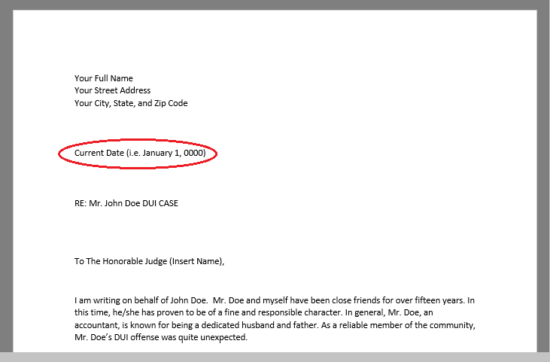
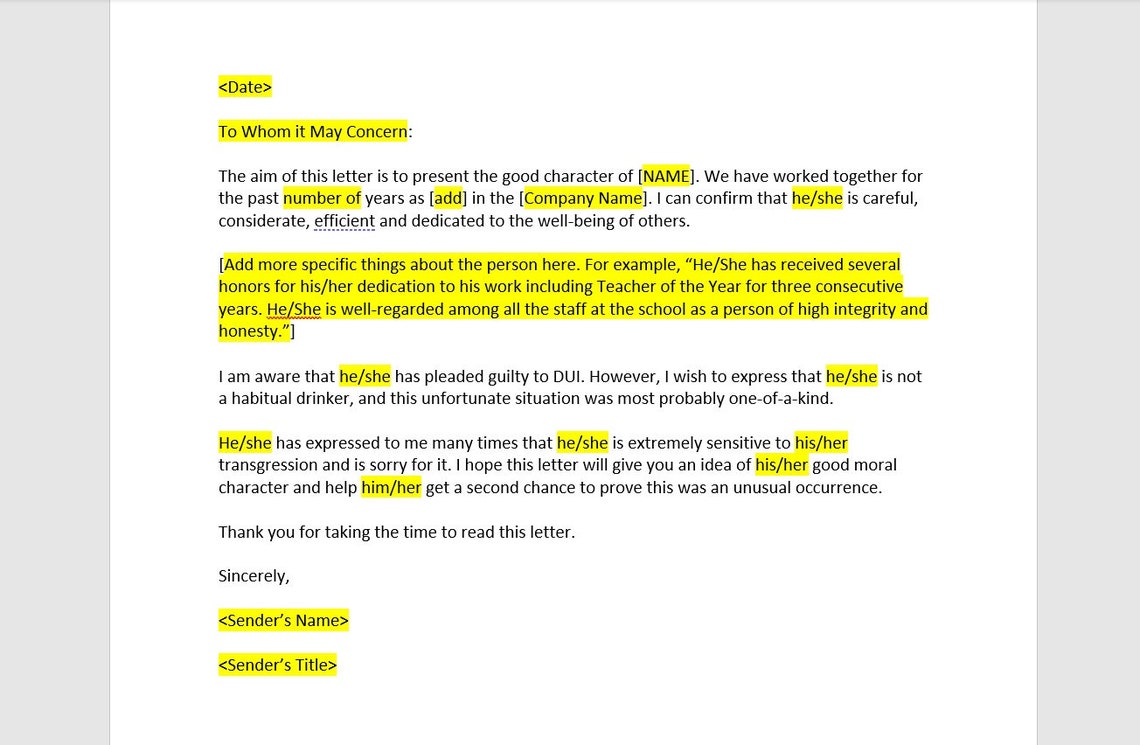
Here's a basic template you can adapt. Remember, personalize it with specific details.
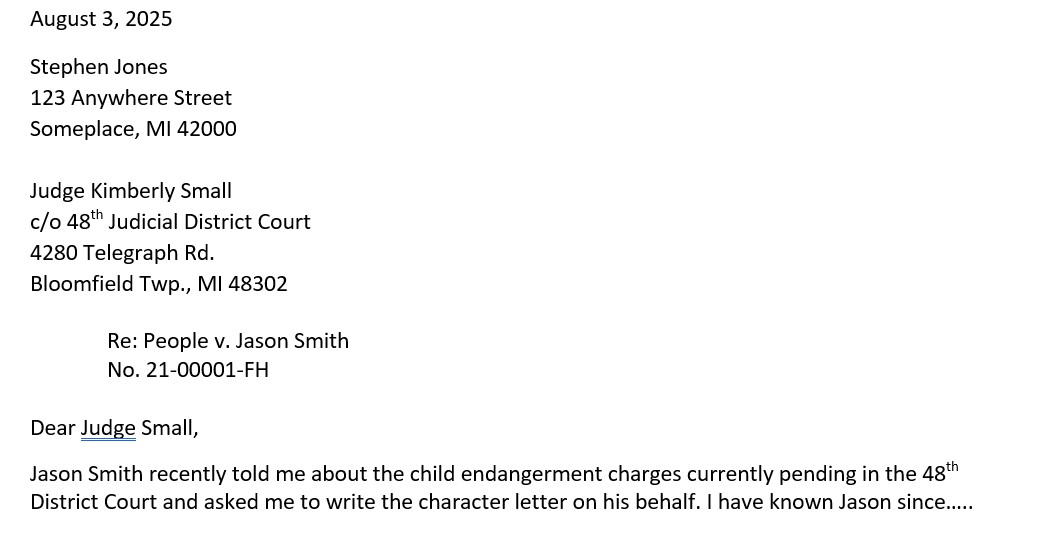
[Your Name] [Your Address] [Your Phone Number] [Your Email Address] [Date] [Judge's Name (if known), or "To the Honorable Judge"] [Court Name] [Court Address] Subject: Character Letter for John Smith (Case Number: [Case Number, if known])
Dear [Judge's Name or To the Honorable Judge],
My name is [Your Name], and I am writing this letter as a [Your Relationship - e.g., close friend, colleague, neighbor] of John Smith. I have known John for [Number] years.
I am aware that John was arrested for driving under the influence, and I understand the seriousness of this offense. I am not writing to excuse his behavior, but rather to provide some insight into his character and the person I know him to be.
[Paragraph 3: Describe specific instances where John has demonstrated responsibility. Be specific. Example: "For the past five years, John has volunteered every Saturday morning at the local animal shelter, caring for abandoned dogs and cats. He consistently shows up on time and goes above and beyond to ensure the animals are well cared for. This demonstrates his commitment and compassion."]
[Paragraph 4: Describe specific instances where John has demonstrated integrity. Be specific. Example: "Last year, John found a large sum of money in the street. Without hesitation, he reported it to the police and worked with them to locate the owner. This act of honesty speaks volumes about his character."]
[Paragraph 5: If applicable, mention John's efforts towards rehabilitation. Example: "Since the incident, John has taken full responsibility for his actions. He has enrolled in a DUI education program and is attending weekly support group meetings. He expresses genuine remorse and a strong desire to learn from this experience."]
I believe that John has learned a valuable lesson from this experience and is committed to making positive changes in his life. I am confident that he will continue to be a responsible and contributing member of our community.
Thank you for your time and consideration.
Sincerely,
[Your Signature]
[Your Typed Name]
Final Thoughts
Writing a character letter for someone facing a DUI is a significant undertaking. Approach it with seriousness, honesty, and a genuine desire to help. By focusing on their positive attributes and commitment to rehabilitation, you can provide valuable support during a difficult time. Remember to always consult with legal counsel for specific guidance relevant to the case.