Amps To Kw 3 Phase Formula

Understanding Amps, Kilowatts, and 3-Phase Power for HVAC Systems
When selecting a new HVAC system, whether it's a central air conditioner, heat pump, or furnace, understanding the electrical requirements is crucial. This article breaks down the relationship between amps, kilowatts (kW), and 3-phase power, and how these concepts apply to your home or business's heating and cooling needs.
Why is This Important for HVAC Selection?
HVAC systems are significant energy consumers. Knowing the amperage and kilowatt requirements helps you:
- Determine if your electrical panel can handle the new load.
- Estimate operating costs.
- Choose the right size system for your property.
- Avoid electrical overloads and potential hazards.
The Amps to kW 3-Phase Formula Explained
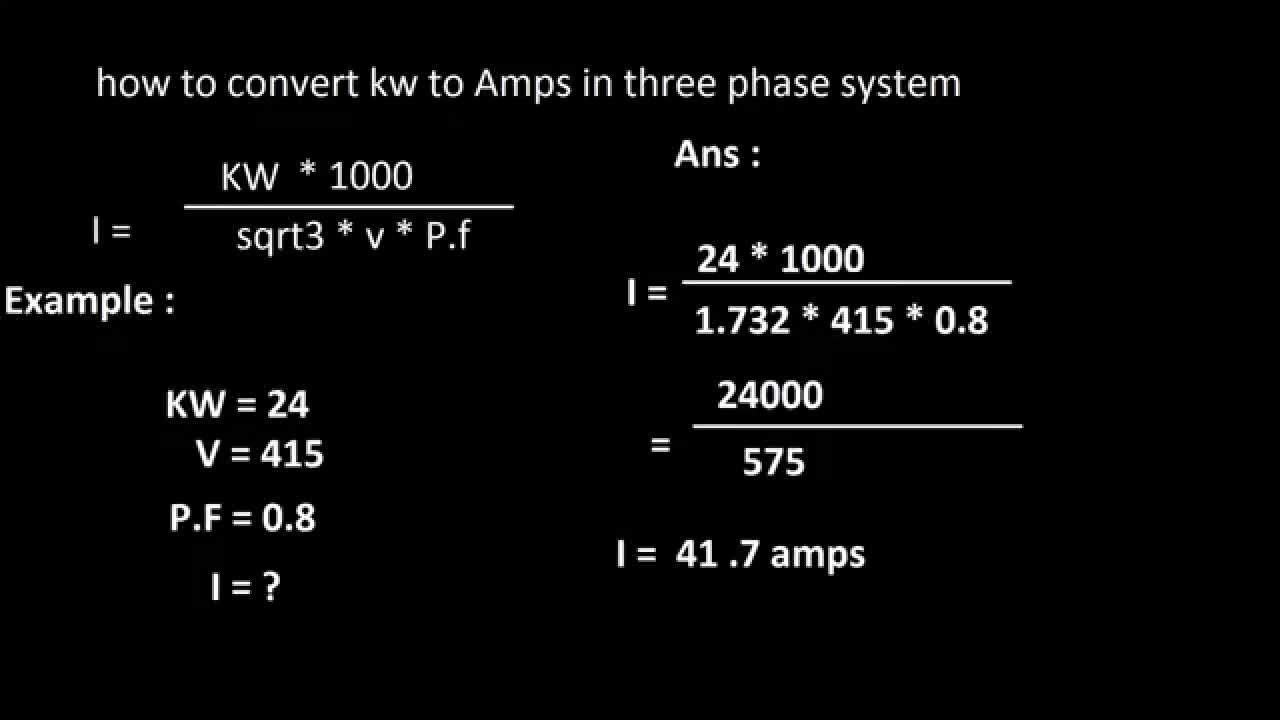
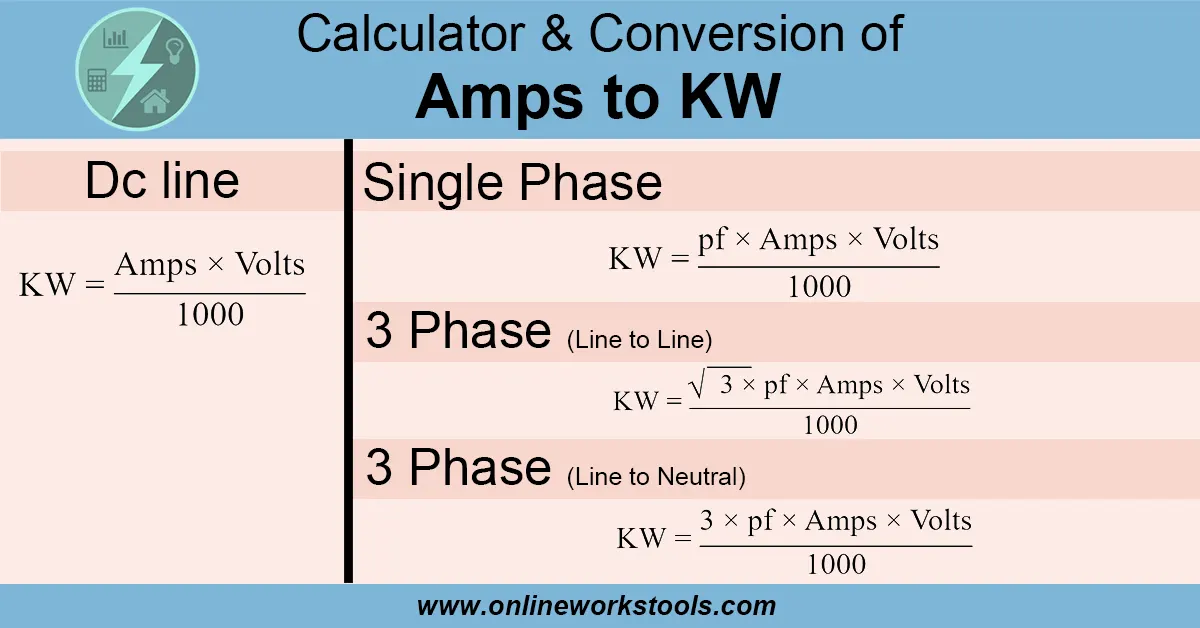
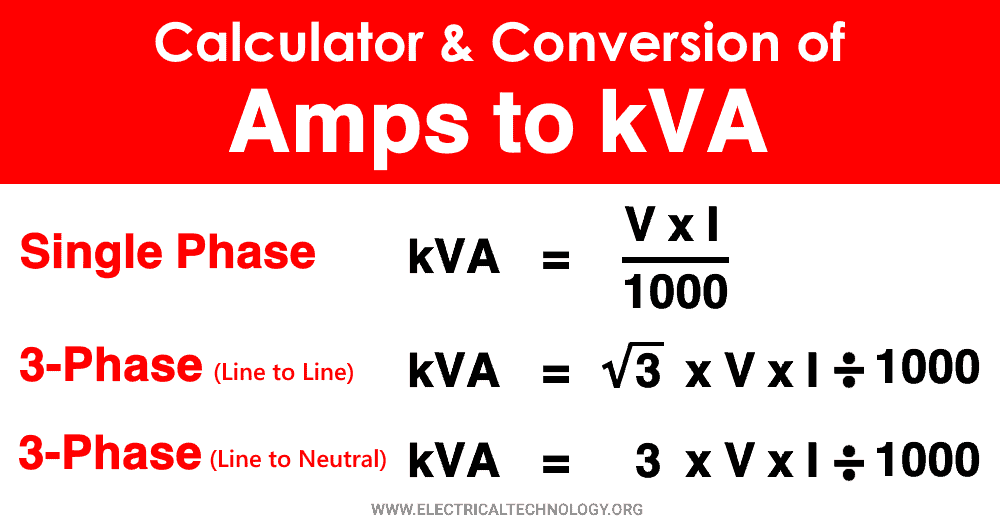
The formula to convert amps to kilowatts in a 3-phase system is:
kW = (√3 * Volts * Amps * Power Factor) / 1000
Let's break down each component:
- kW (Kilowatts): The unit of real power. This is the power your HVAC system actually uses to heat or cool.
- √3 (Square Root of 3): Approximately 1.732. This constant accounts for the phase difference in a 3-phase system.
- Volts (V): The voltage of your 3-phase electrical system. In North America, this is commonly 208V, 240V, or 480V for commercial buildings. Homeowners usually don't have 3-phase electricity.
- Amps (A): The current drawn by the HVAC system. This is usually listed on the unit's nameplate.
- Power Factor (PF): A dimensionless number between 0 and 1 that represents the efficiency of the electrical load. For HVAC systems, a typical power factor is around 0.8. This means that some of the power supplied to the system is used to create magnetic fields (reactive power) rather than doing actual work.
Example Calculation
Let's say you're considering a 3-phase air conditioner that draws 20 amps on a 208V system with a power factor of 0.8.
kW = (1.732 * 208 * 20 * 0.8) / 1000
kW = 5.77 kW
Therefore, this air conditioner consumes approximately 5.77 kilowatts of power when running at full load.
Understanding Single-Phase vs. 3-Phase Power
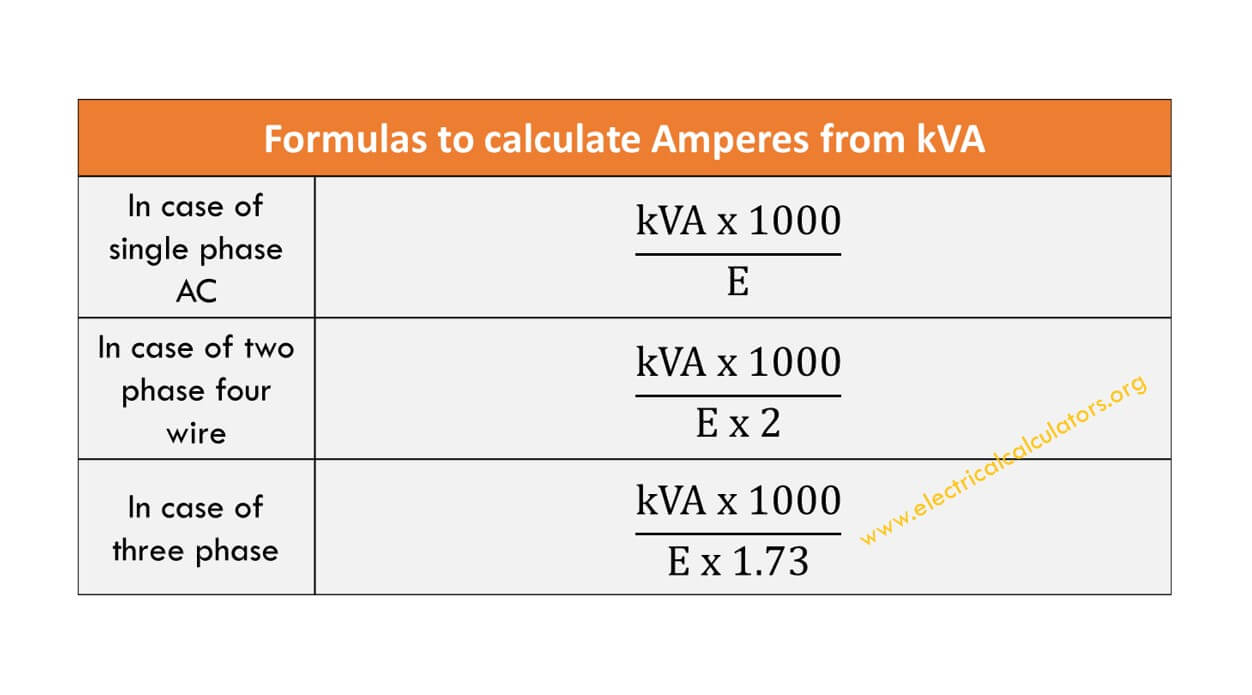
Most residential homes in North America use single-phase power (typically 120V or 240V). 3-phase power is more common in commercial and industrial settings because it can deliver more power more efficiently. Large HVAC systems in commercial buildings often require 3-phase power.
Important Note: If you have a residential property, you likely *do not* have a 3-phase electrical system. In this case, you would use a different formula to calculate the power requirements of your HVAC system.
Single-Phase Power Calculation
For single-phase power, the formula is simpler:
kW = (Volts * Amps * Power Factor) / 1000
For example, a single-phase heat pump running at 240V, drawing 15 amps with a power factor of 0.9 would be:
kW = (240 * 15 * 0.9) / 1000
kW = 3.24 kW
HVAC System Electrical Requirements: What to Look For
When evaluating different HVAC systems, pay attention to the following electrical specifications:
- Voltage: The voltage required by the unit. Ensure it matches your electrical system (208V, 240V, 480V for 3-phase; 120V or 240V for single-phase).
- Minimum Circuit Ampacity (MCA): The minimum ampacity (current-carrying capacity) of the circuit breaker required to power the unit. This is usually higher than the actual running amps to account for startup surges.
- Maximum Overcurrent Protection (MOCP): The maximum size of the circuit breaker or fuse that can be used to protect the unit.
- Running Amps: The actual current drawn by the unit during normal operation.
- Starting Amps: The current drawn during startup, which is significantly higher than the running amps.
Important: Always consult with a qualified electrician to ensure your electrical system can safely handle the load of your new HVAC system.
Popular HVAC Brands and Models: Electrical Considerations
Here's a brief look at some popular HVAC brands and models and how their electrical requirements factor into the selection process. (Note: Electrical specifications vary depending on the specific model and size.)
Carrier
Carrier offers a wide range of air conditioners, heat pumps, and furnaces. Their high-efficiency models, like the Carrier Infinity series, may have lower amperage draws compared to older or less efficient models. When choosing a Carrier system, pay close attention to the MCA and MOCP ratings to ensure proper electrical protection.
Trane
Trane is known for its durable and reliable HVAC systems. The Trane XV20i variable-speed air conditioner, for example, uses inverter technology to modulate its cooling output and reduce energy consumption. This often translates to lower running amps compared to single-speed models.
Lennox
Lennox offers a variety of HVAC systems, including energy-efficient models like the Lennox SL280V furnace. When selecting a Lennox system, consider the electrical requirements of both the indoor and outdoor units. Furnaces also have electrical components, such as the blower motor and ignition system.
Mitsubishi Electric
Mitsubishi Electric is a leader in ductless mini-split systems. These systems often have lower amperage draws compared to central air conditioners, making them a good option for homes with limited electrical capacity. However, it's still important to check the electrical specifications before installation.
Example Comparison (Hypothetical):
Consider these two hypothetical air conditioner models:
- Model A: SEER 16, 240V, MCA 25A, Running Amps 18A
- Model B: SEER 20, 240V, MCA 20A, Running Amps 15A
While Model B has a higher SEER rating (better energy efficiency), it's crucial to verify that your electrical panel has a 25-amp circuit breaker available for Model A or a 20-amp circuit breaker for Model B.
HVAC Efficiency Ratings and Electrical Consumption
The efficiency ratings of HVAC systems, such as SEER (Seasonal Energy Efficiency Ratio) for air conditioners, HSPF (Heating Seasonal Performance Factor) for heat pumps, and AFUE (Annual Fuel Utilization Efficiency) for furnaces, are directly related to their electrical consumption.
- Higher SEER: Indicates a more efficient air conditioner, meaning it will provide more cooling for the same amount of electricity (lower amps).
- Higher HSPF: Indicates a more efficient heat pump, meaning it will provide more heating for the same amount of electricity (lower amps).
- Higher AFUE: Indicates a more efficient furnace, meaning it will convert more fuel (gas or oil) into heat, reducing the amount of electricity required to run the blower motor.
Investing in a high-efficiency HVAC system can not only lower your energy bills but also reduce the strain on your electrical system.
Warranties and Maintenance Needs
HVAC warranties typically cover defects in materials and workmanship. However, they usually don't cover damage caused by improper electrical wiring or installation. It's crucial to have your HVAC system installed by a licensed and qualified technician to ensure compliance with electrical codes and protect your warranty.
Regular maintenance, such as cleaning or replacing air filters, can also help to ensure that your HVAC system operates efficiently and doesn't draw excessive amounts of electricity. A dirty air filter can restrict airflow, forcing the blower motor to work harder and draw more amps.
Conclusion
Understanding the amps to kW 3-phase formula and the electrical requirements of your HVAC system is essential for making informed decisions. By considering the voltage, amperage, and power factor of different models, you can choose a system that meets your heating and cooling needs while staying within the limits of your electrical capacity. Always consult with a qualified electrician and HVAC technician to ensure safe and efficient installation.