Btu Tonnage Calculator

Understanding the cooling capacity of an air conditioner is crucial for ensuring your comfort and energy efficiency. This guide will explain the concepts of BTU (British Thermal Unit) and tonnage, how they relate to air conditioner sizing, and how to estimate the right size AC unit for your space.
What are BTU and Tonnage?
Let's break down these terms into simple, understandable language.
British Thermal Unit (BTU)
A BTU is a unit of measurement that describes the amount of energy required to raise the temperature of one pound of water by one degree Fahrenheit. In the context of air conditioning, BTU represents the amount of heat an AC unit can remove from a room in one hour. The higher the BTU rating, the more cooling power the air conditioner has.
Think of it this way: imagine you have a bucket of ice. The number of BTUs needed to melt all that ice is a measure of its 'cooling capacity'. An air conditioner is like a heat-removing machine, and its BTU rating tells you how much 'ice' (heat) it can melt (remove) per hour.
Tonnage
Tonnage is another way to express the cooling capacity of an air conditioner, often used for larger systems. One ton of air conditioning is defined as the amount of heat required to melt one ton (2000 pounds) of ice in 24 hours.
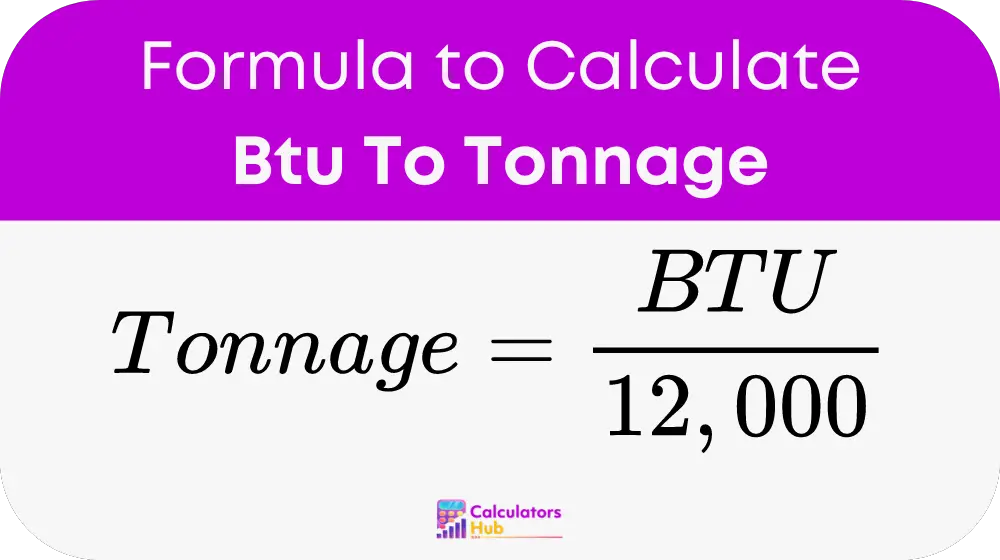
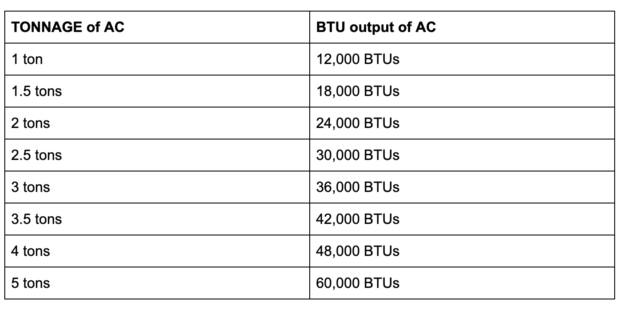
The relationship between BTU and tonnage is: 1 ton = 12,000 BTU/hour. So, a 2-ton AC unit has a cooling capacity of 24,000 BTU/hour.
Imagine you're moving ice sculptures. One ton of air conditioning is like having a machine that can handle one *literal* ton of ice melting over the course of a day. It's just a different way of stating the cooling power, often used for larger, whole-house systems.
Why is Correct AC Sizing Important?
Choosing the right size air conditioner is critical for several reasons:
- Comfort: An improperly sized AC unit won't effectively cool your space. An undersized unit will struggle to keep up with the heat load, leaving you feeling uncomfortable, especially during peak hours. An oversized unit will cool the space too quickly, leading to short cycling.
- Energy Efficiency: An undersized unit will run constantly, consuming excessive energy and increasing your electricity bills. An oversized unit will cycle on and off frequently, which is also inefficient. Short cycling wastes energy because the unit doesn't run long enough to dehumidify the air properly.
- Dehumidification: Air conditioners remove humidity as they cool. If an AC unit is too large, it will cool the air quickly but won't run long enough to effectively dehumidify it. This can lead to a damp, clammy feeling, even when the temperature is comfortable.
- Equipment Lifespan: Short cycling caused by an oversized unit puts extra stress on the compressor and other components, potentially shortening the lifespan of your air conditioner and leading to costly repairs.
In short, properly sized AC units provide optimal comfort, lower energy bills, better dehumidification, and a longer lifespan for your equipment.
Factors Affecting AC Size
Several factors influence the amount of cooling your space requires. Consider these when estimating the appropriate BTU or tonnage:
- Square Footage: This is the most basic factor. Larger spaces generally require larger AC units.
- Climate: Areas with hot and humid summers need more cooling capacity than areas with milder climates.
- Insulation: Good insulation helps keep heat out in the summer and in during the winter. Poorly insulated spaces require more cooling.
- Windows: Windows allow sunlight and heat to enter a room. The number, size, and type of windows (e.g., single-pane, double-pane, low-E) significantly impact cooling needs. West-facing windows receive the most intense afternoon sun.
- Ceiling Height: Higher ceilings mean a larger volume of air to cool, increasing the required BTU/tonnage.
- Occupancy: The number of people regularly occupying the space affects the heat load. Each person generates body heat that the AC unit must remove.
- Heat-Generating Appliances: Appliances like computers, ovens, and dryers generate heat. Consider these appliances when calculating the cooling load, especially in rooms where they are frequently used.
- Sun Exposure: Rooms with a lot of direct sunlight will require more cooling power than those in the shade.
Estimating AC Size: A Step-by-Step Guide
Here's a general method for estimating the appropriate AC size. Remember: This is an estimation. Consulting with a qualified HVAC professional is always recommended for accurate sizing.
- Measure the Area: Calculate the square footage of the space you want to cool. Multiply the length by the width of the room or area.
- Base BTU Calculation: A common rule of thumb is to use 20 BTU per square foot. Multiply the square footage by 20 to get a baseline BTU requirement.
Example: A room that is 20 feet long and 15 feet wide has a square footage of 300 square feet (20 x 15 = 300). The baseline BTU requirement would be 6,000 BTU (300 x 20 = 6,000). - Adjust for Climate:
- Hot Climates (e.g., Arizona, Florida): Increase the BTU by 10-20%
- Mild Climates (e.g., California coast): Reduce the BTU by 10-20%
- Adjust for Insulation:
- Poor Insulation: Increase the BTU by 10-20%
- Good Insulation: Decrease the BTU by 10-20%
- Adjust for Windows:
- Many Windows (especially west-facing): Increase the BTU by 10-20%
- Few Windows: Decrease the BTU by 10-20%
- Adjust for Occupancy: Add 400 BTU for each additional person who regularly occupies the space.
- Adjust for Heat-Generating Appliances: Add BTU based on the appliance type and frequency of use. This is highly variable, so research specific appliance heat output or consult an HVAC professional. For a regularly used computer, you might add 300-500 BTU.
- Calculate Total BTU: Add or subtract the adjustments from the baseline BTU calculation to arrive at the total estimated BTU requirement.
- Convert to Tonnage (Optional): Divide the total BTU by 12,000 to get the tonnage.
Important Considerations:
- Round Up: It's generally better to slightly overestimate than underestimate. If your calculation falls between sizes, round up to the next larger size. However, avoid oversizing significantly.
- Whole-House Systems: For whole-house systems, it's crucial to consider the entire square footage, climate, insulation, and other factors. A load calculation should be performed by a qualified HVAC technician.
- Multiple Zones: If you have multiple zones or rooms, consider using a multi-zone system or individual AC units for each zone. This allows for more precise temperature control and energy savings.
Example Calculation
Let's say you have a room that is 15 feet long and 12 feet wide. The room is located in a moderately hot climate, has average insulation, a couple of windows, and is typically occupied by two people. You also have a computer that is used regularly.
- Square Footage: 15 ft x 12 ft = 180 sq ft
- Baseline BTU: 180 sq ft x 20 BTU/sq ft = 3,600 BTU
- Climate Adjustment (Moderately Hot): Increase by 10%: 3,600 BTU x 0.10 = 360 BTU. New BTU = 3,600 + 360 = 3,960 BTU
- Insulation Adjustment (Average): No adjustment needed.
- Window Adjustment (Couple of Windows): Increase by 5%: 3,960 BTU x 0.05 = 198 BTU. New BTU = 3,960 + 198 = 4,158 BTU
- Occupancy Adjustment (Two People): Add 400 BTU per person: 400 BTU x 2 = 800 BTU. New BTU = 4,158 + 800 = 4,958 BTU
- Appliance Adjustment (Computer): Add 400 BTU. New BTU = 4,958 + 400 = 5,358 BTU
- Total Estimated BTU: 5,358 BTU
- Tonnage (Optional): 5,358 BTU / 12,000 BTU/ton = 0.45 tons. A 5,000 or 6,000 BTU AC unit (or a slightly larger portable unit) would likely be appropriate.
The Importance of Professional Consultation
While this guide provides a framework for estimating AC size, it's essential to understand that it's just an approximation. A qualified HVAC professional can perform a detailed load calculation that takes into account all the specific factors of your home or building. This includes conducting a thorough inspection of your insulation, windows, ductwork, and other relevant elements.
They can also advise you on the best type of AC system for your needs and budget, considering factors like energy efficiency, noise levels, and air quality. Furthermore, proper installation is crucial for ensuring the optimal performance and lifespan of your AC unit. An experienced technician will ensure that the unit is installed correctly and that the refrigerant levels are properly charged.
Think of it this way: estimating AC size yourself is like trying to diagnose a medical condition based on online information. While you can gain some understanding, a professional doctor (HVAC technician) has the expertise and tools to provide an accurate diagnosis and recommend the best course of treatment.
Conclusion
Understanding BTU, tonnage, and the factors influencing AC size is essential for making informed decisions about your cooling needs. While you can use the methods described in this guide to estimate the appropriate size, always consult with a qualified HVAC professional for accurate sizing and installation. This will ensure your comfort, energy efficiency, and the longevity of your air conditioning system. Investing in the right size AC unit is an investment in your long-term comfort and well-being.