Can't Find Furnace Control Board

Imagine this: it's a frigid winter night, and your furnace suddenly stops blowing warm air. You check the thermostat, and it seems fine. Panic starts to set in as you envision a hefty repair bill. Before you call a professional, there's a simple troubleshooting step you can take that might just save you time and money: locating and checking your furnace's control board.
The control board is essentially the brain of your furnace, managing various functions like igniting the burner, controlling the blower fan, and monitoring safety sensors. If the control board malfunctions, your furnace won't work. But where is it, and what can you do if you can't find it?
Understanding Your Furnace and Safety First
Before we dive into the search, let's establish some ground rules and safety precautions:
- Turn off the power: Locate the circuit breaker that controls your furnace and switch it to the OFF position. This is non-negotiable. Working with electricity can be dangerous, and this is the most critical safety step.
- Gas shut-off (optional, but recommended): If you're comfortable and know how, you can also shut off the gas supply to the furnace. There's usually a valve on the gas line leading to the furnace. Turn it 90 degrees to shut off the gas flow. This adds an extra layer of safety, especially if you suspect a gas leak.
- No jewelry or loose clothing: Remove any jewelry and ensure loose clothing is tucked in to prevent accidental contact with electrical components.
- Work in a well-lit area: Good visibility is crucial for safety and accuracy.
- If in doubt, call a pro: If at any point you feel uncomfortable or unsure about what you're doing, stop and call a qualified HVAC technician. It's better to be safe than sorry, especially when dealing with gas and electricity.
Where to Look: The Furnace Control Board Scavenger Hunt
The control board's location varies depending on the type and model of your furnace. Here's a systematic approach to finding it:
1. The Main Furnace Cabinet
This is the most likely spot. The control board is typically housed inside the main cabinet of your furnace. You'll need to remove an access panel to get to it.
- Locate the access panel(s): Most furnaces have one or two access panels. These are usually held in place by screws or latches. They may be on the front, side, or top of the unit.
- Remove the panel(s): Use a screwdriver (usually a flathead or Phillips head) to remove any screws. Be careful not to strip the screws. For latches, gently release them.
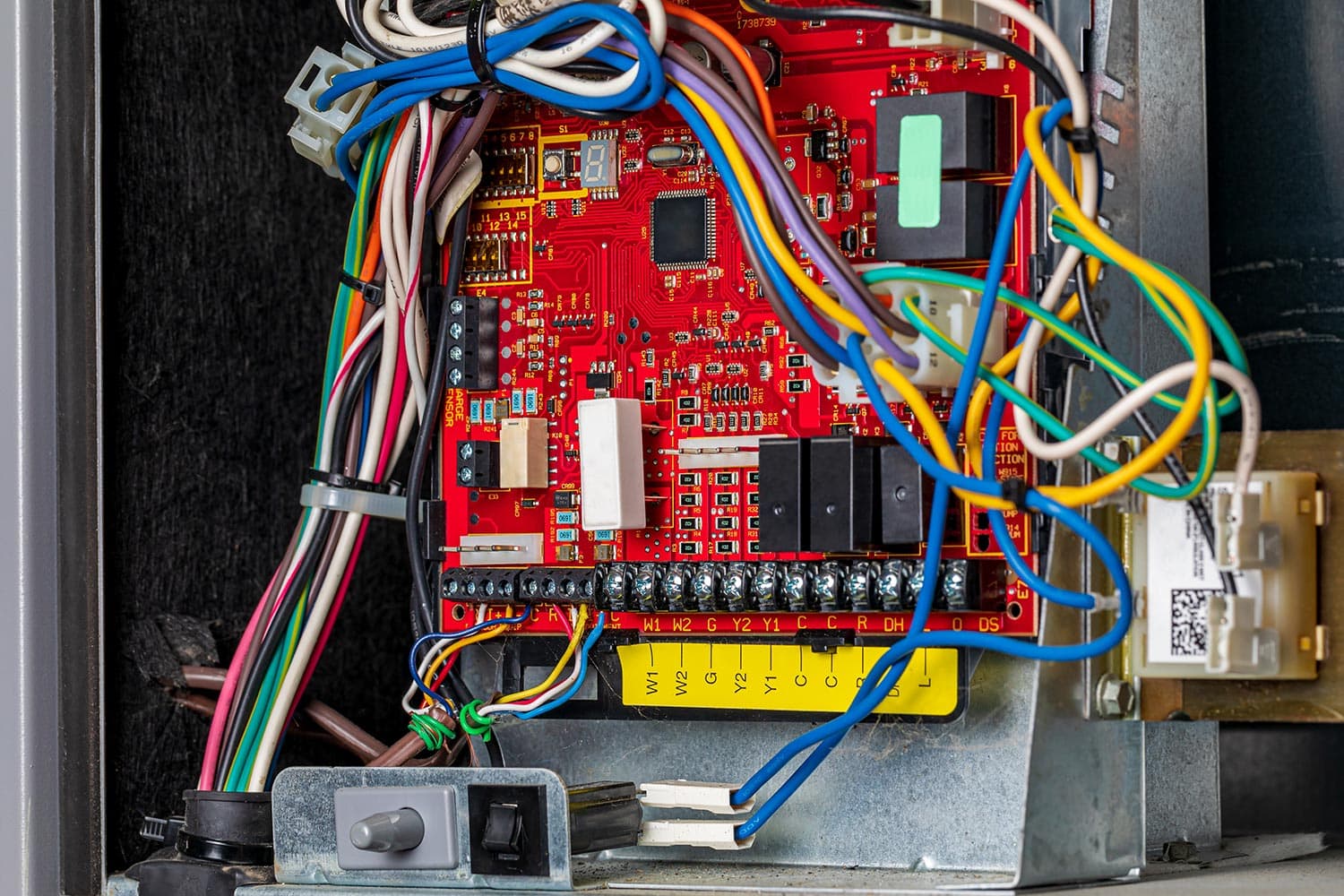
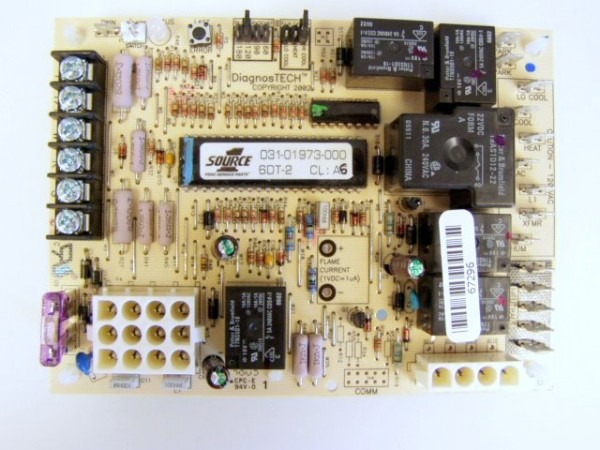
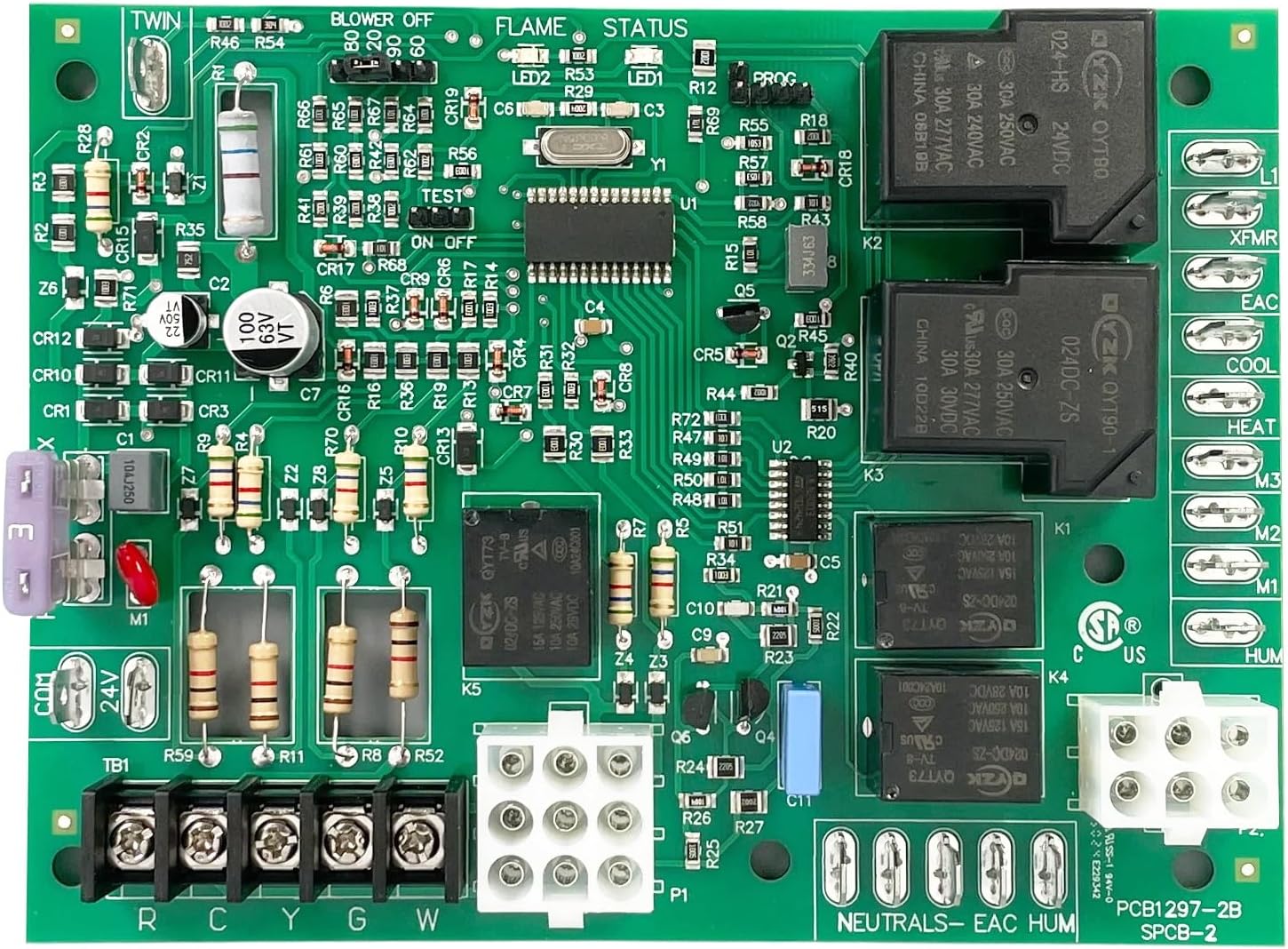
- Look inside: Once the panel is off, shine a flashlight inside the furnace. You're looking for a green (most common), blue, or sometimes brown circuit board. It will be populated with various electronic components like capacitors, resistors, and relays. It will have wires connected to it.
Important: Some access panels have safety interlock switches. These switches automatically shut off the furnace when the panel is removed. If your furnace doesn't start after you replace the panel, check if the interlock switch is properly engaged.
2. The Blower Compartment
If you can't find the control board in the main cabinet, it might be located in the blower compartment. The blower compartment houses the fan that circulates air through your house.
- Identify the blower compartment: The blower compartment is usually located at the bottom of the furnace. It's a separate section with its own access panel.
- Remove the blower compartment panel: Similar to the main cabinet panel, remove the screws or release the latches holding the blower compartment panel in place.
- Search for the board: Look inside the blower compartment. The control board might be mounted on the blower housing or on a nearby wall.
3. Integrated Furnace Control (IFC) Location
Some newer furnaces use an Integrated Furnace Control (IFC) board. This board combines several functions into a single unit.
- Close to gas valve: The IFC is often near the gas valve or burner assembly.
- Check wiring: Look for a concentration of wires leading to a specific area. The IFC is likely nearby.
4. Following the Wires
If you're still struggling to find the control board, try following the wires.
- Trace the thermostat wires: The wires from your thermostat connect to the control board. Trace these wires back from the thermostat connection point on the furnace to the control board.
- Follow the power wires: The main power wires (usually black and white) also connect to the control board. Trace these wires back to the control board.
- Look for wire bundles: Control boards usually have multiple wires connected to them in bundles. Identify any areas where a significant number of wires converge.
5. Consulting the Furnace Manual
If all else fails, your furnace manual is your best friend.
- Locate the manual: Many homeowners discard their appliance manuals, but they can be invaluable for troubleshooting. If you don't have the physical manual, try searching online for your furnace's model number.
- Check the diagrams: The manual should contain diagrams showing the location of the control board and other components.
Basic Checks You Can Perform (After Finding the Control Board)
Once you've located the control board, there are a few simple checks you can perform. Remember, these checks should only be performed after you've turned off the power to the furnace.
1. Visual Inspection
Carefully inspect the control board for any obvious signs of damage.
- Burn marks: Look for any areas that appear burned or scorched. This could indicate a short circuit or component failure.
- Blown fuses: Check for any blown fuses on the control board. Fuses are small, cylindrical or rectangular components with a thin wire inside. If the wire is broken, the fuse is blown.
- Swollen capacitors: Capacitors are cylindrical components that store electrical energy. If a capacitor is swollen or bulging, it needs to be replaced.
- Loose connections: Check for any loose wires or connectors on the control board. Gently wiggle each wire to ensure it's securely connected.
2. Replacing a Fuse
If you find a blown fuse, replacing it is a simple fix you can try. However, it's crucial to use the correct type and amperage of fuse. The amperage rating is usually printed on the fuse itself. Using the wrong fuse can damage the control board or create a fire hazard.
- Identify the blown fuse: Locate the fuse that's blown.
- Purchase a replacement: Buy a new fuse with the exact same amperage and type as the old one. You can find fuses at most hardware stores or electronic supply stores.
- Replace the fuse: Carefully remove the old fuse and insert the new one.
- Test the furnace: Turn the power back on to the furnace and see if it starts. If the fuse blows again immediately, there's likely a more serious problem that requires professional attention.
3. Checking the Transformer
The transformer steps down the voltage from your home's electrical system to a lower voltage that the control board can use. If the transformer is faulty, the control board won't receive the power it needs.
- Locate the transformer: The transformer is usually a small, box-shaped component located near the control board.
- Voltage test (advanced, requires a multimeter): This step should only be performed by someone comfortable using a multimeter. Set the multimeter to measure AC voltage. With the power on (use extreme caution!), carefully measure the voltage on both sides of the transformer. You should find a higher voltage on the input side (e.g., 120V) and a lower voltage on the output side (e.g., 24V). If the output voltage is significantly lower than expected or zero, the transformer may be faulty.
When to Call a Professional
While some basic checks and simple replacements can be done DIY, certain repairs are best left to the professionals. Here's when you should call a qualified HVAC technician:
- You're uncomfortable working with electricity or gas: If you're not confident in your ability to safely work with electricity or gas, don't risk it.
- You suspect a gas leak: If you smell gas, evacuate your home immediately and call your gas company or the fire department.
- You see significant damage to the control board: If the control board has burn marks, extensive corrosion, or other signs of major damage, it's likely beyond repair and needs to be replaced by a professional.
- The furnace continues to malfunction after simple repairs: If you've replaced a fuse or checked the connections and the furnace still isn't working, there's likely a more complex problem that requires specialized knowledge and equipment.
- You're not sure what's wrong: If you've exhausted your troubleshooting efforts and you're still not sure what's causing the problem, it's time to call a pro.
Empowering You to Troubleshoot (Safely!)
Finding and checking your furnace control board can seem daunting, but by following these steps, you can empower yourself to troubleshoot minor issues and potentially save money on repair costs. Remember, safety is paramount. Always turn off the power before working on your furnace and never hesitate to call a professional when needed. By being proactive and informed, you can keep your furnace running smoothly and your home warm all winter long.
Disclaimer: This article provides general guidance only. Furnace models vary, and specific instructions may differ. Always consult your furnace manual and follow all safety precautions. The author and publisher are not responsible for any damages or injuries resulting from the use of this information.