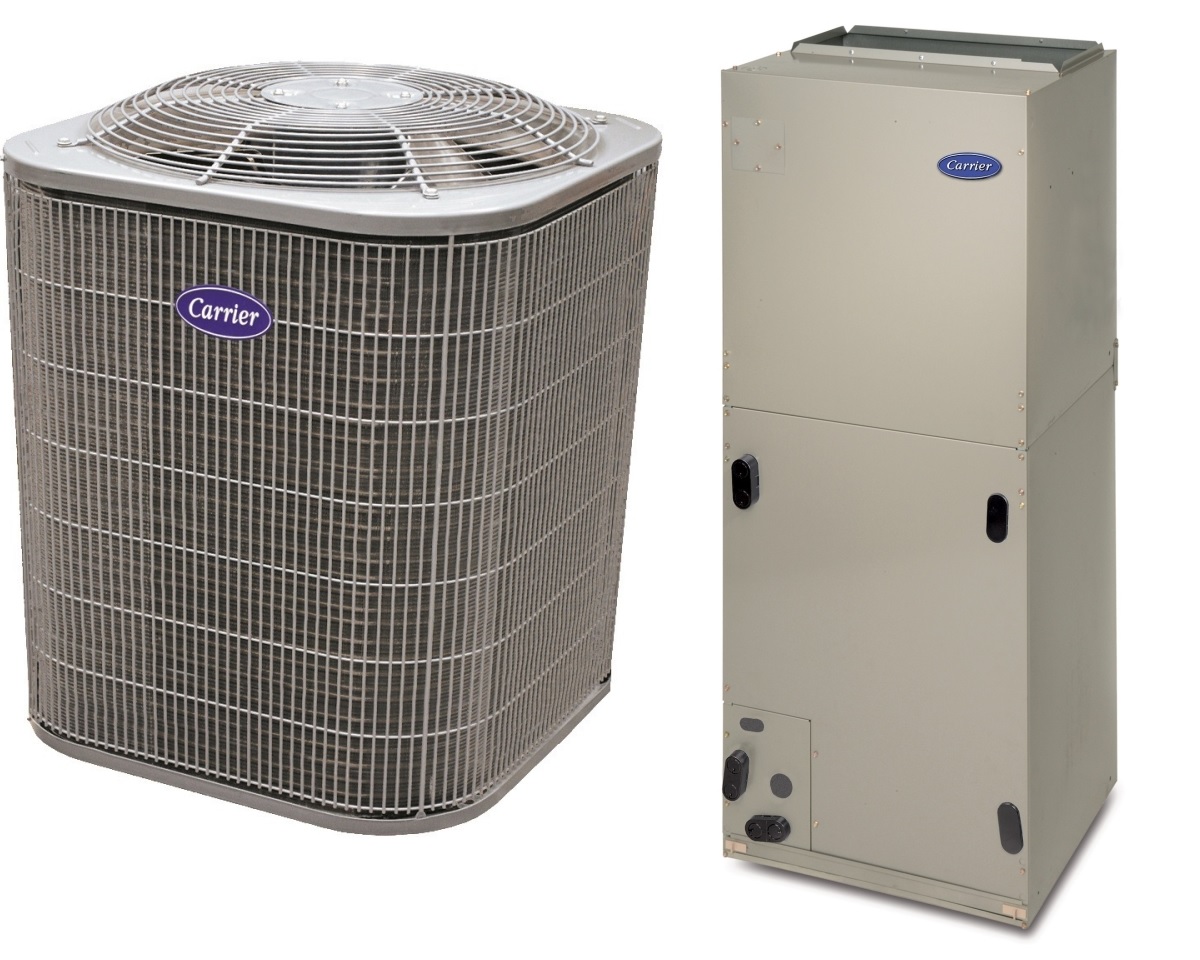
Carrier 5 Ton Split System

The Carrier 5 Ton Split System is a popular choice for both residential and commercial applications requiring substantial heating and cooling capacity. This article provides a comprehensive overview of this system, targeting homeowners, HVAC professionals, and facility managers. We'll delve into its components, performance characteristics, installation considerations, maintenance requirements, and cost factors to help you make informed decisions.
Understanding Split Systems
Before diving into the specifics of a 5-ton Carrier unit, let's clarify what a "split system" entails. In essence, a split system HVAC (Heating, Ventilation, and Air Conditioning) system divides its core components into two separate units: an outdoor unit (condenser) and an indoor unit (air handler). The outdoor unit contains the compressor, condenser coil, and fan. The indoor unit houses the evaporator coil, blower fan, and often the heating element (for heat pump models or furnaces integrated into the system).
The two units are connected by refrigerant lines, which circulate refrigerant between them. This refrigerant is the working fluid that absorbs and releases heat, enabling the cooling and heating process. Split systems offer flexibility in installation and can be a more efficient alternative to window units or less powerful central air systems, especially for larger spaces.
Key Components of a Carrier 5 Ton Split System
A typical Carrier 5 Ton Split System comprises the following essential components:
- Outdoor Condensing Unit: This unit is responsible for rejecting heat from the refrigerant during the cooling cycle and absorbing heat from the outside air during the heating cycle (for heat pumps). It includes the compressor, a vital component that circulates refrigerant; the condenser coil, which dissipates heat; and a fan to facilitate airflow.
- Indoor Air Handler: Located inside the building, the air handler circulates air across the evaporator coil, which absorbs heat from the air during cooling. It contains the blower fan to distribute the cooled or heated air through the ductwork. The air handler also houses the air filter, which removes dust and other particulates from the air.
- Refrigerant Lines: These copper lines connect the outdoor and indoor units, carrying the refrigerant. Proper sizing and insulation of these lines are crucial for optimal system performance.
- Thermostat: The thermostat controls the system's operation, allowing users to set the desired temperature and schedule. Modern thermostats often include features like programmable schedules, remote access via smartphone apps, and energy-saving modes.
- Ductwork: The ductwork distributes the conditioned air throughout the building. Properly designed and sealed ductwork is essential for maximizing efficiency and ensuring even temperature distribution.
Performance and Efficiency Ratings
Understanding the performance metrics of an HVAC system is crucial for evaluating its efficiency and cost-effectiveness. Key ratings for a Carrier 5 Ton Split System include:
- SEER (Seasonal Energy Efficiency Ratio): SEER measures the cooling efficiency of the system. A higher SEER rating indicates greater energy efficiency. Modern Carrier 5-ton units typically have SEER ratings ranging from 13 to 20 or higher. For example, a unit with a SEER of 16 will use significantly less energy to cool your home compared to a unit with a SEER of 13.
- EER (Energy Efficiency Ratio): EER measures the cooling efficiency at a specific operating point (e.g., 95°F outdoor temperature). While SEER provides a seasonal average, EER offers a snapshot of performance under specific conditions.
- HSPF (Heating Seasonal Performance Factor): This rating applies only to heat pump models and measures the heating efficiency. A higher HSPF rating indicates better heating performance.
- BTU (British Thermal Units): BTU measures the heating or cooling capacity of the system. A 5-ton system is rated for 60,000 BTUs (5 tons x 12,000 BTU/ton). This indicates the amount of heat the system can remove (cooling) or add (heating) per hour.
Choosing a unit with the right SEER and HSPF ratings for your climate and energy consumption habits can significantly impact your energy bills. Consult with an HVAC professional to determine the optimal ratings for your specific needs.
Sizing Considerations
A 5-ton unit is designed to cool or heat approximately 2,000 to 2,500 square feet, but the actual square footage depends on various factors, including insulation levels, window size and orientation, climate, and building construction. Oversizing or undersizing the unit can lead to inefficiencies and comfort problems. An oversized unit will cycle on and off frequently, leading to poor dehumidification and uneven temperatures. An undersized unit will struggle to maintain the desired temperature, especially during peak heating or cooling periods.
A professional HVAC technician will perform a load calculation to determine the appropriate size for your specific needs. This calculation takes into account factors such as:
- Square footage of the building
- Insulation levels
- Window size and orientation
- Climate
- Number of occupants
- Heat-generating appliances
Installation Considerations
Proper installation is critical for ensuring the optimal performance and lifespan of a Carrier 5 Ton Split System. Installation should always be performed by a qualified HVAC technician. Key installation considerations include:
- Proper Placement: The outdoor unit should be placed in a location with adequate clearance for airflow and access for maintenance. The indoor unit should be installed in a central location to ensure even air distribution.
- Refrigerant Line Sizing and Insulation: The refrigerant lines must be properly sized and insulated to prevent heat loss or gain.
- Ductwork Inspection and Sealing: The ductwork should be inspected for leaks and sealed to prevent air loss. In many older homes, leaky ductwork can waste a significant portion of the heated or cooled air.
- Electrical Connections: All electrical connections must be made safely and correctly, adhering to local codes and regulations.
- System Startup and Testing: After installation, the system should be started up and tested to ensure proper operation. This includes checking refrigerant levels, airflow, and temperature differentials.
Maintenance and Longevity
Regular maintenance is essential for prolonging the lifespan of your Carrier 5 Ton Split System and ensuring optimal performance. Recommended maintenance tasks include:
- Regular Filter Changes: Air filters should be changed every 1-3 months, depending on usage and air quality. Dirty filters restrict airflow and reduce efficiency.
- Coil Cleaning: The condenser and evaporator coils should be cleaned annually to remove dirt and debris.
- Refrigerant Level Check: Refrigerant levels should be checked periodically to ensure proper system operation. Low refrigerant levels can indicate a leak, which should be repaired promptly.
- Ductwork Inspection: The ductwork should be inspected periodically for leaks and damage.
- Professional Tune-Ups: Schedule annual or bi-annual tune-ups with a qualified HVAC technician. These tune-ups typically include a thorough inspection of the system, cleaning of components, and performance testing.
With proper maintenance, a Carrier 5 Ton Split System can last 15-20 years or longer. Neglecting maintenance can significantly shorten the lifespan of the system and increase the risk of costly repairs.
Cost Considerations
The cost of a Carrier 5 Ton Split System can vary depending on several factors, including the SEER rating, features, and installation costs. Generally, you can expect to pay between $6,000 and $12,000 for a complete system, including installation. Prices have been affected recently, so verify with local vendors. Factors influencing cost include:
- SEER Rating: Higher SEER units typically cost more upfront but offer greater long-term energy savings.
- Features: Advanced features, such as variable-speed blowers, smart thermostats, and zoning capabilities, can increase the cost of the system.
- Installation Complexity: Complex installations, such as those requiring significant ductwork modifications, can increase labor costs.
- Location: Labor and material costs can vary depending on your location.
In addition to the initial cost, consider the ongoing operating costs, including energy consumption and maintenance. A more efficient system will have higher upfront costs but lower operating costs over its lifespan. Also, consider tax credits and rebates offered by federal, state, or local governments, which can help offset the initial cost of the system.
Carrier Model Variations
Carrier offers a range of 5-ton split systems with varying features and performance levels. Some popular model series include:
- Infinity Series: Carrier's top-of-the-line series offers the highest SEER ratings and advanced features, such as variable-speed compressors and zoning capabilities. These units provide superior comfort and energy savings.
- Performance Series: This series offers a balance of performance and affordability, providing good energy efficiency and reliable operation.
- Comfort Series: Carrier's entry-level series offers basic cooling and heating functionality at an affordable price.
Within each series, there are different models with varying features and performance levels. Consult with an HVAC professional to determine the best model for your specific needs and budget.
Troubleshooting Common Issues
Even with proper maintenance, HVAC systems can experience occasional problems. Common issues with Carrier 5 Ton Split Systems include:
- Refrigerant Leaks: Low refrigerant levels can cause reduced cooling or heating performance.
- Compressor Failure: The compressor is a critical component, and its failure can render the system inoperable.
- Fan Motor Problems: The fan motors in the outdoor and indoor units can fail, leading to reduced airflow.
- Dirty Coils: Dirty coils can restrict airflow and reduce efficiency.
- Frozen Evaporator Coil: A frozen evaporator coil can occur due to restricted airflow, low refrigerant levels, or a malfunctioning expansion valve.
If you experience any of these issues, consult with a qualified HVAC technician. Attempting to repair the system yourself can be dangerous and may void the warranty.
Conclusion
The Carrier 5 Ton Split System is a powerful and versatile solution for heating and cooling larger residential and commercial spaces. By understanding the system's components, performance characteristics, installation considerations, maintenance requirements, and cost factors, you can make informed decisions about whether this system is right for your needs. Always consult with a qualified HVAC professional for expert advice and installation services. Proper selection, installation, and maintenance are essential for ensuring the optimal performance, efficiency, and longevity of your HVAC system.