Carrier Air Conditioner Size
Understanding Carrier Air Conditioner Sizing: A Homeowner's Guide
Choosing the right size Carrier air conditioner is crucial for efficient cooling, comfort, and avoiding premature system failure. An undersized unit will struggle to cool your home, leading to high energy bills and constant operation. An oversized unit, on the other hand, can cool too quickly, resulting in short cycling, humidity problems, and increased wear and tear. This guide will help you understand the factors that influence AC sizing and how to determine the appropriate size for your home.
Why is AC Size So Important?
Improper sizing affects every aspect of your home's comfort and your wallet. Here's a breakdown:
- Undersized AC:
- Inability to cool your home adequately, especially during peak heat.
- Constant running, leading to higher energy bills.
- Reduced lifespan due to excessive strain on the compressor.
- Oversized AC:
- Short cycling (frequent on/off cycles), leading to uneven cooling and temperature fluctuations.
- Poor dehumidification, resulting in a damp and uncomfortable indoor environment.
- Increased wear and tear on components due to frequent starting and stopping.
- Higher upfront cost for a unit larger than necessary.
Factors Influencing AC Size
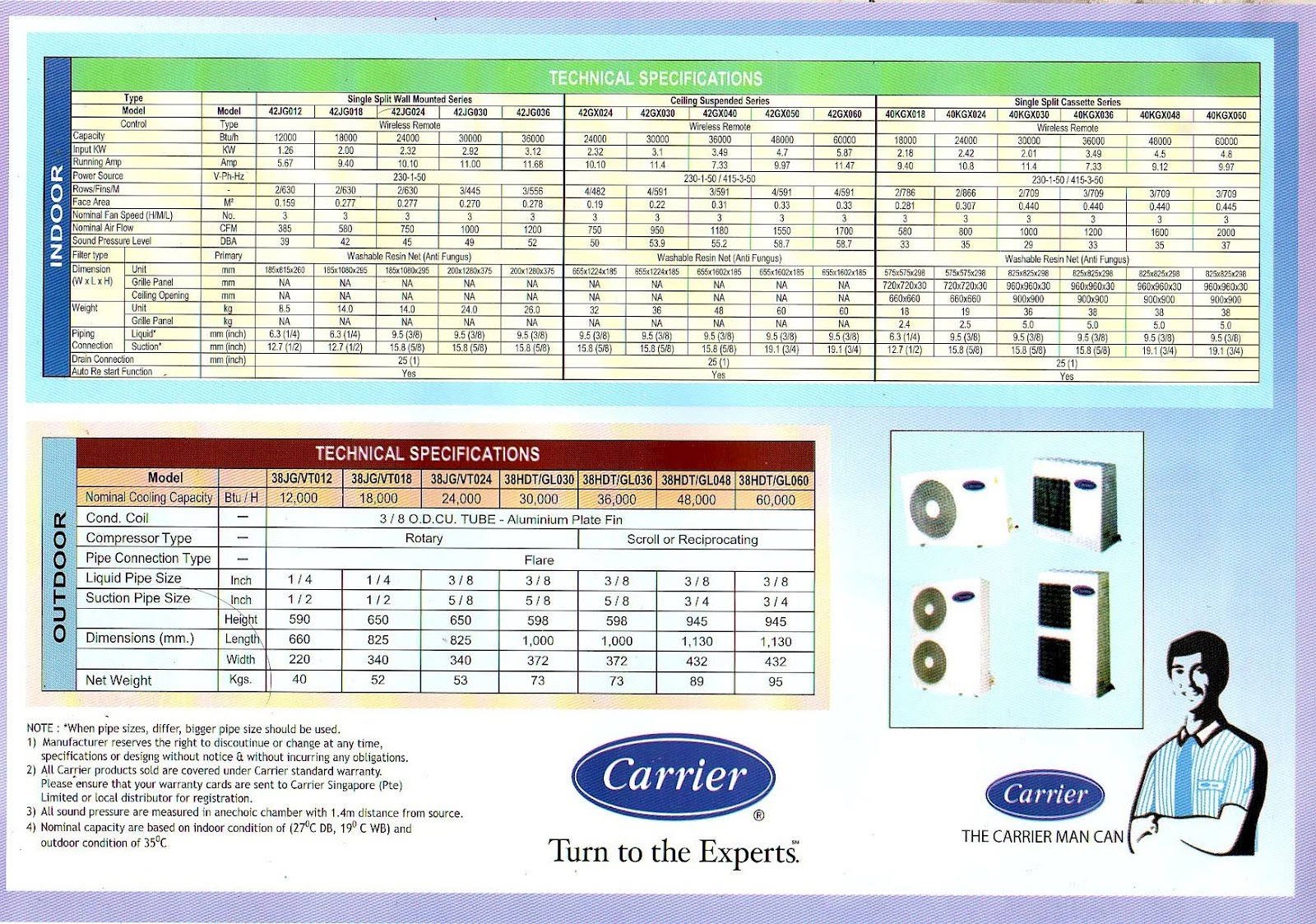
Several factors contribute to determining the ideal BTU (British Thermal Units) or tonnage for your Carrier AC. Remember, a "ton" of cooling equals 12,000 BTUs.
- Square Footage: The most basic factor. Larger homes require more cooling capacity.
- Climate: Hotter climates demand larger units.
- Insulation: Well-insulated homes retain cool air better, requiring less cooling power.
- Windows: The number, size, and type of windows significantly impact heat gain. Energy-efficient windows reduce the load on your AC.
- Sun Exposure: Homes with significant sun exposure, particularly on west-facing walls, will need a larger unit.
- Ceiling Height: Higher ceilings increase the volume of space to be cooled.
- Number of Occupants: More people generate more heat.
- Appliances: Heat-generating appliances like ovens and dryers contribute to the cooling load.
- Ductwork: Properly sized and sealed ductwork is essential for efficient air distribution. Leaky or poorly designed ducts can significantly reduce cooling performance.
Estimating AC Size: The Simplified Method
A rough estimate can be obtained by using a simple square footage calculation. However, remember that this method is a starting point and doesn't account for all the factors listed above. A professional load calculation is always recommended for accuracy.
- Measure the square footage of the area you want to cool.
- Multiply the square footage by 25 BTU/hour. This gives you a basic estimate of the required cooling capacity.
- Divide the result by 12,000 to convert BTUs to tons.
Example: A 1,200 square foot home:
(1,200 sq ft x 25 BTU/hr) / 12,000 = 2.5 tons
Based on this simplified calculation, a 2.5-ton unit might seem appropriate. However, consider the other factors mentioned earlier. In a hot climate with poor insulation, a 3-ton unit might be a better choice.
The Importance of a Professional Load Calculation (Manual J)
The most accurate way to determine the correct AC size is to have a qualified HVAC professional perform a Manual J load calculation. This comprehensive assessment considers all the factors that influence heat gain and loss in your home, providing a precise estimate of the required cooling capacity. While seemingly simple, it involves complex calculations and software programs designed for the purpose. Don't underestimate the value of a Manual J, as it's the only surefire way to avoid the problems associated with undersized or oversized systems.
DIY Troubleshooting: Signs of an Improperly Sized AC
Even with a seemingly correct calculation, problems can arise. Here are some common signs that your Carrier AC might be the wrong size:
- Uneven Cooling: Some rooms are significantly warmer or cooler than others.
- High Humidity: The air feels damp and sticky, even when the AC is running.
- Short Cycling: The AC turns on and off frequently, running for short periods.
- Long Run Times: The AC runs constantly, struggling to maintain the desired temperature.
- High Energy Bills: Your electricity bills are unusually high compared to similar homes in your area.
- Ice Formation on the Evaporator Coil: This can indicate restricted airflow or an undersized unit struggling to cool the air.
Common Problems and DIY Checks
Before assuming your AC is the wrong size, perform some basic troubleshooting steps:
- Check the Air Filter: A dirty air filter restricts airflow, reducing cooling efficiency. Replace it regularly (every 1-3 months).
- Inspect the Outdoor Unit: Ensure the outdoor unit is free of debris, such as leaves, grass clippings, and branches. Clear any obstructions around the unit to allow for proper airflow.
- Seal Air Leaks: Caulk around windows and doors to prevent air leaks. Insulate any gaps around pipes or wiring that enter your home.
- Check Ductwork: Inspect accessible ductwork for leaks or damage. Seal any leaks with duct tape or mastic sealant.
- Clean the Evaporator Coil: A dirty evaporator coil can reduce cooling efficiency. Consult your owner's manual or a professional for instructions on how to clean the coil safely. Caution: Use appropriate safety gear like gloves and eye protection.
When to Call a Professional
While some troubleshooting steps can be performed by homeowners, certain repairs require the expertise of a qualified HVAC technician. It is always wise to consult a qualified technician for a Carrier Air Conditioner because of the sensitivity of its components.
Call a professional if:
- You suspect a refrigerant leak. Refrigerant is a regulated substance and requires specialized equipment to handle safely.
- You are experiencing electrical problems with your AC unit.
- You need to clean the evaporator coil and are uncomfortable doing so.
- You suspect a problem with the compressor or other major components.
- You want to perform a Manual J load calculation to determine the correct AC size.
Estimating AC Repair Costs
Repair costs can vary depending on the nature of the problem and the type of Carrier air conditioner you have. Here are some general cost ranges:
- Air Filter Replacement: $10 - $30 (DIY)
- Duct Sealing: $200 - $800 (DIY or professional)
- Refrigerant Recharge: $200 - $500 (professional only)
- Compressor Replacement: $800 - $2,500 (professional only)
- Evaporator Coil Replacement: $600 - $1,500 (professional only)
- Condenser Fan Motor Replacement: $200 - $600 (professional only)
- Manual J Load Calculation: $200 - $500 (professional only)
Disclaimer: These are just estimates, and actual costs may vary depending on your location, the specific problem, and the HVAC contractor you choose. Always get multiple quotes from reputable contractors before making a decision.
Choosing a New Carrier Air Conditioner
If your existing AC is old or inefficient, it might be time to consider a replacement. When choosing a new Carrier AC, consider the following:
- SEER Rating: The Seasonal Energy Efficiency Ratio (SEER) indicates the unit's energy efficiency. Higher SEER ratings mean lower energy bills.
- HSPF Rating: Heating Seasonal Performance Factor (HSPF) is a metric only for heat pumps. It indicates how efficient your unit is when heating.
- Size: Ensure the unit is properly sized for your home based on a Manual J load calculation.
- Features: Consider features like variable-speed compressors, smart thermostats, and zoning systems for enhanced comfort and energy savings.
- Warranty: Check the warranty offered by the manufacturer. A longer warranty provides greater peace of mind.
Safety First!
When working with electrical appliances, always prioritize safety:
- Turn off the power to the AC unit at the circuit breaker before performing any maintenance or repairs.
- Wear safety glasses and gloves to protect yourself from hazards.
- Never work on electrical components if you are not comfortable or experienced.
- Consult a qualified HVAC technician for any repairs that require specialized knowledge or equipment.
Conclusion
Proper Carrier air conditioner sizing is essential for a comfortable and energy-efficient home. While DIY troubleshooting can help identify some common issues, a professional load calculation is crucial for determining the correct size. By understanding the factors that influence AC sizing and following the tips outlined in this guide, you can ensure that your AC system provides optimal performance for years to come.