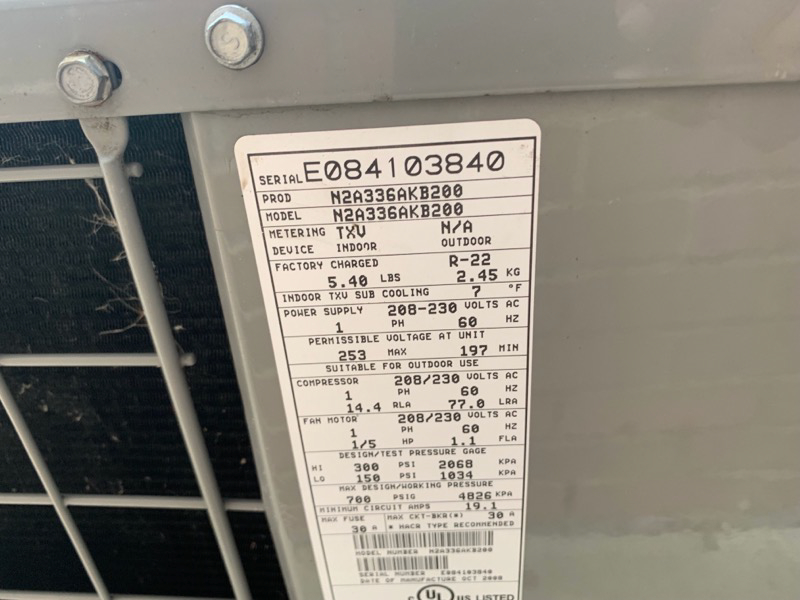
Carrier Commercial Model Number Lookup

Navigating the world of commercial HVAC systems can be daunting, especially when you're looking to maximize energy efficiency and minimize operating costs. One of the first steps in understanding your current system, or planning for an upgrade, is accurately identifying the Carrier commercial model number. This seemingly simple task unlocks a wealth of information, from performance specs and maintenance schedules to potential energy-saving retrofits and available rebates.
Why is Knowing Your Carrier Commercial Model Number Important?
Think of your Carrier model number as the key to unlocking your system's potential. Here's why it's so crucial:
- Accurate Identification: Avoid guesswork. The model number provides a precise identifier, ensuring you're referencing the correct documentation, parts, and specifications for your specific system.
- Performance Analysis: The model number allows you to access detailed performance data, including SEER (Seasonal Energy Efficiency Ratio), EER (Energy Efficiency Ratio), and HSPF (Heating Seasonal Performance Factor) ratings. This information is vital for assessing your system's efficiency and identifying areas for improvement.
- Maintenance and Repairs: When ordering replacement parts or scheduling maintenance, the model number ensures compatibility and accuracy. This prevents costly mistakes and ensures your system operates optimally.
- Warranty Information: Easily verify warranty coverage and eligibility for service.
- Energy Efficiency Upgrades and Rebates: Many energy efficiency programs and rebates are tied to specific models. Knowing your model number allows you to determine if your system qualifies for incentives that can significantly reduce the cost of upgrades.
- Smart HVAC Integration: When integrating with smart thermostats and sensors, the model number is essential for ensuring compatibility and enabling advanced features like remote control, energy monitoring, and automated scheduling.
Locating Your Carrier Commercial Model Number
Finding the model number is usually straightforward. Look for a metal nameplate or sticker attached to the unit. The location varies depending on the type of equipment:
Rooftop Units (RTUs)
On rooftop units, the nameplate is typically located on the exterior casing, often near the control panel access door. Look for a durable metal tag. The model number is usually prominently displayed, often preceded by "Model No." or "Model."
Split Systems (Indoor and Outdoor Units)
For split systems, you'll need to find the model number for both the indoor air handler and the outdoor condensing unit. On the outdoor unit, look for the nameplate on the side or back. The indoor unit's nameplate is usually located inside the access panel or on the unit's exterior.
Chillers and Large Equipment
For larger equipment like chillers, the nameplate is usually prominently displayed on the unit's exterior. Due to the size and complexity, ensure you have adequate lighting and access when searching.
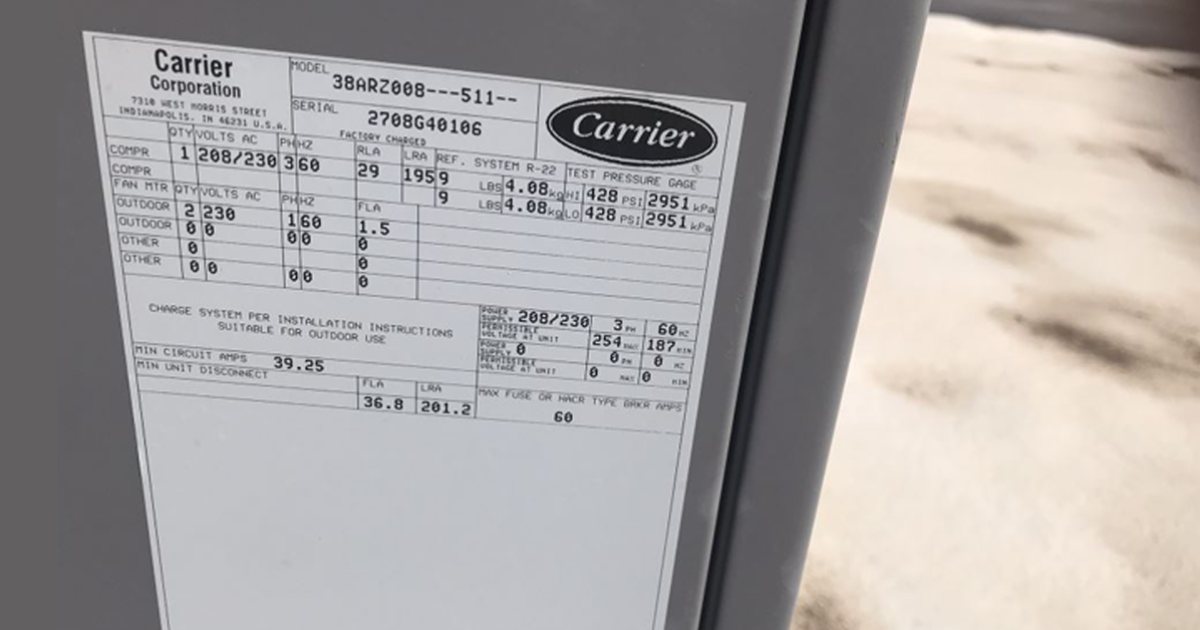
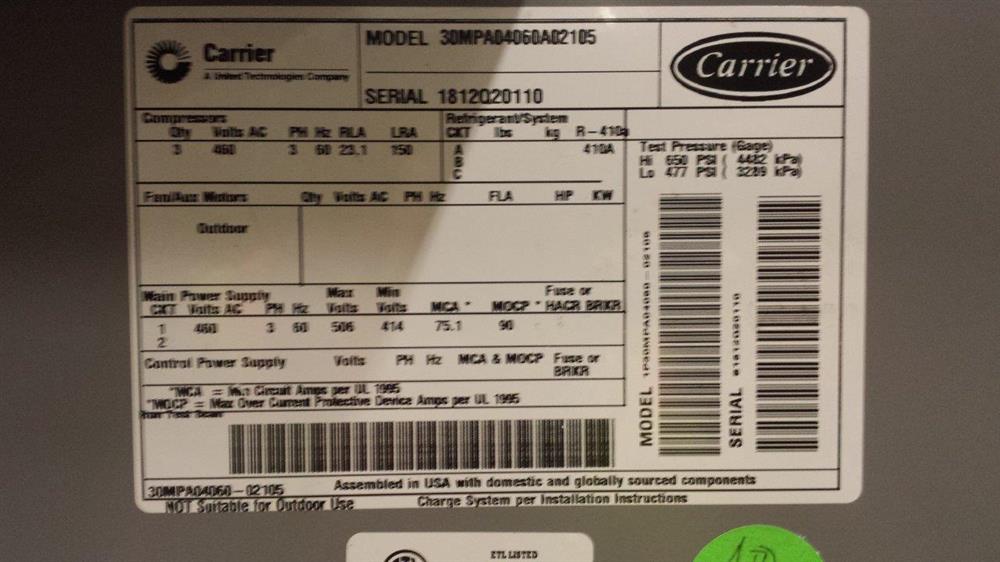
What to Look For on the Nameplate
The nameplate contains various pieces of information, including:
- Model Number: This is what you're primarily looking for. It's a combination of letters and numbers that uniquely identifies your unit.
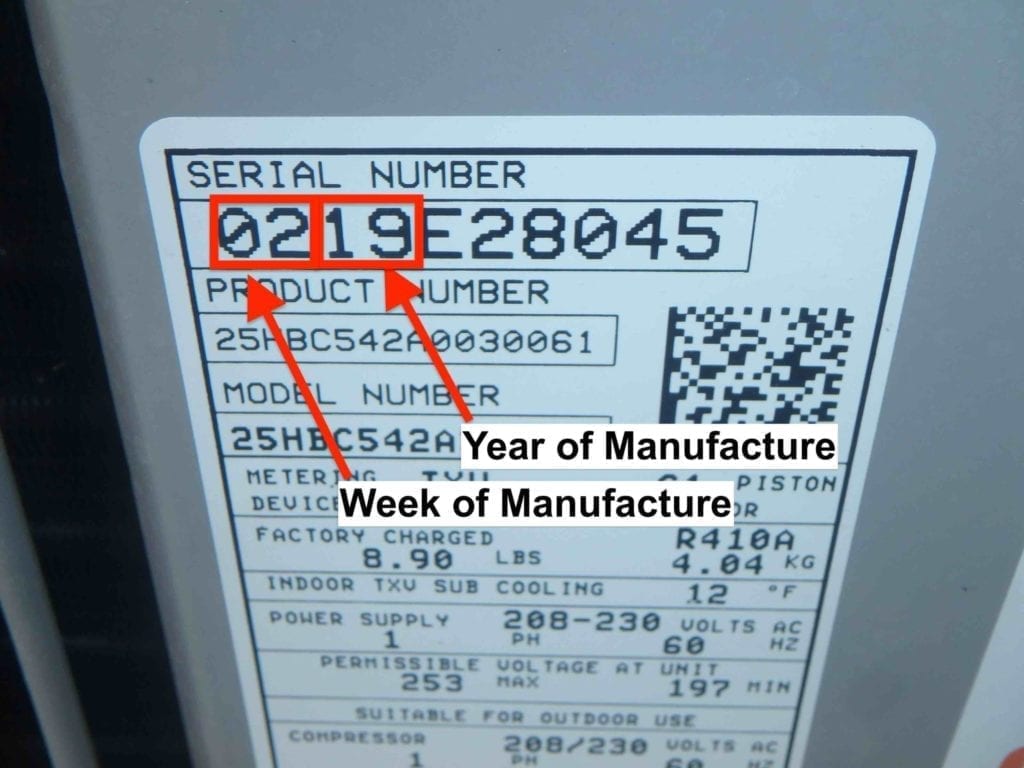
- Serial Number: Used for warranty registration and tracking the unit's history.
- Manufacturing Date: Indicates when the unit was manufactured.
- Voltage, Phase, and Amperage: Electrical specifications.
- Refrigerant Type: Important for servicing and recharging the system.
Tip: Take a photo of the nameplate with your smartphone. This provides a convenient digital record for future reference.
Decoding Your Carrier Commercial Model Number
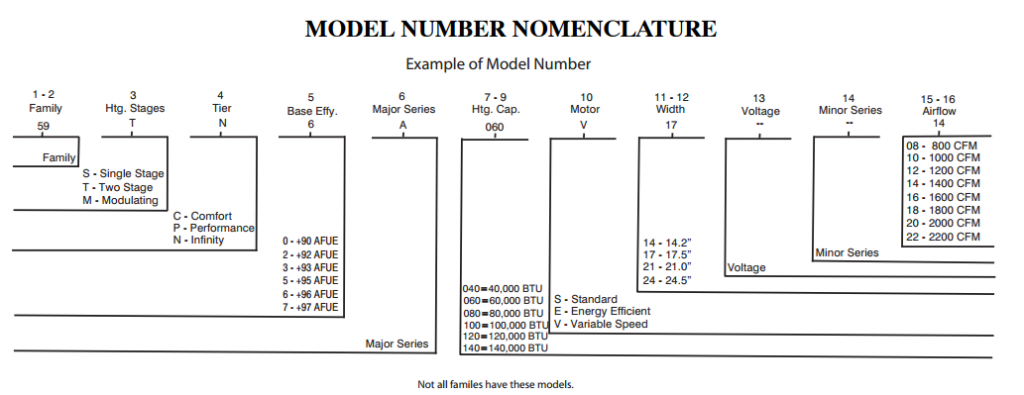
Carrier model numbers may seem like gibberish, but they actually contain valuable information about the system's features and specifications. While the specific format varies depending on the type of equipment, there are some common elements:
- Product Family: Identifies the type of unit (e.g., RTU for rooftop unit, AC for air conditioner).
- Efficiency Rating: May indicate the SEER or EER rating.
- Capacity: Indicates the cooling or heating capacity in BTU/hr (British Thermal Units per hour).
- Voltage: Specifies the required voltage for operation.
- Series: Indicates the specific series or generation of the equipment.
Example: Consider a hypothetical model number "48TCU16A2A5-A." Without knowing the specifics of Carrier's coding, we can guess that "48" might relate to the unit’s tonnage (4 tons), "TCU" might stand for a specific rooftop unit series, and the remaining alphanumeric characters could specify voltage, efficiency tier, and other options. Referencing Carrier's documentation will provide the precise meaning of each segment.
Using Your Model Number to Improve Energy Efficiency
Once you have your model number, you can use it to explore various energy-saving strategies:
Assess Current Performance
Use the model number to access the system's technical specifications. Compare the original SEER/EER rating to current Energy Star standards. If your system is significantly below current standards, it's likely costing you money.
Example: A rooftop unit with a SEER of 9 installed in 2005 might be significantly less efficient than a modern unit with a SEER of 16 or higher. According to the U.S. Department of Energy, upgrading to a more efficient system can reduce energy consumption by 20-40%.
Explore Upgrade Options
Use the model number to research compatible replacement units with higher efficiency ratings. Consider factors like:
- SEER/EER: Higher ratings translate to lower energy consumption.
- Variable-Speed Technology: Variable-speed compressors and fans adjust their output to match the actual cooling or heating demand, resulting in significant energy savings.
- Smart Controls: Integrating with a smart thermostat allows for precise temperature control, automated scheduling, and remote monitoring.
Investigate Rebates and Incentives
Many utility companies and government agencies offer rebates and incentives for upgrading to energy-efficient HVAC systems. Check the Energy Star website and your local utility's website for available programs.
Example: The Database of State Incentives for Renewables & Efficiency (DSIRE) is a comprehensive resource for finding energy efficiency incentives.
Consider Smart HVAC Integration
Integrating your Carrier commercial HVAC system with a smart thermostat and sensors can provide significant energy savings and improved comfort. Smart thermostats learn your building's heating and cooling patterns and automatically adjust the temperature to optimize energy use. They also allow for remote control and monitoring, so you can make adjustments even when you're away.
Key features of smart HVAC systems include:
- Remote Control: Adjust the temperature from anywhere using a smartphone or tablet.
- Automated Scheduling: Create custom schedules to optimize energy use based on occupancy patterns.
- Energy Monitoring: Track energy consumption and identify areas for improvement.
- Geofencing: Automatically adjust the temperature based on your location.
- Predictive Maintenance: Some smart systems can monitor system performance and alert you to potential problems before they become major issues.
Working with an HVAC Contractor
While you can gather information using your model number, it's essential to consult with a qualified HVAC contractor for professional advice and installation. A contractor can:
- Assess Your Specific Needs: Evaluate your building's size, insulation, and occupancy patterns to determine the optimal HVAC system for your needs.
- Recommend Energy-Efficient Solutions: Provide expert guidance on selecting the most energy-efficient equipment and smart HVAC solutions.
- Ensure Proper Installation: Proper installation is crucial for maximizing energy efficiency and ensuring long-term performance.
- Handle Refrigerant Handling and Disposal: Ensure proper handling of refrigerants, which are regulated by environmental laws.
- Assist with Rebate Applications: Help you navigate the application process for available rebates and incentives.
When selecting an HVAC contractor, look for certifications from organizations like NATE (North American Technician Excellence) and ACCA (Air Conditioning Contractors of America). These certifications indicate that the contractor has the knowledge and skills to properly install and maintain HVAC systems.
ROI and Long-Term Savings
While upgrading to an energy-efficient HVAC system represents an initial investment, the long-term savings can be significant. Consider the following factors when evaluating the ROI:
- Reduced Energy Bills: The most obvious benefit is lower monthly energy bills.
- Extended Equipment Lifespan: A well-maintained, energy-efficient system can last longer than an older, less efficient model.
- Improved Comfort: A properly sized and installed HVAC system provides more consistent and comfortable temperatures.
- Increased Property Value: Upgrading to energy-efficient equipment can increase the value of your property.
- Reduced Maintenance Costs: Energy-efficient systems often require less maintenance than older models.
By carefully evaluating your options and working with a qualified HVAC contractor, you can use your Carrier commercial model number to unlock significant energy savings and improve the overall performance of your HVAC system. Don't underestimate the power of knowledge – it's the first step towards a more sustainable and cost-effective future.