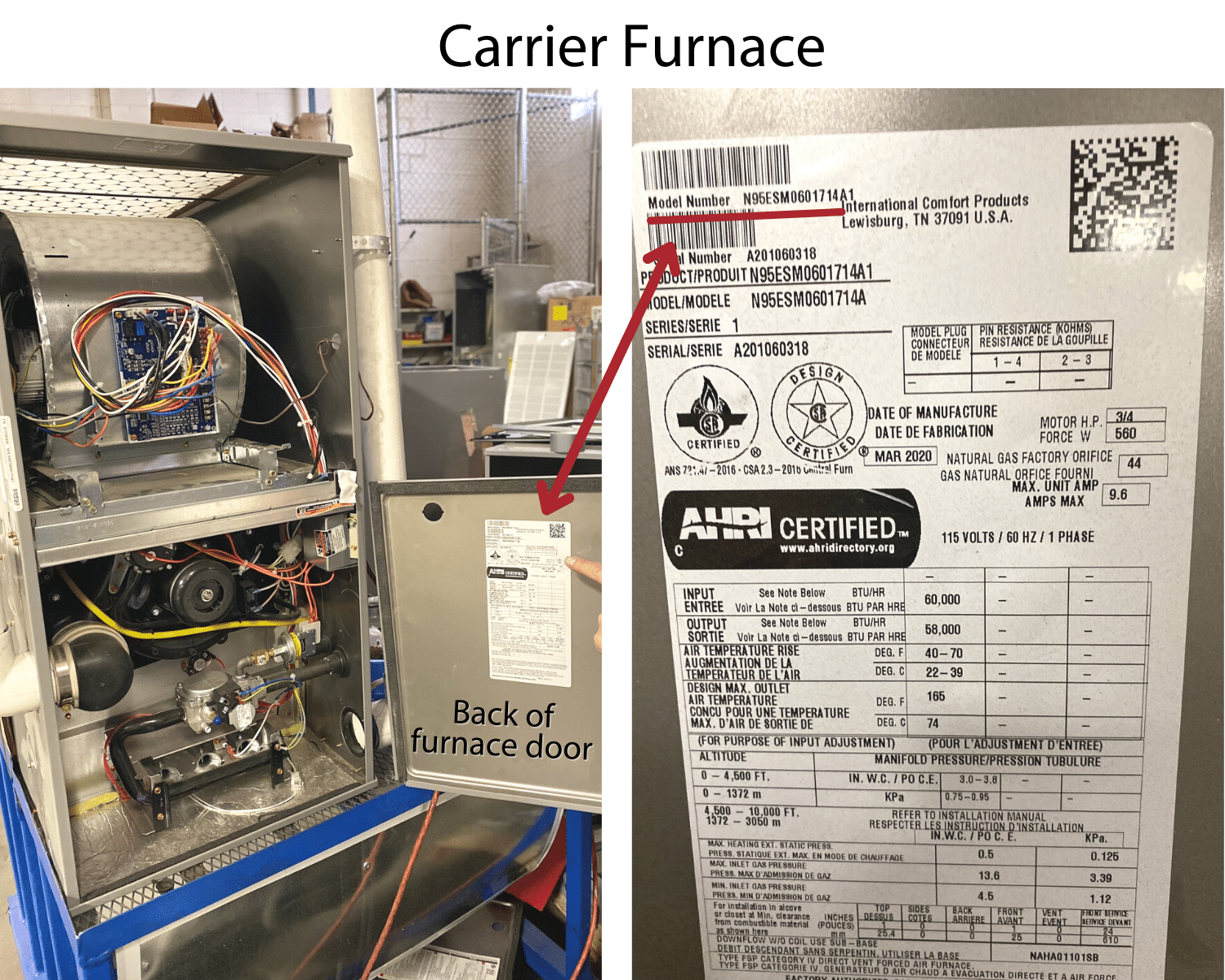
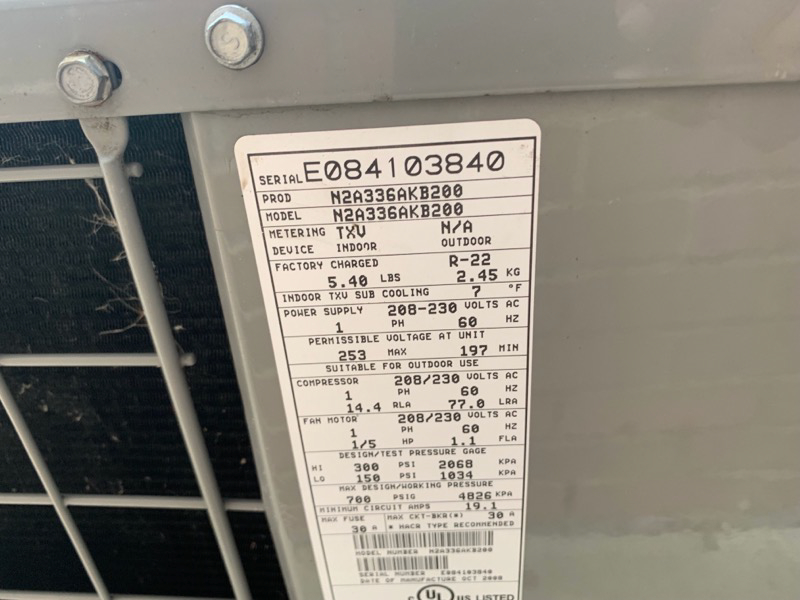
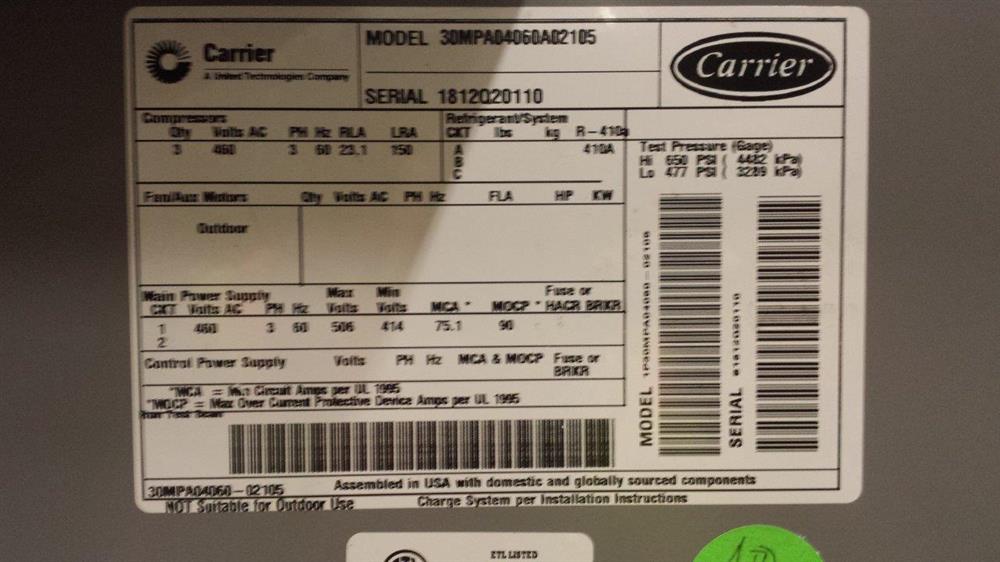
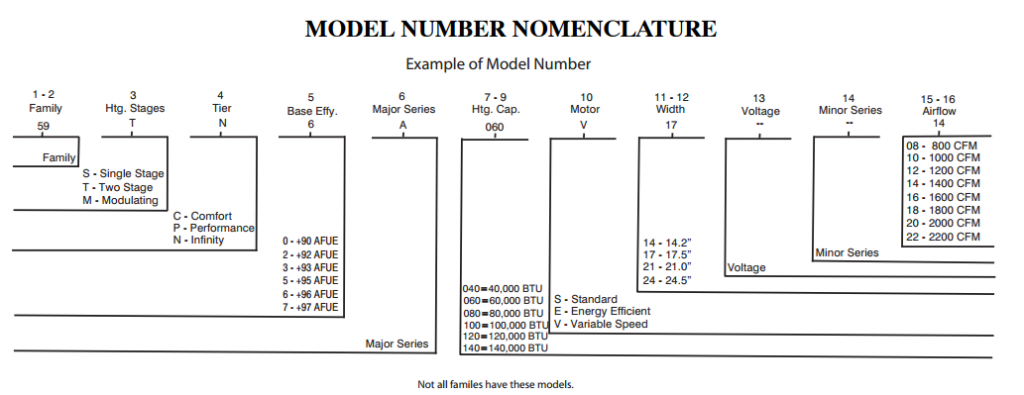
Carrier Electric Furnace Model Numbers

Imagine waking up on a chilly morning, expecting the comforting warmth of your Carrier electric furnace, only to find it blowing cold air – or worse, doing nothing at all. Furnace failures, especially during peak heating seasons, are a common household headache. This guide provides a structured approach to troubleshooting your Carrier electric furnace (model numbers typically start with 58, 59, or similar), empowering you to identify and resolve simple issues while recognizing when professional help is essential. Safety is paramount; always prioritize your well-being.
Understanding Your Carrier Electric Furnace
Before diving into troubleshooting, familiarize yourself with the basic components of your Carrier electric furnace:
- Thermostat: Controls the furnace's on/off cycle and temperature settings.
- Circuit Breaker: Provides electrical power to the furnace; located in your home's electrical panel.
- Disconnect Switch: A local power shut-off switch, usually located near the furnace.
- Control Board: The brain of the furnace, managing various functions.
- Heating Elements (Electric Coils): Generate heat when electricity passes through them.
- Blower Motor: Circulates heated air throughout your home's ductwork.
- Filter: Cleans the air circulating through the furnace; a dirty filter restricts airflow.
- Limit Switch: A safety device that shuts off the heating elements if the furnace overheats.
- Door Switch: A safety switch that prevents the furnace from operating when the access door is open.
Step 1: Basic Checks – Power and Thermostat
The first steps are the simplest and often the most overlooked:
1.1 Verify Thermostat Settings
- Ensure the thermostat is set to "Heat" mode. It sounds obvious, but double-check!
- Confirm the setpoint temperature is higher than the current room temperature. Even a degree or two can make a difference.
- Check the thermostat batteries (if applicable). Low or dead batteries can cause erratic behavior. Replace them with fresh ones.
- If you have a programmable thermostat, review the schedule. Make sure it's not inadvertently set to "Off" or a low temperature during the time you expect heat.
1.2 Check the Circuit Breaker
- Locate the circuit breaker for your furnace in your home's electrical panel. The breaker should be labeled (e.g., "Furnace," "HVAC").
- Visually inspect the breaker. Is it tripped (in the "Off" or middle position)?
- If the breaker is tripped, reset it. Flip it fully to the "Off" position and then back to the "On" position.
- If the breaker trips immediately after resetting, this indicates a short circuit. Do not continue to reset the breaker. Call a qualified electrician or HVAC technician immediately. This is a serious safety concern.
1.3 Inspect the Disconnect Switch
- Locate the disconnect switch near your furnace. It's usually a simple on/off switch or a pull-out block.
- Ensure the switch is in the "On" position. For a pull-out block, make sure it's fully inserted.
If your furnace starts working after these checks, you've solved the problem! If not, proceed to the next step.
Step 2: Inspecting the Furnace Itself
Now, let's examine the furnace directly. Remember to turn off the power to the furnace at both the circuit breaker and the disconnect switch before proceeding with any internal inspections or maintenance.
2.1 Check the Air Filter
- Locate the air filter slot. This is usually located on the side or bottom of the furnace, or in the return air duct.
- Remove the filter and inspect it. Is it visibly dirty or clogged with dust and debris?
- A dirty filter restricts airflow, which can cause the furnace to overheat and shut down. It also reduces heating efficiency.
- Replace the filter with a new one of the correct size and type. Check the filter housing or your furnace manual for the correct specifications.
- Regular filter replacement is crucial for maintaining furnace performance and preventing problems. Aim to replace your filter every 1-3 months, depending on usage and air quality.
2.2 Inspect the Blower Motor
This step involves electrical components. If you are not comfortable working with electricity, consult a qualified HVAC technician.
- After disconnecting power, carefully remove the blower compartment access panel. The panel is usually held in place by screws or clips.
- Visually inspect the blower motor. Look for any signs of damage, such as burnt wires, loose connections, or debris obstructing the fan blades.
- Try to manually spin the blower fan. It should spin freely. If it's stiff or difficult to turn, the motor bearings may be failing.
- A failing blower motor can prevent the furnace from circulating heated air. Replacement of the blower motor is typically a job for a professional.
2.3 Checking the Door Switch
Remember to disconnect power before accessing internal components.
- Locate the door switch. This is a small switch that is activated when the furnace access door is closed. It prevents the furnace from operating when the door is open for safety reasons.
- Inspect the switch. Make sure it is properly aligned and that it is being fully depressed when the door is closed. Sometimes, the switch can become bent or misaligned.
- Test the switch. Close the door and then reset the disconnect and circuit breaker to see if the furnace starts. If the furnace still does not start, the switch may be faulty. Replacement should be done by a qualified technician.
Step 3: Identifying Potential Problems and When to Call a Professional
Here's a breakdown of common Carrier electric furnace problems and whether you can attempt a DIY fix or need professional assistance:
- No Heat, Blower Not Running:
- Possible Causes: Tripped circuit breaker, disconnect switch off, thermostat issue, blower motor failure, faulty control board.
- DIY Fixes: Check circuit breaker, disconnect switch, thermostat settings, replace thermostat batteries.
- Professional Assistance: Blower motor repair/replacement, control board diagnosis/replacement, electrical issues.
- No Heat, Blower Running:
- Possible Causes: Overheating (limit switch tripped), faulty heating elements, control board issue.
- DIY Fixes: Replace air filter (to prevent overheating).
- Professional Assistance: Limit switch diagnosis/replacement, heating element testing/replacement, control board diagnosis/replacement.
- Furnace Cycles On and Off Rapidly (Short Cycling):
- Possible Causes: Overheating (dirty filter, blocked vents), improper furnace sizing, faulty limit switch.
- DIY Fixes: Replace air filter, ensure vents are open and unobstructed.
- Professional Assistance: Limit switch diagnosis/replacement, ductwork inspection, furnace sizing assessment.
- Strange Noises (Banging, Squealing, Grinding):
- Possible Causes: Loose parts, failing blower motor, problems with the ductwork.
- DIY Fixes: None (noise indicates a mechanical issue).
- Professional Assistance: Diagnosis and repair of the noise source (blower motor, ductwork, etc.).
- Burning Smell:
- Possible Causes: Dust accumulation (especially after initial startup of the season), overheating, electrical problems.
- DIY Fixes: Replace air filter.
- Professional Assistance: Thorough furnace cleaning, electrical inspection, diagnosis of the burning smell source. If the smell is strong or accompanied by smoke, shut off the furnace immediately and call a fire department.
When to Call a Professional HVAC Technician
While this guide provides basic troubleshooting steps, certain situations always require professional assistance:
- Any time you are uncomfortable working with electricity or gas.
- If you suspect a gas leak (natural gas furnaces). Evacuate the premises immediately and call your gas company.
- If you are unsure about any of the steps described in this guide.
- If you encounter complex components like the control board or limit switch.
- If the problem persists after attempting basic DIY fixes.
- If you suspect a problem with your ductwork.
- If your furnace is old or has a history of problems.
- If you need to diagnose or replace heating elements. This requires specialized equipment and knowledge.
Attempting repairs beyond your skill level can be dangerous and may void your furnace's warranty. It's always better to err on the side of caution and call a qualified HVAC technician.
Preventative Maintenance for Your Carrier Electric Furnace
Regular maintenance can significantly extend the life of your furnace and prevent many common problems. Consider these tips:
- Replace the air filter regularly (every 1-3 months).
- Schedule annual professional furnace inspections and tune-ups. A technician can clean and inspect the furnace, identify potential problems, and ensure it's operating safely and efficiently.
- Keep the area around the furnace clean and free of obstructions.
- Ensure vents are open and unobstructed to promote proper airflow.
- Consider investing in a whole-house surge protector to protect your furnace's electrical components from power surges.
By following these troubleshooting steps and preventative maintenance tips, you can keep your Carrier electric furnace running smoothly and efficiently for years to come. Remember, safety is always the top priority. When in doubt, call a qualified HVAC professional.