Carrier Furnace Fuse Location
In the dynamic world of Heating, Ventilation, and Air Conditioning (HVAC), understanding the intricacies of system components is paramount. From the foundational principles of thermodynamics to the practical application of troubleshooting techniques, HVAC professionals require a deep understanding of equipment. This article focuses on a crucial, often overlooked, element within Carrier furnaces: the fuse.
Carrier Furnace Fuse Location: A Technician's Guide
Locating the fuse in a Carrier furnace is a fundamental skill for any HVAC technician. The fuse serves as a vital safety device, protecting the furnace's electrical components from overcurrent situations. Identifying its location and understanding its function are essential for diagnosing and resolving common furnace issues.
Typical Fuse Locations
While specific locations can vary slightly depending on the Carrier furnace model, the fuse is generally found in one of two primary locations:
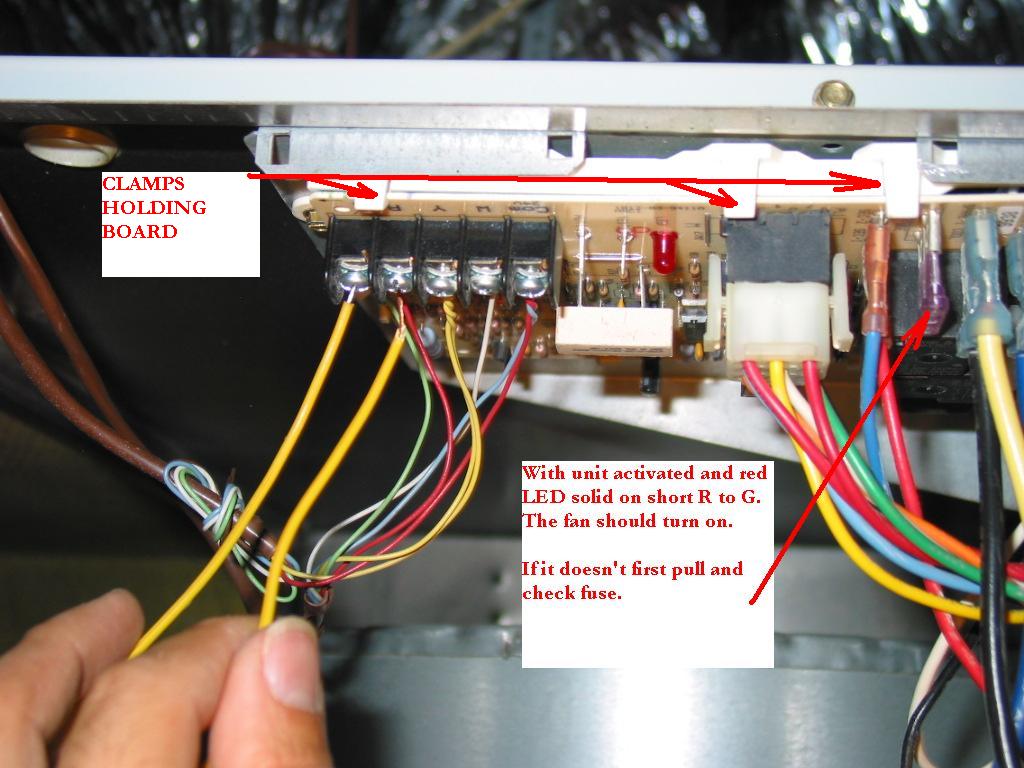
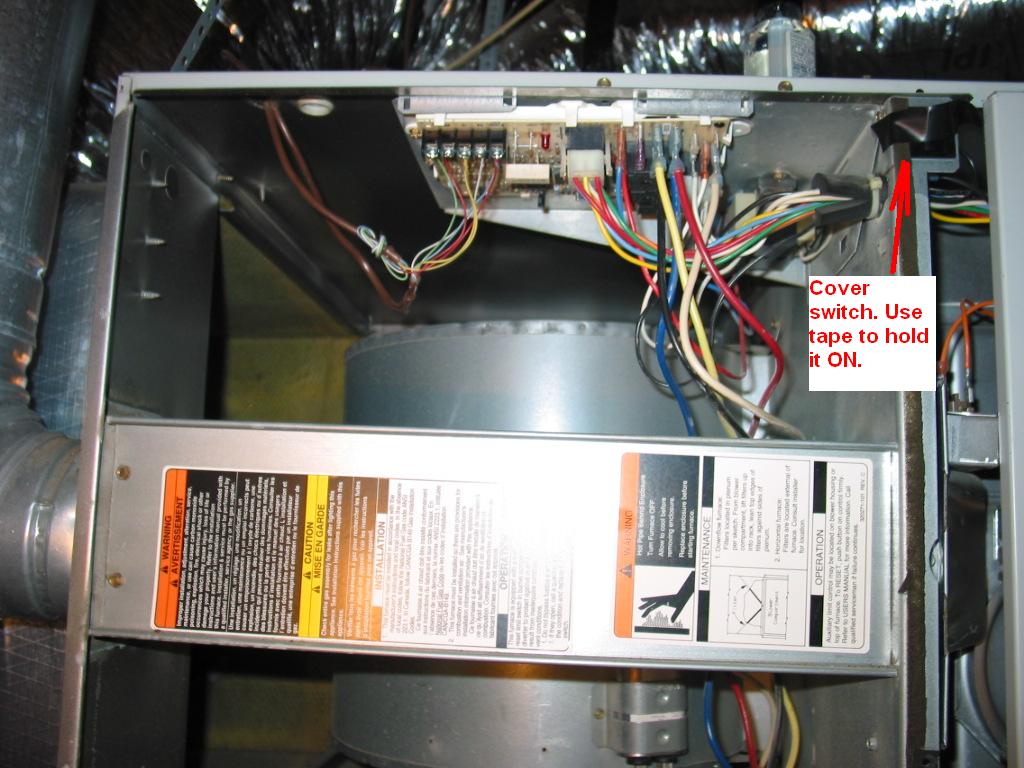
- Inside the Control Panel: The most common location is within the furnace's control panel. This panel is usually a metal enclosure located on the front or side of the furnace. You'll need to remove the access panel (after disconnecting power, of course!) to reveal the internal components. Look for a small, often rectangular or cylindrical fuse holder near the control board.
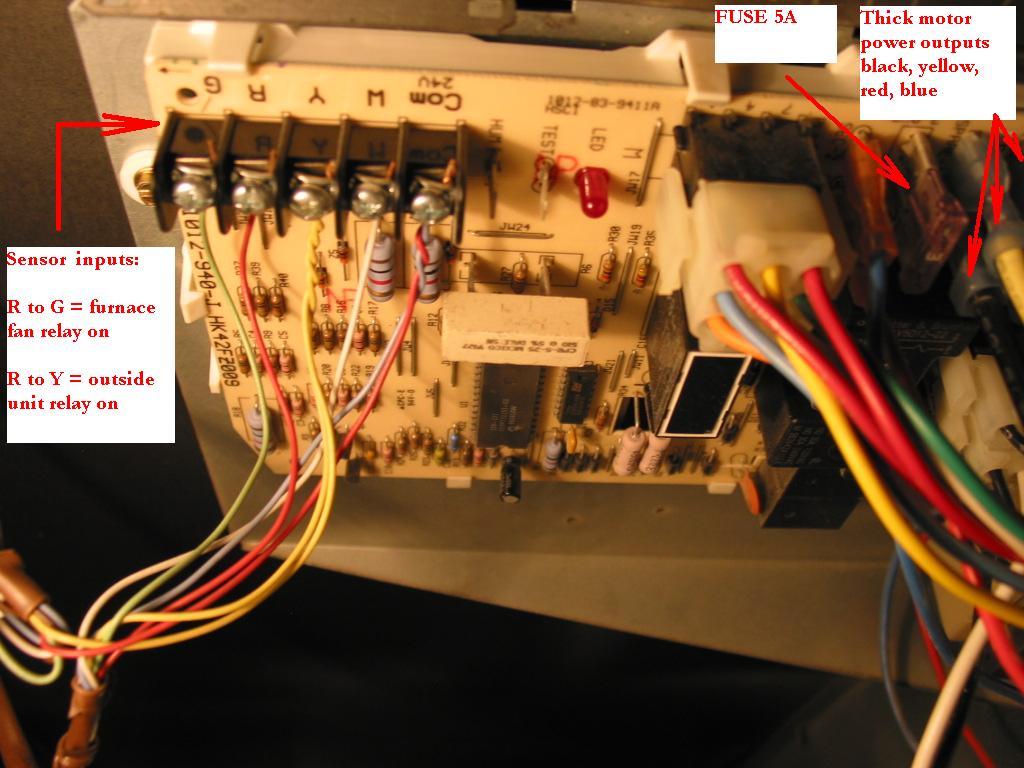
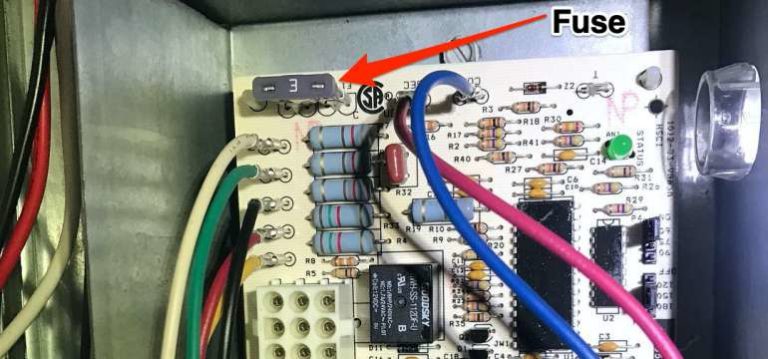
- On the Control Board: In some models, the fuse may be directly mounted on the control board itself. The control board is a circuit board that manages the furnace's operation. If you find the control board, carefully inspect it for a fuse holder or a fuse directly soldered onto the board.
It's crucial to consult the furnace's wiring diagram or service manual to confirm the exact location of the fuse for a specific model. This information will save time and prevent accidental damage to other components.
Identifying the Fuse Type
Once you've located the fuse, you need to identify its type and amperage rating. Common types include:
- Automotive Fuses: These are blade-style fuses similar to those used in cars. They are typically color-coded to indicate their amperage rating.
- Glass Tube Fuses: These are cylindrical fuses with a glass tube enclosing the fusible link. The amperage rating is usually printed on the fuse.
- Ceramic Fuses: Similar to glass tube fuses, but with a ceramic body for higher temperature applications.
Using the correct amperage rating is absolutely critical. Replacing a fuse with a higher amperage rating can bypass the safety mechanism and potentially cause serious damage to the furnace or even a fire hazard. Always replace a blown fuse with one of the same type and amperage rating.
Troubleshooting and Fuse Replacement
A blown furnace fuse is often an indicator of an underlying problem. Before simply replacing the fuse, it's essential to investigate the cause of the failure. Common causes include:
- Short Circuit: A short circuit occurs when there's an unintended path for electricity to flow, bypassing the intended load. This can be caused by damaged wiring, faulty components, or moisture.
- Overloaded Circuit: An overloaded circuit occurs when too much current is drawn through the circuit. This can be caused by a malfunctioning motor, a clogged filter, or other factors.
- Faulty Components: A failing blower motor, igniter, or other component can draw excessive current and blow the fuse.
To troubleshoot a blown fuse, follow these steps:
- Disconnect Power: Always disconnect power to the furnace before working on any electrical components.
- Visually Inspect Wiring: Check for any signs of damaged wiring, loose connections, or corrosion.
- Test Components: Use a multimeter to test the continuity of components like the blower motor, igniter, and transformer.
- Replace the Fuse: Once you've identified and addressed the underlying cause, replace the blown fuse with a new one of the same type and amperage rating.
If the fuse blows again shortly after being replaced, it indicates that the underlying problem has not been resolved. Further investigation is needed to identify and correct the issue.
HVAC Career Outlook and Salary Information
The HVAC industry is experiencing robust growth, driven by factors such as increasing demand for energy-efficient systems and the growing need for skilled technicians to maintain and repair existing equipment. The U.S. Bureau of Labor Statistics projects a growth rate of 6% for HVAC mechanics and installers from 2022 to 2032, which is about average for all occupations. This translates to approximately 38,000 job openings each year, on average, over the decade.
The median annual wage for HVAC mechanics and installers was $59,690 in May 2023. The lowest 10 percent earned less than $36,170, and the highest 10 percent earned more than $86,140. Salary can vary depending on experience, location, and specialization. For example, technicians working in metropolitan areas or specializing in commercial HVAC systems often command higher salaries.
Career Paths and Advancement Opportunities
An HVAC career offers a variety of paths for advancement. Entry-level positions typically involve assisting experienced technicians with installations and repairs. With experience and further training, technicians can progress to more complex tasks, such as diagnosing and repairing sophisticated HVAC systems. Opportunities for specialization exist in areas like:
- Commercial HVAC: Focusing on larger, more complex systems found in office buildings, hospitals, and industrial facilities.
- Residential HVAC: Specializing in the installation and maintenance of HVAC systems in homes and apartments.
- Refrigeration: Working with refrigeration systems in supermarkets, restaurants, and other businesses.
- Building Automation: Integrating HVAC systems with building management systems to optimize energy efficiency and comfort.
Many HVAC technicians eventually become supervisors, project managers, or even start their own businesses. Continuous learning and professional development are essential for career advancement in this field.
Certifications and Training
Earning professional certifications can significantly enhance career prospects and earning potential in the HVAC industry. Some of the most recognized certifications include:
- NATE (North American Technician Excellence): NATE certification demonstrates a technician's knowledge and skills in specific areas of HVAC, such as installation, service, and efficiency.
- EPA 608 Certification: Required by the Environmental Protection Agency (EPA) for technicians who handle refrigerants. This certification ensures that technicians are trained in proper refrigerant handling and recovery techniques to protect the environment.
- HVAC Excellence: HVAC Excellence offers a range of certifications that validate competency in various areas of HVAC.
In addition to certifications, formal training programs, such as apprenticeships and technical school programs, provide the foundational knowledge and skills needed to succeed in the HVAC industry. Apprenticeships typically combine classroom instruction with on-the-job training under the supervision of experienced technicians.
Real-World Examples
Consider the journey of Maria, a recent graduate of an HVAC technical program. Maria started her career as an apprentice, assisting senior technicians with residential HVAC installations. She quickly gained experience and obtained her EPA 608 certification. After a few years, Maria pursued NATE certification in residential heating and cooling. This certification helped her land a more challenging and higher-paying position at a commercial HVAC company. Maria is now on track to become a project manager, overseeing large-scale HVAC installations.
Another example is John, an experienced HVAC technician who spent years working in residential settings. John recognized the growing demand for energy-efficient HVAC systems and decided to specialize in building automation. He obtained additional training in building automation systems and earned certifications in related technologies. John now works for a large commercial building, optimizing the HVAC systems to minimize energy consumption and improve occupant comfort.
Employer Considerations
For employers in the HVAC industry, hiring skilled and qualified technicians is crucial for providing high-quality service and maintaining a competitive edge. When recruiting HVAC technicians, employers should look for candidates with:
- Formal Training: Graduation from an accredited technical school or completion of an apprenticeship program.
- Relevant Certifications: NATE, EPA 608, and other industry-recognized certifications.
- Problem-Solving Skills: The ability to diagnose and resolve complex HVAC system issues.
- Communication Skills: The ability to communicate effectively with customers and colleagues.
- Commitment to Safety: A strong understanding of safety procedures and a commitment to working safely.
Employers should also invest in ongoing training and development opportunities for their technicians. This will help them stay up-to-date with the latest technologies and best practices, and it will improve employee retention.
"Investing in your employees' skills and knowledge is an investment in the future of your business," says Sarah Miller, owner of a successful HVAC company. "We provide our technicians with ongoing training and support, and it pays off in terms of improved service quality and customer satisfaction."
In conclusion, understanding the Carrier furnace fuse location is a small but critical part of a larger skillset. Whether you are just starting your HVAC journey or looking to advance your career, dedication to learning and professional development will ensure success in this growing and rewarding industry.