Clearance To Electrical Panel

Maintaining safe and accessible electrical panels is crucial for efficient energy management and preventing electrical hazards in both residential and commercial settings. One of the most important aspects of electrical panel safety is ensuring adequate clearance around the panel. Understanding and adhering to the required clearances is not just about code compliance; it's about safety, accessibility for maintenance, and ultimately, contributing to a more energy-efficient and safe environment.
Why Electrical Panel Clearance Matters
Electrical panels, also known as breaker boxes or service panels, are the central distribution points for electricity in a building. They contain circuit breakers that protect individual circuits from overloads and short circuits. Proper clearance ensures that electricians and other qualified personnel can safely access the panel for inspections, repairs, and upgrades. Restricted access can delay critical maintenance, potentially leading to increased energy consumption and even dangerous electrical fires. Ignoring clearance regulations can also void insurance claims in the event of an electrical incident.
Beyond safety, accessibility directly impacts the efficiency of your electrical system. When making upgrades to enhance energy efficiency – such as installing smart thermostats, integrating solar panels, or adding electric vehicle (EV) charging stations – easy access to the electrical panel is essential for quick and cost-effective installations. Inefficient installations due to limited access translate to higher labor costs and potentially suboptimal performance of your energy-efficient upgrades.
Understanding NEC Clearance Requirements
The National Electrical Code (NEC), published by the National Fire Protection Association (NFPA), sets the standard for safe electrical installations in the United States. While local codes may have stricter requirements, the NEC provides a baseline for electrical panel clearances. Section 110.26 of the NEC specifically addresses workspace about electrical equipment operating at 600 volts, nominal, or less to ground. Here’s a breakdown:
Working Space Dimensions
The NEC specifies minimum depths, widths, and heights for the working space around electrical equipment. These dimensions vary depending on the voltage of the equipment and the presence of exposed live parts. The most common situations are:
- Depth (Distance from the front of the panel): This is the most frequently misunderstood aspect. The required depth depends on the voltage and the conditions on the opposite side of the workspace. The conditions typically break down as follows:
- Condition 1: Exposed live parts on one side and grounded parts on the other, or grounded parts on both sides.
- Condition 2: Exposed live parts on one side and insulated parts on the other.
- Condition 3: Exposed live parts on both sides.
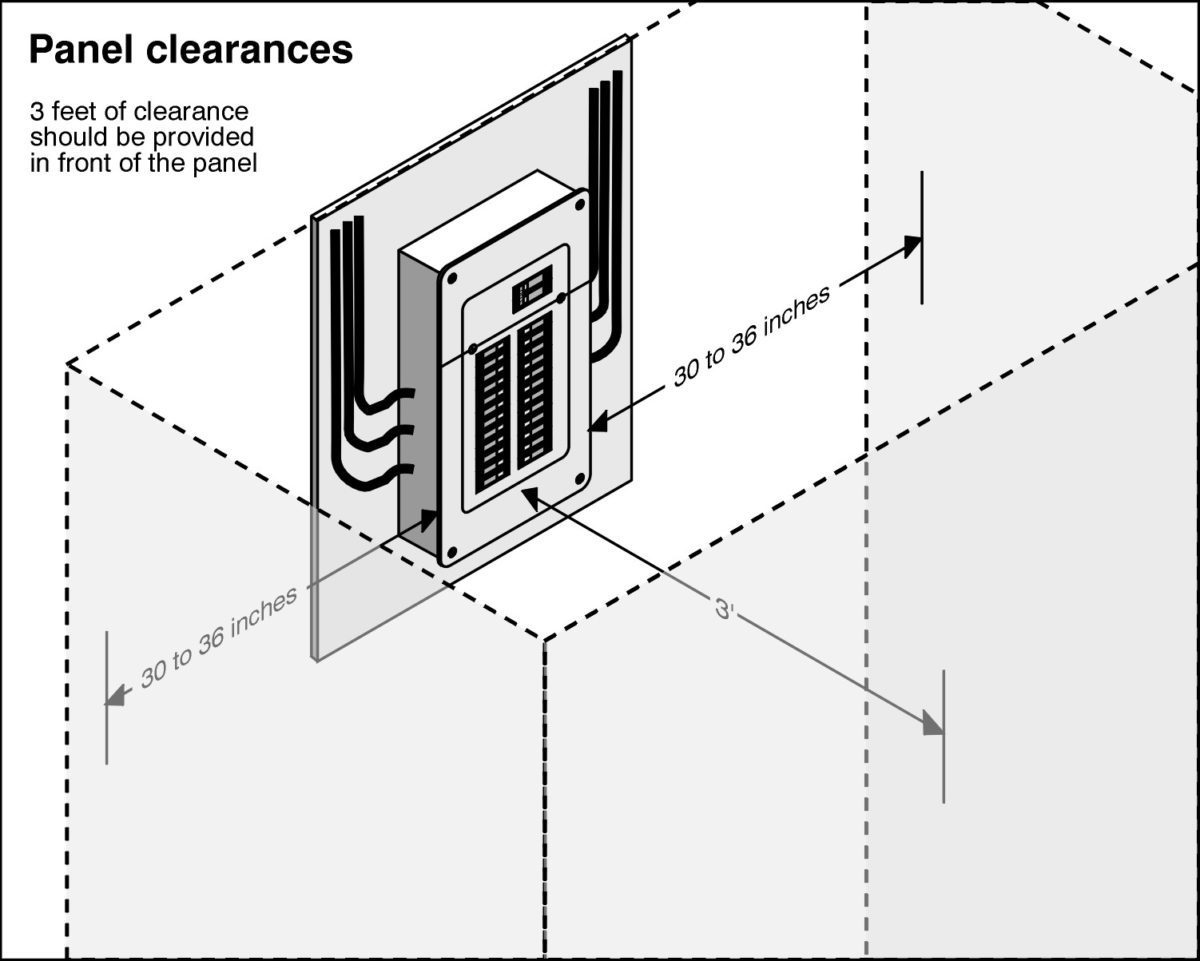
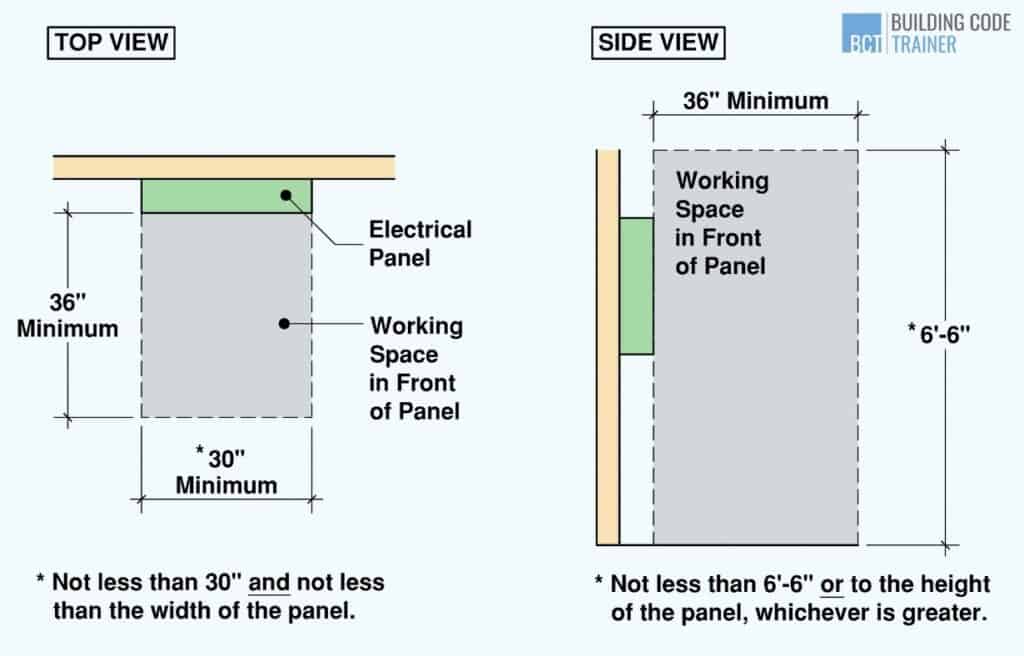
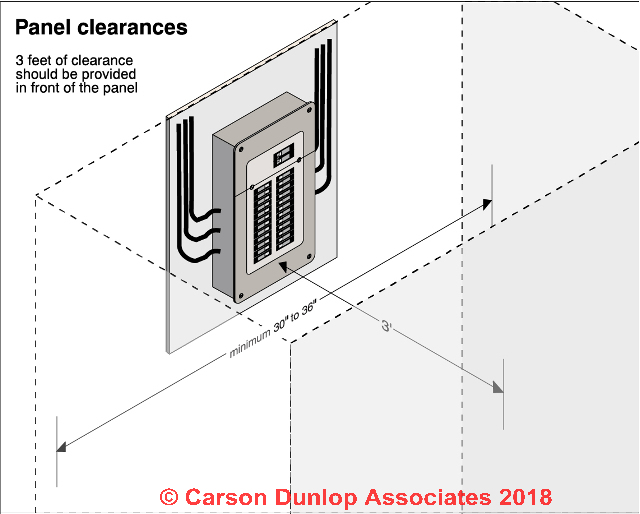
For typical residential panels (120/240V), Condition 1 requires a minimum depth of 3 feet. Higher voltage panels require greater depths. Always consult the NEC table 110.26(A)(1) for precise measurements based on your panel's voltage.
- Width: The working space must be at least 30 inches wide, or the width of the equipment if it's wider than 30 inches. This width allows personnel to safely work on the equipment without being obstructed. The panel door must be able to open at least 90 degrees.
- Height: The working space must be at least 6.5 feet high, or the height of the equipment, whichever is greater. This ensures adequate headroom for personnel working on the panel.
Illumination and Headroom
Beyond the physical dimensions, the NEC also mandates adequate illumination and headroom in the workspace. Sufficient lighting allows for clear visibility of the panel and its components, reducing the risk of errors and accidents. As mentioned before, maintaining a minimum headroom of 6.5 feet ensures comfortable and safe working conditions.
Dedicated Equipment Space
The space above and below the electrical panel must be dedicated to the electrical equipment. This means that other utilities, such as plumbing or HVAC ducts, cannot be installed in this space. A dedicated space ensures that the panel remains accessible and protected from potential damage. This dedicated space extends the width and depth requirements of the working space.
Common Violations and How to Avoid Them
Several common violations of NEC clearance requirements can lead to safety hazards and code compliance issues. Understanding these violations and taking steps to avoid them is essential for homeowners and businesses alike.
- Obstructions in the Working Space: Storing boxes, tools, or other items in front of the electrical panel is a common violation. These obstructions can impede access to the panel in an emergency or during maintenance.
- Insufficient Depth: Placing the electrical panel in a narrow hallway or closet without sufficient depth can violate the NEC requirements. Ensure that the working space meets the minimum depth requirements based on the panel's voltage.
- Lack of Dedicated Equipment Space: Running plumbing pipes or HVAC ducts above or below the electrical panel can violate the dedicated equipment space requirements. Relocate these utilities to ensure that the panel has a clear and unobstructed space.
- Inadequate Illumination: Poor lighting in the area around the electrical panel can make it difficult to see the panel's components and increase the risk of errors. Install adequate lighting to ensure clear visibility.
Energy Efficiency Benefits of Proper Clearance
While seemingly unrelated, maintaining proper electrical panel clearance directly contributes to energy efficiency in several ways:
- Facilitates Upgrades: Easy access to the electrical panel simplifies the installation of energy-efficient upgrades such as smart thermostats, solar panels, and EV chargers. These upgrades can significantly reduce energy consumption and lower utility bills.
- Reduces Downtime: Quick access to the panel allows for prompt troubleshooting and repairs, minimizing downtime and preventing energy waste caused by malfunctioning equipment.
- Encourages Regular Inspections: Accessible panels are more likely to be inspected regularly, allowing for early detection of potential problems that could lead to energy inefficiencies.
- Supports Smart Home Integration: Integrating smart home devices with your electrical system requires easy access to the panel for wiring and configuration. Proper clearance ensures that these devices can be installed and maintained efficiently, maximizing their energy-saving potential.
Integrating Smart HVAC and Electrical Systems
Smart HVAC systems, coupled with smart electrical panels, are the future of energy-efficient homes and businesses. These systems use sensors, data analytics, and automation to optimize energy consumption and reduce costs. Integrating these systems requires a modern electrical panel with sufficient capacity and proper clearance for installation and maintenance.
For example, smart thermostats learn your heating and cooling preferences and adjust the temperature automatically to minimize energy waste. These thermostats can be integrated with smart electrical panels to monitor energy usage and identify potential problems. Similarly, smart sensors can detect occupancy and adjust lighting and HVAC systems accordingly, further reducing energy consumption.
Energy Star certified smart thermostats often qualify for rebates and incentives from utility companies. These rebates can significantly reduce the upfront cost of upgrading to a smart HVAC system, making it a financially attractive option for homeowners and businesses.
ROI and Incentives for Electrical Panel Upgrades
Upgrading an outdated electrical panel not only improves safety and accessibility but also provides a significant return on investment (ROI) through energy savings and increased property value. Older panels may have insufficient capacity to handle modern electrical loads, leading to frequent tripping of circuit breakers and potential damage to electrical equipment. A new panel can accommodate the increased demands of smart home devices, EV chargers, and other energy-efficient appliances.
Many utility companies and government agencies offer rebates and incentives for electrical panel upgrades. These incentives can help offset the cost of the upgrade and make it more affordable for homeowners and businesses. Additionally, upgrading to a new panel can increase the value of your property, making it a worthwhile investment in the long run. Check with your local utility company and state energy office to learn about available rebates and incentives.
"Investing in a modern, properly installed electrical panel is an investment in the safety, efficiency, and value of your property." - *Energy Efficiency Experts of America*
Ensuring Compliance and Hiring a Qualified Electrician
Electrical work can be dangerous and should only be performed by qualified and licensed electricians. Improper wiring or installation can lead to electrical fires, shocks, and other hazards. When hiring an electrician, be sure to check their credentials, licenses, and insurance. Ask for references and review their past work to ensure they have the experience and expertise to handle your electrical panel upgrade.
A qualified electrician will ensure that your electrical panel meets all applicable codes and regulations. They will also provide guidance on selecting the right panel for your needs and ensuring that it is properly installed and maintained. By hiring a qualified electrician, you can have peace of mind knowing that your electrical system is safe, efficient, and compliant with all applicable standards.
Regularly inspect your electrical panel for any signs of damage or wear. If you notice any problems, such as flickering lights, frequently tripping circuit breakers, or unusual noises, contact a qualified electrician immediately. Prompt repairs can prevent more serious problems and ensure the safety and efficiency of your electrical system.
Conclusion
Proper electrical panel clearance is not just a matter of code compliance; it's a critical component of a safe, efficient, and sustainable energy system. By understanding and adhering to the NEC requirements, homeowners and businesses can ensure easy access for maintenance, facilitate energy-efficient upgrades, and minimize the risk of electrical hazards. Investing in a modern, properly installed electrical panel is an investment in the safety, efficiency, and value of your property. Furthermore, embracing smart HVAC systems and electrical panels allows for optimized energy usage, lower utility bills, and a more environmentally friendly footprint. Take the time to assess your electrical panel clearance and ensure that it meets all applicable standards. Your safety and energy savings depend on it.