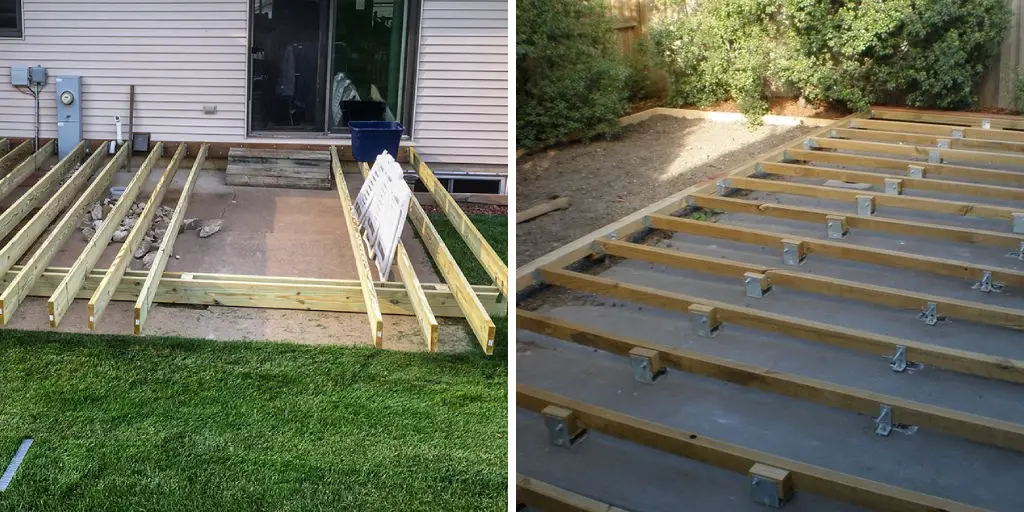
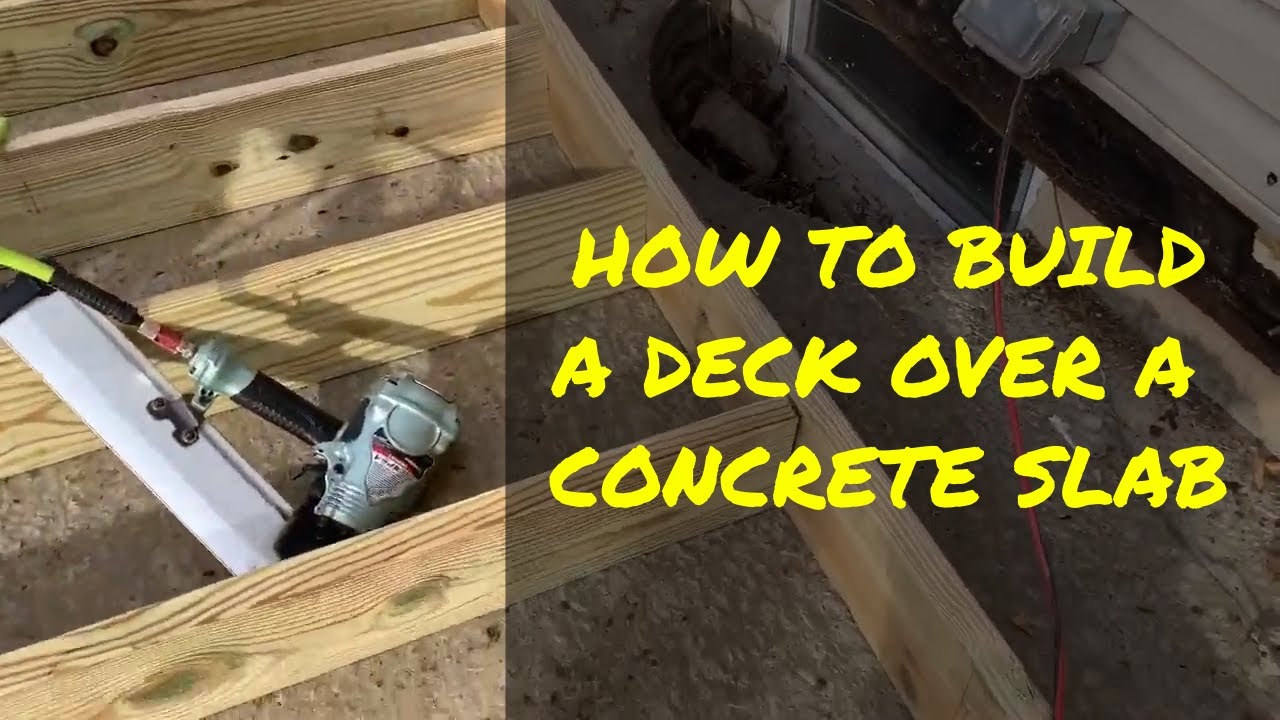
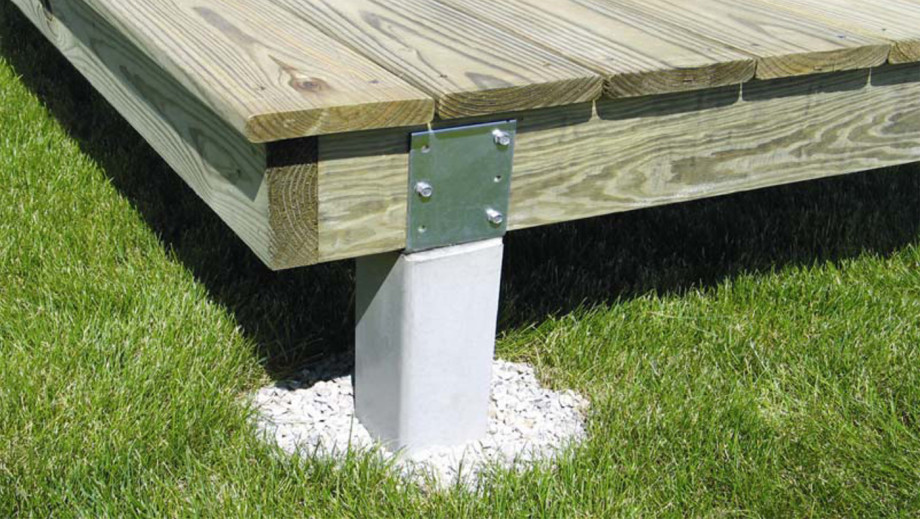
Deck Posts On Concrete Slab

Deck posts anchored to a concrete slab offer a sturdy foundation for outdoor living spaces. However, improper installation or lack of insulation can create significant thermal bridges, leading to increased energy costs and decreased comfort. This article explores best practices for installing deck posts on concrete slabs to minimize energy loss and maximize the efficiency of your HVAC system.
Understanding the Thermal Bridge Effect
A thermal bridge is a pathway of high thermal conductivity that allows heat to flow more easily through a building's envelope. When deck posts are directly attached to a concrete slab without proper insulation, the concrete acts as a thermal bridge, conducting heat from inside your home to the outside during winter and vice versa during summer. This continuous heat transfer increases the workload on your HVAC system, resulting in higher energy bills.
Consider this: uninsulated concrete has an R-value (resistance to heat flow) of around 0.1 to 0.2 per inch. This is significantly lower than typical wall insulation, which can range from R-13 to R-21. A deck post directly connected to the slab acts as a "short circuit" in your home's insulation system.
Best Practices for Energy-Efficient Deck Post Installation
Mitigating the thermal bridge effect is crucial for energy savings. Here are several strategies to consider when installing deck posts on a concrete slab:
1. Utilizing Thermal Breaks
A thermal break is a material with low thermal conductivity placed between the deck post and the concrete slab to interrupt the heat flow. Several options are available:
- High-Density Polyethylene (HDPE) Shims: HDPE shims offer a simple and cost-effective thermal break. They provide a physical barrier between the post and the slab, reducing direct contact and minimizing heat transfer. Ensure the shims are thick enough to provide adequate insulation – at least ½ inch is recommended.
- Closed-Cell Foam Pads: Closed-cell foam pads, such as expanded polystyrene (EPS) or extruded polystyrene (XPS), offer superior insulation compared to HDPE shims. These pads have higher R-values and can effectively reduce thermal bridging. Choose a pad with a minimum R-value of 5.
- Proprietary Thermal Break Products: Several manufacturers offer specialized thermal break products designed specifically for deck posts. These products often incorporate advanced materials and engineered designs for optimal thermal performance. Research brands like Thermal Block or Barricade Building Products.
When using thermal breaks, ensure they are properly sized and installed to fully cover the contact area between the post and the slab. This prevents any direct contact that could create a thermal bridge.
2. Insulating the Slab Perimeter
In addition to thermal breaks at the post-to-slab connection, insulating the perimeter of the concrete slab can further reduce heat loss. This is especially important in colder climates. Exterior insulation can be applied to the exposed edges of the slab, providing a continuous thermal barrier.
Consider using rigid foam insulation boards, such as EPS or XPS, with a minimum R-value of 10. These boards can be attached to the slab using construction adhesive and mechanical fasteners. Cover the insulation with a protective layer, such as stucco or siding, to prevent damage from weather and UV exposure.
3. Using Insulated Concrete Forms (ICFs) for New Construction
If you are building a new home with a deck attached to a concrete slab, consider using insulated concrete forms (ICFs) for the foundation walls. ICFs are hollow blocks made of EPS foam that are stacked and filled with concrete. They provide excellent insulation and can significantly reduce thermal bridging. ICFs offer continuous insulation around the entire foundation, including the slab perimeter, creating a highly energy-efficient building envelope.
ICF construction often qualifies for energy efficiency rebates and incentives. Check with your local utility company and government agencies for available programs.
4. Selecting the Right Anchoring System
The type of anchoring system used to attach the deck post to the concrete slab can also impact energy efficiency. Avoid using metal anchors that directly connect the post to the slab, as these can create a significant thermal bridge. Instead, opt for anchoring systems that minimize metal-to-concrete contact.
Consider using epoxy anchors with fiberglass or composite sleeves. These sleeves provide insulation between the metal anchor and the concrete, reducing heat transfer. Alternatively, you can use adjustable deck post anchors with built-in thermal breaks.
5. Sealing Air Leaks
Air leaks around the deck post can also contribute to energy loss. Seal any gaps or cracks between the post, the slab, and the surrounding wall with caulk or weather stripping. This will prevent drafts and reduce the amount of conditioned air that escapes from your home.
Pay close attention to areas where the deck boards meet the house. Use backer rod and sealant to create an airtight seal. Regularly inspect these areas for cracks and re-seal as needed.
Smart HVAC Integration for Enhanced Energy Savings
Integrating your HVAC system with smart home technology can further enhance energy savings and improve comfort. Smart thermostats, sensors, and zoning systems allow you to control your heating and cooling based on occupancy, weather conditions, and personal preferences. Here's how it ties in with deck design:
- Smart Thermostats: A smart thermostat learns your heating and cooling patterns and automatically adjusts the temperature to optimize energy efficiency. It can also be controlled remotely via a smartphone app, allowing you to adjust the temperature before you arrive home. Look for Energy Star certified smart thermostats for proven energy savings.
- Smart Sensors: Smart sensors can detect occupancy and temperature in different zones of your home. This information can be used to adjust the heating and cooling in each zone, ensuring that only occupied areas are heated or cooled. Sensors placed near the deck door can detect when the door is open for extended periods, automatically adjusting the thermostat to prevent excessive energy loss.
- Zoning Systems: Zoning systems allow you to divide your home into different temperature zones. This is particularly useful if you have a large deck or a home with varying heating and cooling needs. By controlling the temperature in each zone independently, you can optimize energy efficiency and improve comfort.
Integrating your HVAC system with a smart home platform like Google Home or Amazon Alexa allows you to control your thermostat and sensors using voice commands. This makes it easy to adjust the temperature and monitor energy usage. Setting up automatic routines based on time of day, weather, or deck usage can further optimize energy savings.
ROI and Energy Savings
Investing in energy-efficient deck post installation and smart HVAC integration can provide significant long-term cost savings. While the initial investment may be higher, the reduced energy bills and increased comfort will quickly pay for themselves.
According to the U.S. Department of Energy, homeowners can save up to 10% on their heating and cooling bills by properly insulating their homes. By mitigating thermal bridging and sealing air leaks around deck posts, you can contribute to these overall energy savings. Smart thermostats can save an additional 8% on heating and cooling costs, according to Energy Star.
Consider the following example: A homeowner spends $500 on thermal breaks, slab insulation, and air sealing materials for their deck posts. They also invest in a $200 smart thermostat. Their annual heating and cooling costs are $2,000. By implementing these energy-efficient measures, they can save approximately 10% on their heating and cooling bills, resulting in annual savings of $200. In this scenario, the investment would pay for itself in approximately 3.5 years.
Rebates and Incentives
Many utility companies and government agencies offer rebates and incentives for energy-efficient home improvements. These programs can help offset the cost of thermal breaks, insulation, smart thermostats, and other energy-saving measures.
Check with your local utility company and state energy office to see what rebates and incentives are available in your area. The Database of State Incentives for Renewables & Efficiency (DSIRE) is a comprehensive online resource for finding energy efficiency rebates and incentives.
Some rebates may be available for installing Energy Star certified products or for meeting specific energy efficiency standards. Be sure to research the eligibility requirements before making any purchases.
Conclusion
Properly installing deck posts on concrete slabs and integrating your HVAC system with smart home technology are essential for maximizing energy efficiency and reducing energy costs. By implementing the best practices outlined in this article, you can minimize thermal bridging, seal air leaks, and optimize your heating and cooling system for optimal performance. Investing in energy-efficient home improvements is not only good for your wallet but also for the environment.
Remember to consult with a qualified HVAC contractor or energy auditor for personalized recommendations and to ensure that your installation meets local building codes and energy efficiency standards. By taking the time to plan and execute your project carefully, you can enjoy a comfortable and energy-efficient home for years to come.