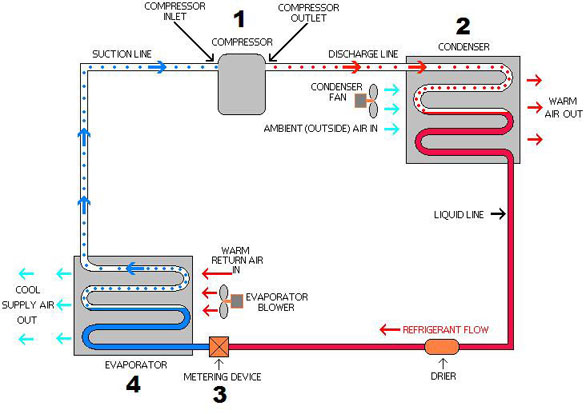
Diagram Of Home Air Conditioning System
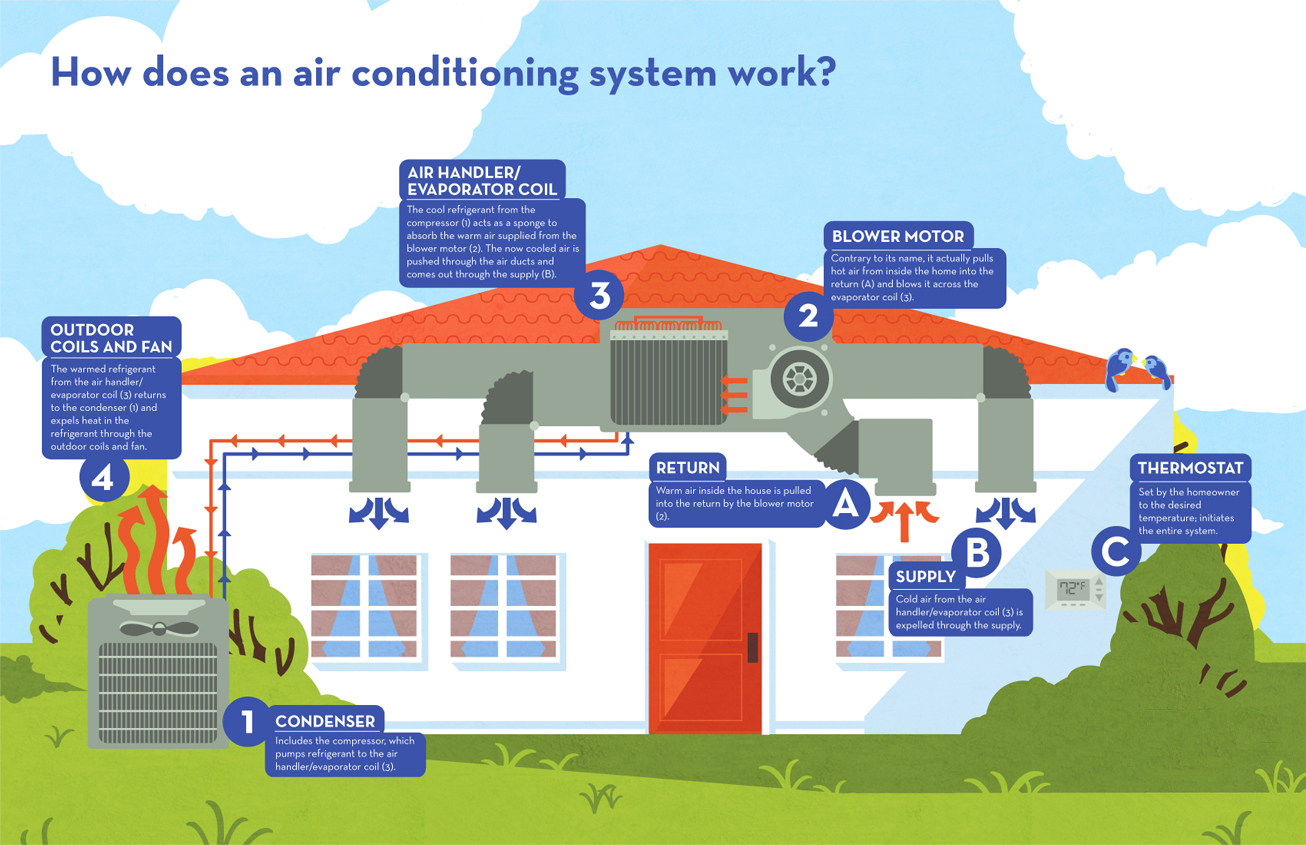
Understanding Your Home Air Conditioning System: A Comprehensive Guide
Air conditioning systems are complex, but understanding the basics is crucial for homeowners, HVAC technicians, and anyone interested in the field. This article breaks down the components of a typical residential air conditioning system, explores common issues, and offers insights into HVAC careers.
The Anatomy of a Central Air Conditioning System
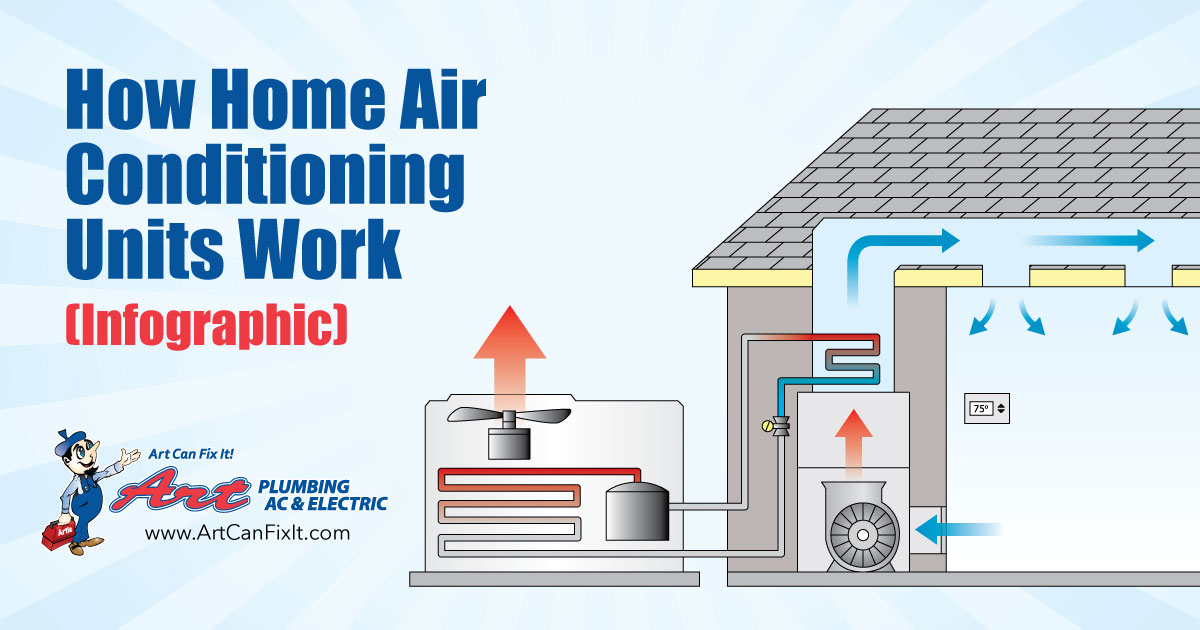
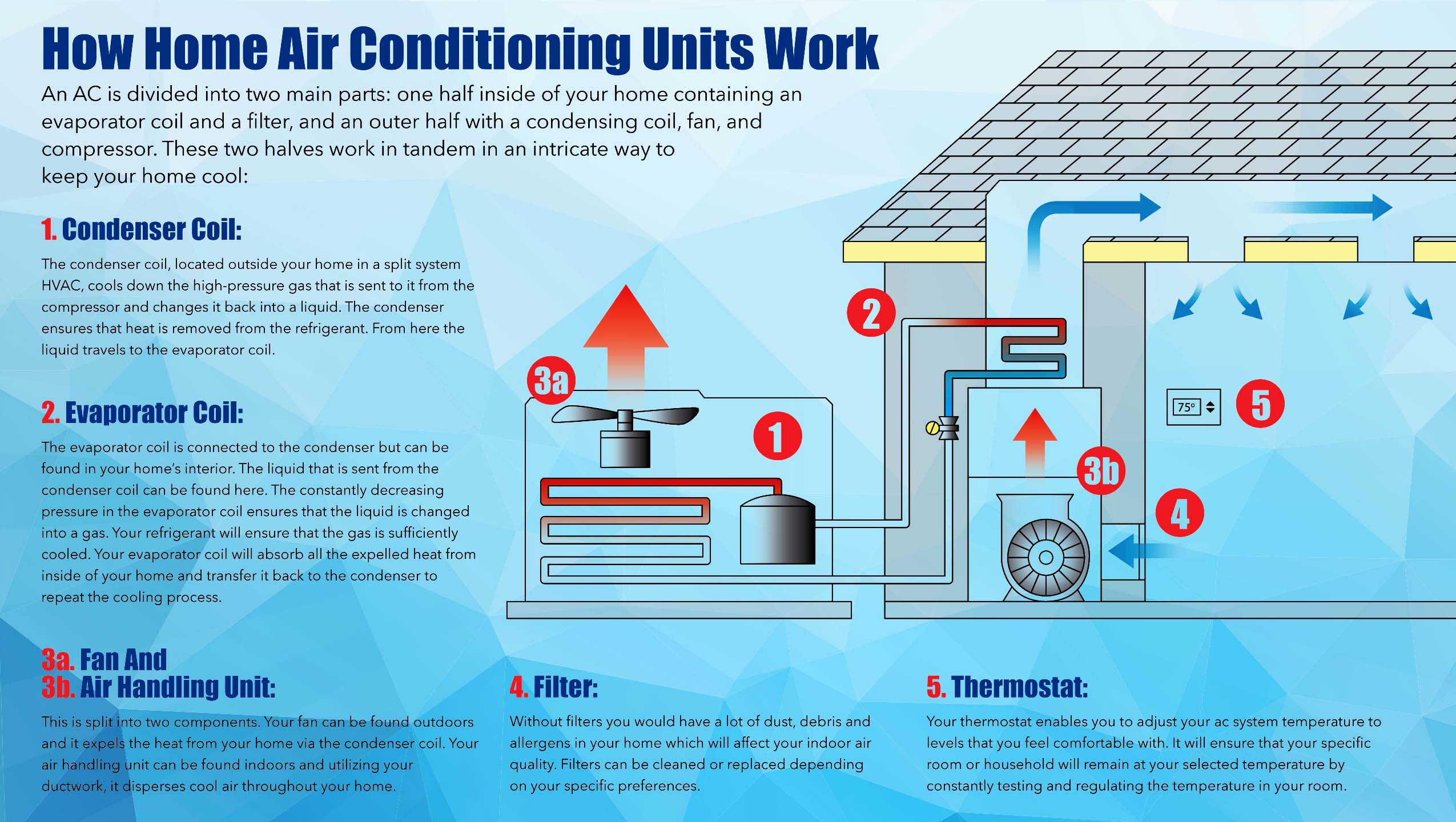
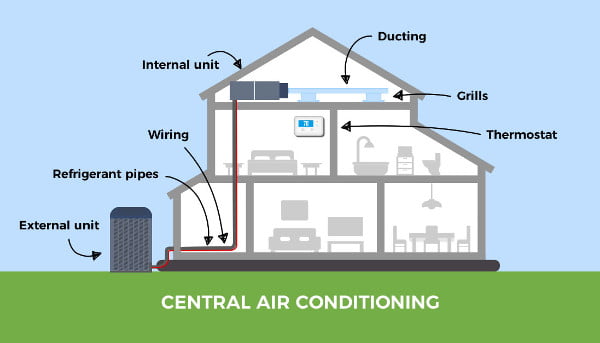
A central air conditioning system comprises several key components working in harmony to cool your home. Here's a look at each:
- Refrigerant: The lifeblood of the system. Refrigerant absorbs heat inside your home and releases it outside. Common refrigerants include R-410A (being phased out) and newer, more environmentally friendly options like R-32.
- Compressor: Located in the outdoor unit, the compressor pressurizes the refrigerant, turning it into a hot, high-pressure gas.
- Condenser Coil: Also located in the outdoor unit, the condenser coil dissipates the heat from the refrigerant to the outside air, converting it into a high-pressure liquid. A fan assists this process.
- Expansion Valve (or Metering Device): This component reduces the pressure of the refrigerant, turning it into a cool, low-pressure liquid as it enters the evaporator coil.
- Evaporator Coil: Located inside the air handler (often part of the furnace), the evaporator coil absorbs heat from the indoor air, cooling it down. The refrigerant turns into a low-pressure gas in this process.
- Air Handler: The air handler circulates air throughout your home. It typically contains a blower fan, the evaporator coil, and filters.
- Ductwork: A network of ducts distributes the cooled air from the air handler to different rooms in your home and returns warm air back to the air handler.
- Thermostat: The control center of the system. The thermostat senses the indoor temperature and signals the air conditioner to turn on or off to maintain the desired temperature. Smart thermostats offer advanced features like remote control and energy monitoring.
The Refrigeration Cycle: How it Works
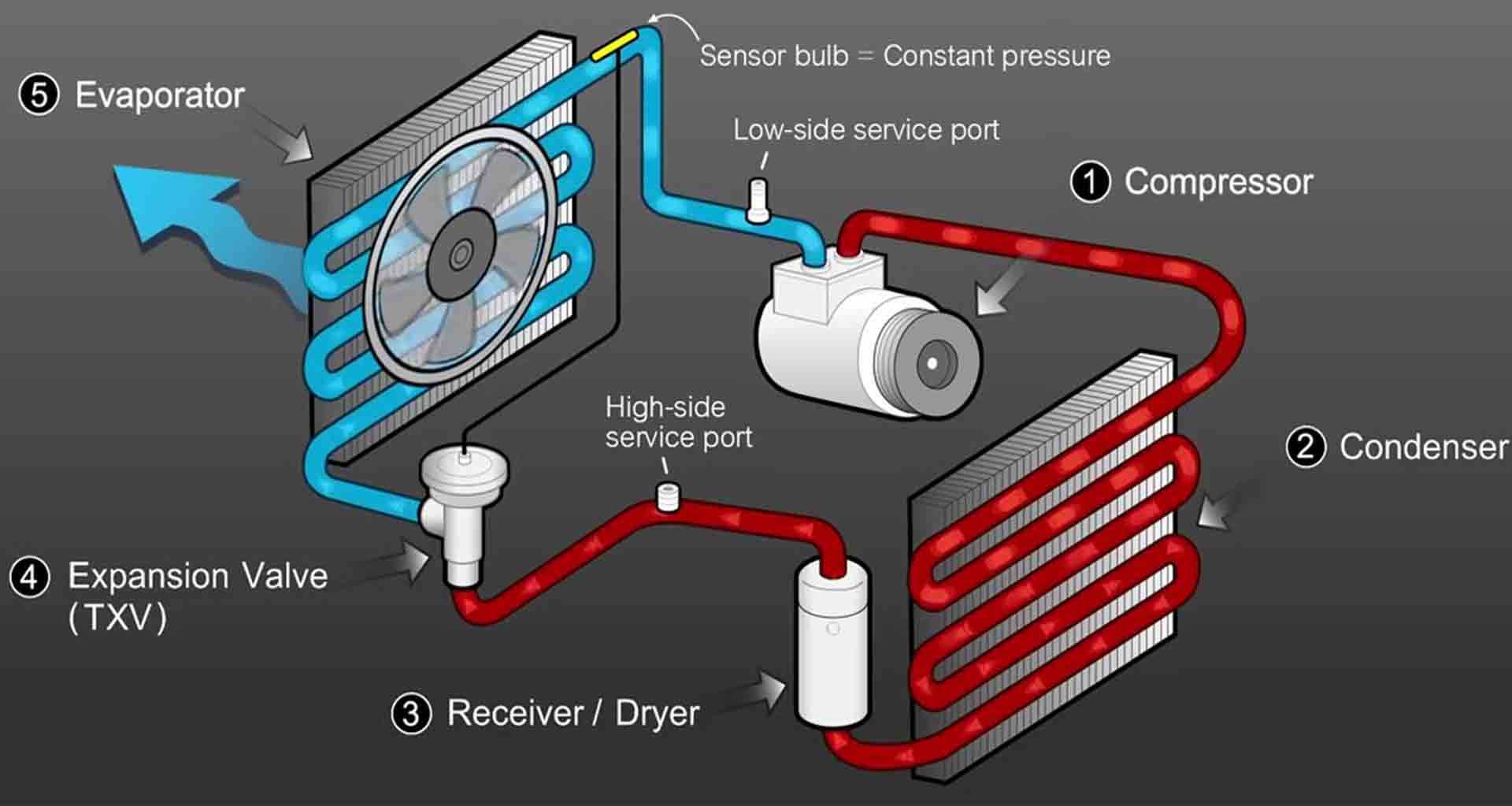
The air conditioning process relies on the refrigeration cycle, a closed-loop system where refrigerant constantly changes state to transfer heat. Here's a simplified explanation:
- The compressor pumps refrigerant as a high-pressure, high-temperature gas.
- The hot gas flows to the condenser coil, where it releases heat to the outside air and condenses into a high-pressure liquid.
- The liquid refrigerant flows through the expansion valve, which reduces its pressure and temperature.
- The cold, low-pressure refrigerant flows to the evaporator coil, where it absorbs heat from the indoor air, cooling the air and turning back into a low-pressure gas.
- The low-pressure gas returns to the compressor, and the cycle repeats.
Common Air Conditioning Problems and Troubleshooting
Several issues can affect the performance of your air conditioning system. Some common problems include:
- Refrigerant Leaks: A common problem that reduces cooling efficiency. Signs include ice buildup on the coils and a hissing sound. Requires professional repair.
- Dirty Air Filters: Restrict airflow, reducing cooling efficiency and potentially damaging the system. Replace filters regularly (typically every 1-3 months).
- Frozen Evaporator Coil: Often caused by restricted airflow or low refrigerant.
- Faulty Compressor: A major issue that can lead to complete system failure. Often requires replacement of the entire unit.
- Dirty Condenser Coil: Reduces the system's ability to dissipate heat, lowering efficiency. Clean the coil regularly.
- Thermostat Issues: Malfunctioning thermostats can cause the system to run inefficiently or not turn on at all.
The HVAC Career Landscape: Opportunities and Growth
The Heating, Ventilation, and Air Conditioning (HVAC) industry offers a stable and growing career path. According to the Bureau of Labor Statistics, the employment of HVAC technicians is projected to grow 6 percent from 2022 to 2032, about as fast as the average for all occupations. About 40,700 openings for HVAC mechanics and installers are projected each year, on average, over the decade. This demand is driven by new construction, equipment upgrades, and the increasing complexity of HVAC systems.
The median annual wage for HVAC mechanics and installers was $59,620 in May 2023. The lowest 10 percent earned less than $36,090, and the highest 10 percent earned more than $87,940.
HVAC Career Paths: From Entry-Level to Specialized Roles
The HVAC industry offers a variety of career paths, catering to different skill sets and interests. Here are some common roles:
- HVAC Technician: Installs, maintains, and repairs HVAC systems in residential and commercial buildings. A solid understanding of electrical systems, refrigeration principles, and troubleshooting techniques is essential.
- HVAC Installer: Specializes in installing new HVAC systems. Requires knowledge of ductwork design, refrigerant piping, and equipment sizing.
- HVAC Service Technician: Focuses on diagnosing and repairing malfunctioning HVAC systems. Strong troubleshooting skills and customer service skills are crucial.
- HVAC Sales Engineer: Works with clients to design and sell HVAC systems for new construction and retrofit projects. Requires technical knowledge and sales skills.
- HVAC Design Engineer: Designs HVAC systems for buildings, ensuring they meet energy efficiency standards and building codes. Requires a strong understanding of thermodynamics, fluid mechanics, and building science.
- HVAC Project Manager: Oversees the installation and maintenance of HVAC systems for large-scale projects. Requires strong organizational and management skills.
Essential HVAC Certifications: Boosting Your Career Prospects
Certifications are highly valued in the HVAC industry. They demonstrate your knowledge and skills, enhancing your credibility and increasing your earning potential. Some key certifications include:
- NATE (North American Technician Excellence): The leading certification program for HVAC technicians. NATE certification demonstrates competency in specific HVAC areas, such as installation, service, and maintenance.
- EPA Section 608 Certification: Required by the EPA for technicians who handle refrigerants. Ensures proper handling and disposal of refrigerants to protect the environment. Different types exist depending on what you work with (Type I, Type II, Type III, and Universal).
- HVAC Excellence: Offers a range of certifications for HVAC technicians and educators.
- Industry Competency Exams (ICE): Another respected certification option for HVAC professionals.
Example Career Path: Many technicians start with an apprenticeship, learning the trade on the job under the guidance of experienced professionals. After completing their apprenticeship, they can pursue certifications like NATE and EPA 608 to advance their careers. Some technicians may eventually specialize in areas like commercial refrigeration or building automation systems, earning higher salaries and taking on more complex projects.
HVAC Training and Education: Building a Solid Foundation
A strong educational foundation is crucial for success in the HVAC industry. Options include:
- Vocational Schools and Trade Schools: Offer hands-on training in HVAC systems and related skills. Programs typically last from several months to two years.
- Community Colleges: Offer associate degrees in HVAC technology, providing a more comprehensive education in the field.
- Apprenticeships: Combine on-the-job training with classroom instruction, providing a well-rounded learning experience.
Emerging Trends in the HVAC Industry
The HVAC industry is constantly evolving, with new technologies and trends emerging regularly. Staying up-to-date on these advancements is essential for HVAC professionals. Key trends include:
- Energy Efficiency: Increasing demand for energy-efficient HVAC systems, driven by rising energy costs and environmental concerns.
- Smart HVAC Systems: Integration of smart technology into HVAC systems, allowing for remote control, energy monitoring, and predictive maintenance.
- Sustainable Refrigerants: Phasing out of ozone-depleting refrigerants and adoption of more environmentally friendly alternatives.
- Building Automation Systems (BAS): Integration of HVAC systems with other building systems, such as lighting and security, for improved efficiency and control.
HVAC Employer Perspectives: Finding Skilled Talent
Employers in the HVAC industry are constantly seeking skilled and qualified technicians. When hiring, they typically look for candidates with:
- Technical Skills: A strong understanding of HVAC systems, electrical systems, and refrigeration principles.
- Certifications: NATE, EPA 608, and other relevant certifications.
- Experience: Previous experience in HVAC installation, maintenance, or repair.
- Problem-Solving Skills: Ability to diagnose and repair malfunctioning HVAC systems.
- Customer Service Skills: Ability to communicate effectively with customers and provide excellent service.
Employers often partner with vocational schools and trade schools to recruit graduates. They also offer apprenticeships and training programs to develop their workforce.
In conclusion, understanding the diagram of a home air conditioning system is the first step for both homeowners and aspiring HVAC professionals. With a growing demand for skilled technicians and evolving technologies, the HVAC industry offers rewarding career opportunities for those who are willing to learn and adapt.