Difference Between Fluke T6 1000 And T6 1000 Pro
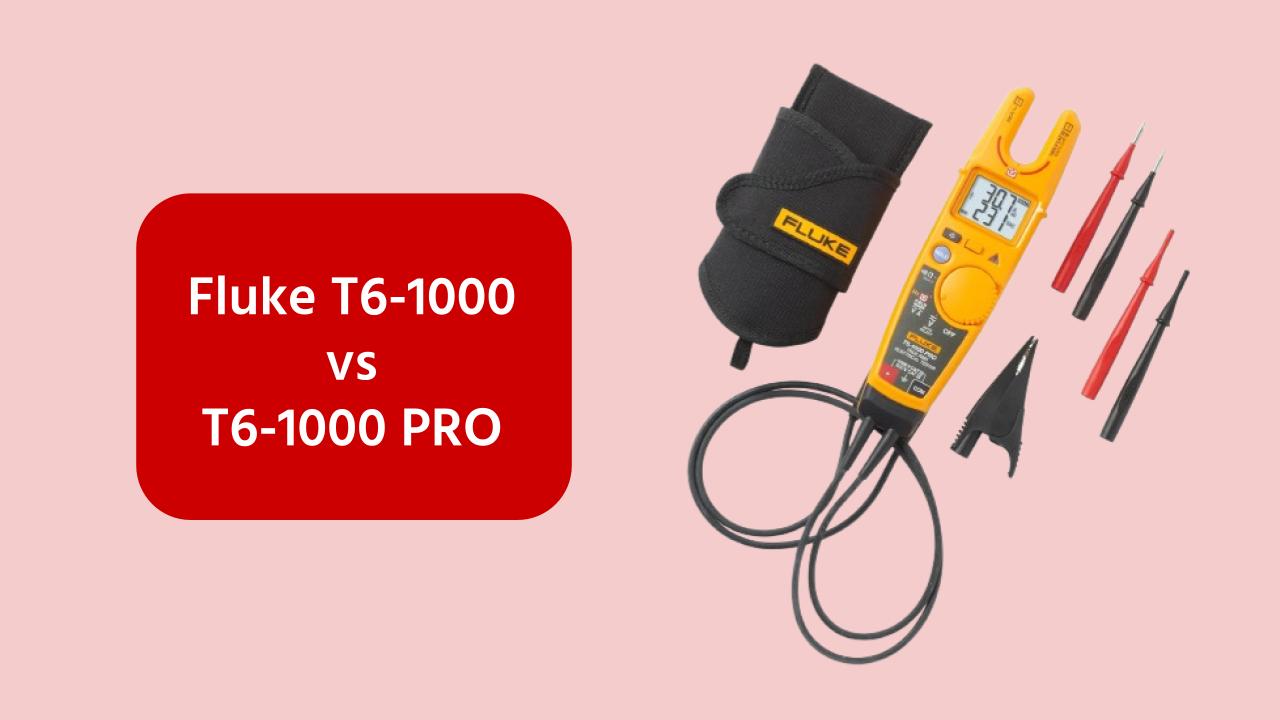
Unlocking the Differences: Fluke T6-1000 vs. T6-1000 Pro for HVAC Troubleshooting
When tackling HVAC issues, having the right tools is crucial. The Fluke T6-1000 and T6-1000 Pro are popular choices for non-contact voltage and current measurement. Both tools offer a safer and more convenient way to troubleshoot electrical problems without needing test leads in many situations. However, understanding their differences is key to choosing the right one for your needs. This guide breaks down the features, benefits, and drawbacks of each model to help you make an informed decision.
Core Functionality: What Both Testers Offer
Before diving into the specifics, let's outline what the Fluke T6-1000 and T6-1000 Pro have in common:
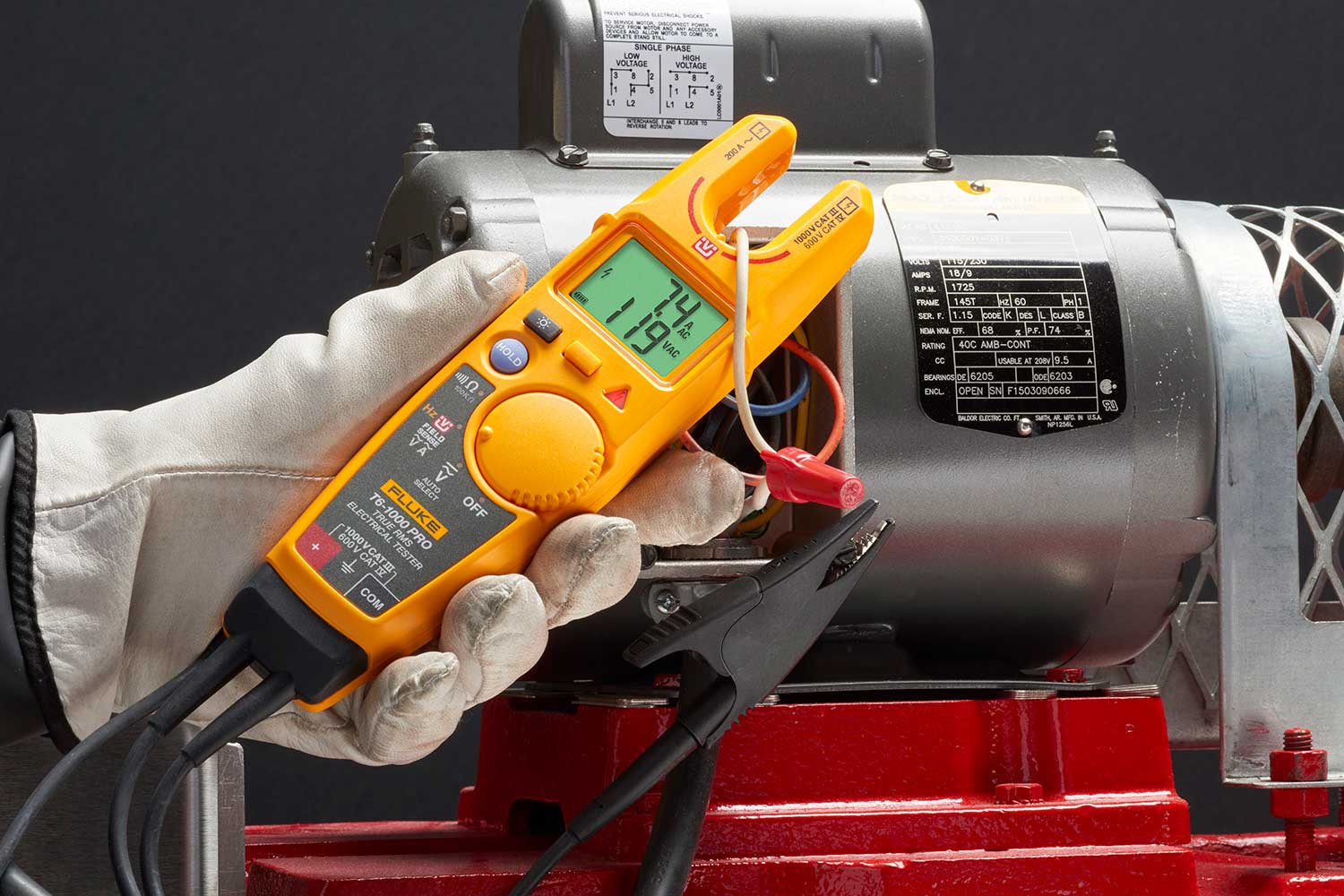
- FieldSense Technology: Measures AC voltage and current without test leads, simply by sliding the open fork over a conductor. This enhances safety, especially when working with live circuits.
- AC Voltage Measurement: Both measure AC voltage from 1 to 1000 V.
- AC Current Measurement: Both measure AC current from 0.1 to 200 A.
- Frequency Measurement: Capability to measure frequency from 45 Hz to 66 Hz.
- Resistance Measurement: Measures resistance up to 1000 Ω.
- Continuity Testing: Checks for broken circuits or loose connections.
- Compact Design: Both are designed to fit comfortably in your hand and are easy to carry around.
- Easy-to-Read Display: Provides clear readings, even in dimly lit environments.
- Safety Rating: CAT III 1000V/CAT IV 600V rating for safe use in a wide range of electrical environments.
Key Differences: Where the Pro Excels
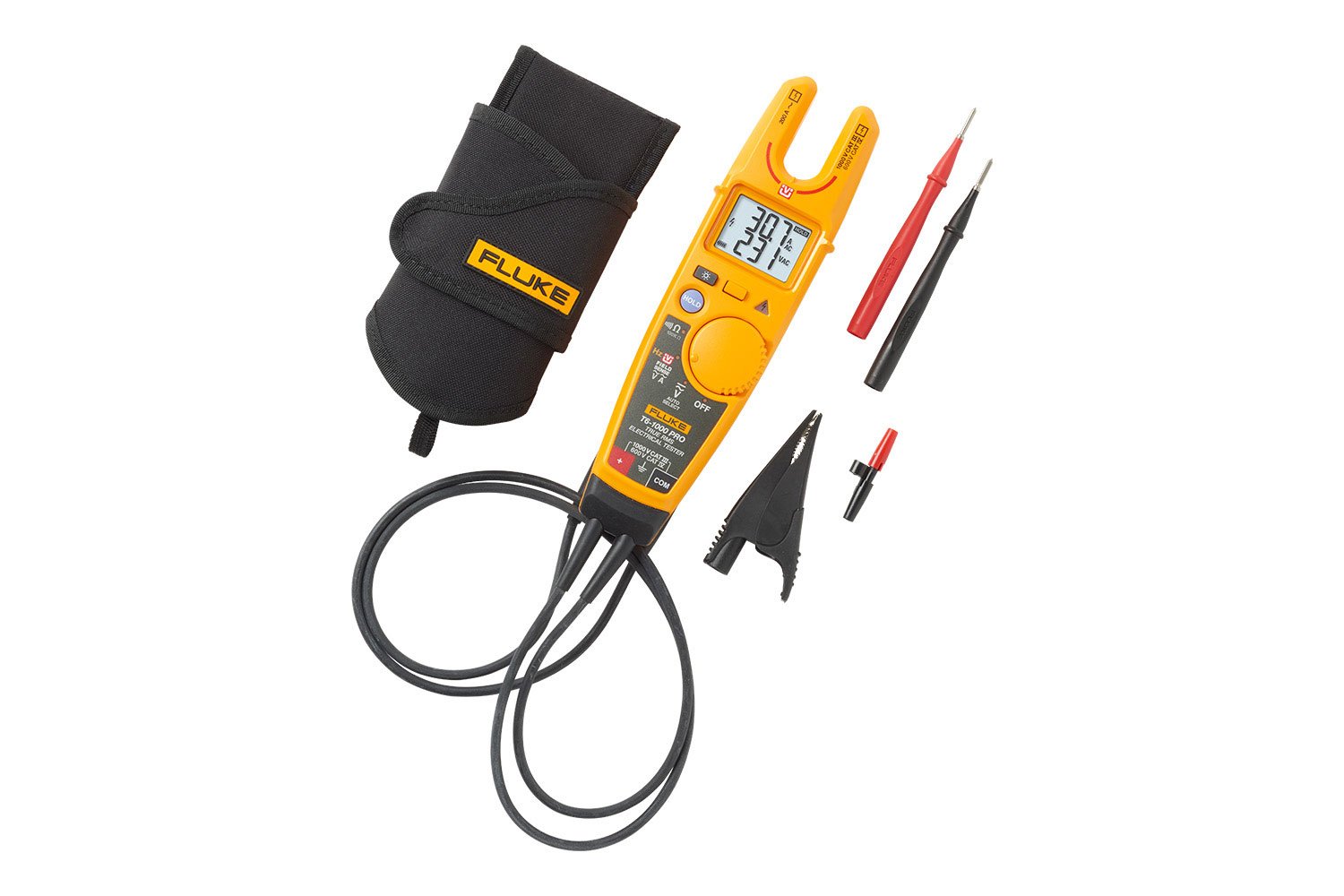
The Fluke T6-1000 Pro builds upon the foundation of the T6-1000, offering enhanced features and accuracy for more demanding troubleshooting tasks. Here's a detailed comparison:
- True-RMS Measurement: This is the biggest difference. The T6-1000 Pro features True-RMS voltage and current measurements, providing accurate readings on non-linear signals. This is essential for modern electronics and variable frequency drives (VFDs) commonly found in HVAC systems. The standard T6-1000 provides average measurements, which can be inaccurate on distorted waveforms.
- Resistance Range: The Pro model extends the resistance measurement range to 100.0 kΩ, allowing you to test a wider range of components. The standard T6-1000 is limited to 1000 Ω.
- Improved Accuracy: The T6-1000 Pro generally offers higher accuracy across all measurement ranges compared to the standard T6-1000.
- Higher Display Resolution: The Pro model boasts a higher resolution display for more precise readings.
- Temperature Measurement: The T6-1000 Pro often includes a K-type thermocouple input and temperature measurement capabilities. This is incredibly useful for checking superheat and subcooling in refrigeration systems.
- Backlight: Some versions of the Pro offer an improved backlight for better visibility in dark areas.
Use Cases in HVAC Troubleshooting
Let's explore specific HVAC scenarios where each tester shines:
Fluke T6-1000: Best for Basic Checks
- Verifying Power Supply: Quickly checking if a unit is receiving power before opening it up.
- Checking for Continuity: Ensuring wires and fuses are intact.
- Identifying Voltage Presence: Locating voltage sources in a circuit.
- Testing Capacitors: Checking capacitor health by measuring resistance after proper discharge (Warning: Capacitors can hold dangerous voltage even when the unit is off. Always discharge them before testing!).
Fluke T6-1000 Pro: Essential for Advanced Diagnostics
- VFD Troubleshooting: Accurately measuring voltage and current on VFD-controlled motors, where non-sinusoidal waveforms are common.
- Precise Voltage Readings: Obtaining accurate voltage readings for sensitive electronic components and controls.
- Temperature Measurement for Refrigeration: Monitoring superheat and subcooling to optimize refrigerant charge and system performance.
- Detailed Resistance Checks: Measuring resistance of sensors, thermistors, and other components with higher resistance values.
DIY vs. Professional: Knowing Your Limits
While the Fluke T6-1000 series simplifies electrical troubleshooting, safety is paramount. Remember these guidelines:
- Safety First: Always turn off the power to the circuit you are testing whenever possible. Use proper PPE (personal protective equipment), including safety glasses and insulated gloves.
- Know Your Limits: If you are uncomfortable working with electricity, call a qualified HVAC technician.
- Complex Repairs: Tasks such as refrigerant handling, compressor replacement, and control board repair require specialized knowledge and equipment and should only be performed by licensed professionals.
Common HVAC Problems and When to Use Your Tester
- No Power to Unit: Use the tester to check for voltage at the disconnect switch and at the unit's power terminals. If there's no voltage, check the circuit breaker.
- Fan Motor Not Working: Check for voltage at the fan motor terminals. If voltage is present but the motor isn't running, the motor may be faulty.
- Compressor Not Starting: Check for voltage at the compressor terminals. If voltage is present, the compressor may be locked rotor or have other internal issues. (Requires True-RMS meter like the T6-1000 Pro for accurate readings on VFD compressors.)
- Blown Fuses: Use the continuity function to check if a fuse is blown. If fuses are repeatedly blowing, there's likely a short circuit that needs to be identified and repaired.
- Capacitor Failure: Visually inspect the capacitor for bulging or leaking. Discharge it properly and use the resistance function to check its condition. (Warning: Capacitors can hold dangerous voltage even when the unit is off. Always discharge them before testing!).
Tools and Parts for Basic HVAC Troubleshooting
Having these items on hand can help you diagnose and resolve common HVAC issues:
Tools:
- Fluke T6-1000 or T6-1000 Pro: For voltage, current, and continuity testing.
- Screwdrivers (various sizes and types): For removing panels and accessing components.
- Pliers: For gripping and manipulating wires.
- Wire Strippers/Crimpers: For making secure wire connections.
- Multimeter with Thermocouple (if you don't have a T6-1000 Pro): For more detailed electrical measurements and temperature readings.
Parts:
- Fuses: Assorted amperage ratings for replacing blown fuses.
- Wire Connectors: For making secure wire connections.
- Replacement Capacitors: Matching the original capacitor's specifications. (Ensure proper discharge before handling.)
Cost Considerations: Investing in the Right Tester
The Fluke T6-1000 Pro typically costs more than the standard T6-1000. The extra investment is justified if you regularly work with VFDs, require higher accuracy, or need temperature measurement capabilities. For basic home use and occasional troubleshooting, the T6-1000 may be sufficient. However, investing in the Pro version gives you the confidence of more precise and useful data.
When to Call a Professional HVAC Technician
While basic troubleshooting can save you money, some problems require professional expertise. Call an HVAC technician if:
- You are uncomfortable working with electricity.
- You suspect a refrigerant leak.
- The compressor is not working.
- You are unsure about the proper diagnosis or repair procedure.
- The problem involves high voltage components.
- Any doubts about the process.
By understanding the differences between the Fluke T6-1000 and T6-1000 Pro, you can choose the right tool for your HVAC troubleshooting needs, enhance your safety, and potentially save money on repair costs. Remember to prioritize safety and call a professional when the job is beyond your capabilities.