Difference Between Latent Heat And Sensible Heat

Understanding Latent Heat and Sensible Heat: Key Concepts for HVAC Efficiency
In the world of HVAC (Heating, Ventilation, and Air Conditioning), understanding the difference between latent heat and sensible heat is crucial for homeowners, technicians, and facility managers alike. These two forms of heat energy play different roles in how our HVAC systems function and ultimately impact our comfort and energy bills. Getting a firm grasp on these concepts allows for better system selection, efficient operation, and improved troubleshooting. This article will break down the complexities of latent and sensible heat, using relatable examples and practical applications.
Sensible Heat: The Heat You Can Feel
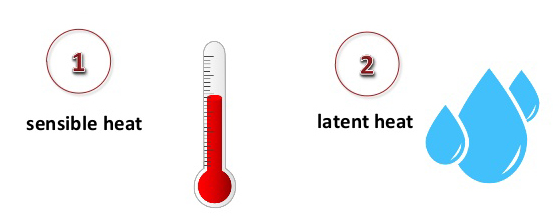
Sensible heat is the type of heat that causes a change in temperature of a substance. It’s called "sensible" because you can sense it – you can measure it with a thermometer, and you can feel it getting hotter or colder. When you turn on your furnace, the air in your home heats up, and the temperature rises. This is a direct result of adding sensible heat to the air.
Here are some key characteristics of sensible heat:
- Measurable Temperature Change: As sensible heat is added to a substance (like air or water), its temperature increases. Conversely, removing sensible heat causes the temperature to decrease.
- No Phase Change: Sensible heat doesn't cause a substance to change its state (e.g., from solid to liquid, or liquid to gas). It only affects its temperature.
- Impact on HVAC Systems: HVAC systems are primarily designed to manage sensible heat. Furnaces add sensible heat to warm spaces, while air conditioners remove sensible heat to cool spaces.
Examples of Sensible Heat in Action:
- Heating water on a stove: The temperature of the water rises as you add heat.
- The sun warming your skin: You feel the increase in temperature as your body absorbs solar energy.
- An air conditioner cooling a room: The thermostat detects a high temperature and activates the AC, removing heat from the air.
Latent Heat: The Hidden Heat of Phase Change
Latent heat, on the other hand, is the heat absorbed or released during a phase change of a substance without changing its temperature. Think of it as "hidden" heat because you don't see a temperature change, but energy is still being transferred. The most common example in HVAC systems is the evaporation and condensation of water.
Here are the defining features of latent heat:
- Phase Change: Latent heat is associated with changes in the state of a substance, such as melting ice (solid to liquid), boiling water (liquid to gas), or condensation (gas to liquid).
- Constant Temperature: During a phase change, the temperature remains constant even though heat is being added or removed.
- Humidity Control: Latent heat plays a critical role in humidity control. Air conditioners remove moisture from the air by cooling it to the dew point, causing water vapor to condense into liquid water. This process releases latent heat, which the AC must also remove to maintain the desired temperature.
Examples of Latent Heat in Action:
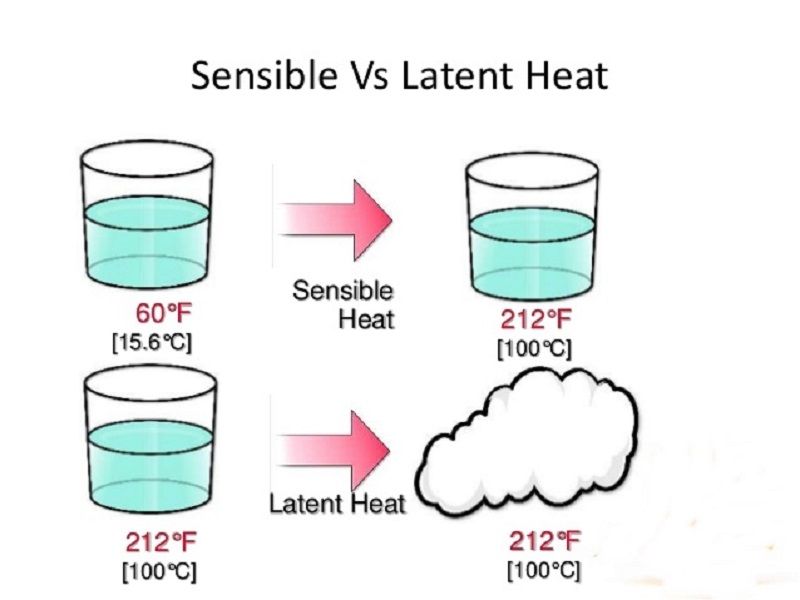
- Boiling water: The water temperature remains at 212°F (100°C) until all the water has turned into steam, despite continued heating. The heat being added is used to break the bonds between water molecules, allowing them to escape as steam (latent heat of vaporization).
- Melting ice: Ice stays at 32°F (0°C) while it melts into water. The heat absorbed is used to break the bonds holding the ice crystals together (latent heat of fusion).
- Air conditioning dehumidification: As air passes over the evaporator coil, water vapor condenses, removing moisture from the air and releasing latent heat. This is why a drain line is necessary for air conditioners.
The Relationship Between Sensible and Latent Heat in HVAC
Both sensible heat and latent heat are important considerations for HVAC system design and operation. The total heat load on a building comprises both sensible and latent heat loads. The sensible heat ratio (SHR) is the proportion of the total heat load that is sensible heat. A higher SHR indicates that the HVAC system primarily needs to address temperature control, while a lower SHR suggests a greater emphasis on humidity control.
Air Conditioners: Air conditioners are designed to remove both sensible and latent heat from the air. The cooling coil cools the air, removing sensible heat. Simultaneously, the coil's cold surface causes water vapor to condense, removing latent heat in the form of humidity. If an air conditioner is oversized, it may cool the air too quickly without effectively removing humidity, leading to a cold, clammy feeling.
Furnaces: Furnaces primarily add sensible heat to the air, raising the temperature. While they don't directly impact humidity, the heated air can hold more moisture. In very dry climates, humidifiers might be used in conjunction with furnaces to maintain comfortable humidity levels.
Practical Implications for Homeowners, Technicians, and Facility Managers
Understanding the difference between latent and sensible heat has several practical implications:
- HVAC System Selection: When selecting an HVAC system, consider the climate and the specific needs of the building. In humid climates, a system with good dehumidification capabilities is essential. Technicians can use psychrometric charts to accurately assess the sensible and latent heat loads and select appropriately sized equipment.
- System Sizing: Proper system sizing is crucial for both energy efficiency and comfort. An oversized air conditioner may cool the air too quickly without effectively removing humidity, while an undersized system may struggle to maintain the desired temperature. Load calculations, accounting for both sensible and latent heat, are essential for accurate sizing.
- Energy Efficiency: Efficient HVAC systems are designed to minimize energy consumption while effectively managing both sensible and latent heat. Look for systems with high SEER (Seasonal Energy Efficiency Ratio) ratings for cooling and AFUE (Annual Fuel Utilization Efficiency) ratings for heating. Consider using variable-speed systems, which can adjust their output to match the changing heat loads.
- Troubleshooting: Understanding the role of latent heat can aid in troubleshooting HVAC problems. For example, if a room feels cold and damp despite the air conditioner running, it could indicate a problem with the system's dehumidification capabilities.
- Maintenance: Regular maintenance, including cleaning coils and changing filters, can help ensure that HVAC systems operate efficiently and effectively manage both sensible and latent heat.
Cost Considerations
The initial cost of HVAC systems can vary significantly depending on their features, efficiency, and capacity. High-efficiency systems with advanced dehumidification capabilities may have a higher upfront cost but can offer significant long-term savings in energy bills. The lifespan of an HVAC system typically ranges from 15 to 20 years, depending on the quality of the equipment and the level of maintenance. Investing in a quality system and proper maintenance can help extend its lifespan and reduce the total cost of ownership.
Here's a general comparison:
- Lower Initial Cost: Standard efficiency systems, less sophisticated dehumidification. Higher long-term running costs.
- Higher Initial Cost: High-efficiency systems, advanced dehumidification, variable speed compressors. Lower long-term running costs.
Facility managers, in particular, should factor in the long-term operational costs and potential energy savings when making HVAC investment decisions. Conducting a thorough life-cycle cost analysis can help determine the most cost-effective option.
Conclusion
Understanding the difference between latent heat and sensible heat is fundamental to achieving optimal HVAC performance and energy efficiency. By grasping these concepts, homeowners can make informed decisions about system selection and operation, technicians can effectively troubleshoot and maintain HVAC equipment, and facility managers can optimize energy consumption and reduce operating costs. Paying attention to both sensible and latent heat loads will ultimately lead to greater comfort, lower energy bills, and a more sustainable future.