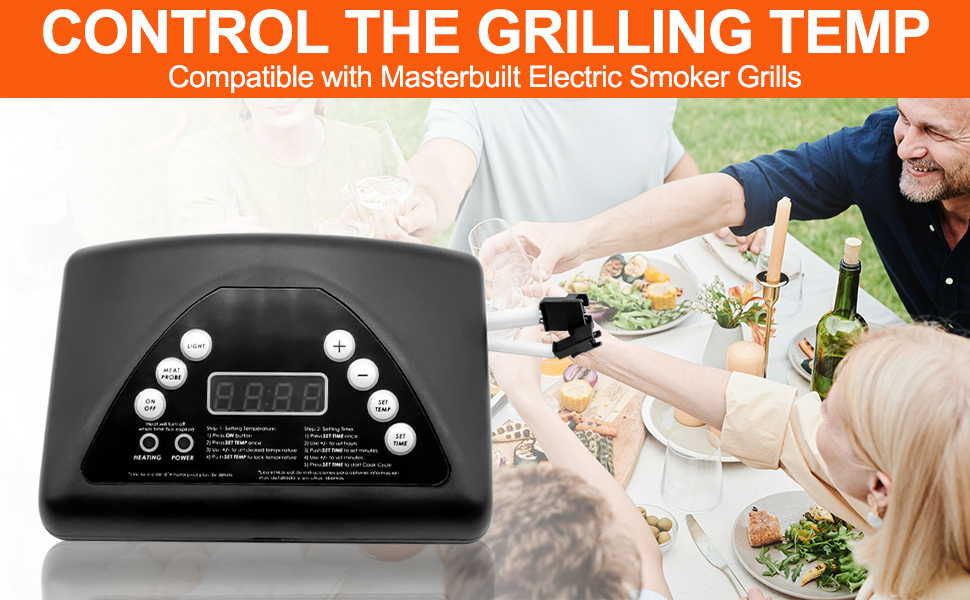
Digital Control Panel For Masterbuilt Smoker

Decoding Digital Control Panels in Masterbuilt Smokers: An HVAC Perspective
The world of heating, ventilation, and air conditioning (HVAC) extends far beyond traditional residential and commercial systems. As the industry evolves, so does the demand for technicians with expertise in related fields, including understanding and servicing appliances with sophisticated digital control systems. Believe it or not, the digital control panel on a Masterbuilt smoker shares fundamental principles with larger HVAC systems, making it a valuable learning opportunity for HVAC professionals and those aspiring to join the trade.
Why Smokers Matter to HVAC Professionals
You might be asking, "Why should an HVAC technician care about a smoker?" The answer lies in the increasing complexity of appliances. Many modern devices, including high-end smokers, utilize sophisticated digital control systems to manage temperature, airflow, and other parameters. Understanding these systems provides a foundational knowledge base applicable to a wider range of equipment.
Furthermore, the HVAC industry is facing a significant labor shortage. According to the U.S. Bureau of Labor Statistics, the employment of HVAC mechanics and installers is projected to grow 6 percent from 2022 to 2032, about as fast as the average for all occupations. Approximately 38,000 openings for HVAC mechanics and installers are projected each year, on average, over the decade. This demand creates opportunities for technicians with diverse skill sets, even those acquired from seemingly unrelated applications like understanding the control systems in a Masterbuilt smoker.
Let's break down the key components of a typical Masterbuilt smoker's digital control panel and how they relate to HVAC principles:
* Temperature Sensors: Just like in a home thermostat, temperature sensors (often thermocouples or thermistors) provide feedback to the control panel about the smoker's internal temperature. This is crucial for maintaining consistent cooking temperatures, similar to how HVAC systems regulate building temperatures. * Control Logic (Microcontroller): The "brain" of the system, the microcontroller, receives data from the temperature sensor and uses programmed algorithms to adjust the heating element (or gas valve) to maintain the desired temperature. This is analogous to the control algorithms used in sophisticated HVAC controllers for managing dampers, variable-speed fans, and modulating burners. * Heating Element/Gas Valve: These components provide the heat source. The control panel regulates their output based on the feedback from the temperature sensor, ensuring the smoker stays within the set temperature range. This is directly comparable to how furnaces and heat pumps operate in HVAC systems. * Display and User Interface: The display shows the current temperature, set temperature, and other relevant information. The user interface allows the user to set the desired temperature and cooking time. This mirrors the interface on modern thermostats and HVAC control systems, which often include touchscreens and mobile app connectivity.Bridging the Gap: Skills Transferable from Smoker Controls to HVAC
Understanding the principles behind a Masterbuilt smoker's digital control panel can provide valuable experience for aspiring HVAC technicians in several key areas:
* Troubleshooting Electrical Circuits: Identifying and resolving electrical issues within the control panel, such as faulty sensors, wiring problems, or a malfunctioning heating element, directly translates to diagnosing electrical problems in HVAC equipment. * Understanding Control Systems: Grasping the closed-loop control system used in the smoker (temperature sensor -> microcontroller -> heating element) provides a foundational understanding of control theory applicable to more complex HVAC systems. * Reading and Interpreting Schematics: Many Masterbuilt smokers come with basic wiring diagrams. Learning to read and interpret these schematics is a crucial skill for HVAC technicians, who often rely on schematics to diagnose and repair equipment. * Basic Programming and Configuration: While not all smokers allow for advanced programming, understanding how the control panel is configured and how to adjust parameters can be a stepping stone to working with programmable logic controllers (PLCs) used in industrial HVAC applications.Certifications and Career Advancement in HVAC
While experience with appliance control systems can be beneficial, formal training and certifications are essential for a successful career in HVAC.
* EPA Section 608 Certification: This certification is required by the Environmental Protection Agency (EPA) for technicians who handle refrigerants. There are different types of certifications depending on the type of equipment being serviced. * NATE (North American Technician Excellence) Certification: NATE certification is a widely recognized industry credential that demonstrates a technician's knowledge and skills. NATE offers certifications in various specialties, such as air conditioning, heating, and refrigeration. * HVAC Excellence Certification: Similar to NATE, HVAC Excellence offers a range of certifications to validate a technician's competency.The median annual wage for HVAC mechanics and installers was $59,620 in May 2023. The best-paid 10 percent made more than $87,780. This figure underscores the potential for a rewarding career in HVAC, especially for those who continuously upgrade their skills and knowledge.
Real-World Career Paths
The skills gained from understanding appliance control systems, combined with formal HVAC training and certifications, can open doors to various career paths:
* Residential HVAC Technician: Install, maintain, and repair heating and cooling systems in homes. * Commercial HVAC Technician: Work on larger, more complex HVAC systems in commercial buildings, such as offices, hospitals, and schools. * Industrial HVAC Technician: Maintain and repair HVAC systems in industrial settings, such as factories and manufacturing plants. * HVAC Controls Specialist: Focus on the design, installation, and programming of HVAC control systems, often working with PLCs and building automation systems. * HVAC Service Manager: Oversee a team of HVAC technicians and manage service operations.The Employer's Perspective: Hiring Skilled Workers
Employers in the HVAC industry are constantly seeking qualified technicians with the right skills and certifications. When hiring, employers typically look for candidates who:
* Possess relevant certifications (EPA 608, NATE, HVAC Excellence). * Have completed a formal HVAC training program (apprenticeship or vocational school). * Demonstrate strong troubleshooting and problem-solving skills. * Are proficient in reading and interpreting schematics. * Have experience working with various types of HVAC equipment. * Exhibit a strong work ethic and a commitment to safety.In addition to these core skills, employers are increasingly valuing technicians who have a basic understanding of digital control systems and building automation. This knowledge can be particularly valuable in the commercial and industrial sectors, where HVAC systems are becoming increasingly sophisticated.
Conclusion: Embracing Continuous Learning in HVAC
The HVAC industry is constantly evolving, with new technologies and regulations emerging all the time. To stay ahead of the curve, HVAC professionals must embrace continuous learning and be willing to expand their skill sets. Understanding the principles behind seemingly simple appliances like a Masterbuilt smoker can provide a valuable foundation for tackling more complex HVAC systems. By combining this practical knowledge with formal training and certifications, aspiring and experienced technicians can position themselves for a successful and rewarding career in this dynamic and in-demand field.