Dry Bulb Temperature And Wet Bulb Temperature

Frequently Asked Questions: Dry Bulb and Wet Bulb Temperatures
Understanding temperature is crucial for comfort and efficient operation of HVAC systems. Two key temperature measurements are dry bulb and wet bulb. This FAQ provides answers to common questions about these concepts.
1. What exactly is dry bulb temperature?
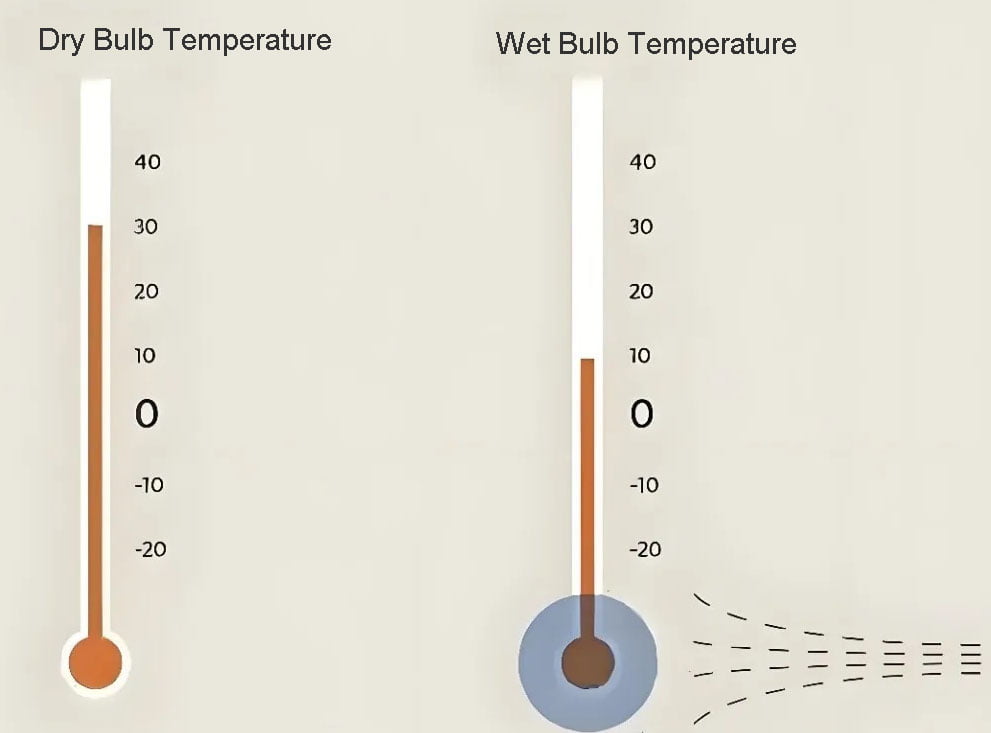
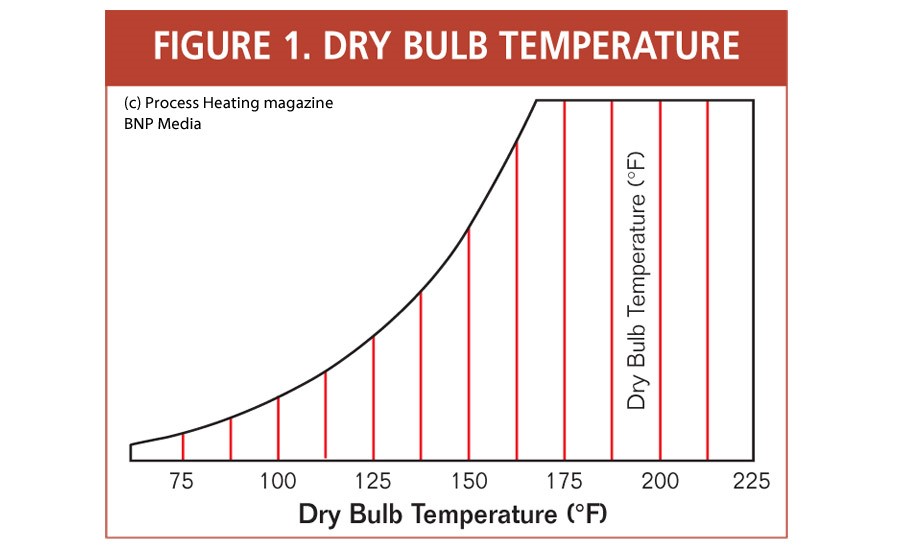
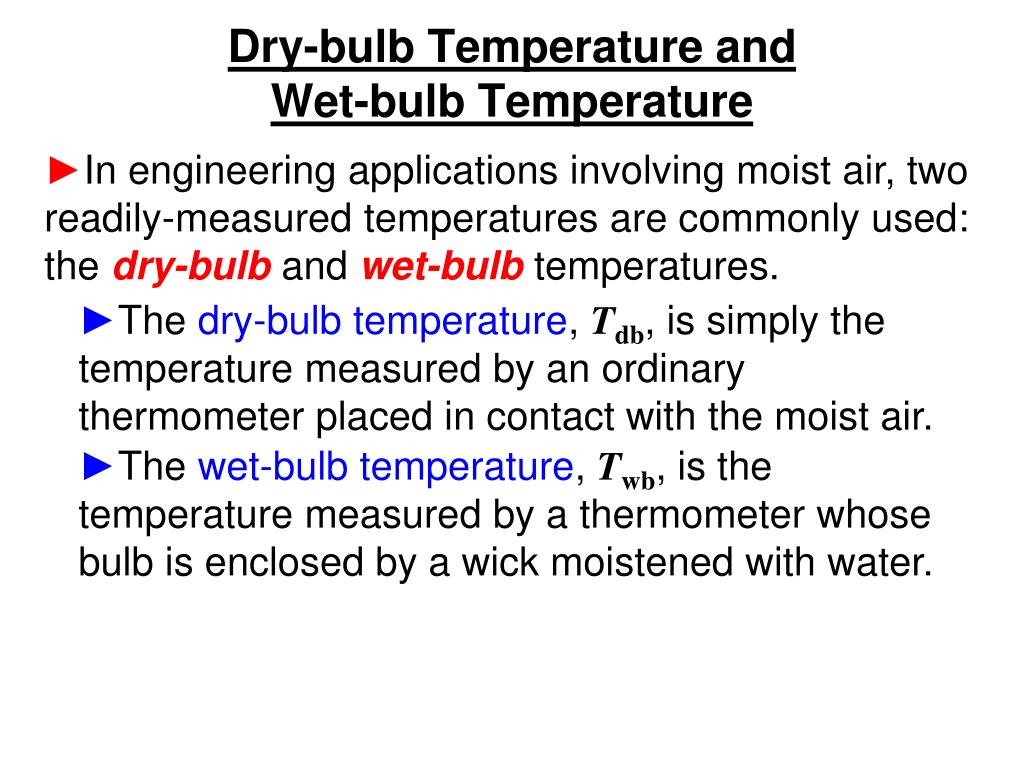
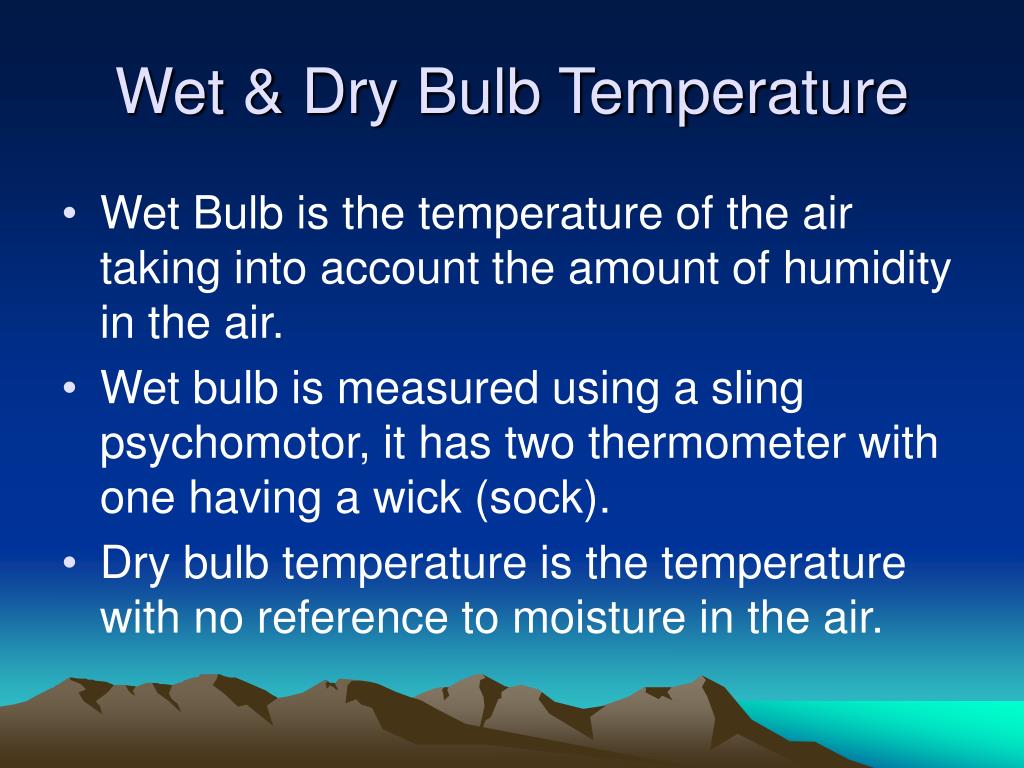
Dry bulb temperature is what you typically think of when you hear the word "temperature." It's the air temperature measured by a standard thermometer that's exposed to the air but shielded from direct sunlight and radiant heat. In essence, it's a measure of the sensible heat of the air.
- Think of it as the temperature you see on your home thermostat.
- It represents the amount of heat energy in the air.
- It's measured using a standard thermometer, electronic temperature sensor, or thermocouple.
2. What is wet bulb temperature and how does it differ from dry bulb temperature?
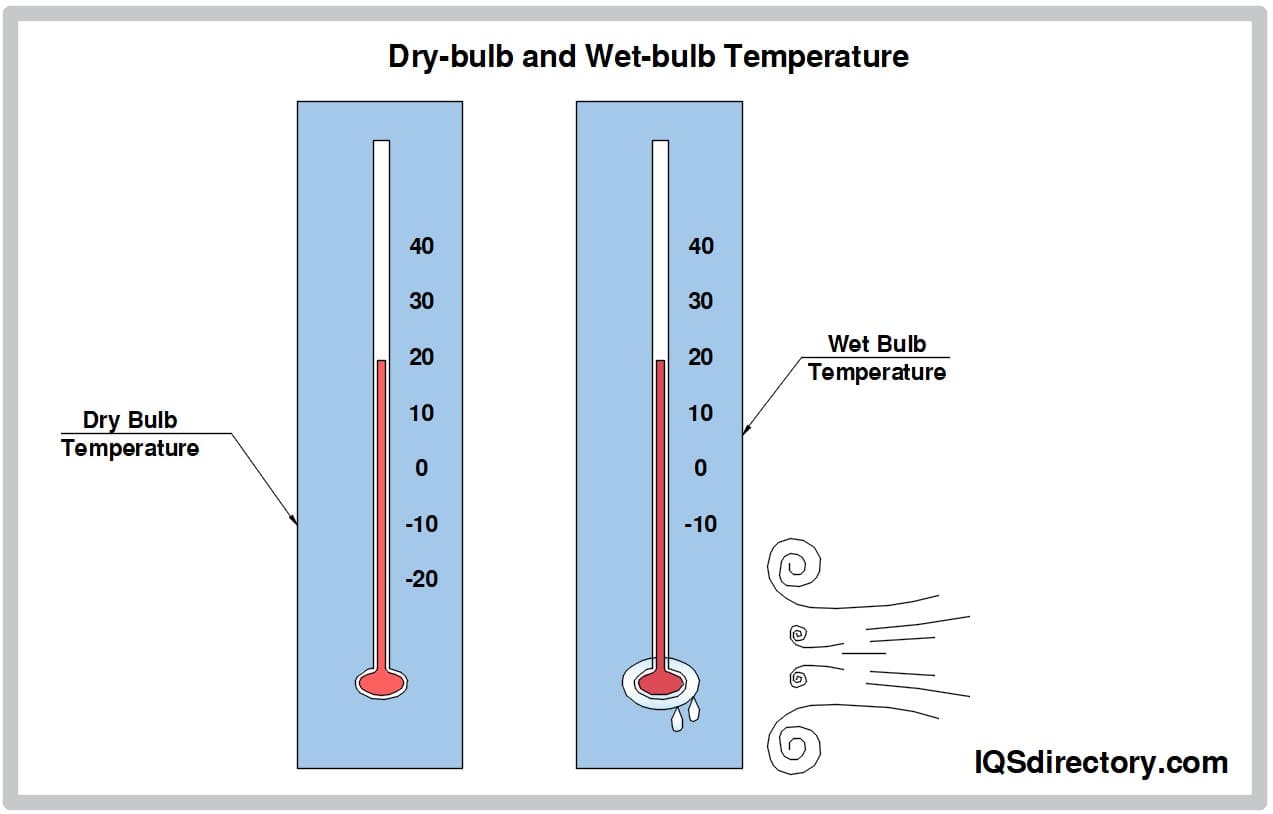
Wet bulb temperature is the temperature read by a thermometer covered in a water-soaked cloth (wick) over which air is passed. The evaporation of water from the wick cools the thermometer, and the temperature reading reflects the effect of this evaporative cooling.
Here's the key difference:
- Dry bulb temperature measures the air temperature only.
- Wet bulb temperature measures the air temperature and the effect of humidity. It reflects how much moisture the air can absorb through evaporation.
If the air is completely saturated with moisture (100% relative humidity), no evaporation occurs, and the wet bulb temperature will be the same as the dry bulb temperature. However, if the air is dry, more evaporation will occur, causing the wet bulb temperature to be lower than the dry bulb temperature.
3. Why are both dry bulb and wet bulb temperatures important?
While dry bulb temperature provides a basic measure of air temperature, wet bulb temperature, when considered in conjunction with dry bulb temperature, offers a more complete picture of the air's thermodynamic state. This information is critical for a variety of applications, including:
- HVAC System Design and Control: Understanding both temperatures allows for accurate calculation of humidity levels (like relative humidity and dew point), which is crucial for designing and controlling heating, ventilation, and air conditioning systems to optimize comfort and energy efficiency.
- Evaporative Cooling: The difference between dry and wet bulb temperatures is a direct indicator of the effectiveness of evaporative coolers. The larger the difference, the greater the potential for cooling.
- Industrial Processes: Many industrial processes are sensitive to humidity. Monitoring both temperatures allows for precise control and optimization.
- Agriculture: Wet bulb temperature is used to calculate evapotranspiration rates, which are important for irrigation management.
- Weather Forecasting: Meteorologists use wet bulb temperature to assess the risk of heat stress and to predict cloud formation.
In short, dry bulb alone is not enough. Knowing the wet bulb temperature allows you to understand the air's ability to absorb moisture, which greatly impacts comfort and the effectiveness of various processes.
4. How are dry bulb and wet bulb temperatures used in HVAC systems?
HVAC systems rely heavily on both dry bulb and wet bulb temperatures for efficient operation and occupant comfort. Here's how:
- Calculating Cooling Load: Air conditioning systems need to remove both sensible heat (measured by dry bulb) and latent heat (related to humidity). Wet bulb temperature helps determine the latent heat load, allowing the system to be sized and controlled appropriately. An oversized system wastes energy, while an undersized system struggles to maintain the desired temperature and humidity.
- Controlling Dehumidification: By monitoring both temperatures, the system can precisely control the dehumidification process, ensuring that the air is not only cooled but also dried to a comfortable level.
- Energy Efficiency: Optimizing the system based on both temperatures can lead to significant energy savings. For example, using evaporative cooling strategies when the difference between dry and wet bulb temperatures is large.
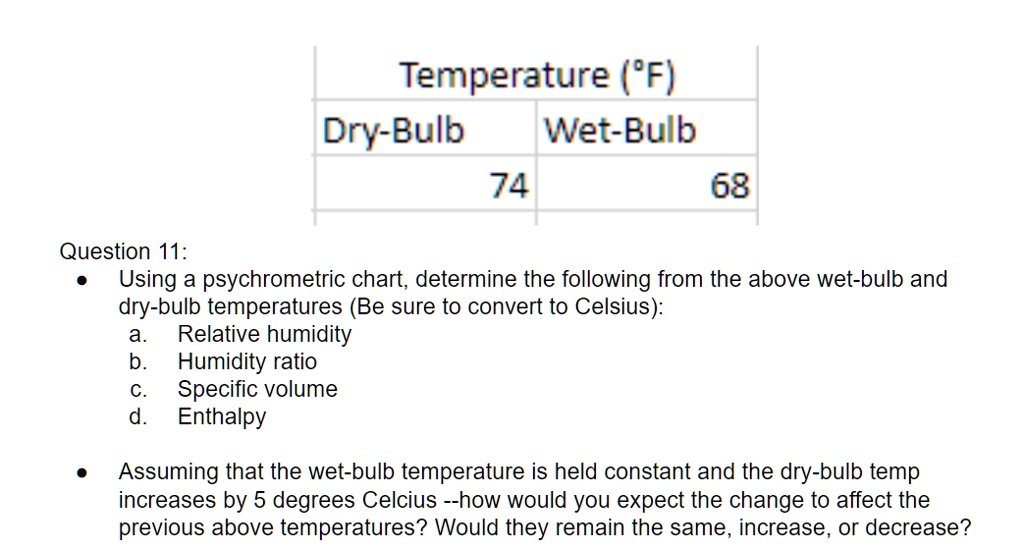
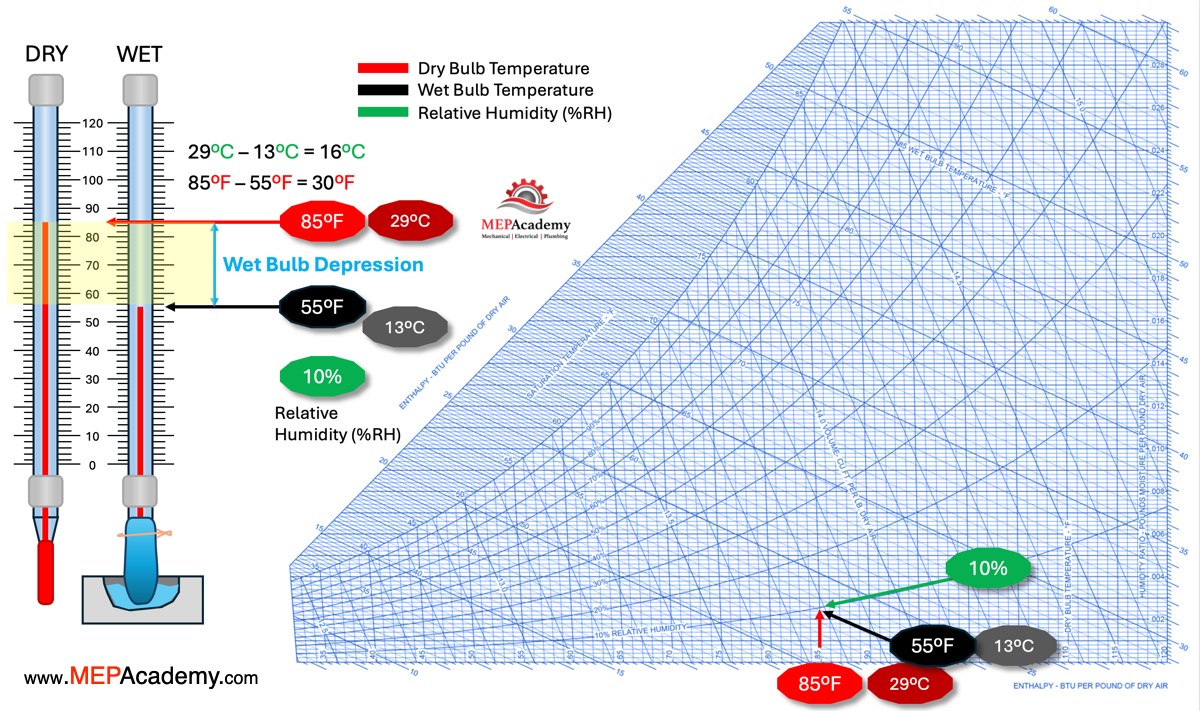
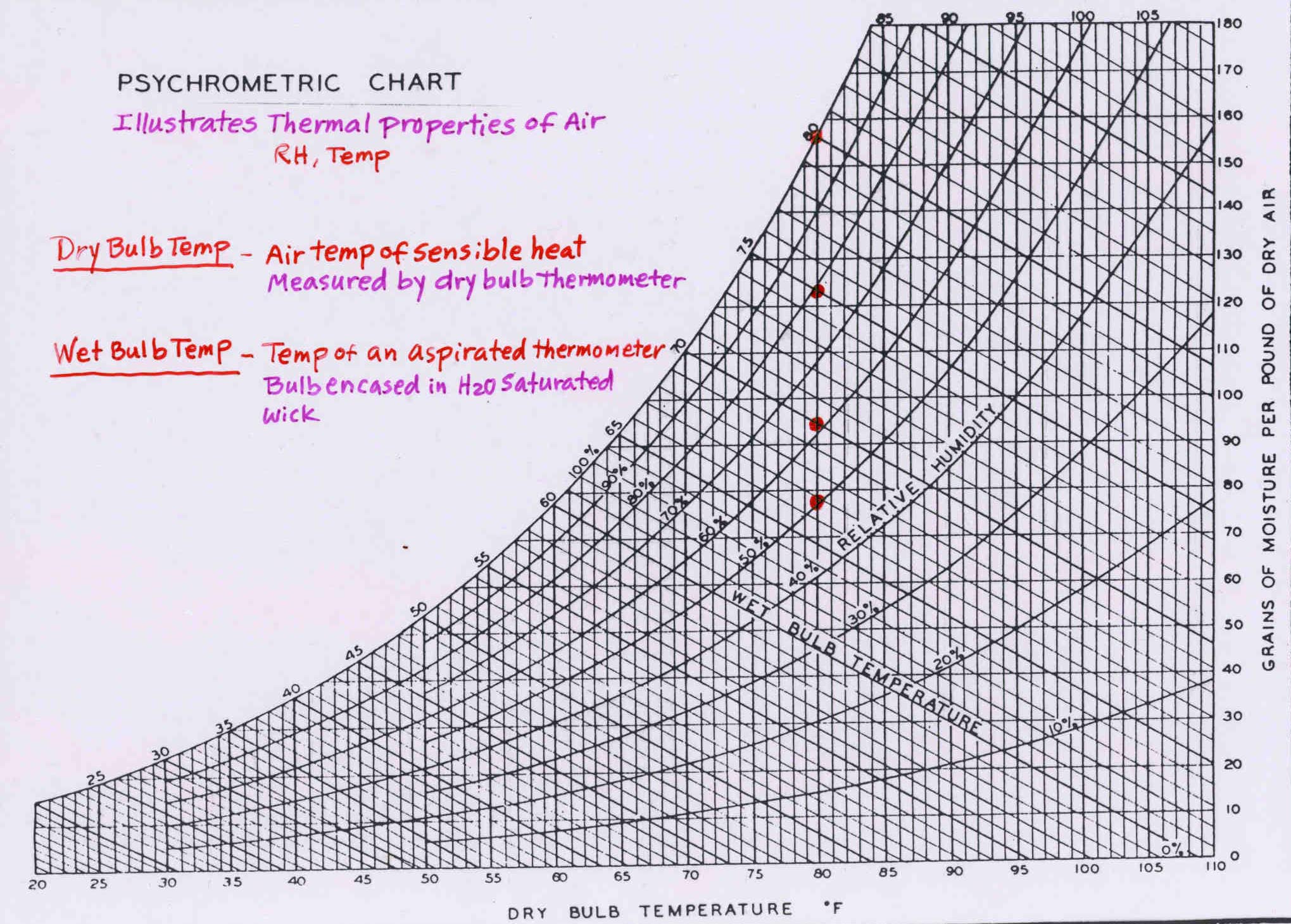
- Psychrometric Chart Use: HVAC engineers and technicians use a psychrometric chart, which graphically represents the relationship between dry bulb temperature, wet bulb temperature, humidity ratio, enthalpy, and other thermodynamic properties of air. This chart is essential for analyzing and designing HVAC systems.
Modern HVAC control systems often use sensors that measure both dry bulb and wet bulb temperatures, providing real-time data for optimal system performance.
5. What is the relationship between wet bulb temperature, dry bulb temperature, and relative humidity?
These three parameters are interconnected and provide a comprehensive understanding of air's moisture content.
- Relative Humidity (RH): Expressed as a percentage, RH indicates the amount of moisture in the air compared to the maximum amount of moisture the air can hold at a given temperature.
- Relationship:
- When the air is fully saturated (100% RH), the wet bulb temperature equals the dry bulb temperature.
- As RH decreases, the wet bulb temperature becomes lower than the dry bulb temperature. The greater the difference, the lower the RH.
- Knowing any two of these parameters (dry bulb, wet bulb, and RH) allows you to determine the third. You can use a psychrometric chart, calculator, or formula.
Think of it this way: dry bulb temperature tells you how hot the air is, wet bulb temperature tells you how much cooling can occur through evaporation (which is related to how much moisture the air can still absorb), and relative humidity tells you how close the air is to being saturated.
6. How can I measure wet bulb temperature at home or in my facility?
There are a few ways to measure wet bulb temperature, ranging from simple DIY methods to more sophisticated instruments:
- Sling Psychrometer: This is a traditional instrument consisting of two thermometers, one dry bulb and one wet bulb. The wet bulb thermometer is covered with a wetted wick. The psychrometer is then "slung" or whirled around to create airflow over the wicks, allowing for evaporation. The difference in temperature readings is used to determine the wet bulb temperature and, subsequently, the relative humidity using a psychrometric chart or calculator.
- Electronic Psychrometer: These digital instruments use electronic sensors to measure both dry and wet bulb temperatures. They are more convenient and accurate than sling psychrometers. Some models also calculate relative humidity and dew point temperature.
- DIY Wet Bulb Thermometer: You can create a simple wet bulb thermometer by wrapping a thermometer bulb with a wetted cloth (e.g., cotton). Ensure the cloth is kept moist but not dripping. Then, expose the thermometer to moving air (e.g., using a fan). After a few minutes, the temperature reading will approximate the wet bulb temperature. This method is less accurate than using a dedicated instrument.
Important Considerations:
- Ensure adequate airflow over the wet bulb. Stagnant air will not produce accurate readings.
- Keep the wick clean and properly wetted. Dirty or dry wicks will affect the accuracy.
- Shield the thermometers from direct sunlight and radiant heat sources.
7. What are some common mistakes to avoid when measuring dry and wet bulb temperatures?
Accurate measurements are essential for making informed decisions. Here are some common pitfalls to avoid:
- Direct Sunlight Exposure: Exposing the thermometers to direct sunlight will falsely elevate the dry bulb temperature reading. Always take measurements in the shade.
- Radiant Heat Interference: Radiant heat from surfaces like hot equipment or walls can also affect the readings. Ensure the thermometers are shielded from these sources.
- Inadequate Airflow: For wet bulb measurements, sufficient airflow over the wetted wick is crucial for proper evaporation. Stagnant air will result in inaccurate readings.
- Dirty or Dry Wick: A dirty wick can impede evaporation, while a dry wick will not provide any evaporative cooling. Keep the wick clean and moist.
- Insufficient Stabilization Time: Allow the thermometers sufficient time to stabilize before taking readings. Rapid temperature fluctuations can lead to inaccurate results.
- Using an Uncalibrated Instrument: Regularly calibrate your instruments to ensure accuracy. Even small errors can have significant consequences in HVAC system performance.
- Incorrect Psychrometric Chart Usage: When using a psychrometric chart, ensure you are using the correct chart for the relevant atmospheric pressure (elevation).
By avoiding these common mistakes, you can ensure that your dry and wet bulb temperature measurements are accurate and reliable, leading to better HVAC system performance and improved comfort.