Ducted Central Split Air Conditioner Heat Pump System
A ducted central split air conditioner heat pump system is a popular and efficient way to heat and cool an entire home. It combines the benefits of a central air conditioning system with the added functionality of a heat pump, allowing it to provide both cooling in the summer and heating in the winter. This comprehensive guide will explain how these systems work, their key components, advantages, disadvantages, and factors to consider when deciding if one is right for you.
What is a Ducted Central Split Air Conditioner Heat Pump System?
Let's break down the name to understand the system:
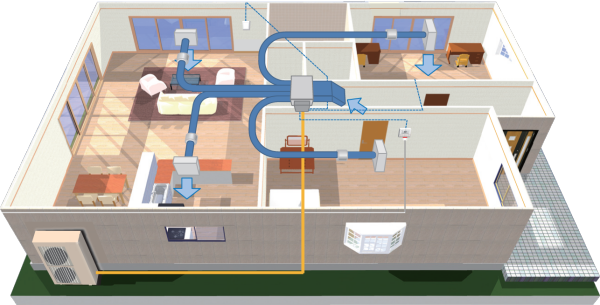
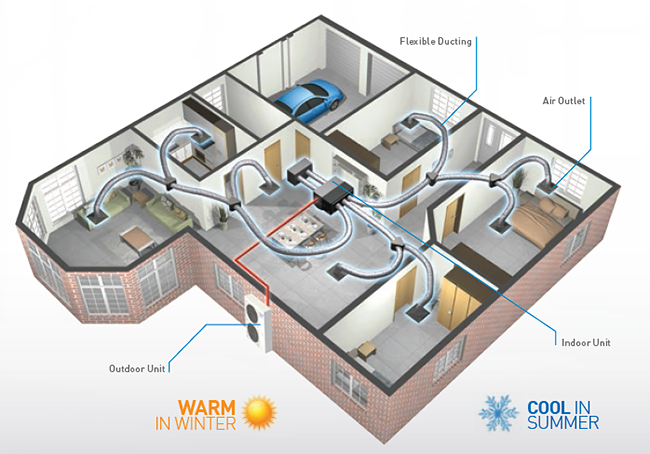
- Ducted: This means the system uses a network of ducts to distribute conditioned air throughout your home. Air travels through these ducts to vents in each room.
- Central: The system operates from a central location, rather than individual units in each room.
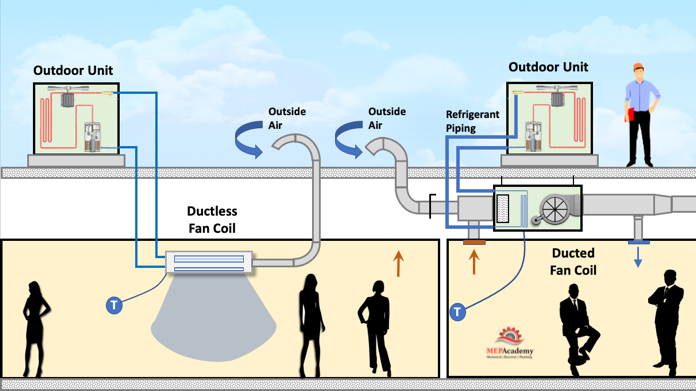
- Split: The system is "split" into two main units: an outdoor unit and an indoor unit.
- Air Conditioner Heat Pump: This indicates the system can both cool and heat your home. It's an air conditioner that can also reverse its function to act as a heat pump.
In essence, a ducted central split air conditioner heat pump system is a whole-house comfort solution using ducts to deliver heated or cooled air from a central unit.
How Does It Work?
A heat pump doesn't actually "create" heat; it *moves* it. Think of it like a refrigerator, but capable of working in reverse.
Cooling Mode (Air Conditioning)
In cooling mode, the system works as follows:
- Refrigerant: The refrigerant, a special fluid, absorbs heat from the indoor air. Think of refrigerant as the "blood" of your AC system, carrying heat from inside to outside.
- Indoor Unit (Evaporator Coil): The warm air from your home is blown across the evaporator coil (located in the indoor unit), where the refrigerant absorbs the heat and cools the air. The cooled air is then circulated through the ducts.
- Outdoor Unit (Compressor and Condenser Coil): The heated refrigerant is pumped to the outdoor unit.
- Compressor: The compressor increases the pressure and temperature of the refrigerant.
- Condenser Coil: The hot refrigerant releases its heat to the outside air, and the refrigerant condenses back into a liquid.
- Expansion Valve: The refrigerant then passes through an expansion valve, which reduces its pressure and temperature, preparing it to absorb more heat from inside. The cycle repeats.
Heating Mode (Heat Pump)
In heating mode, the process is reversed:
- Refrigerant: The refrigerant absorbs heat from the outdoor air (even cold air contains some heat).
- Outdoor Unit (Evaporator Coil): The refrigerant absorbs the heat from the outside air, even when it's cold outside.
- Compressor: The compressor increases the pressure and temperature of the refrigerant.
- Indoor Unit (Condenser Coil): The hot refrigerant releases its heat to the indoor air, warming your home.
- Expansion Valve: The refrigerant then passes through an expansion valve, reducing its pressure and temperature, preparing it to absorb more heat from the outside. The cycle repeats.
Essentially, the heat pump extracts heat from the outside air and transfers it inside. In summer, it reverses the process, extracting heat from the inside air and transferring it outside.
Key Components of the System
Understanding the components is crucial for understanding the system as a whole.
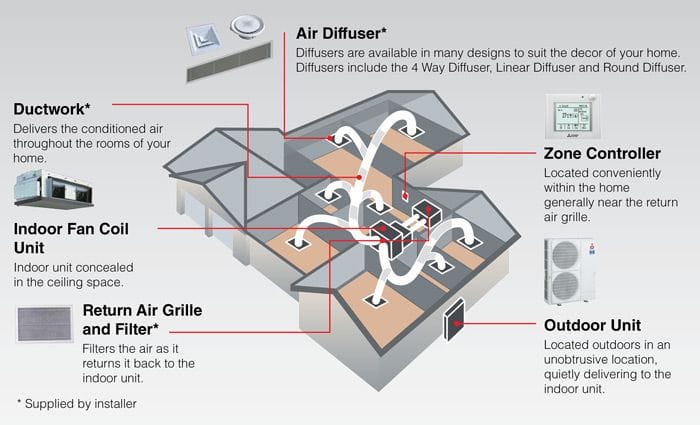
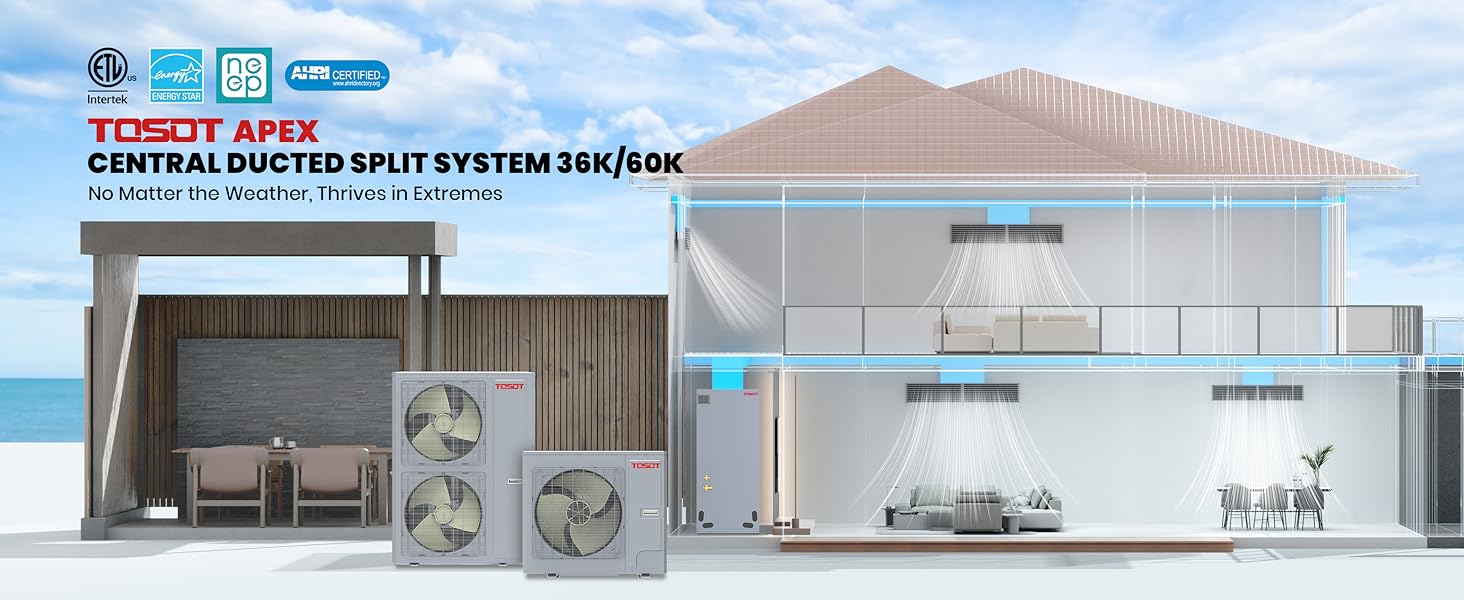
- Outdoor Unit: This houses the compressor, condenser coil (which also acts as an evaporator coil in heating mode), fan, and other components. It's responsible for releasing heat to the outside in cooling mode and absorbing heat from the outside in heating mode. The compressor is the heart of the system, consuming most of the energy.
- Indoor Unit (Air Handler): This contains the evaporator coil (which also acts as a condenser coil in heating mode), a blower fan, and often electric resistance heating elements as backup. The blower fan circulates air throughout your home.
- Refrigerant Lines: These insulated copper pipes carry the refrigerant between the indoor and outdoor units. Properly sized and insulated lines are critical for efficiency.
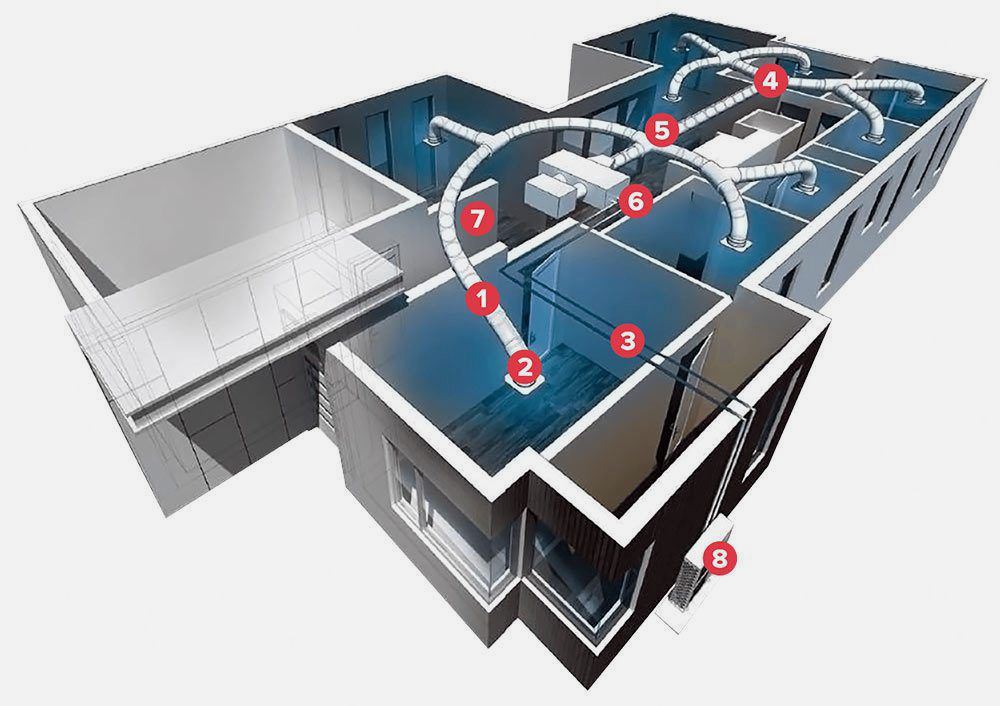
- Ductwork: A network of insulated ducts distributes the conditioned air throughout your home. Leaky or poorly insulated ducts can significantly reduce efficiency. Ductwork is like the arteries and veins of your home's climate control system.
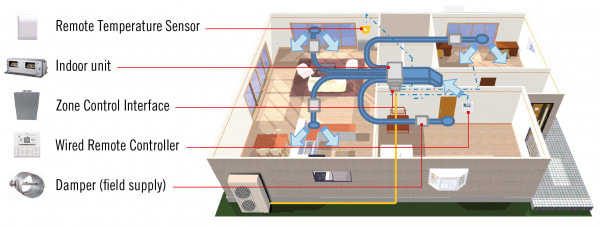
- Thermostat: This controls the system, allowing you to set the desired temperature and schedule operation. Modern thermostats offer advanced features like programmable schedules, zoning control, and smart home integration.
- Air Filter: Located in the indoor unit, the air filter removes dust, pollen, and other particles from the air. Regular filter changes are essential for maintaining air quality and system efficiency. A dirty filter forces the system to work harder, decreasing efficiency and potentially damaging components.
Advantages of a Ducted Central Split Air Conditioner Heat Pump System
- Year-Round Comfort: Provides both cooling and heating from a single system.
- Energy Efficiency: Heat pumps can be very efficient, especially in moderate climates. They often use less energy than traditional furnaces.
- Whole-House Comfort: Provides consistent temperatures throughout your home.
- Improved Air Quality: Centralized filtration system improves indoor air quality.
- Quiet Operation: Modern systems are relatively quiet compared to window units.
- Zoning Capabilities: Some systems can be zoned, allowing you to control the temperature in different areas of your home independently. Zoning offers personalized comfort and potential energy savings.
Disadvantages of a Ducted Central Split Air Conditioner Heat Pump System
- Higher Upfront Cost: Generally more expensive than window units or portable air conditioners.
- Professional Installation Required: Requires professional installation, which adds to the overall cost. Improper installation can void warranties and decrease efficiency.
- Performance in Extreme Cold: Heat pump efficiency decreases in very cold temperatures. Auxiliary heating (electric resistance heat) may be required.
- Ductwork Required: Requires existing ductwork, which may need to be inspected or upgraded. Installing new ductwork can be expensive and disruptive.
- Maintenance: Requires regular maintenance, including filter changes and professional servicing. Neglecting maintenance can lead to costly repairs and reduced lifespan.
- Complexity: More complex than simple cooling or heating systems, potentially leading to more complex repairs.
Factors to Consider When Choosing a System
Several factors should be considered before purchasing and installing a ducted central split air conditioner heat pump system:
- Climate: Heat pumps are most efficient in moderate climates. Consider a hybrid system with a gas furnace for colder climates.
- Home Size and Insulation: The system must be properly sized for your home's square footage and insulation levels. An undersized system will struggle to heat or cool your home, while an oversized system will cycle on and off frequently, reducing efficiency and potentially shortening its lifespan.
- Ductwork Condition: Inspect your ductwork for leaks, damage, and proper insulation. Seal any leaks and insulate ducts to maximize efficiency.
- Energy Efficiency Ratings: Look for systems with high SEER (Seasonal Energy Efficiency Ratio) ratings for cooling and HSPF (Heating Season Performance Factor) ratings for heating. Higher ratings indicate greater efficiency.
- Budget: Consider the upfront cost of the system, installation, and ongoing operating costs. Calculate the long-term cost savings from energy efficiency.
- Professional Installation: Choose a qualified and experienced HVAC contractor for installation. A professional installation is crucial for ensuring proper operation and longevity. Check for licenses, insurance, and positive customer reviews.
- Zoning: Determine if you need zoning capabilities to control the temperature in different areas of your home.
- Noise Level: Check the decibel rating of the outdoor unit to ensure it won't be too noisy.
- Warranty: Review the warranty terms and conditions before purchasing. A longer warranty provides greater peace of mind.
Maintenance Tips
Regular maintenance is crucial for ensuring the efficient and reliable operation of your system.
- Change Air Filters Regularly: Replace air filters every 1-3 months, depending on usage and air quality. A clogged filter restricts airflow and reduces efficiency.
- Clean Outdoor Unit: Remove leaves, debris, and vegetation from around the outdoor unit. Ensure proper airflow around the unit.
- Inspect Ductwork: Check ductwork for leaks and damage. Seal any leaks with duct tape or mastic.
- Professional Servicing: Schedule annual professional servicing to inspect and clean the system. A technician can check refrigerant levels, clean coils, and identify any potential problems.
Conclusion
A ducted central split air conditioner heat pump system is a versatile and efficient way to heat and cool your home. By understanding how these systems work, their key components, advantages, and disadvantages, you can make an informed decision about whether one is right for you. Remember to consider your climate, home size, budget, and energy efficiency needs when choosing a system. Proper installation and regular maintenance are essential for ensuring optimal performance and longevity. Investing in a quality system and maintaining it properly can provide years of comfortable and energy-efficient heating and cooling.