Electric Furnace Troubleshooting Chart
Electric Furnace Troubleshooting Chart: A Comprehensive Guide
Electric furnaces, while seemingly simple in design, can still experience malfunctions that leave you in the cold. Understanding common issues and how to diagnose them is crucial for homeowners, HVAC technicians, and facility managers alike. This article provides a detailed troubleshooting chart to help you identify and address problems with your electric furnace.
Understanding Electric Furnace Basics
Before diving into troubleshooting, let's review the core components of an electric furnace. Unlike gas furnaces that burn fuel, electric furnaces use heating elements, similar to those in a toaster, to generate heat. These elements heat air that's blown across them by a blower motor. The heated air is then distributed throughout your home via ductwork. Key components include:
- Thermostat: Controls the furnace's operation based on temperature settings.
- Circuit Breaker/Fuses: Protects the furnace from electrical overloads.
- Transformer: Steps down voltage to power control circuits.
- Sequencer (or Relay): Controls the order in which heating elements are activated.
- Heating Elements: Generate heat through electrical resistance.
- Blower Motor: Circulates air across the heating elements and through the ductwork.
- Limit Switch: A safety device that shuts off the furnace if it overheats.
- Filter: Removes dust and debris from the air, protecting the furnace and improving air quality.
Troubleshooting Chart
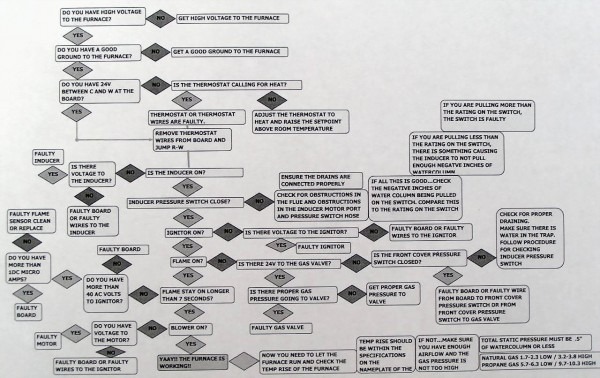
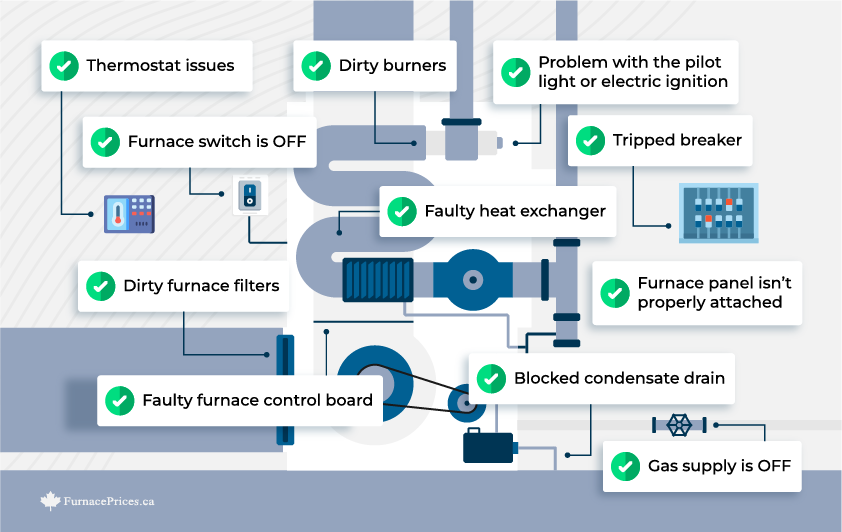
The following chart outlines common electric furnace problems, potential causes, and suggested solutions. Always disconnect power to the furnace at the circuit breaker before attempting any repairs or inspections. If you're not comfortable working with electricity, contact a qualified HVAC technician.
| Problem | Possible Cause | Solution |
|---|---|---|
| Furnace not turning on | No power to the furnace. | Check the circuit breaker or fuse. Reset the breaker or replace the fuse. Ensure the disconnect switch near the furnace is on. |
| Thermostat not set correctly. | Verify thermostat settings are correct (heat mode, desired temperature). Check thermostat batteries if applicable. | |
| Faulty thermostat. | Test the thermostat with a multimeter. If faulty, replace it. Consider a smart thermostat for enhanced control and energy savings. | |
| Faulty door switch. | The door switch prevents the furnace from operating when the access panel is removed. Ensure the door switch is properly engaged. If faulty, replace it. | |
| Faulty transformer. | Use a multimeter to check the transformer's output voltage. If no output, replace the transformer. | |
| Furnace blowing cold air | Heating elements not working. | Check the sequencer (or relay). Use a multimeter to test the heating elements for continuity. If no continuity, the element is burned out and needs replacement. |
| Limit switch tripped. | Allow the furnace to cool down. Check for airflow restrictions (dirty filter, blocked vents). Reset the limit switch (if it has a reset button). If it trips again, investigate the cause of overheating. | |
| Blower motor malfunction. | Listen for unusual noises from the blower motor. Check the blower motor capacitor. Test the blower motor windings with a multimeter. If faulty, replace the blower motor. | |
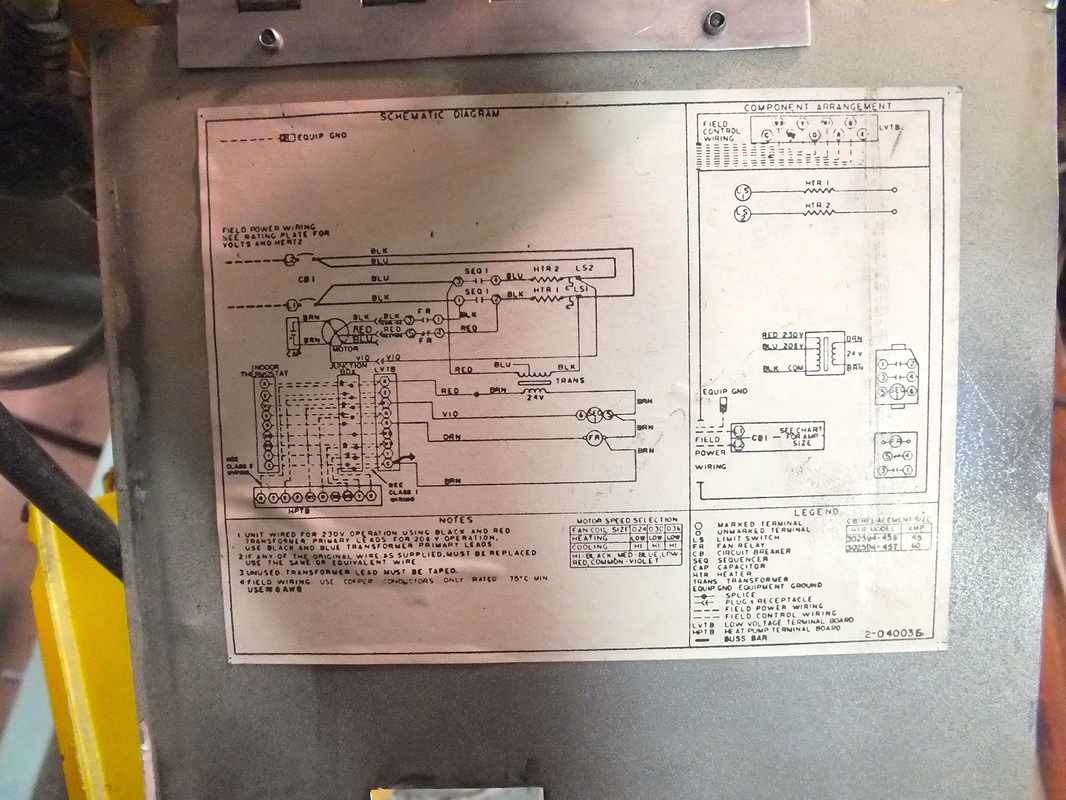
| Incorrect wiring. | This is more common after DIY repairs. Consult the wiring diagram and ensure all connections are correct. Contact a qualified electrician or HVAC technician if unsure. | |
| Furnace short cycling (turning on and off frequently) | Dirty air filter. | Replace the air filter. A clogged filter restricts airflow, causing the furnace to overheat. |
| Oversized furnace. | An oversized furnace heats the space too quickly and then shuts off, leading to short cycles. This is best addressed by a professional HVAC technician who can perform a load calculation and recommend a properly sized unit. | |
| Faulty limit switch. | The limit switch might be prematurely tripping due to a malfunction. Test the limit switch with a multimeter. If faulty, replace it. | |
| Furnace making unusual noises | Loose components. | Inspect the furnace for loose screws, panels, or blower motor mounts. Tighten any loose components. |
| Blower motor issues. | As mentioned above, listen for unusual noises from the blower motor. Worn bearings can cause squealing or grinding sounds. | |
| Ductwork problems. | Rattling or banging sounds can indicate loose or damaged ductwork. Inspect the ductwork for leaks or damage. Seal any leaks with duct tape or mastic. | |
| Burning smell | Dust accumulation. | A burning smell is often caused by dust burning off the heating elements. This is common when first turning on the furnace for the season. Ensure the filter is clean and allow the furnace to run for a short period to burn off the dust. |
| Electrical issues. | A burning smell can also indicate a serious electrical problem. Immediately turn off the furnace and contact a qualified electrician or HVAC technician. Look for discolored wiring or components. | |
| Uneven heating throughout the house | Blocked vents. | Ensure all vents are open and unobstructed. |
| Leaky ductwork. | As mentioned above, inspect the ductwork for leaks and seal them. | |
| Poor insulation. | Inadequate insulation can lead to heat loss in certain areas of the house. Consider adding insulation to attics, walls, and crawl spaces. | |
| Zone damper problems (if applicable). | If your home has a zoned heating system, check the zone dampers to ensure they are functioning correctly. |
Preventative Maintenance: Key to a Long Furnace Lifespan
Regular maintenance is crucial for ensuring the efficient and reliable operation of your electric furnace. Here are some essential maintenance tasks:
- Replace the air filter regularly: At least every 1-3 months, or more often if you have pets or allergies. This is arguably the most important maintenance task.
- Inspect and clean the blower motor: Annually, inspect the blower motor for dust and debris. Clean it with a soft brush or vacuum.
- Inspect the heating elements: Visually inspect the heating elements for signs of damage or corrosion.
- Check electrical connections: Ensure all electrical connections are tight and secure.
- Schedule professional maintenance: Have a qualified HVAC technician inspect your furnace annually. They can perform a more thorough inspection and identify potential problems before they become major issues. A professional can measure amperage draw of motors, inspect safety controls, and ensure proper airflow.
Electric Furnace Efficiency, Cost, and Lifespan
Electric furnaces are typically 100% efficient, meaning all the electricity they consume is converted into heat. However, electricity is generally more expensive than natural gas, so operating costs can be higher. The AFUE (Annual Fuel Utilization Efficiency) rating, commonly used for gas furnaces, isn't applicable to electric furnaces. The efficiency lies in the conversion of electrical energy to heat, which is very close to 100%. The actual cost to heat a home depends on local electricity rates.
The lifespan of an electric furnace is typically 15-20 years with proper maintenance. Factors affecting lifespan include the quality of the unit, usage patterns, and maintenance practices. A well-maintained furnace will last longer and operate more efficiently.
Comparing Electric Furnaces to Other Heating Options
When considering heating options, it's important to compare electric furnaces to alternatives such as gas furnaces, heat pumps, and oil furnaces.
- Gas Furnaces: Generally more cost-effective to operate in areas with affordable natural gas. However, they require venting for combustion gases and have a lower AFUE rating (typically 80-98%).
- Heat Pumps: Offer both heating and cooling capabilities. They are very efficient in moderate climates but may struggle to provide sufficient heat in extremely cold temperatures. Heat pumps use electricity to *move* heat, rather than generate it directly.
- Oil Furnaces: Less common than gas or electric furnaces. They require a fuel oil tank and venting. Oil prices can fluctuate, impacting operating costs.
The best heating option for your home depends on your climate, energy costs, and personal preferences. Consult with a qualified HVAC professional to determine the most suitable system for your needs.
When to Call a Professional
While some electric furnace troubleshooting can be done by homeowners, certain issues require the expertise of a qualified HVAC technician. Call a professional if:
- You are uncomfortable working with electricity.
- You suspect a gas leak (if you have a combination system).
- The furnace is making loud or unusual noises.
- You are unable to diagnose the problem.
- You have tried troubleshooting but the furnace still isn't working correctly.
Attempting repairs without the necessary knowledge and skills can be dangerous and may void your warranty. Hiring a professional ensures the job is done safely and correctly.
By understanding the basics of electric furnace operation and using this troubleshooting chart, you can effectively diagnose and address many common issues. Remember to prioritize safety and consult with a qualified professional when needed. Proper maintenance will extend the life of your furnace and ensure efficient heating for years to come. Understanding your HVAC system is the first step in maximizing its performance and longevity.