Freeze Point Of Propylene Glycol Charts

In the dynamic world of Heating, Ventilation, and Air Conditioning (HVAC), understanding the properties of various fluids is paramount. Among these, propylene glycol plays a crucial role, particularly in systems operating in cold climates or requiring freeze protection. This article provides a comprehensive overview of propylene glycol freeze point charts, their significance, and their implications for HVAC professionals at all career stages.
Propylene Glycol: A Primer for HVAC Professionals
Propylene glycol is an organic chemical compound widely used as an antifreeze and coolant in HVAC systems. Unlike ethylene glycol, which is highly toxic, propylene glycol is considered less hazardous, making it a preferred choice in applications where human contact is possible, such as in potable water systems and food processing facilities. Its primary function is to lower the freezing point of water, preventing pipes from bursting and equipment from being damaged during cold temperatures. It also functions as a corrosion inhibitor. In HVAC systems, propylene glycol is mixed with water in varying concentrations to achieve the desired level of freeze protection.
Understanding Freeze Point Depression
The principle behind using propylene glycol is freeze point depression. When propylene glycol is added to water, it disrupts the hydrogen bonding between water molecules, making it harder for them to form ice crystals. This results in a lower freezing point for the mixture compared to pure water. The extent to which the freezing point is lowered depends on the concentration of propylene glycol in the water. Therefore, knowing the relationship between concentration and freeze point is critical for properly commissioning and maintaining HVAC systems.
Decoding Propylene Glycol Freeze Point Charts
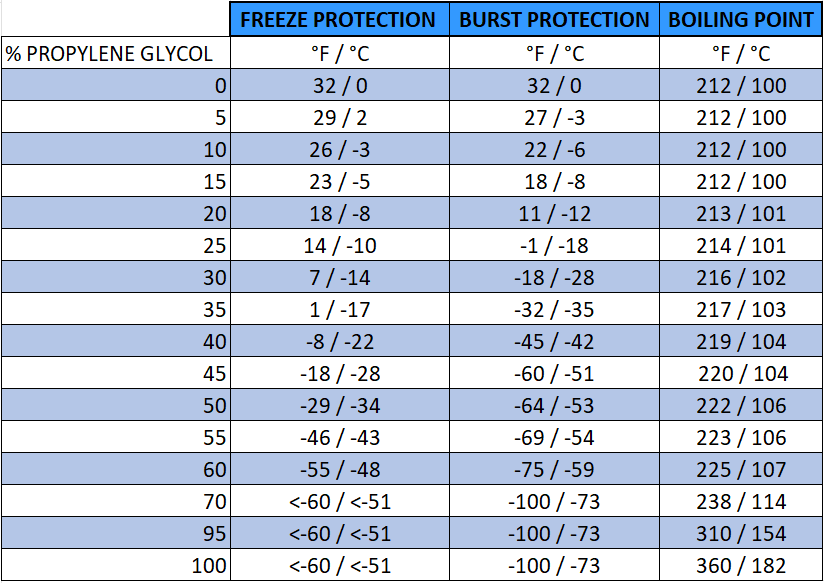
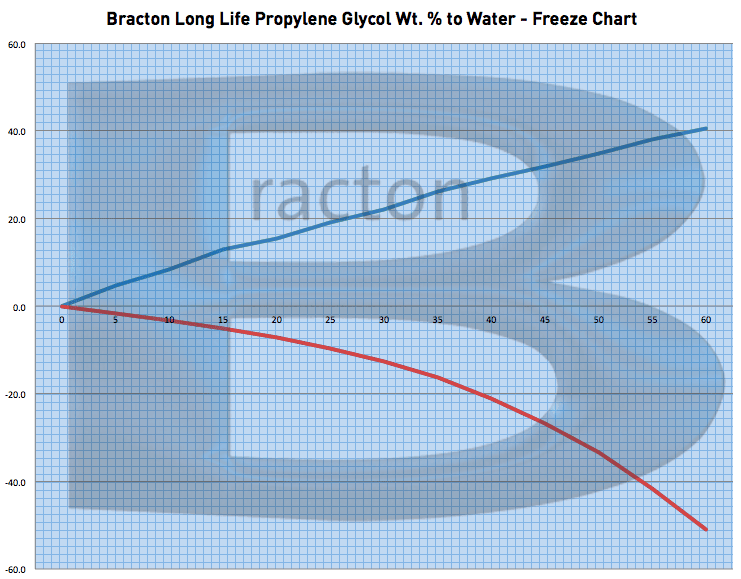
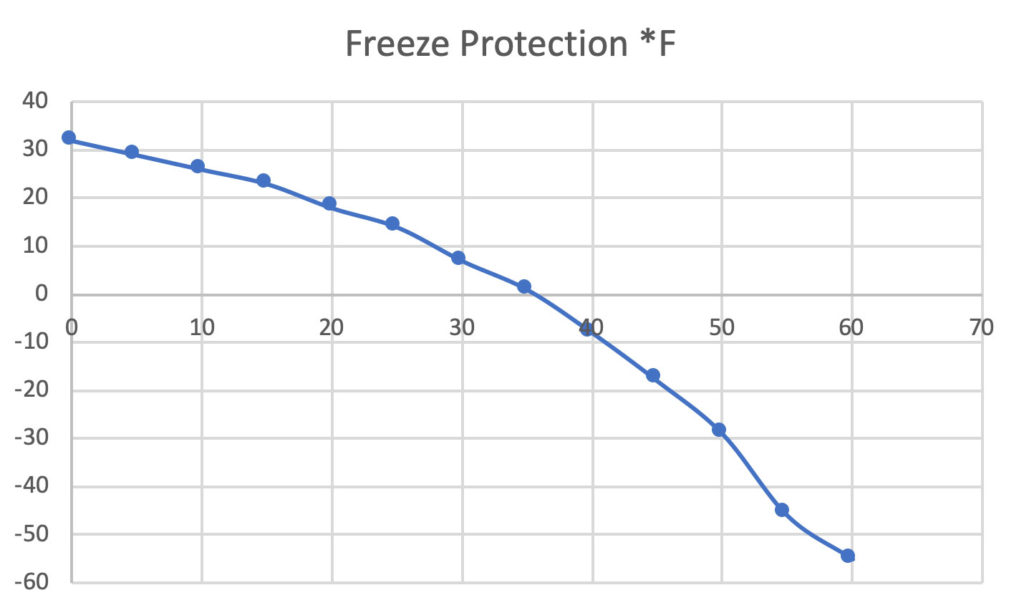
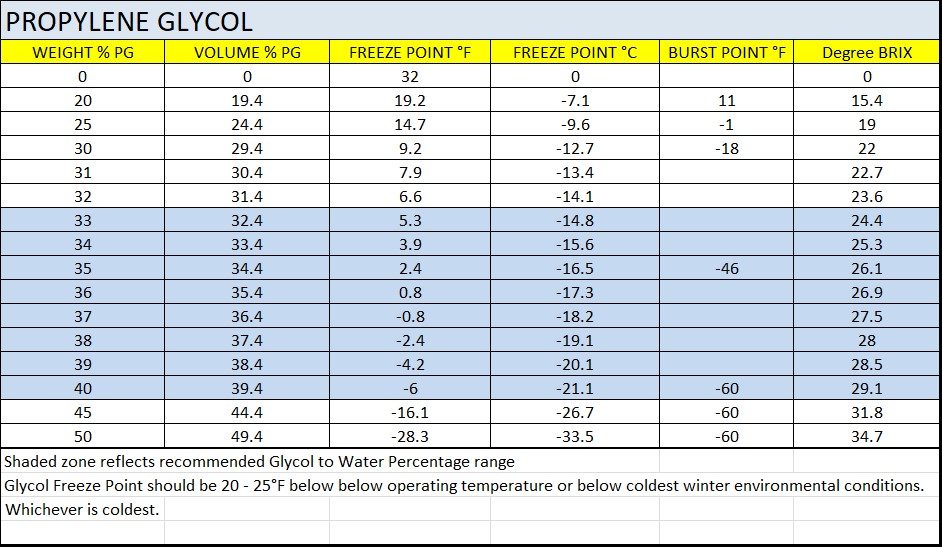
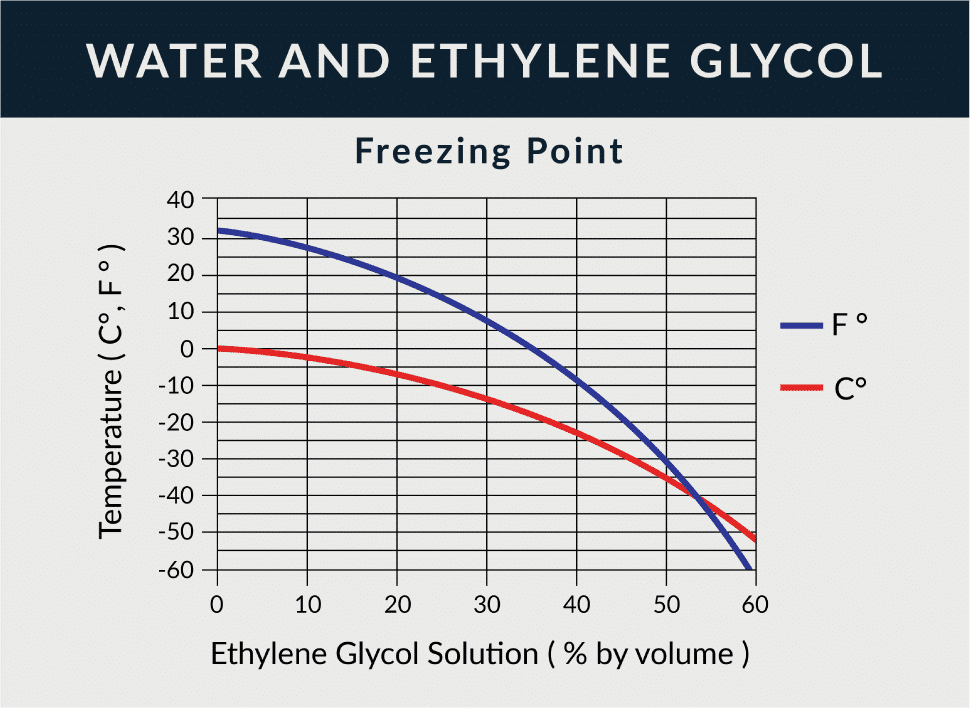
Propylene glycol freeze point charts are essential tools for HVAC technicians and engineers. These charts provide a visual representation of the relationship between the concentration of propylene glycol in water and the resulting freezing point of the mixture. They typically display the concentration of propylene glycol (usually expressed as a percentage by volume or weight) on one axis and the corresponding freezing point in degrees Celsius or Fahrenheit on the other. These charts are not standardized, and different manufacturers may have slightly different charts due to variations in the specific formulation of their propylene glycol products. Always consult the manufacturer's specifications.
How to Use a Freeze Point Chart
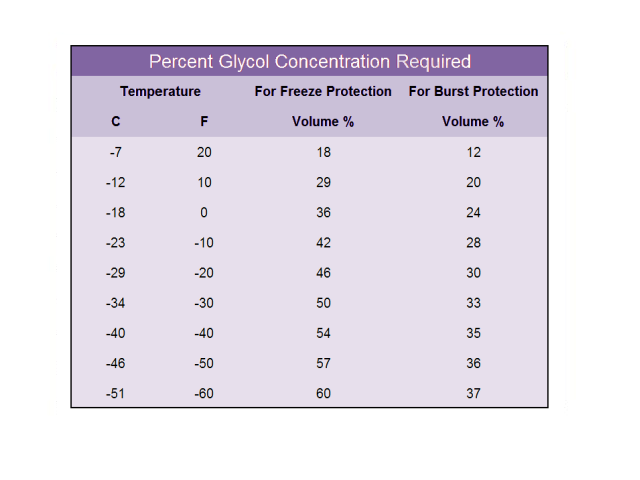
Using a propylene glycol freeze point chart is straightforward. First, determine the lowest expected temperature for the HVAC system's environment. This is crucial for selecting the appropriate glycol concentration. Locate the desired freezing point on the chart and then read across to find the corresponding propylene glycol concentration. For example, if the lowest expected temperature is -10°F (-23°C), you would find -10°F on the temperature axis and then read across to find the corresponding propylene glycol concentration needed to protect the system. Remember to add a safety factor; choose a solution concentration that protects the system at a lower temperature than the absolute lowest expected.
Importance of Accurate Readings
Accuracy in using these charts is paramount. An incorrectly selected concentration can lead to insufficient freeze protection, resulting in burst pipes and costly repairs. Conversely, using an unnecessarily high concentration can reduce the system's heat transfer efficiency and increase the viscosity of the fluid, potentially straining pumps and other components.
Propylene Glycol in HVAC Systems: Applications and Considerations
Propylene glycol is used in a variety of HVAC applications, including:
- Hydronic Heating Systems: Protecting pipes and equipment from freezing in cold climates.
- Chilled Water Systems: Preventing freezing in systems operating at low temperatures.
- Geothermal Systems: Ensuring consistent performance in ground-source heat pumps.
- Solar Heating Systems: Protecting solar collectors and piping from freezing.
- Food Processing: Keeping food and equipment at proper temperature.
When using propylene glycol, consider the following:
- Concentration Monitoring: Regularly check the glycol concentration using a hydrometer or refractometer.
- Corrosion Inhibition: Ensure the propylene glycol contains appropriate corrosion inhibitors to protect metal components.
- Fluid Maintenance: Regularly flush and replace the propylene glycol solution to remove contaminants and maintain its effectiveness.
- Material Compatibility: Verify that all materials in the system are compatible with propylene glycol.
Career Paths in HVAC and the Importance of Glycol Knowledge
A solid understanding of propylene glycol and its properties is valuable for various HVAC career paths. Let's explore some common roles and their respective salary ranges and certifications:
- HVAC Technician: Installs, maintains, and repairs HVAC systems. A thorough understanding of propylene glycol helps in properly commissioning and troubleshooting systems in cold climates. Median salary: $50,590 per year (BLS, May 2023). Key certifications include EPA Section 608 certification and NATE certification.
- HVAC Installer: Specializes in installing new HVAC systems. Knowledge of propylene glycol is essential for ensuring proper freeze protection in hydronic and geothermal systems. Salary typically ranges from $40,000 to $60,000 per year.
- HVAC Service Manager: Oversees a team of HVAC technicians and ensures that service calls are handled efficiently. A strong understanding of propylene glycol helps in providing technical guidance and troubleshooting complex issues. Salary typically ranges from $60,000 to $90,000 per year.
- HVAC Engineer: Designs and plans HVAC systems. A deep understanding of propylene glycol properties is crucial for selecting the appropriate concentrations and ensuring optimal system performance. Median salary: $99,730 per year (BLS, May 2023). Professional Engineering (PE) licensure is often required.
The job outlook for HVAC professionals remains strong. The Bureau of Labor Statistics projects a 6 percent growth in employment for HVAC mechanics and installers from 2022 to 2032, about as fast as the average for all occupations. This growth is driven by increasing demand for energy-efficient HVAC systems and the need to replace older, less efficient equipment. The emphasis on energy efficiency and the increasing adoption of geothermal and solar heating systems, which often utilize propylene glycol, further bolster the demand for skilled HVAC technicians and engineers with expertise in fluid properties and system design.
Certifications and Continuing Education
Obtaining relevant certifications can significantly enhance your career prospects in the HVAC industry. Some of the most valuable certifications include:
- EPA Section 608 Certification: Required for technicians who handle refrigerants. Although propylene glycol is not a refrigerant, understanding refrigerant handling is often a prerequisite for working on HVAC systems.
- NATE Certification: Demonstrates competency in HVAC installation, maintenance, and service. NATE (North American Technician Excellence) offers various certifications covering different aspects of HVAC, including hydronic systems.
- HVAC Excellence Certification: Another reputable certification program that validates technical skills and knowledge.
- Manufacturer-Specific Training: Many HVAC equipment manufacturers offer training programs on their products, including courses on fluid properties and system design.
Continuing education is also essential for staying up-to-date with the latest technologies and best practices in the HVAC industry. Consider attending workshops, seminars, and online courses to expand your knowledge of propylene glycol, system design, and energy efficiency.
Real-World Career Examples
Let's consider a few real-world career examples to illustrate the importance of propylene glycol knowledge:
- Sarah, HVAC Technician: Sarah works for a commercial HVAC company in Minnesota. She regularly services hydronic heating systems in office buildings and apartment complexes. Her understanding of propylene glycol freeze point charts allows her to accurately determine the required glycol concentration for each system, preventing costly freeze-ups during the harsh winter months.
- David, HVAC Engineer: David designs geothermal heating systems for residential and commercial buildings. He uses his knowledge of propylene glycol properties to optimize system performance and ensure that the glycol solution provides adequate freeze protection while minimizing energy consumption.
- Maria, HVAC Service Manager: Maria manages a team of HVAC technicians in Colorado. She relies on her extensive knowledge of HVAC systems and fluid properties to provide technical support and troubleshoot complex issues. Her expertise in propylene glycol helps her to diagnose and resolve problems related to freeze protection and system efficiency.
Conclusion
Understanding propylene glycol freeze point charts is a fundamental skill for HVAC professionals. From selecting the appropriate glycol concentration to troubleshooting system issues, this knowledge is essential for ensuring the reliable and efficient operation of HVAC systems, particularly in cold climates. Whether you are a student, an experienced technician, or an employer, investing in education and training related to propylene glycol and other HVAC fundamentals will undoubtedly pay dividends in the form of enhanced skills, improved career prospects, and increased customer satisfaction. In an industry driven by innovation and sustainability, a deep understanding of core principles will continue to be invaluable. By staying informed and committed to continuous learning, HVAC professionals can thrive in this dynamic and rewarding field. Consider seeking training in Building Information Modeling (BIM), LEED certification and other green building practices to future-proof your career.