Furnace Control Board Troubleshooting
Furnace Control Board Troubleshooting: A Homeowner's Guide
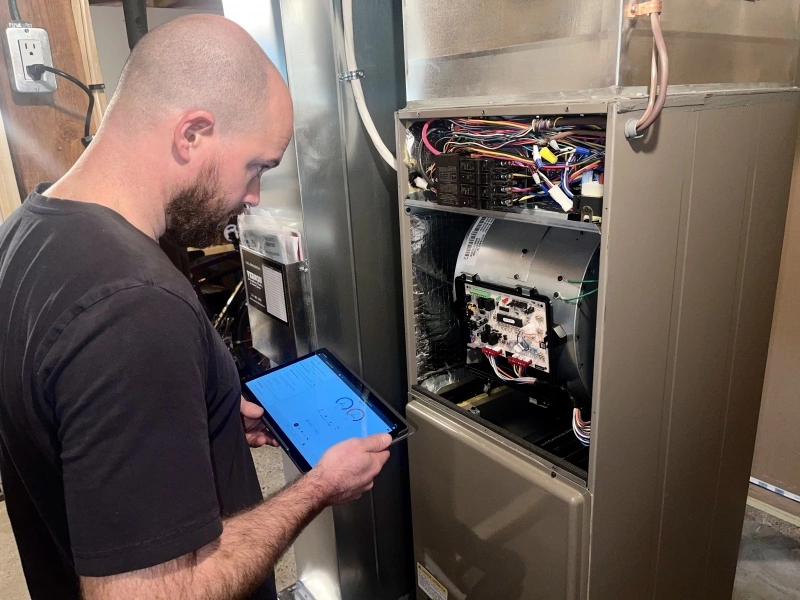
The furnace control board, often referred to as the "brain" of your furnace, manages the entire heating process. When your furnace malfunctions, the control board is a prime suspect. Understanding how to troubleshoot it can save you time, money, and the frustration of a cold house. This guide provides a comprehensive overview of furnace control board troubleshooting for homeowners, real estate investors, and contractors.
Understanding the Control Board
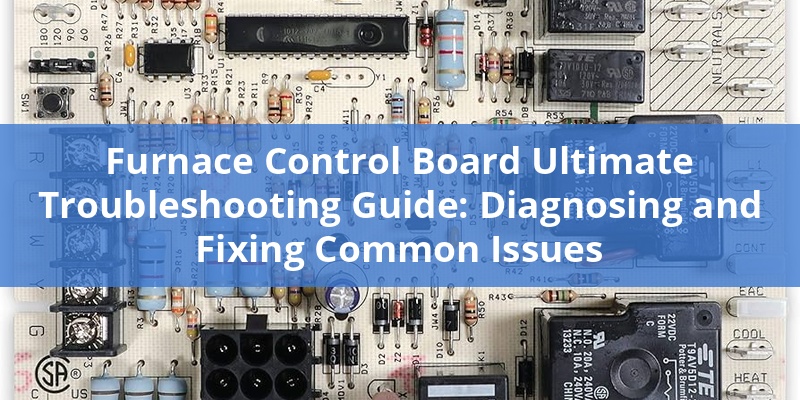
The control board monitors safety sensors, ignition, blower motor operation, and gas valve control. It's a printed circuit board (PCB) with various components, including relays, capacitors, resistors, and a microprocessor. When a component fails or a sensor detects a problem, the control board shuts down the furnace to prevent damage or hazards.
Common Symptoms of a Faulty Control Board
Identifying the symptoms early can help pinpoint the problem. Here are some common signs of a failing furnace control board:
- Furnace won't turn on: This is the most obvious symptom. The furnace may not respond at all when the thermostat calls for heat.
- Intermittent operation: The furnace might turn on and off sporadically, or run for a short period before shutting down.
- Blower motor issues: The blower fan might run constantly, not run at all, or run at the wrong speed.
- Ignition problems: The furnace might fail to ignite, or the igniter may glow but not light the gas.
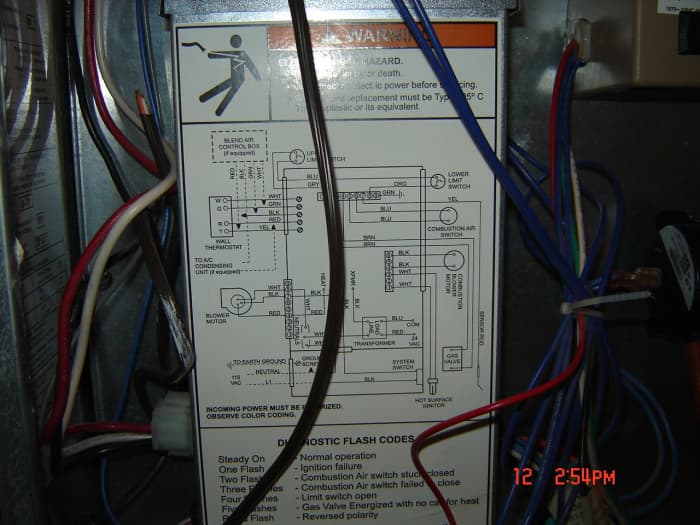
- Error codes: Many modern furnaces display error codes on the control board or thermostat, indicating a specific problem. Consult your furnace's manual to decipher these codes.
- Strange noises: Clicking, buzzing, or humming sounds coming from the furnace area can indicate a failing component on the control board.
Safety First!
Before attempting any troubleshooting, always turn off the power to your furnace at the breaker box. This prevents electrical shock. Also, turn off the gas supply to the furnace. If you smell gas at any point, evacuate the premises immediately and call your gas company or 911.
Troubleshooting Steps
Follow these steps to systematically diagnose a potential control board issue:
- Check the power supply: Ensure the breaker hasn't tripped and the furnace switch is in the "on" position.
- Inspect the wiring: Look for loose connections, frayed wires, or signs of damage. Tighten any loose connections and replace damaged wires.
- Examine the control board visually: Look for burnt components, bulging capacitors, or signs of water damage. These are clear indicators of a faulty board.
- Check the fuses: Most control boards have fuses to protect against electrical surges. Use a multimeter to test the fuses for continuity. Replace any blown fuses with the same amperage rating.
- Test the sensors: Use a multimeter to check the continuity and resistance of the flame sensor, limit switch, and pressure switch. A faulty sensor can trigger the control board to shut down the furnace.
- Read the error codes: If your furnace displays error codes, consult the manual to understand their meaning. This can help pinpoint the source of the problem. For example, a common error code indicates a faulty flame sensor, which can mimic a control board problem.
- Test the voltage: Using a multimeter, check the voltage to the control board and to various components. Ensure that the voltage readings are within the specified range.
When to Call a Professional
While some troubleshooting steps can be performed by homeowners, certain repairs require the expertise of a qualified HVAC technician. Call a professional if:
- You are uncomfortable working with electricity or gas.
- You are unable to identify the problem.
- The control board is visibly damaged.
- You need to replace components on the control board.
- The furnace is under warranty. Attempting repairs yourself may void the warranty.
Replacing the Control Board
If the control board is indeed faulty, replacement is often the best solution. Here's a general overview of the process:
- Identify the correct replacement board: Ensure the replacement board is compatible with your furnace model. Use the model number and serial number of your furnace to find the correct replacement. Many online retailers sell furnace control boards, but verify compatibility before purchasing.
- Disconnect the power: As mentioned before, always disconnect the power to the furnace before working on it.
- Label the wires: Before disconnecting any wires from the old control board, label them carefully. This will make it easier to reconnect them to the new board correctly. Take pictures for reference.
- Remove the old control board: Disconnect all wires and screws holding the old control board in place.
- Install the new control board: Attach the new control board to the furnace and reconnect all the wires according to your labels.
- Restore power and test: Turn the power back on to the furnace and test its operation. Monitor for any unusual noises or error codes.
Popular Furnace Brands and Control Boards
Different furnace brands use different control boards. Here are some popular brands and considerations:
- Carrier/Bryant/Payne: These brands often use similar control boards due to their common ownership. Carrier control boards are known for their reliability, but can be more expensive to replace.
- Goodman/Amana: Goodman and Amana furnaces are often praised for their affordability, and their control boards are generally readily available.
- Lennox: Lennox furnaces are known for their efficiency, and their control boards often incorporate advanced features. Ensure you choose the correct replacement, as Lennox uses proprietary boards.
- Rheem/Ruud: Rheem and Ruud furnaces offer a good balance of performance and value, and their control boards are generally reliable.
Warranty Considerations
Furnace warranties vary depending on the brand and model. Most furnaces have a limited warranty that covers parts, including the control board, for a specific period (e.g., 5 or 10 years). Some manufacturers offer extended warranties for additional coverage. Check your furnace's warranty documentation to understand the terms and conditions. Attempting DIY repairs while under warranty might void the coverage.
Preventative Maintenance
Regular maintenance can help prevent control board failures and extend the life of your furnace. Here are some tips:
- Change the air filter regularly: A dirty air filter restricts airflow, which can cause the furnace to overheat and stress the control board.
- Schedule annual inspections: A qualified HVAC technician can inspect the furnace for potential problems and perform necessary maintenance, such as cleaning the burners and checking the wiring.
- Keep the furnace area clean: Dust and debris can accumulate on the control board and cause it to overheat.
- Consider a surge protector: Electrical surges can damage the control board. A surge protector can help protect your furnace from power spikes.
Cost Considerations
The cost of replacing a furnace control board can vary depending on the brand, model, and complexity of the board. A replacement board can range from $100 to $500 or more. Labor costs for professional installation can add another $100 to $300. Weigh the cost of replacement against the age and condition of your furnace. If your furnace is nearing the end of its lifespan (typically 15-20 years), it might be more cost-effective to replace the entire unit.
AFUE, SEER, and HSPF Ratings
While this article focuses on the control board, it's worth mentioning AFUE (Annual Fuel Utilization Efficiency) for furnaces, SEER (Seasonal Energy Efficiency Ratio) for air conditioners, and HSPF (Heating Seasonal Performance Factor) for heat pumps. These ratings indicate the energy efficiency of the equipment. When replacing a furnace, consider models with a higher AFUE rating to save on energy costs.
Conclusion
Troubleshooting a furnace control board can be challenging, but with a systematic approach and a basic understanding of furnace operation, you can often diagnose the problem and determine the best course of action. Remember to prioritize safety and consult a qualified HVAC technician when necessary. Regular maintenance and prompt repairs can help ensure your furnace operates efficiently and reliably for years to come.