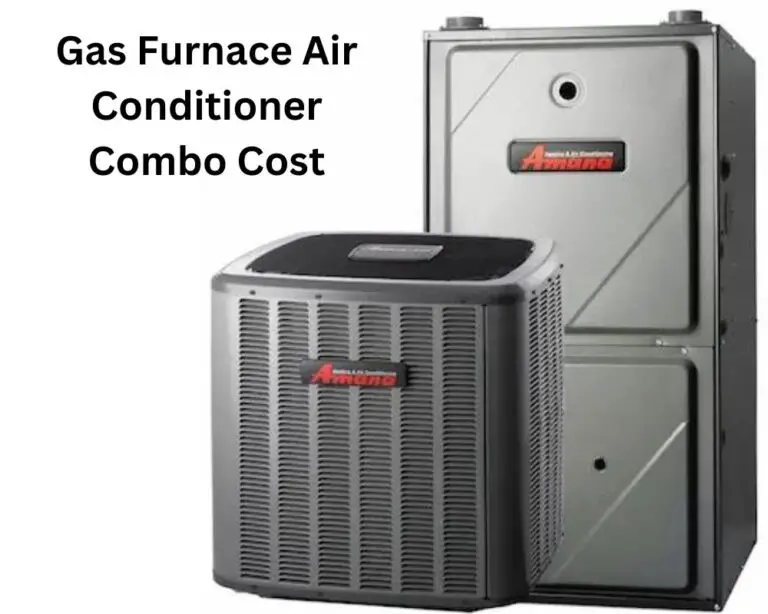
Gas Furnace And Air Conditioner System

Frequently Asked Questions: Gas Furnace and Air Conditioner Systems
This article answers common questions about gas furnace and air conditioner systems, helping you understand how they work and how to maintain them. We aim to provide clear, concise information for homeowners and facility managers.
1. How does a gas furnace and air conditioner system work together?
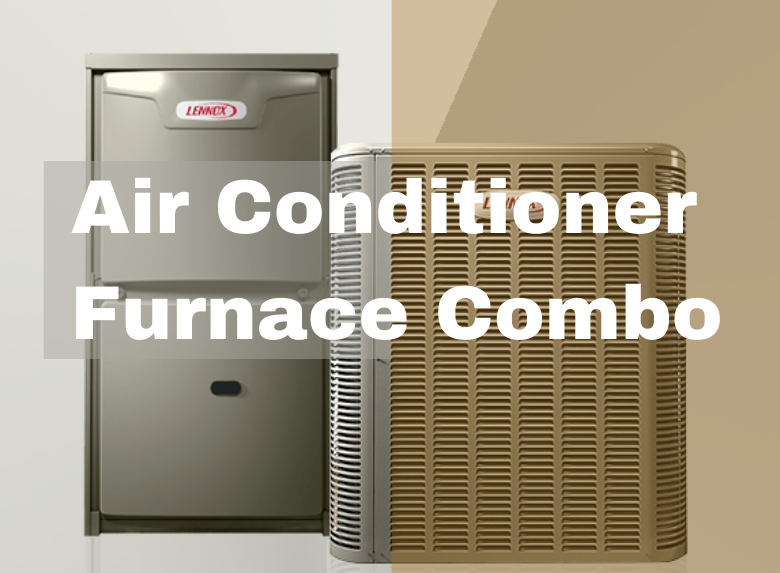
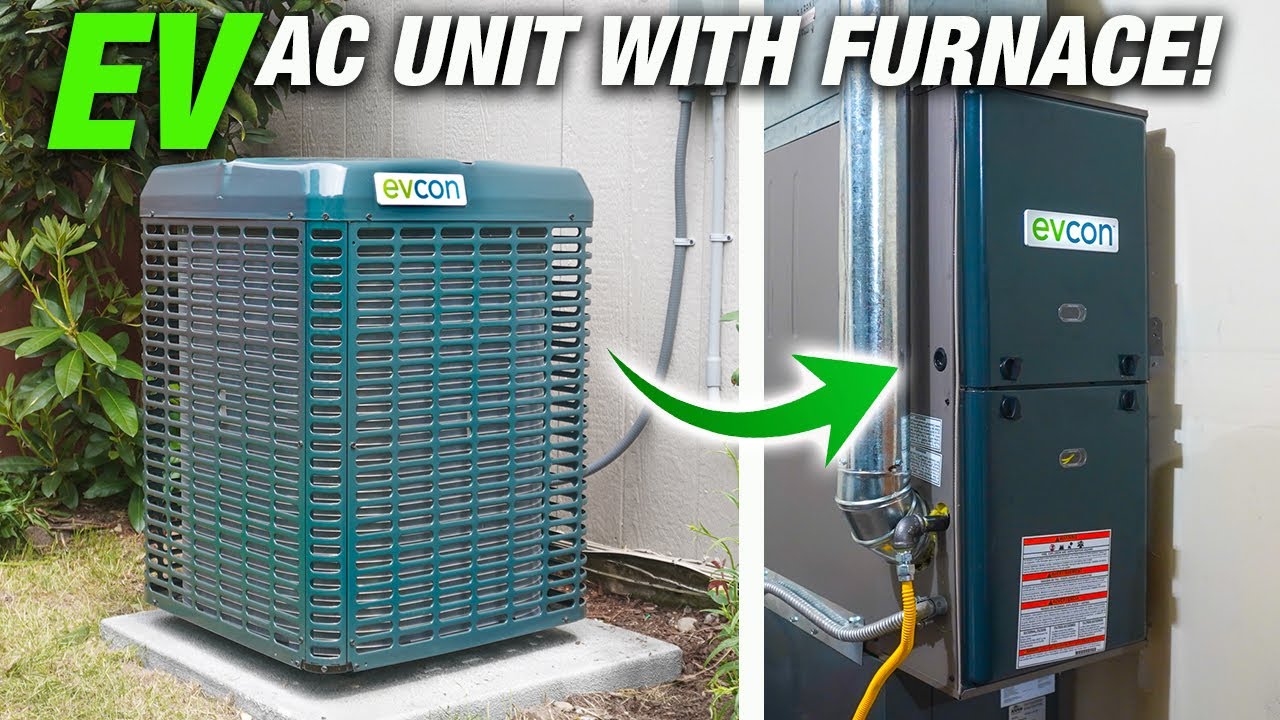
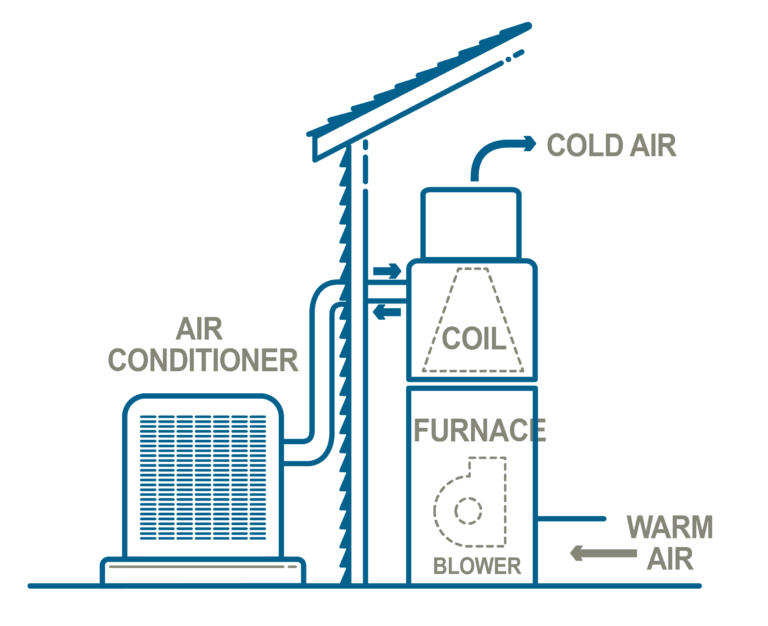
A gas furnace and air conditioner typically share the same ductwork and blower fan to distribute heated or cooled air throughout your home. Here's a simple breakdown:
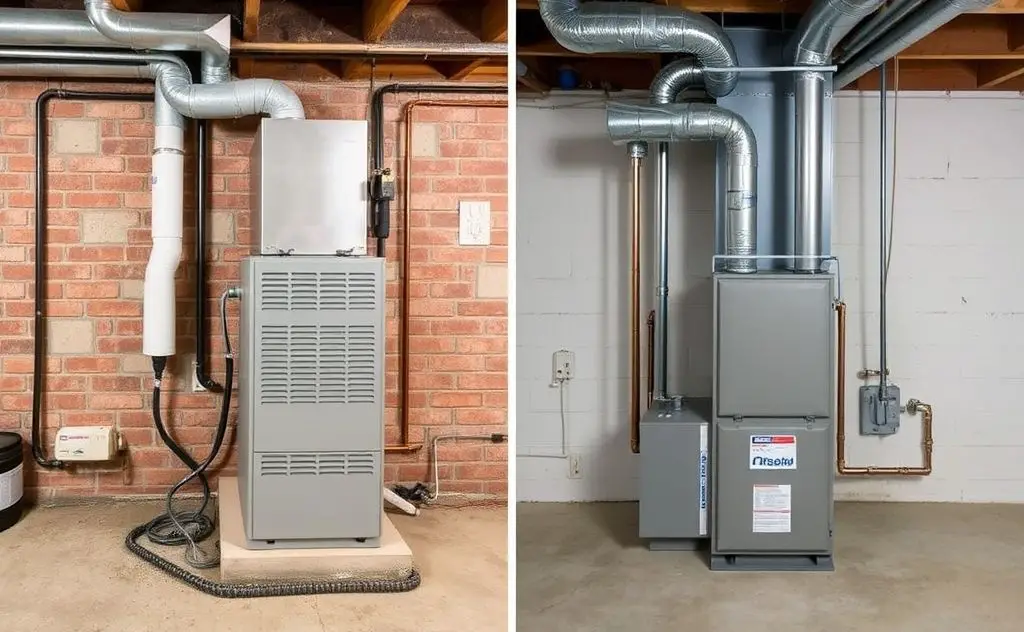
- Heating (Furnace): The furnace burns natural gas (or propane) to generate heat within a heat exchanger. The blower fan then pushes air across the heat exchanger, warming it. This heated air is then distributed through your ductwork and into your rooms. Exhaust gases are safely vented outside.
- Cooling (Air Conditioner): The air conditioner works using a refrigerant that absorbs heat from inside your home and releases it outside. The indoor component, the evaporator coil, sits within your furnace's air handler. The blower fan blows air across the cold evaporator coil, cooling it. This cooled air is then circulated through your ductwork. The outdoor component, the condenser, releases the heat absorbed by the refrigerant.
- Thermostat: The thermostat controls both the furnace and air conditioner, turning them on or off based on your desired temperature. It essentially acts as the brain of the system.
So, while they perform different functions, they are interconnected to provide year-round comfort using a shared distribution system.
2. What are the key components of a gas furnace and air conditioner system?
Understanding the key components can help you troubleshoot minor issues and communicate more effectively with HVAC technicians. Here's a quick rundown:
Gas Furnace Components:
- Burners: These ignite the gas to create a flame, generating heat.
- Heat Exchanger: This is where the heat from the burning gas is transferred to the air that circulates through your home. A cracked heat exchanger is a serious safety hazard and requires immediate attention.
- Blower Fan: This pushes air across the heat exchanger and through the ductwork.
- Gas Valve: Controls the flow of gas to the burners.
- Ignition System: This ignites the gas. Older furnaces may use a pilot light, while newer models use electronic ignition.
- Flue/Vent: This safely vents exhaust gases outside.
- Control Board: This electronic component controls the furnace's operation.
- Filter: Removes dust and debris from the air circulating through the furnace. Regular filter replacement is crucial for efficiency and air quality.
Air Conditioner Components:
- Compressor (Outdoor Unit): This circulates refrigerant and compresses it, raising its temperature and pressure. It's the heart of the AC system.
- Condenser Coil (Outdoor Unit): This releases heat from the refrigerant to the outside air.
- Evaporator Coil (Indoor Unit): This absorbs heat from the air inside your home, cooling it.
- Refrigerant: This is the fluid that absorbs and releases heat, facilitating the cooling process.
- Expansion Valve or Metering Device: This controls the flow of refrigerant into the evaporator coil.
- Fan (Both Units): The outdoor unit has a fan to dissipate heat from the condenser coil, and the indoor unit (blower fan in the furnace) circulates cooled air.
3. How often should I have my gas furnace and air conditioner serviced?
Regular maintenance is essential for the efficiency, lifespan, and safety of your system. Annual servicing by a qualified HVAC technician is highly recommended. This service should ideally include:
Furnace Maintenance:
- Inspection of the burners and heat exchanger for cracks or corrosion.
- Cleaning of the burners and pilot light (if applicable).
- Inspection of the flue/vent for blockages.
- Testing of the gas pressure.
- Checking the blower fan motor and bearings.
- Inspection of electrical connections.
- Carbon monoxide testing.
- Filter replacement.
Air Conditioner Maintenance:
- Cleaning of the condenser coil (outdoor unit).
- Inspection of refrigerant levels.
- Checking for leaks in the refrigerant lines.
- Inspection of the evaporator coil (indoor unit).
- Cleaning of the condensate drain line to prevent clogs.
- Checking the fan motor and bearings.
- Inspection of electrical connections.
- Filter replacement.
In addition to professional servicing, you should regularly replace your air filter (every 1-3 months, depending on usage and filter type).
4. What size furnace and air conditioner do I need for my home?
Proper sizing is crucial for efficiency and comfort. An oversized unit will cycle on and off too frequently, leading to temperature swings and increased wear and tear. An undersized unit will struggle to maintain the desired temperature, especially during extreme weather.
An HVAC professional will perform a load calculation to determine the correct size for your home. This calculation takes into account several factors, including:
- Square footage of your home
- Insulation levels in walls, ceilings, and floors
- Number and size of windows and doors
- Climate zone
- Orientation of your home
- Number of occupants
- Air leakage rates
Avoid relying solely on square footage. A professional load calculation provides a much more accurate estimate.
The furnace size is measured in BTUs (British Thermal Units), and the air conditioner size is measured in tons. One ton is equal to 12,000 BTUs per hour.
5. How can I improve the energy efficiency of my gas furnace and air conditioner system?
Several steps can be taken to improve the energy efficiency of your system and lower your utility bills:
- Regularly replace your air filter: A dirty filter restricts airflow, forcing your system to work harder.
- Seal air leaks: Seal cracks and gaps around windows, doors, and ductwork to prevent conditioned air from escaping.
- Improve insulation: Adding insulation to your attic, walls, and floors can significantly reduce heat loss in winter and heat gain in summer.
- Use a programmable thermostat: Set the thermostat to adjust the temperature automatically when you're away or asleep.
- Consider a smart thermostat: Smart thermostats learn your habits and automatically adjust the temperature to optimize energy savings and comfort.
- Ensure proper ventilation: While sealing air leaks is important, proper ventilation is also necessary for healthy indoor air quality. Consider using an Energy Recovery Ventilator (ERV) or Heat Recovery Ventilator (HRV).
- Keep the area around the outdoor unit clear: Ensure there's adequate airflow around the condenser unit. Remove any shrubs or debris that may be blocking it.
- Upgrade to a high-efficiency system: If your system is old and inefficient, consider upgrading to a newer model with a higher AFUE (Annual Fuel Utilization Efficiency) rating for furnaces and a higher SEER (Seasonal Energy Efficiency Ratio) rating for air conditioners.
- Consider duct sealing: Leaky ducts can lose a significant amount of conditioned air. Have your ducts inspected and sealed by a professional.
6. What are some common problems with gas furnace and air conditioner systems?
Being aware of common problems can help you identify issues early and prevent them from escalating.
Common Furnace Problems:
- No heat: This could be due to a tripped circuit breaker, a faulty thermostat, a pilot light that won't stay lit, a clogged filter, or a more serious problem with the gas valve or igniter.
- Insufficient heat: This could be caused by a dirty filter, a malfunctioning blower fan, or an undersized furnace.
- Strange noises: Rattling, banging, or whistling noises could indicate a problem with the blower fan, motor, or ductwork.
- Frequent cycling: This could be caused by an oversized furnace, a dirty filter, or a faulty thermostat.
- Carbon monoxide leak: This is a serious safety hazard and requires immediate attention. Install carbon monoxide detectors throughout your home and test them regularly.
Common Air Conditioner Problems:
- No cooling: This could be due to a tripped circuit breaker, a faulty thermostat, a dirty filter, a refrigerant leak, or a malfunctioning compressor.
- Insufficient cooling: This could be caused by a dirty filter, a refrigerant leak, a dirty condenser coil, or an undersized air conditioner.
- Water leaks: This could be caused by a clogged condensate drain line.
- Strange noises: Rattling, buzzing, or humming noises could indicate a problem with the compressor, fan, or refrigerant lines.
- Ice on the evaporator coil: This is often caused by restricted airflow (dirty filter) or a refrigerant leak.
If you suspect any of these problems, contact a qualified HVAC technician for diagnosis and repair.
7. How long should a gas furnace and air conditioner system last?
The lifespan of a gas furnace and air conditioner system depends on several factors, including the quality of the equipment, the frequency of maintenance, and the climate.
- Gas Furnace: A well-maintained gas furnace typically lasts 15-20 years.
- Air Conditioner: A well-maintained air conditioner typically lasts 10-15 years.
Signs that it may be time to replace your system include:
- Frequent breakdowns
- Rising energy bills
- Uneven heating or cooling
- Strange noises
- The system is old (approaching or exceeding its expected lifespan)
Investing in a new, high-efficiency system can save you money on energy bills and provide more reliable comfort.