Geothermal Vs Ground Source Heat Pump

The world of HVAC is constantly evolving, with efficiency and sustainability becoming increasingly important. Among the most promising technologies are geothermal and ground source heat pumps. While often used interchangeably, understanding the nuances between these terms and the broader applications is crucial for HVAC professionals. This article delves into the specifics of geothermal and ground source heat pumps, exploring career opportunities, relevant certifications, and industry trends.
Geothermal Vs. Ground Source Heat Pumps: Untangling the Terminology
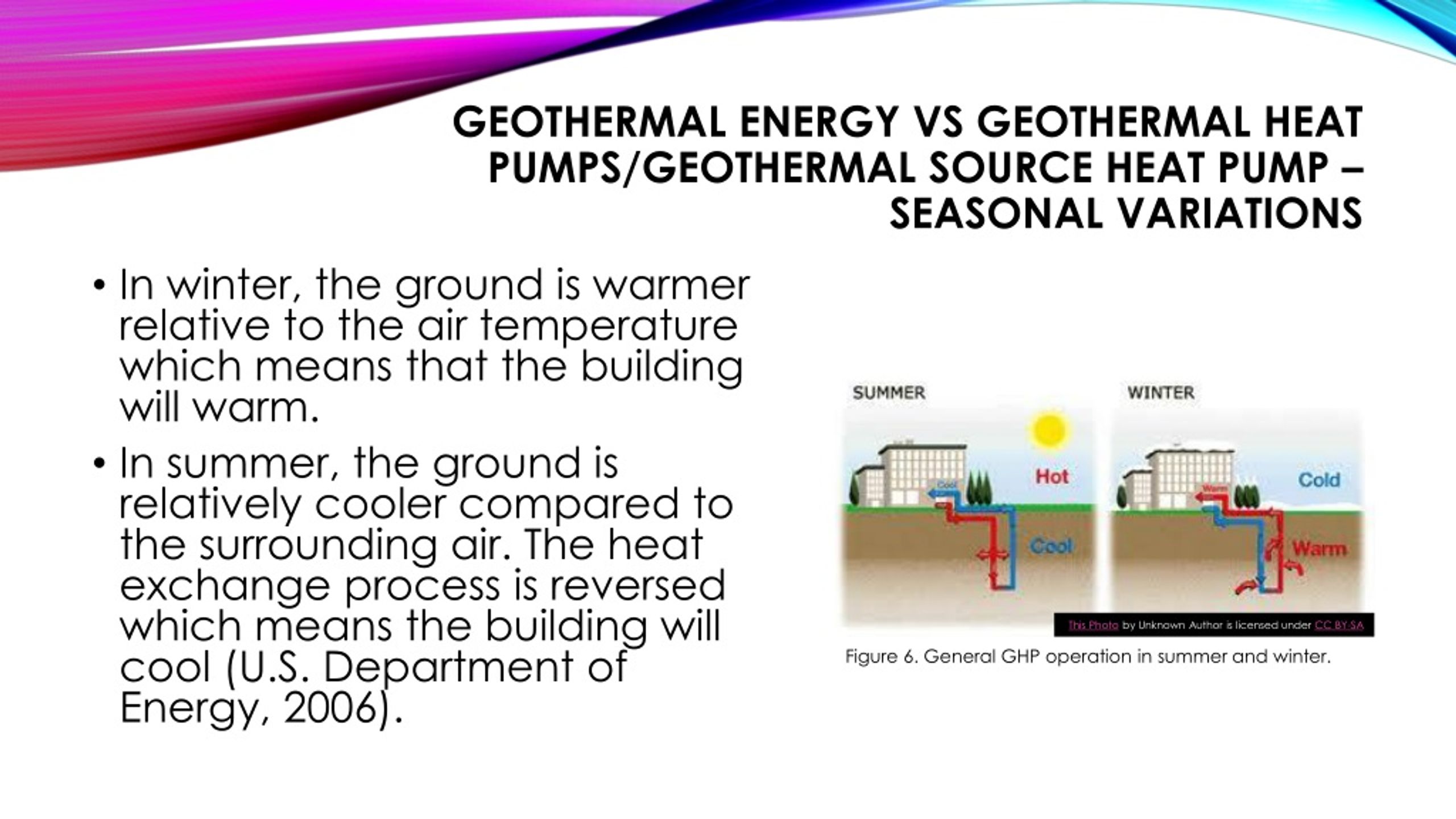
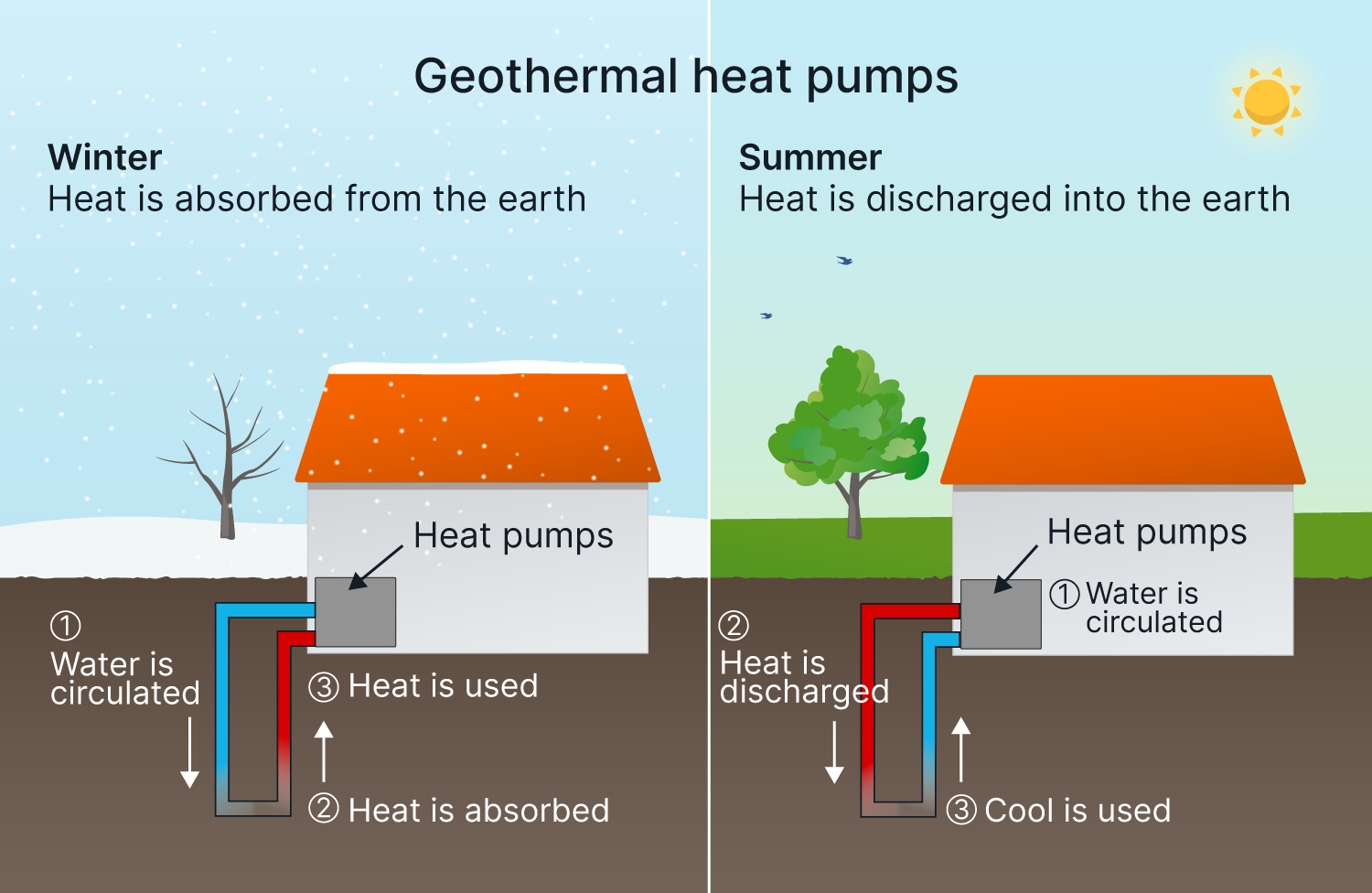
Technically, geothermal energy refers to heat originating from the Earth's core. This high-temperature source is often harnessed directly for electricity generation in areas with significant geothermal activity, like Iceland or parts of the Western United States. However, in the context of residential and commercial heating and cooling, the term "geothermal" is often used loosely and interchangeably with ground source heat pump systems. Ground source heat pumps, more accurately, use the relatively constant temperature of the earth near the surface (typically between 45°F and 75°F) as a heat source in winter and a heat sink in summer. Therefore, while all geothermal systems *are* technically ground source, not all ground source systems are harnessing deep, true geothermal heat.
For practical purposes in the HVAC industry, we often treat "geothermal" and "ground source heat pump" as synonyms, especially when discussing residential and commercial applications. The key takeaway is that these systems leverage the earth's stable temperature to provide efficient heating and cooling.
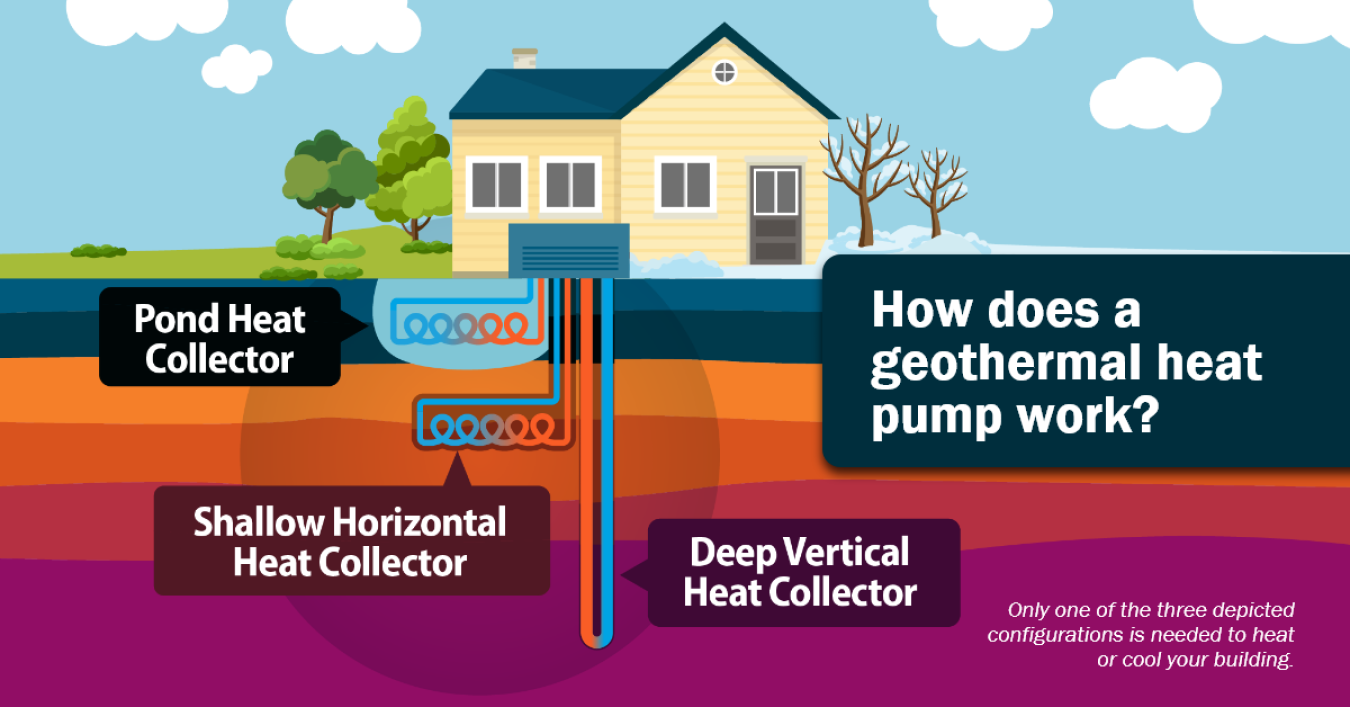
How Ground Source Heat Pumps Work
Ground source heat pumps utilize a refrigerant to transfer heat between the earth and the building. The system consists of three main components:
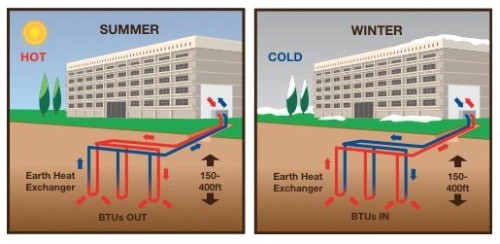
- Ground Loop: A network of pipes buried underground, either horizontally or vertically, containing a water and antifreeze solution. This loop circulates and absorbs or dissipates heat to the surrounding earth.
- Heat Pump Unit: Located indoors, this unit compresses the refrigerant, transferring heat to the building's air or water distribution system in winter. In summer, the process is reversed, removing heat from the building and transferring it to the ground.
- Distribution System: This includes ductwork for forced-air systems or radiant floor heating for hydronic systems, delivering the heated or cooled air or water throughout the building.
Career Opportunities in Geothermal HVAC
The demand for skilled geothermal HVAC technicians is growing, driven by increasing energy costs, government incentives for renewable energy, and a growing awareness of environmental sustainability. The U.S. Bureau of Labor Statistics projects a [Insert Current BLS Projection Percentage Here]% growth in HVAC jobs over the next decade. Within that, geothermal specialists are poised to see even greater opportunities.
Entry-Level Positions
Entry-level positions typically involve assisting experienced technicians with installation, maintenance, and repair of ground source heat pump systems. This may include:
- Digging trenches for ground loops
- Installing piping and fittings
- Charging and testing refrigerant
- Assisting with system start-up and commissioning
Apprenticeships are a common entry point, providing on-the-job training and classroom instruction. Completing a vocational training program or earning an associate's degree in HVAC can also provide a strong foundation for a successful career.
Mid-Level Positions
With experience and certifications, technicians can advance to mid-level positions, taking on more responsibility for diagnosing and repairing complex geothermal systems. This may include:
- Troubleshooting electrical and mechanical components
- Performing system performance testing
- Supervising junior technicians
- Interacting with customers
Salary ranges for mid-level geothermal HVAC technicians typically fall between $[Insert Average Salary Range Here] per year, depending on location, experience, and certifications. Consider specializing in design and installation or maintenance and repairs to further your career.
Advanced Positions
Experienced and highly skilled technicians can advance to supervisory or management positions, overseeing projects and teams of technicians. Some may also choose to specialize in specific areas, such as geothermal system design, energy auditing, or sales and marketing.
Potential advanced roles:
- HVAC Supervisor or Manager
- Geothermal System Designer
- Energy Auditor
- Sales Engineer (Geothermal Focus)
- HVAC Consultant
Salaries for advanced positions can exceed $[Insert Higher Salary Range Here] per year. Further education, such as a bachelor's degree in engineering or business, can open up even more opportunities.
Essential Certifications for Geothermal HVAC Professionals
Certifications are crucial for demonstrating competency and professionalism in the HVAC industry. Several certifications are particularly relevant for geothermal specialists:
- EPA Section 608 Certification: Required for anyone handling refrigerants. This certification demonstrates knowledge of proper refrigerant handling procedures and environmental regulations. There are different types (Type I, Type II, Type III, and Universal), and the required type depends on the equipment you're working on.
- NATE (North American Technician Excellence) Certification: A widely recognized certification that validates a technician's knowledge and skills in HVAC. NATE offers certifications in various specialties, including ground source heat pumps. Employers often prefer to hire NATE-certified technicians.
- IGSHPA (International Ground Source Heat Pump Association) Accreditation: IGSHPA offers training and accreditation programs for installers, designers, and drillers of ground source heat pump systems. IGSHPA accreditation is highly valued by employers and demonstrates a commitment to quality and best practices.
- State and Local Licenses: Many states and localities require HVAC technicians to be licensed. Licensing requirements vary, but typically include passing an exam and completing a certain amount of on-the-job training.
Obtaining these certifications can enhance your job prospects, increase your earning potential, and demonstrate your commitment to professional excellence.
Industry Trends and the Future of Geothermal HVAC
The geothermal HVAC industry is poised for continued growth, driven by several key trends:
- Increasing Energy Efficiency Standards: Building codes are becoming more stringent, requiring higher energy efficiency. Ground source heat pumps are an excellent solution for meeting these standards.
- Government Incentives: Federal, state, and local governments offer tax credits, rebates, and other incentives to encourage the adoption of renewable energy technologies, including geothermal HVAC.
- Growing Environmental Awareness: Consumers are increasingly concerned about the environmental impact of their energy consumption. Ground source heat pumps are a clean and sustainable alternative to traditional heating and cooling systems.
- Technological Advancements: Ongoing research and development are leading to more efficient and cost-effective geothermal systems. Advancements in drilling techniques, heat pump technology, and control systems are making geothermal HVAC more accessible and appealing.
As the industry grows, there will be a greater demand for skilled technicians who can install, maintain, and repair these systems. Staying up-to-date on the latest technologies and industry trends is essential for success in this field. Continual education and professional development will set you apart from the competition.
Real-World Career Path Examples
To illustrate potential career paths, consider these examples:
Example 1: Sarah starts as an HVAC apprentice at a company specializing in geothermal installations. She completes her apprenticeship, earns her EPA 608 certification, and eventually obtains NATE certification in ground source heat pumps. After several years of experience, she becomes a lead installer and eventually starts her own geothermal HVAC company.
Example 2: David graduates from a technical college with an associate's degree in HVAC. He gets a job as a service technician at a company that services both traditional and geothermal systems. He earns his IGSHPA accreditation and becomes the company's go-to expert for geothermal repairs. He eventually moves into a sales role, specializing in geothermal system design and sales.
Example 3: Maria graduates with a bachelor's degree in mechanical engineering and focuses on sustainable energy systems. She takes a job as a design engineer at a company that manufactures ground source heat pumps. She uses her engineering knowledge to develop more efficient and innovative geothermal systems.
These examples demonstrate that there are many different paths to a successful career in geothermal HVAC. The key is to gain the necessary skills, certifications, and experience, and to stay up-to-date on the latest industry trends.
Conclusion
The field of geothermal HVAC presents a wealth of opportunities for skilled professionals. Understanding the technology, obtaining relevant certifications, and staying abreast of industry trends are essential for success. As energy efficiency and sustainability become increasingly important, the demand for qualified geothermal HVAC technicians will continue to grow. By investing in your education and training, you can position yourself for a rewarding and fulfilling career in this exciting and rapidly evolving field.