Hartford Loop On A Steam Boiler
Frequently Asked Questions About the Hartford Loop on Steam Boilers
Steam boilers can be complex systems, and the Hartford Loop is a crucial safety component. This FAQ addresses common questions about the Hartford Loop, helping you understand its purpose and importance in maintaining a safe and efficient steam heating system.
Question 1: What exactly *is* a Hartford Loop, and what does it do?
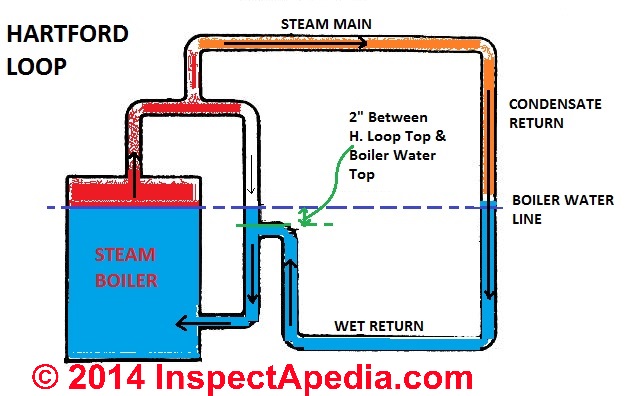
The Hartford Loop is a specific piping configuration used in steam heating systems. Its primary function is to prevent the boiler from losing water rapidly if a break occurs in the return line. Imagine a scenario where the return line (the pipe carrying condensed steam back to the boiler) springs a leak below the water line. Without a Hartford Loop, boiler water would siphon out through the leak, potentially leading to a dangerously low water level and a boiler burnout or even an explosion.
Think of it as a safety net. The Hartford Loop prevents catastrophic water loss by creating a "false" water line that's slightly above the actual water level in the boiler. If a leak occurs in the return line below this "false" water line, air will be drawn into the system, breaking the siphon and preventing the boiler from completely emptying.
Question 2: Where is the Hartford Loop typically located on a steam boiler system?
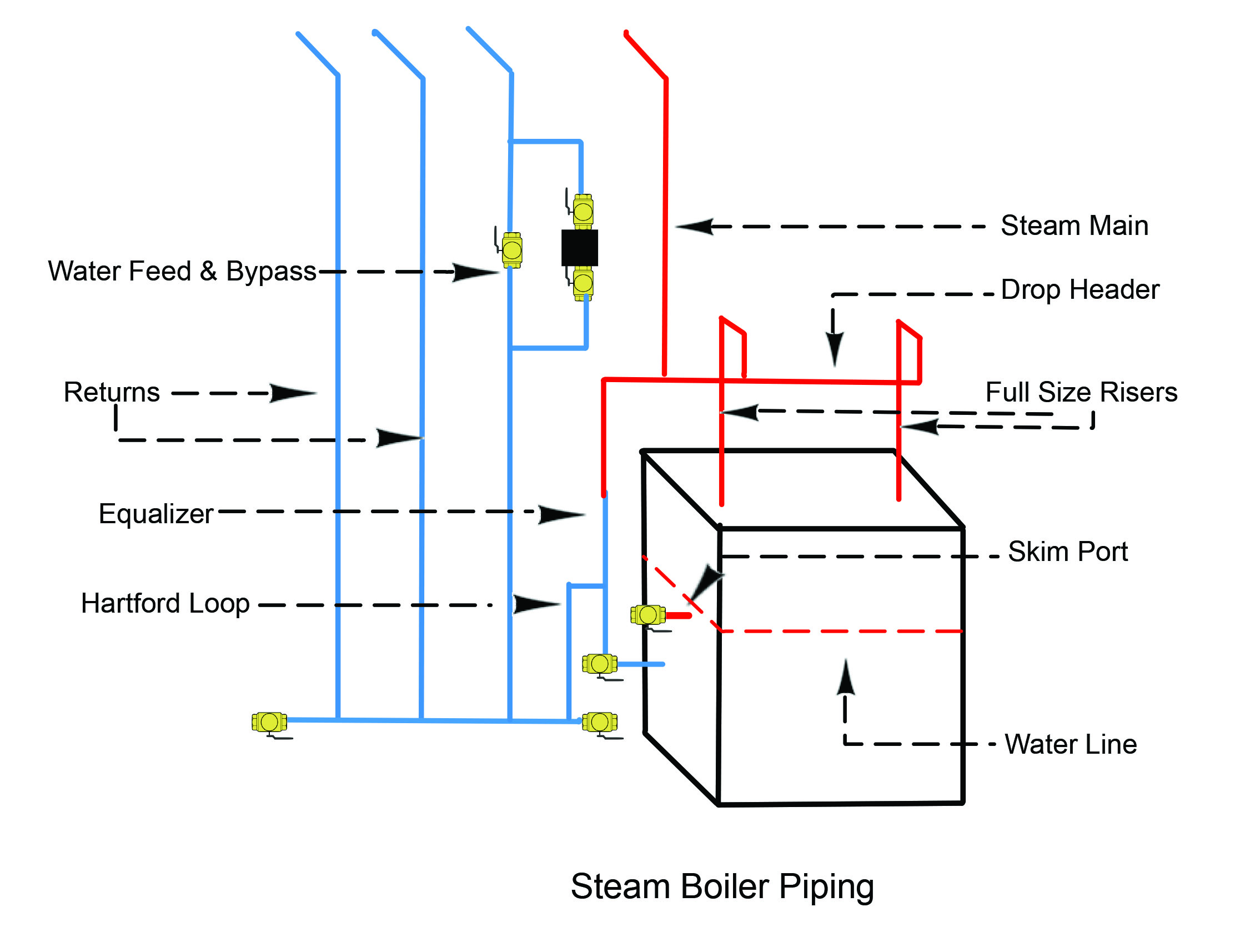
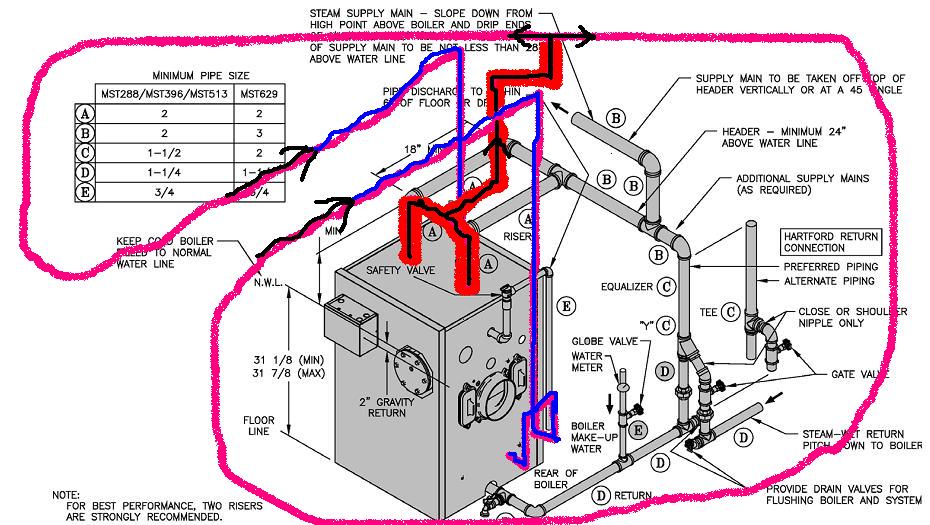
The Hartford Loop is installed on the return line, near the boiler. It consists of a specific arrangement of pipes and fittings. Here's a breakdown:
- The Return Line: The main return pipe carrying condensed steam back to the boiler.
- The Equalizer (or Header): A vertical pipe that connects the return line to the steam header (the main pipe distributing steam to the heating system). This pipe must be above the normal water line of the boiler.
- The Drop: A pipe that drops from the steam header back down to connect to the return line again, but at a point slightly *above* the return line's original connection point to the boiler. This creates the "loop."
- The Boiler Connection: The return line finally connects to the boiler at a point *below* the low water cut-off.
The key is that the equalizer rises *above* the water line before the drop connects back down to the return. This height difference is what creates the safety feature.
Question 3: How does the Hartford Loop actually *prevent* water loss? Can you explain the mechanism?
Let's break down the physics behind the Hartford Loop:
- Normal Operation: Under normal operating conditions, condensed steam flows back through the return line, through the equalizer, down the drop, and finally back into the boiler. The water level in the equalizer will be roughly the same as the water level in the boiler.
- Leak Occurs: If a leak develops in the return line *below* the level of the drop's connection point, something interesting happens.
- Air Enters: Instead of siphoning water out of the boiler, air is drawn into the system through the leak. This is because the pressure in the return line at the leak point is now lower than atmospheric pressure.
- Siphon Breaks: The air entering the return line breaks the siphoning action. The water column in the equalizer is no longer supported by the vacuum created by the siphoning action.
- Water Level Stabilizes: The water level in the boiler will only drop to the level of the drop's connection point on the return line. This is *above* the critical low-water cutoff point.
- Boiler Shuts Down: The low water cut-off (LWCO) sensor detects the slightly lowered water level and automatically shuts down the boiler, preventing damage from running dry.
In essence, the Hartford Loop sacrifices a small amount of water to prevent a catastrophic loss. The air introduced by the leak prevents the entire boiler from emptying.
Question 4: Is a Hartford Loop *required* on all steam boiler systems?
The answer is generally yes, especially for low-pressure steam heating systems. Most building codes and boiler manufacturers require a Hartford Loop or a similar safety configuration. It's a crucial safety feature that protects the boiler and the building occupants.
While older systems might exist without a Hartford Loop, bringing them up to code and installing one is highly recommended. It's a relatively inexpensive upgrade that can prevent significant damage and potential hazards.
Consult your local building codes and a qualified HVAC technician to determine the specific requirements for your steam boiler system.
Question 5: How can I tell if my steam boiler system *has* a Hartford Loop, and how do I inspect it?
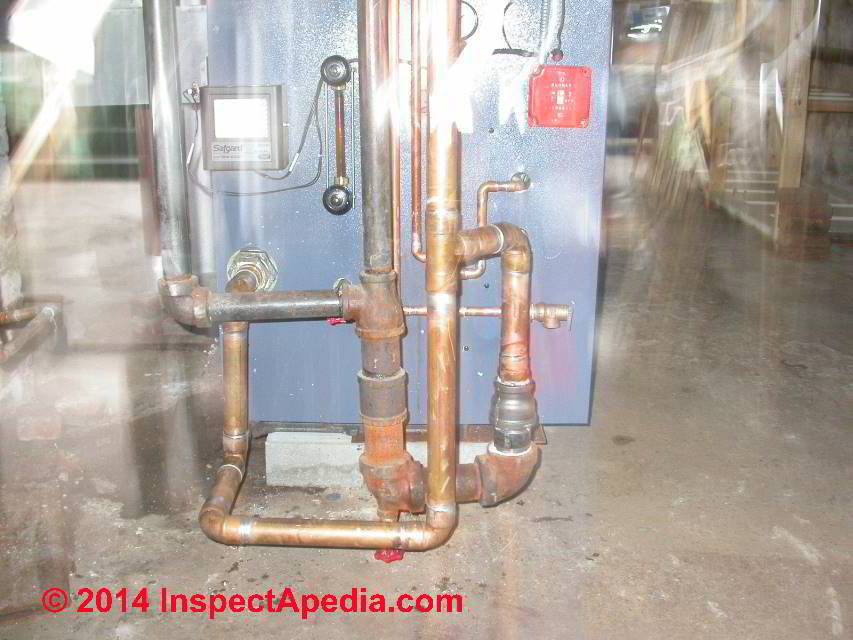
Identifying a Hartford Loop involves visually inspecting the piping configuration near the boiler. Look for the characteristic loop described earlier: the return line, the equalizer rising above the water line, and the drop connecting back to the return line. If you're unsure, take pictures and consult with a qualified HVAC technician.
Here's how to inspect it:
- Visual Inspection: Look for any signs of corrosion, leaks, or damage to the pipes and fittings around the Hartford Loop. Pay particular attention to the joints and connections.
- Verify Height: Ensure the equalizer pipe extends sufficiently above the normal water line. There should be a clear vertical distance.
- Check Pipe Sizes: Make sure the pipe sizes used in the Hartford Loop are appropriate for the boiler size and system capacity.
- Professional Inspection: Schedule regular inspections by a qualified HVAC technician. They can assess the condition of the Hartford Loop and identify any potential problems.
Never attempt to repair or modify the Hartford Loop yourself. This should only be done by a qualified professional.
Question 6: What are the *potential problems* that can occur with a Hartford Loop, and how can they be addressed?
While the Hartford Loop is a reliable safety device, it's not immune to problems. Here are some common issues:
- Corrosion: Corrosion can weaken the pipes and fittings, potentially leading to leaks or failures. Address this by regular inspections and replacing corroded components. Water treatment can also help prevent corrosion.
- Blockages: Sediment or debris can accumulate in the return line and potentially block the Hartford Loop, reducing its effectiveness. Regular flushing of the boiler and return lines can help prevent blockages.
- Improper Installation: If the Hartford Loop is not installed correctly (e.g., the equalizer is not high enough, or the pipe sizes are incorrect), it may not function properly. This requires correction by a qualified technician.
- Leaks: Leaks in the Hartford Loop itself can compromise its integrity. Repair or replace any leaking components immediately.
- Scale Buildup: Minerals in the boiler water can create scale buildup in the pipes, restricting flow and potentially interfering with the loop's function. Regular boiler cleaning and water treatment can minimize scale buildup.
The key to preventing problems is regular maintenance and prompt attention to any signs of trouble. Ignoring problems with the Hartford Loop can jeopardize the safety of your steam boiler system.
Question 7: Can I install a Hartford Loop myself? Is it a DIY project?
No, installing a Hartford Loop is not a DIY project. It requires a thorough understanding of steam boiler systems, plumbing codes, and safety regulations. Improper installation can render the Hartford Loop ineffective or even create dangerous conditions.
This task should only be performed by a licensed and experienced HVAC technician who specializes in steam boiler systems. They will ensure that the Hartford Loop is installed correctly, using the appropriate materials and following all applicable codes and regulations.
Attempting to install a Hartford Loop yourself without the proper knowledge and experience could result in serious injury, property damage, and potentially void the boiler's warranty.
Remember, the Hartford Loop is a critical safety component. Leave its installation and maintenance to the professionals.