Heat Pump Versus Air Conditioner Efficiency

Frequently Asked Questions: Heat Pump vs. Air Conditioner Efficiency
Choosing the right heating and cooling system for your home or business is a big decision. Understanding the efficiency differences between heat pumps and air conditioners is crucial for making an informed choice. This FAQ addresses common questions about their efficiency, helping you save money and stay comfortable.
Question 1: What's the fundamental difference in how a heat pump and an air conditioner work?
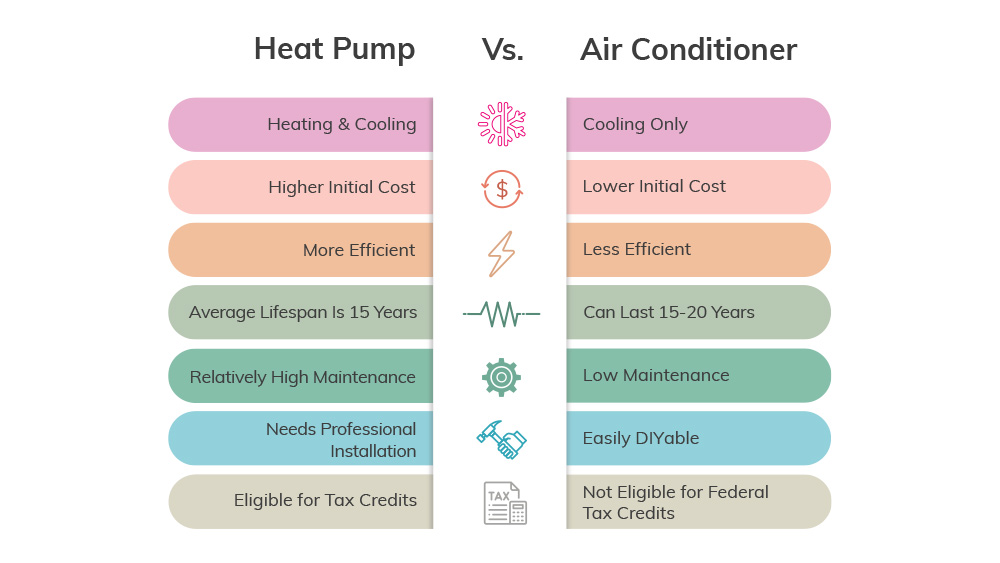
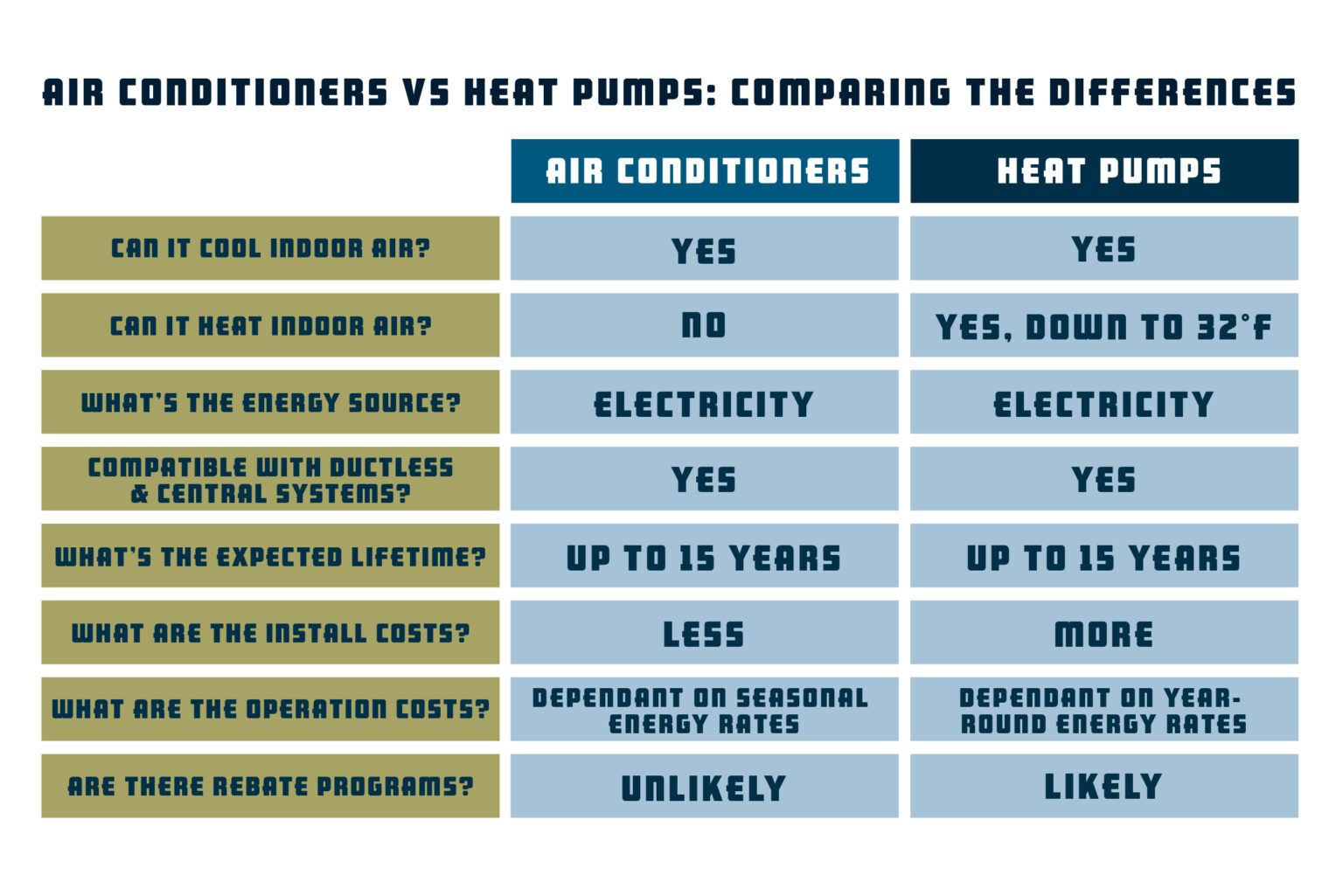
The core difference is that an air conditioner only cools, while a heat pump can both heat and cool. Think of an air conditioner as removing heat from your home and exhausting it outside. A heat pump can do that too, but it can also reverse the process, pulling heat from the outside air (even when it's cold) and transferring it inside. This ability to both heat and cool makes heat pumps a versatile option.
Question 2: How is the efficiency of air conditioners and heat pumps measured? What are SEER, EER, and HSPF?
Several metrics are used to measure the efficiency of air conditioners and heat pumps:
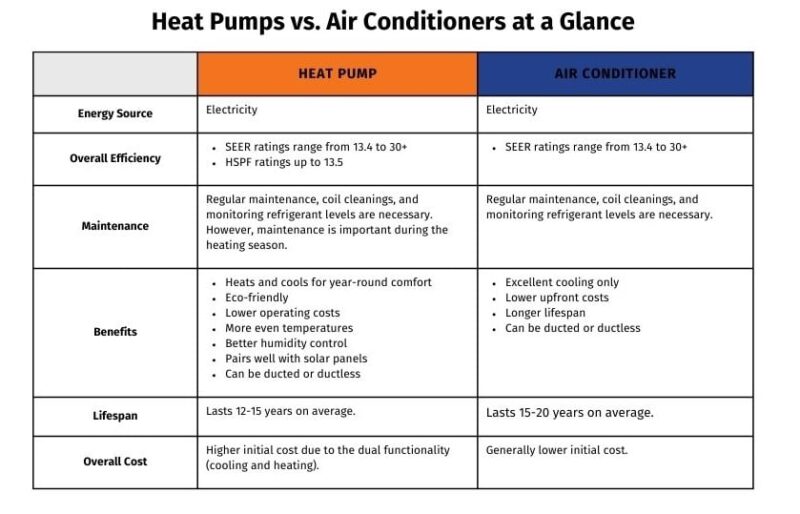
- SEER (Seasonal Energy Efficiency Ratio): This measures the cooling efficiency of both air conditioners and heat pumps over an entire cooling season. A higher SEER rating means better efficiency. The current minimum SEER rating in the US is 14, but high-efficiency models can reach SEER ratings of 20 or higher.
- EER (Energy Efficiency Ratio): This measures the cooling efficiency of an air conditioner or heat pump at a specific operating condition (usually a hot day). It's a snapshot of efficiency, unlike SEER which looks at a whole season. A higher EER rating indicates better cooling efficiency at that specific condition.
- HSPF (Heating Seasonal Performance Factor): This measures the heating efficiency of a heat pump over an entire heating season. A higher HSPF rating means better heating efficiency. The current minimum HSPF rating is 8.2, and higher-efficiency models can reach HSPF ratings of 10 or higher. Air conditioners don't have an HSPF rating because they don't heat.
In short, SEER and HSPF give you a broader picture of efficiency over a season, while EER provides a snapshot at a particular moment.
Question 3: Generally speaking, are heat pumps more or less efficient than air conditioners?
This is a nuanced question. In terms of cooling efficiency (measured by SEER and EER), a high-efficiency air conditioner and a high-efficiency heat pump can have comparable ratings. You can find both with excellent SEER ratings. However, the key difference lies in the heating functionality. Because heat pumps *move* heat rather than generate it (like a furnace), they can be significantly more efficient at heating than traditional electric resistance heating, especially in moderate climates. If you compare a heat pump to an air conditioner *plus* an electric resistance heating system, the heat pump will almost always be more energy efficient overall.
Think of it this way: a heat pump is like recycling heat, while electric resistance heating is like creating heat from scratch using electricity. Recycling is generally more efficient.
Question 4: How does climate affect the efficiency and cost-effectiveness of a heat pump? Are they suitable for all climates?
Climate plays a significant role in the performance of heat pumps. They are most efficient in climates with moderate winters. Heat pumps extract heat from the outside air, and as the outdoor temperature drops, the amount of heat available decreases. At very low temperatures (typically below freezing), a heat pump's efficiency drops significantly, and it may need to rely on a backup heating system (usually electric resistance heat). This backup heat is much less efficient than the heat pump itself.
Therefore:
- Warm Climates: Heat pumps are an excellent choice, providing efficient cooling and heating with minimal reliance on backup heating.
- Moderate Climates: Heat pumps are generally very efficient, but the specific model and its HSPF rating are crucial. Look for models designed to perform well at lower temperatures.
- Cold Climates: While heat pumps are improving, their efficiency can be compromised in very cold weather. Newer "cold climate heat pumps" are designed to operate more efficiently at lower temperatures, but a thorough analysis of heating needs is still recommended. A hybrid system (heat pump plus a furnace) may be the most cost-effective option in extremely cold regions.
Ultimately, consider your local climate and average winter temperatures when deciding if a heat pump is the right choice. Research cold climate heat pump options which are designed to perform more efficiently in temperatures down to -15°F.
Question 5: What are the operating cost differences between a high-efficiency air conditioner and a heat pump? How do I calculate potential savings?
The operating cost difference depends on several factors, including:
- Climate: As mentioned earlier, climate heavily influences heat pump efficiency.
- Energy Prices: The cost of electricity and other fuels (like natural gas, if you're comparing to a furnace) in your area is critical.
- Efficiency Ratings (SEER & HSPF): Higher ratings translate to lower energy consumption.
- Usage Patterns: How much you use heating and cooling throughout the year.
- Insulation Levels: Good insulation reduces heating and cooling loads, lowering energy bills regardless of the system.
To estimate potential savings, you can use online energy calculators provided by utility companies or HVAC manufacturers. These calculators typically require information about your location, current energy costs, the efficiency ratings of the systems you're considering, and your estimated usage.
A simplified calculation could look like this (for heating):
- Calculate Heating Load: Estimate your total heating needs for the year (e.g., in BTU or kWh).
- Calculate Energy Consumption for Heat Pump: Divide the heating load by the heat pump's HSPF (after converting units as needed). This gives you the amount of electricity the heat pump would use.
- Calculate Energy Consumption for Electric Resistance Heating: Since electric resistance heating is essentially 100% efficient, the energy consumption is roughly equal to the heating load (after converting units as needed).
- Multiply by Electricity Cost: Multiply the energy consumption figures from steps 2 and 3 by your local electricity rate to get the estimated heating cost for each system.
- Compare: Subtract the heat pump's estimated cost from the electric resistance heating's estimated cost to find the potential savings.
This is a simplified calculation. Consulting with an HVAC professional is highly recommended for a more accurate assessment and personalized recommendation.
Question 6: What other factors, besides efficiency, should I consider when choosing between a heat pump and an air conditioner?
Efficiency is important, but other factors to consider include:
- Upfront Cost: Heat pumps typically have a higher initial purchase price than air conditioners. However, this can be offset by lower operating costs over time, especially in moderate climates.
- Installation Costs: Installation costs can vary depending on the complexity of the project and the existing ductwork in your home.
- Maintenance: Both air conditioners and heat pumps require regular maintenance to maintain efficiency and prevent breakdowns. This includes cleaning or replacing filters, inspecting coils, and checking refrigerant levels.
- Lifespan: Both types of systems typically last 10-15 years with proper maintenance.
- Rebates and Incentives: Many utility companies and government agencies offer rebates and incentives for installing high-efficiency HVAC equipment, including heat pumps. This can help offset the initial cost.
- Noise Levels: Consider the noise levels of both the indoor and outdoor units. Look for models with noise-reducing features.
- Home Value: Installing a modern, efficient HVAC system can increase the value of your home.
- Environmental Impact: Heat pumps, especially when powered by renewable energy sources, can have a lower environmental impact than air conditioners paired with fossil fuel-based heating systems.
- Ductwork: Ensure that your existing ductwork is properly sized and sealed for optimal performance, regardless of whether you choose an air conditioner or a heat pump.
Question 7: I've heard about "dual-fuel" systems. How do they relate to heat pumps and air conditioners?
A dual-fuel system combines a heat pump with a furnace (typically a gas furnace, but sometimes propane or oil). The heat pump handles heating in milder temperatures, while the furnace takes over when temperatures drop too low for the heat pump to operate efficiently. Essentially, the heat pump acts as the primary heating source, and the furnace serves as a backup for extremely cold days.
Here's how it relates to heat pumps and air conditioners:
- Air Conditioner Connection: The "air conditioner" part of the system is integrated into the heat pump. The heat pump provides cooling during the summer months.
- Efficiency Optimization: Dual-fuel systems are designed to optimize efficiency by using the most cost-effective heating source at any given time. The system automatically switches between the heat pump and the furnace based on outdoor temperature and energy prices.
- Suitable Climates: Dual-fuel systems are particularly well-suited for climates with cold winters, where heat pumps alone might struggle to provide adequate heating at very low temperatures.
Dual-fuel systems offer a balance between the energy efficiency of a heat pump and the reliable heating power of a furnace. They can be a good option for homeowners who want to minimize their heating costs while ensuring consistent comfort, even in cold weather.