
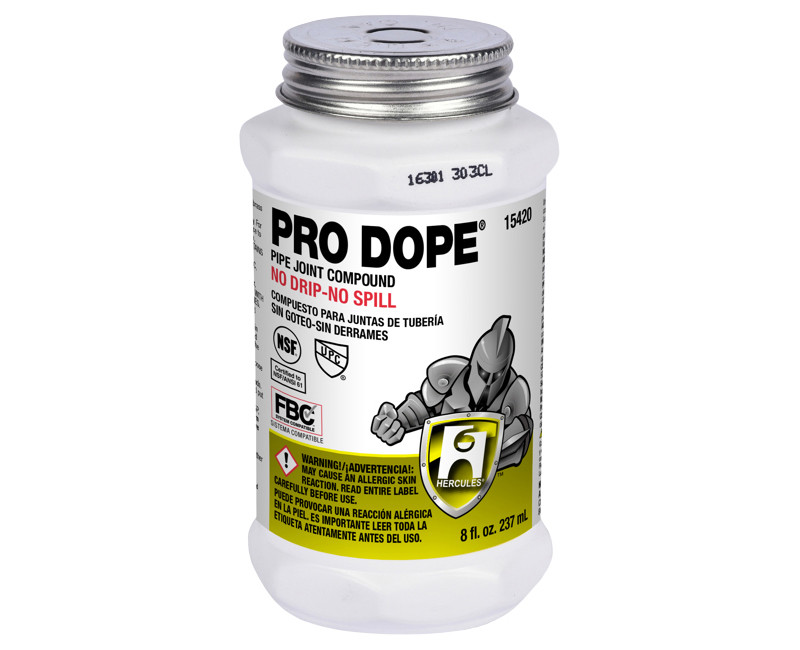
Hercules Pro Dope Pipe Joint Compound
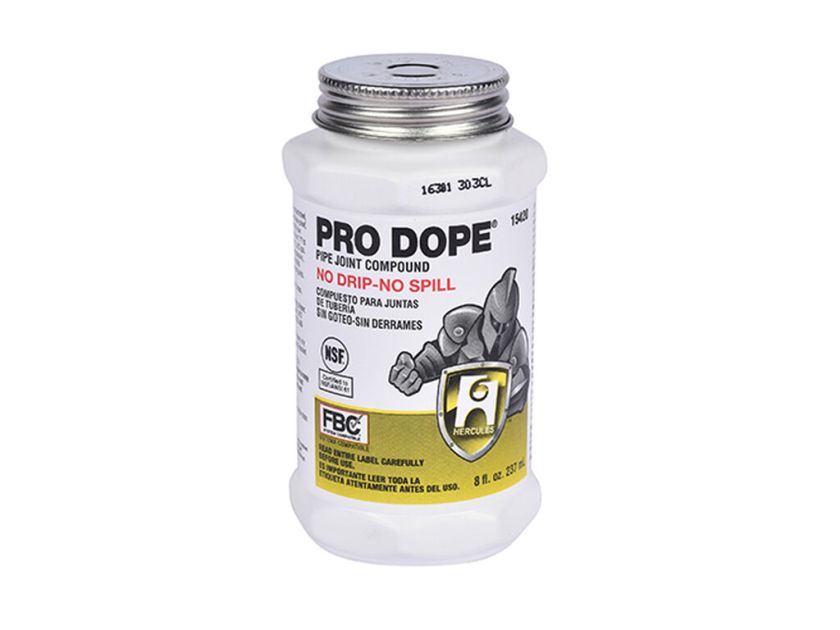
Frequently Asked Questions About Hercules Pro Dope Pipe Joint Compound
Hercules Pro Dope is a popular choice for sealing threaded pipe joints, preventing leaks in plumbing and HVAC systems. This FAQ addresses common questions about its use and application.
1. What exactly *is* Hercules Pro Dope and what is it used for?
Hercules Pro Dope is a pipe joint compound, sometimes referred to as pipe dope or thread sealant. It's a paste-like substance designed to be applied to the threads of pipes and fittings before they are joined together. Its primary purpose is to create a leak-proof seal by filling any gaps and imperfections in the threads. This ensures that liquids or gases, such as water, natural gas, or refrigerants, don't escape from the joint. It is used in a variety of applications including plumbing, heating, natural gas, and compressed air systems.
2. What types of pipes can I use Hercules Pro Dope on?
Hercules Pro Dope is generally suitable for use on a wide range of pipe materials, including:
- Steel pipes: Both black steel and galvanized steel.
- Iron pipes: Including cast iron and malleable iron.
- Brass pipes: Commonly used in plumbing.
- Copper pipes: Though often soldered, threaded copper connections exist.
- PVC pipes: (Polyvinyl Chloride) - *Consult local codes and the pipe manufacturer's recommendations* as some sealants may not be compatible or required. Typically only needed on threaded PVC connections.
- CPVC pipes: (Chlorinated Polyvinyl Chloride) - Similar to PVC, always check compatibility.
- ABS pipes: (Acrylonitrile Butadiene Styrene) - Also, similar to PVC, always check compatibility.
Important Note: While Hercules Pro Dope is versatile, it's *always best to confirm compatibility* with the specific pipe material and the fluid or gas being conveyed. Refer to the Hercules Pro Dope product label or the pipe manufacturer's specifications for guidance. Some plastics may be sensitive to certain chemicals in pipe dopes.
3. How do I properly apply Hercules Pro Dope to pipe threads?
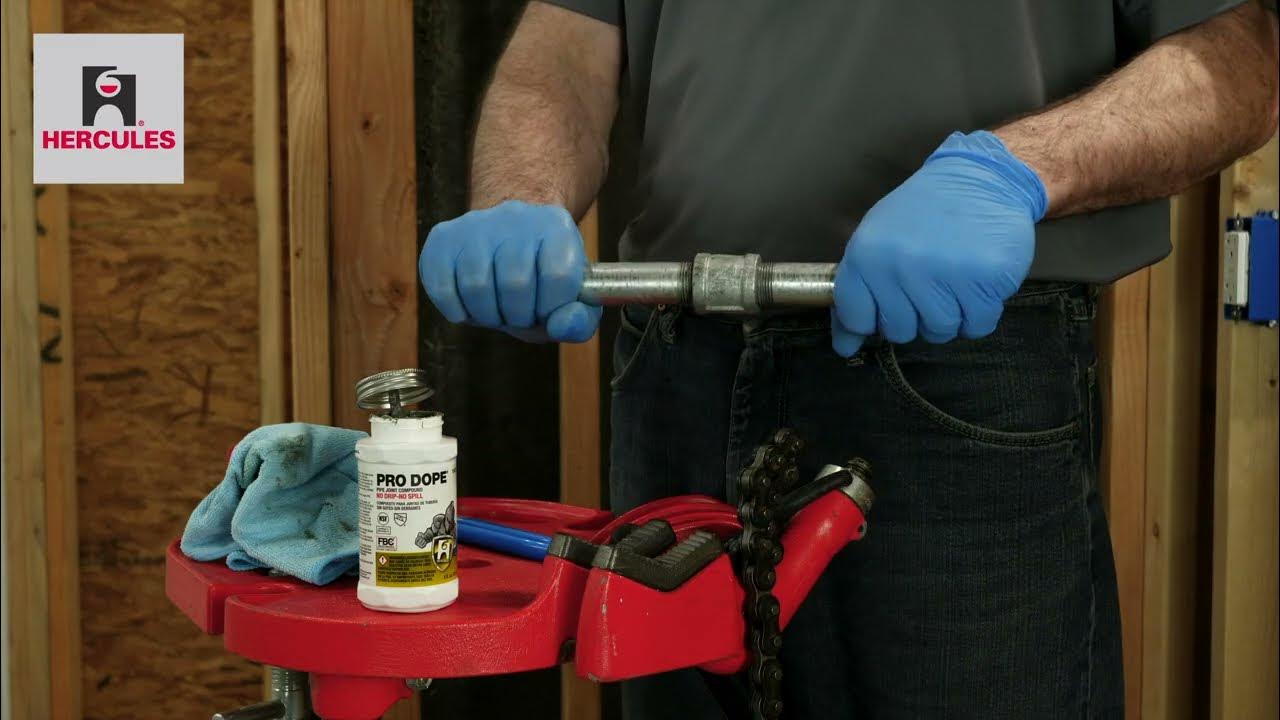
Proper application is crucial for a leak-free seal. Here's a step-by-step guide:
- Clean the Threads: Ensure the threads of both the male and female fittings are clean and free of debris, dirt, oil, and any old sealant. A wire brush can be helpful for removing stubborn residue.
- Apply the Dope: Using the brush applicator provided with the Hercules Pro Dope, apply a liberal and even coating of the compound to the *male* threads only. Apply in the direction of the thread spiral to encourage it to work its way into the threads as the joint is assembled. Avoid getting dope inside the pipe opening, as this could contaminate the fluid or gas being conveyed.
- Assemble the Joint: Carefully align the male and female fittings and begin threading them together by hand. Ensure the threads engage properly to avoid cross-threading.
- Tighten the Joint: Use appropriate wrenches to tighten the joint to the manufacturer's recommended torque specifications, or until it is snug and leak-free. *Avoid over-tightening*, as this can damage the threads or the fittings.
- Wipe Away Excess: Once the joint is tightened, wipe away any excess pipe dope that has squeezed out from the threads with a clean rag.
Pro Tip: A small amount of dope is generally sufficient. Applying too much can make the joint difficult to tighten and could potentially lead to leaks. It's better to use a moderate amount and ensure it's evenly distributed.
4. What are the key benefits of using Hercules Pro Dope compared to Teflon tape?
Both Hercules Pro Dope and Teflon tape (also known as PTFE tape or thread seal tape) are used to seal pipe threads, but they have distinct advantages and disadvantages. Here's a comparison:
- Sealing Ability: Pro Dope generally provides a more robust and reliable seal, especially on larger diameter pipes or when dealing with higher pressures. It fills gaps and imperfections in the threads more effectively than tape.
- Lubrication: Pro Dope acts as a lubricant, making it easier to tighten joints and reducing the risk of galling (thread damage) especially when using metal to metal connections. Teflon tape provides minimal lubrication.
- Ease of Application: Teflon tape can sometimes be tricky to apply correctly, requiring multiple wraps in the right direction. Pro Dope is generally easier and faster to apply, especially for beginners.
- Temperature Resistance: Hercules Pro Dope typically has a wider temperature range than Teflon tape, making it suitable for high-temperature applications. Consult the product specifications for the exact temperature range.
- Chemical Resistance: Pro Dope offers good resistance to a wide range of chemicals, whereas Teflon tape is virtually inert. Again, refer to the product's technical data sheet.
- Messiness: Pro Dope can be messier to work with than Teflon tape, requiring care to avoid drips and spills.
- Re-workability: Joints assembled with Pro Dope are generally easier to disassemble and reassemble if needed. Teflon tape can sometimes tear or shred when the joint is taken apart.
In summary: Hercules Pro Dope is a good general-purpose thread sealant that is particularly well-suited for applications where a robust, reliable seal is required. Teflon tape is a cleaner option and more suitable for some smaller jobs and plastic connections, but may not provide the same level of sealing power.
5. Is Hercules Pro Dope safe for use with potable (drinking) water systems?
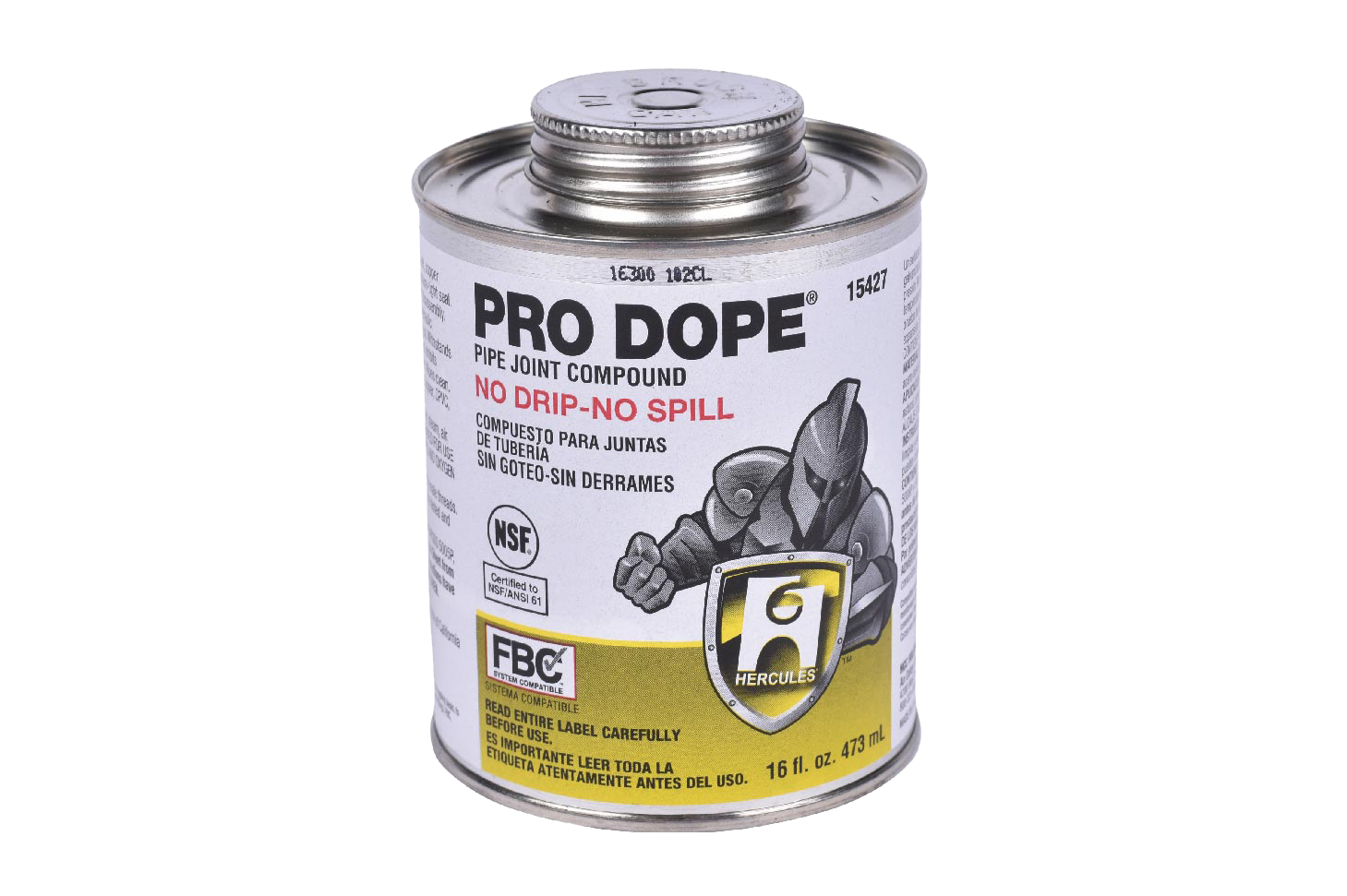
Yes, Hercules Pro Dope is formulated to be safe for use with potable water systems, but you must ensure that you are using the product that specifically states "safe for potable water". Look for the NSF/ANSI Standard 61 certification on the product label. This certification indicates that the product has been tested and certified to meet stringent health effects requirements for materials that come into contact with drinking water. *Always check the product label before using it in any potable water application*.
Using a non-NSF/ANSI 61 certified product in a potable water system could potentially contaminate the water with harmful chemicals. Your local plumbing codes will most likely require the use of NSF approved products for potable water applications.
6. How should I store Hercules Pro Dope, and what is its shelf life?
Proper storage helps to maintain the quality and effectiveness of Hercules Pro Dope. Follow these guidelines:
- Temperature: Store the container in a cool, dry place, away from direct sunlight and extreme temperatures. Avoid storing it in freezing temperatures, as this can alter its consistency. The ideal storage temperature is typically between 40°F and 80°F (4°C and 27°C).
- Container: Keep the container tightly closed when not in use to prevent the compound from drying out or becoming contaminated.
- Shelf Life: Hercules Pro Dope generally has a shelf life of two years from the date of manufacture. Check the product label for the specific expiration date or date of manufacture.
Even if the expiration date has passed, the product may still be usable, but it's best to inspect it before use. If the compound has hardened, thickened significantly, or shows signs of separation, it's probably best to discard it and purchase a fresh container.
7. What should I do if Hercules Pro Dope gets on my skin or in my eyes?
Although Hercules Pro Dope is generally safe to handle, it's important to take precautions to avoid skin and eye contact. Here's what to do in case of exposure:
- Skin Contact: Wash the affected area thoroughly with soap and water. If irritation persists, seek medical attention.
- Eye Contact: Flush the eyes immediately with plenty of clean water for at least 15 minutes, holding the eyelids open to ensure thorough rinsing. Seek medical attention if irritation persists.
- Ingestion: If swallowed, do not induce vomiting. Seek medical attention immediately. Provide the product label to the medical professional.
Always refer to the Safety Data Sheet (SDS) for Hercules Pro Dope for detailed information on hazards, first aid measures, and safe handling practices. The SDS can usually be found on the manufacturer's website or obtained from your supplier.
General Safety Precautions: It is important to follow safety precautions when working with pipe joint compounds:
- Work in a well-ventilated area.
- Wear appropriate personal protective equipment (PPE), such as gloves and eye protection.
- Avoid prolonged or repeated skin contact.
- Keep out of reach of children.
By following these guidelines, you can safely and effectively use Hercules Pro Dope to create leak-free pipe joints in a variety of applications.



:max_bytes(150000):strip_icc()/how-to-use-pipe-joint-compound-2718635-hero-5e9ac192ee064452bf0ba68339612e64.jpg)
:max_bytes(150000):strip_icc()/how-to-use-pipe-joint-compound-2718635-02-6a918b0caac24d048c0ef2ceef470aa6.jpg)
