Hot Water Heater Expansion Tank Sizing
Choosing the right expansion tank for your hot water heater is crucial for a properly functioning and safe water heating system. An undersized tank can lead to pressure relief valve (PRV) discharge, potentially damaging your home and wasting energy. An oversized tank, while not as immediately problematic, can be an unnecessary expense. This guide will walk you through the process of sizing an expansion tank so you can make an informed decision.
Why Do You Need an Expansion Tank?
Water, like most substances, expands when heated. When your water heater heats water, the water's volume increases. In a closed plumbing system (most modern homes), this expansion has nowhere to go. Without an expansion tank, the pressure in your pipes can rise dramatically. This excessive pressure can stress your plumbing, leading to leaks, burst pipes, and premature failure of your water heater. The pressure relief valve (PRV) on your water heater is designed to release this excess pressure, but frequent PRV discharge indicates a problem, often a missing or undersized expansion tank.
Analogy: Imagine blowing up a balloon. The balloon is your plumbing system and your breath is the expanding water. If you keep blowing, the balloon will eventually burst (a plumbing failure) or release air (PRV discharge). An expansion tank is like a small, flexible section of the balloon that allows it to expand a little without bursting.
Understanding Expansion Tank Components and Function
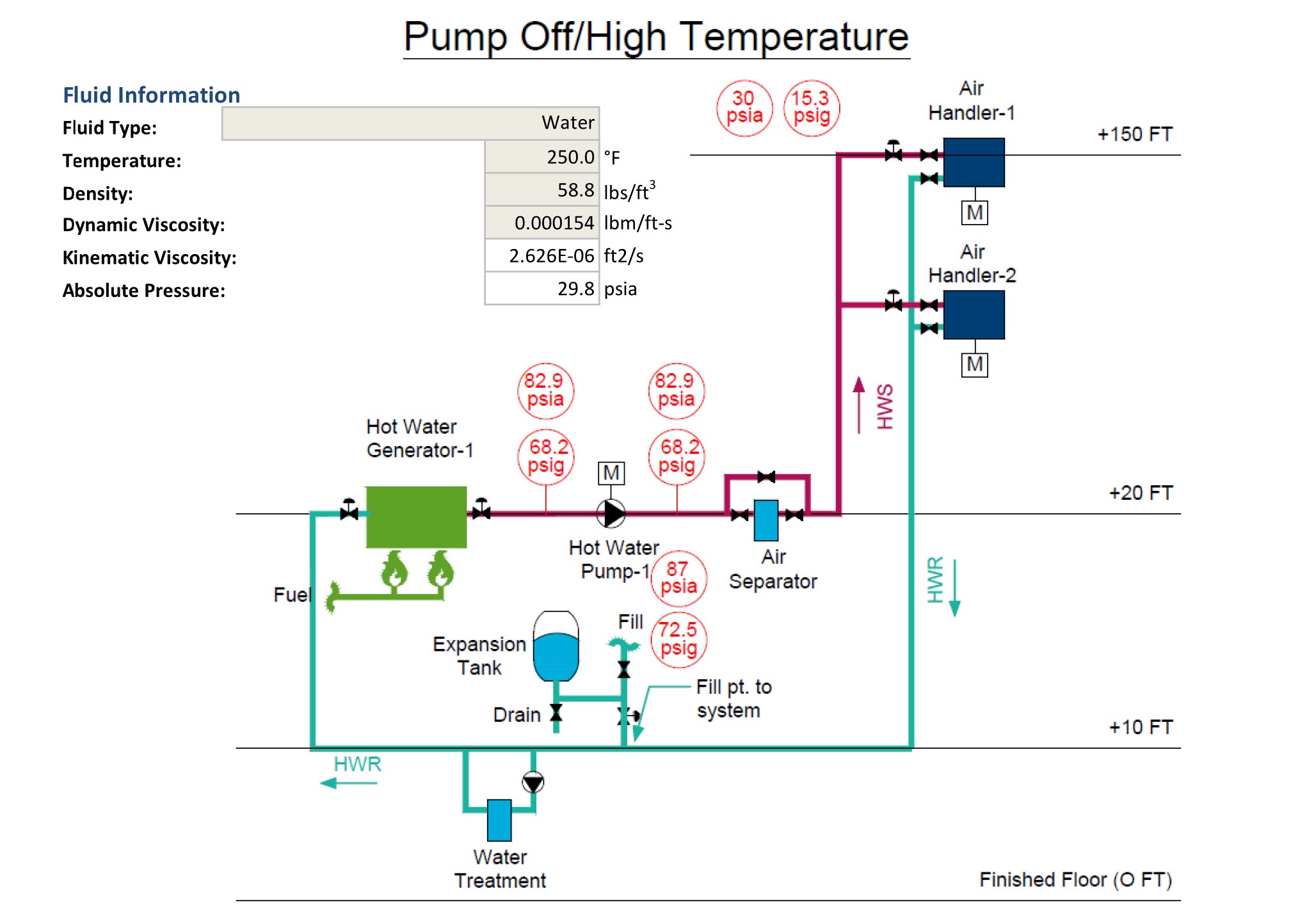
An expansion tank is essentially a metal container divided into two sections by a flexible diaphragm or bladder. One side is connected to your plumbing system and filled with water as needed. The other side is pre-charged with air at a specific pressure, usually the same as your incoming water pressure.
As water heats and expands, it flows into the expansion tank. The pressure of the water compresses the air in the other side of the tank, absorbing the increased volume of water. When the water cools and contracts, the compressed air pushes the water back into the plumbing system, maintaining a relatively stable pressure.
Key Components:
- Tank Body: Usually made of steel, it houses the water and air chambers.
- Diaphragm/Bladder: The flexible barrier separating the water and air. Diaphragm tanks have the water resting against the tank itself, with the diaphragm at the top, while bladder tanks have a separate bladder containing the water.
- Air Charge Valve (Schrader Valve): Similar to a tire valve, used to adjust the air pressure in the tank.
- System Connection: The point where the tank connects to your plumbing.
Factors Affecting Expansion Tank Size
Several factors influence the appropriate size of your expansion tank. Considering these will ensure you select a tank that meets your specific needs.
- Water Heater Capacity: This is the most important factor. A larger water heater requires a larger expansion tank to accommodate the greater volume of expanding water. The tank's capacity is measured in gallons or liters.
- Water Pressure: Both the incoming (static) water pressure and the maximum allowable pressure in your plumbing system are important. Higher water pressure requires a larger tank.
- Temperature Difference: The difference between the cold water temperature and the hot water temperature affects the amount of expansion. A larger temperature difference requires a larger tank.
- Plumbing System Volume: While usually not a significant factor in residential applications, the volume of water in your entire plumbing system can play a role, particularly in larger homes with long pipe runs.
Sizing Methods: Charts and Calculations
There are two primary methods for determining the correct expansion tank size: using sizing charts provided by manufacturers and performing a manual calculation.
Using Sizing Charts:
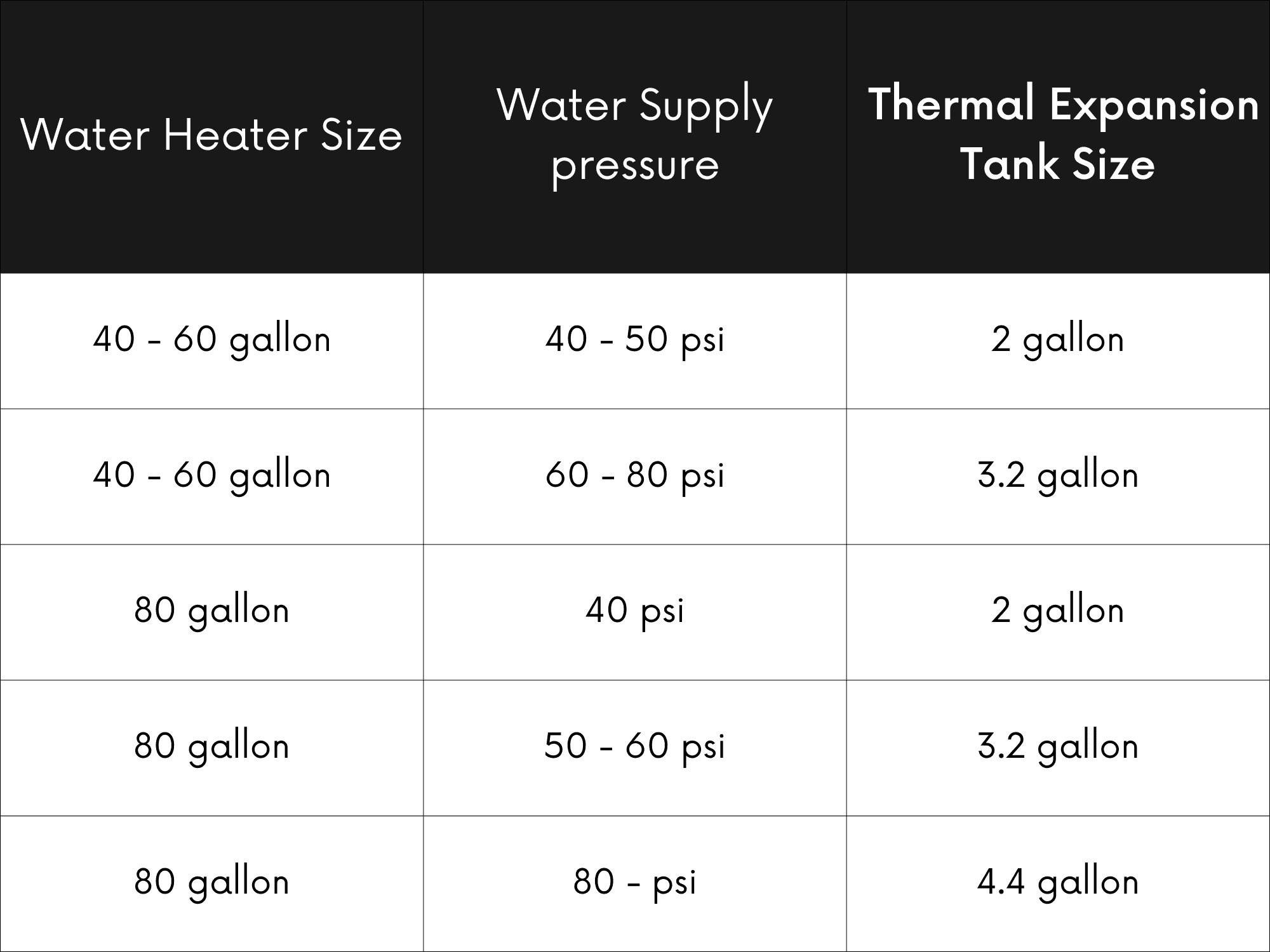
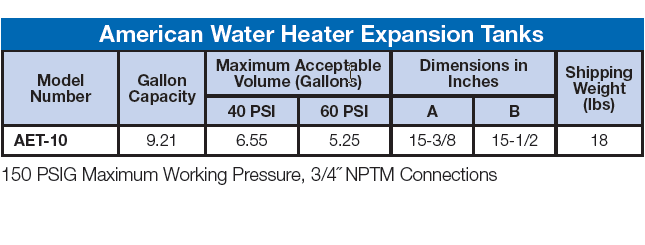
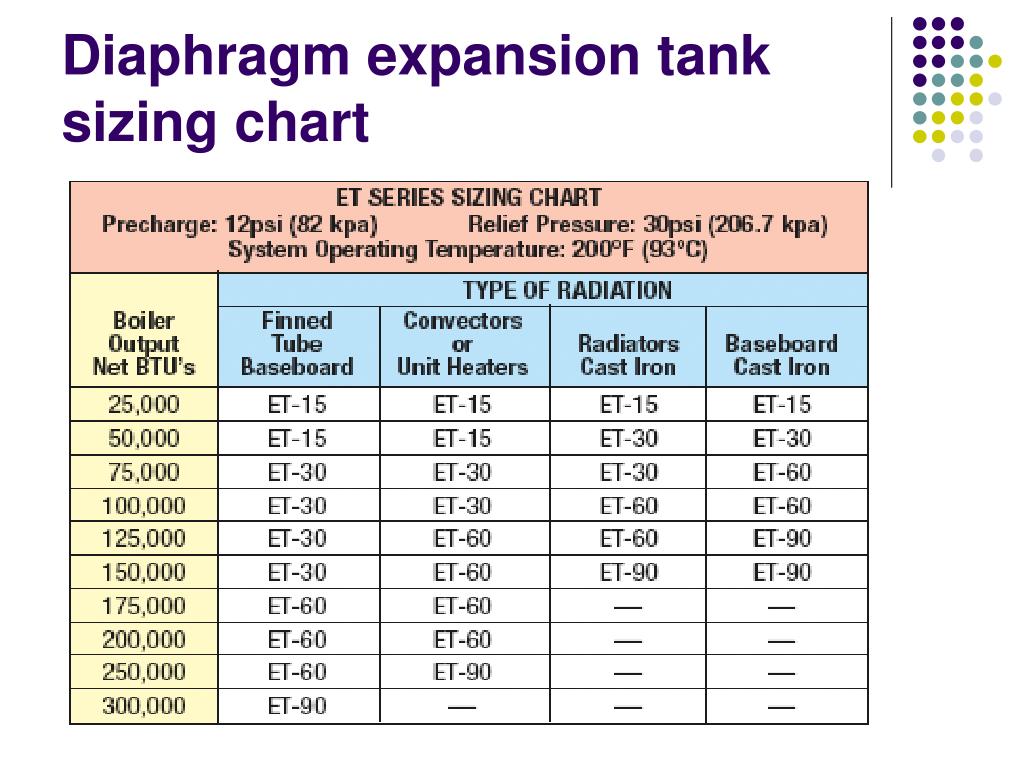
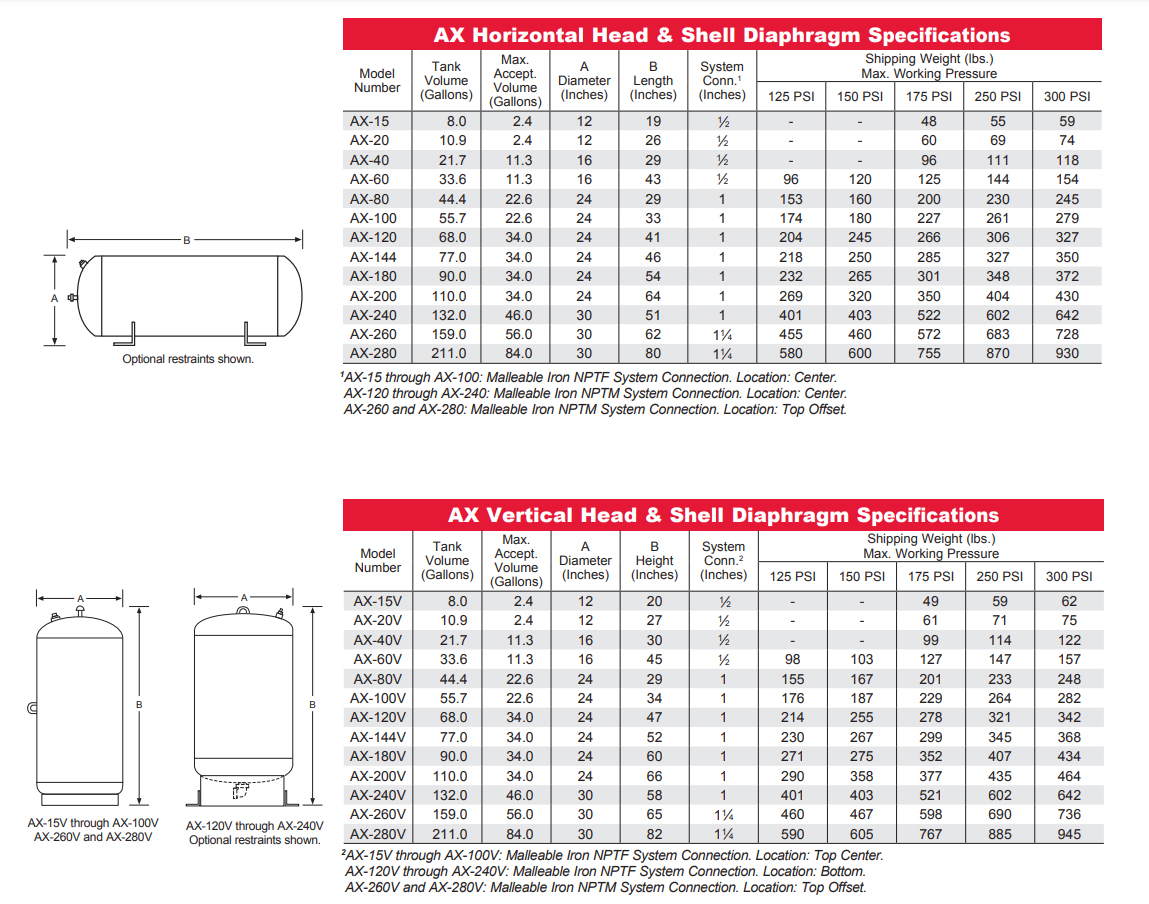
This is the easiest and most common method. Most expansion tank manufacturers provide sizing charts that take into account the water heater capacity, water pressure, and temperature. These charts are usually available on the manufacturer's website or in their product catalogs. To use a sizing chart, you'll need to know your water heater capacity (in gallons or liters), your incoming water pressure (in PSI), and your desired hot water temperature. Locate the corresponding values on the chart, and the recommended expansion tank size will be indicated.
Example: A chart might show that for a 50-gallon water heater with 60 PSI water pressure and a desired hot water temperature of 140°F, a 2-gallon expansion tank is recommended.
Manual Calculation:
While sizing charts are convenient, a manual calculation provides a more precise result. The formula to calculate the minimum expansion tank size is:
Vt = (Vs x E) / ((Pa / Pf) - 1)
Where:
- Vt = Expansion tank volume (gallons)
- Vs = Water heater volume (gallons)
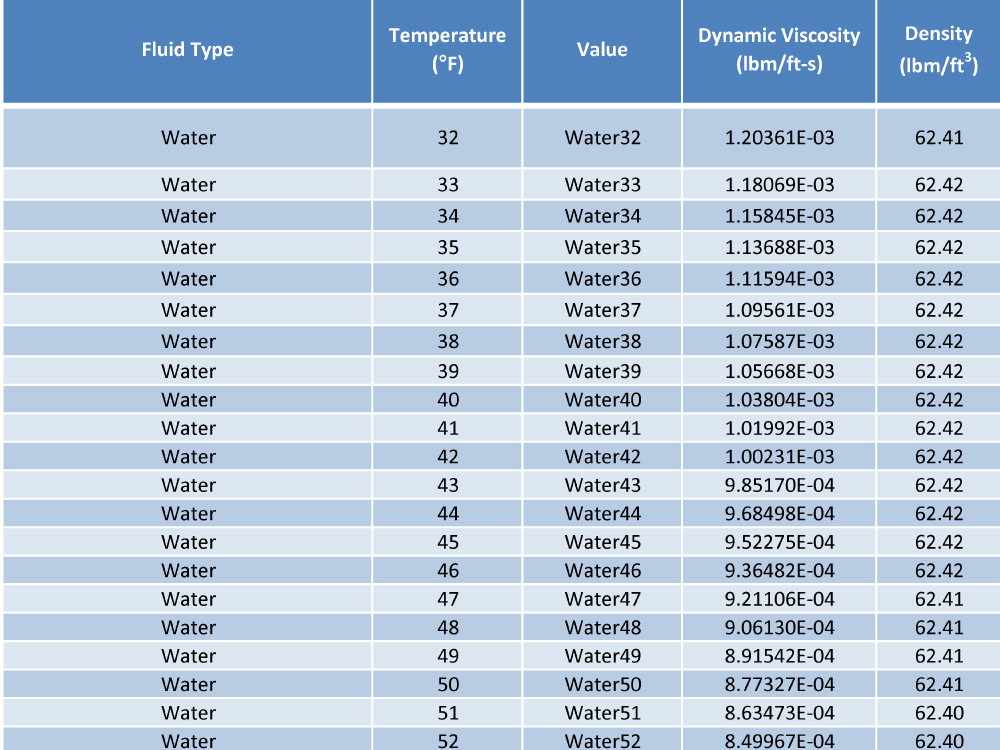
- E = Thermal expansion coefficient (a value representing how much water expands per degree Fahrenheit). This value can be found in engineering tables or approximated.
- Pa = Atmospheric pressure (absolute), which is the water heater's cold water supply pressure plus atmospheric pressure (14.7 PSI at sea level).
- Pf = Maximum allowable system pressure (absolute), which is typically the pressure relief valve setting plus atmospheric pressure (14.7 PSI).
Simplifying the Thermal Expansion Coefficient (E):
The thermal expansion coefficient represents the percentage increase in water volume for each degree Fahrenheit increase in temperature. This value changes with temperature. For typical residential hot water systems (cold water around 60°F and hot water around 140°F), you can approximate the thermal expansion coefficient (E) as 0.02. This simplification reduces the complexity of the calculation.
Worked Example:
Let's say you have a 50-gallon water heater. Your cold water supply pressure is 60 PSI, and your pressure relief valve is set at 75 PSI. Using the simplified thermal expansion coefficient (E = 0.02), we can calculate the required expansion tank size:
- Vs = 50 gallons
- E = 0.02
- Pa = 60 PSI + 14.7 PSI = 74.7 PSI
- Pf = 75 PSI + 14.7 PSI = 89.7 PSI
Vt = (50 x 0.02) / ((74.7 / 89.7) - 1)
Vt = 1 / (0.833 - 1)
Vt = 1 / (-0.167)
Vt = -5.99 gallons
Since the volume can't be negative, we made a calculation error. The mistake is to reverse the denominator of the equation.
Vt = (50 x 0.02) / ((89.7 / 74.7) - 1)
Vt = 1 / (1.201 - 1)
Vt = 1 / (0.201)
Vt = 4.97 gallons
Therefore, you would need an expansion tank with a minimum capacity of approximately 5 gallons. Always round up to the nearest available size.
Installation Considerations
Proper installation is essential for the expansion tank to function correctly. Here are some key considerations:
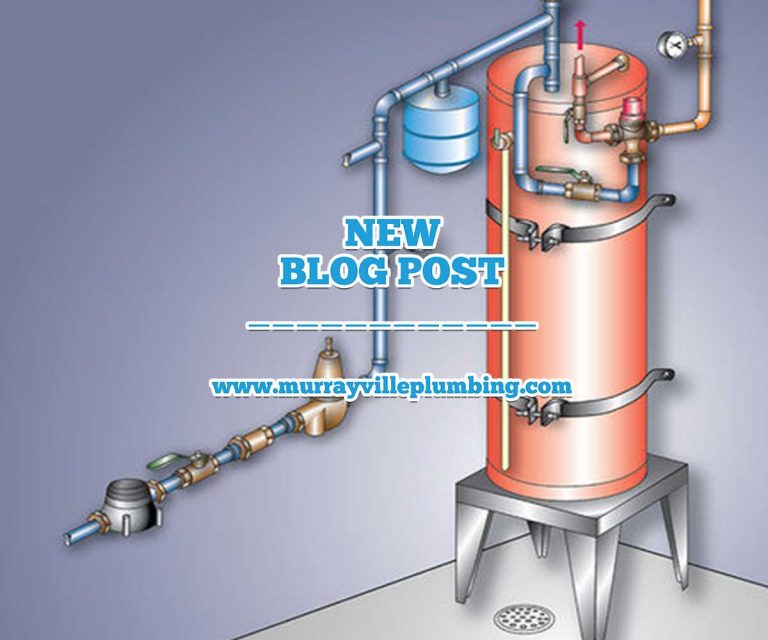
- Location: Install the expansion tank on the cold water supply line before the water heater. This is usually the closest point to the water heater on the cold water inlet pipe.
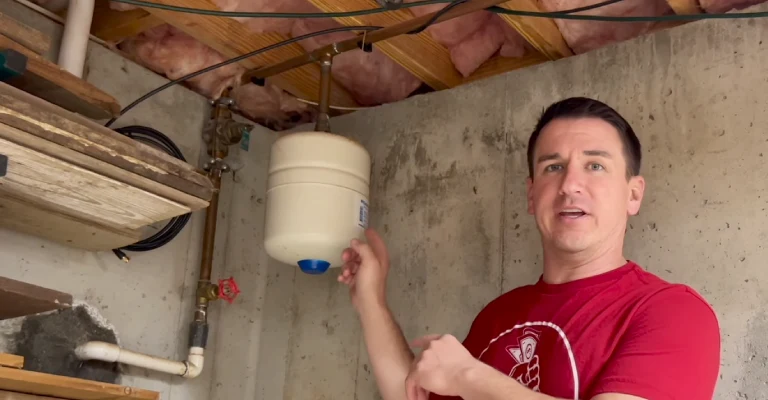
- Orientation: Most expansion tanks can be installed either vertically (hanging down) or horizontally. Follow the manufacturer's recommendations.
- Support: Larger expansion tanks can be heavy when filled with water. Ensure the tank is properly supported to prevent strain on the plumbing.
- Connection: Use the correct fittings and sealant to create a leak-proof connection.
- Air Charge: Before installing the tank, check and adjust the air pressure to match your incoming water pressure. Use a tire pressure gauge to check the pressure at the Schrader valve. Add or release air as needed. This is a critical step.
- Isolation Valve (Optional): Installing an isolation valve between the expansion tank and the water line allows you to isolate the tank for maintenance or replacement without shutting off the entire water supply.
Troubleshooting Common Issues
Even with proper sizing and installation, expansion tanks can sometimes experience problems. Here are a few common issues and their potential solutions:
- Waterlogged Tank: If the air charge is lost, the tank becomes filled with water and loses its ability to absorb expansion. This is often due to a ruptured diaphragm or a leaking air charge valve. The solution is to recharge the tank (if possible) or replace it.
- PRV Discharge: Frequent PRV discharge indicates that the expansion tank is not functioning correctly or is undersized. Check the air charge, ensure the tank is properly sized, and inspect the PRV itself.
- Noisy Operation: Gurgling or banging noises from the expansion tank can indicate trapped air or water hammer. Ensure the tank is properly oriented and supported.
When to Call a Professional
While many homeowners can handle expansion tank sizing and installation, there are situations where it's best to call a qualified plumber:
- If you are uncomfortable working with plumbing.
- If you have complex plumbing system.
- If you are unsure about any of the steps involved.
- If you experience persistent problems after installing a new expansion tank.
A professional plumber can ensure the job is done correctly and safely, preventing potential problems down the road.
Conclusion
Properly sizing and installing an expansion tank is a vital step in protecting your plumbing system and ensuring the efficient operation of your water heater. By understanding the principles outlined in this guide, you can make an informed decision and choose the right expansion tank for your needs. Remember to prioritize safety and consult a professional plumber if you have any doubts or concerns. Choosing the correct sized expansion tank will help to extend the life of your water heater by preventing over pressure and unnecessary cycling of the system.