How Do Ground Source Heat Pumps Work

Frequently Asked Questions About Ground Source Heat Pumps
Considering a ground source heat pump (GSHP) for your home or building? You're not alone! Many homeowners and facility managers are drawn to their energy efficiency and environmental benefits. This FAQ addresses some of the most common questions to help you understand how these systems work.
Q: What exactly is a ground source heat pump and how is it different from a regular heat pump?
A ground source heat pump, also known as a geothermal heat pump, is a system that uses the earth's natural heat to provide heating, cooling, and sometimes even hot water. Unlike air-source heat pumps, which extract heat from the outside air, GSHPs tap into the stable temperature of the ground. Think of it like this: while the air temperature fluctuates drastically throughout the year, the temperature of the ground a few feet below the surface remains relatively constant – typically between 45°F and 75°F depending on your location.
Key Differences:
- Heat Source/Sink: Air-source heat pumps use outside air; ground source heat pumps use the earth.
- Efficiency: GSHPs are generally more efficient than air-source heat pumps, especially in extreme climates. The stable ground temperature provides a more consistent and reliable heat source/sink.
- Installation: GSHPs require underground piping, which can make installation more complex and expensive upfront.
- Lifespan: GSHPs typically have a longer lifespan than air-source heat pumps due to less exposure to the elements.
Q: How does a ground source heat pump actually work? What's the process?
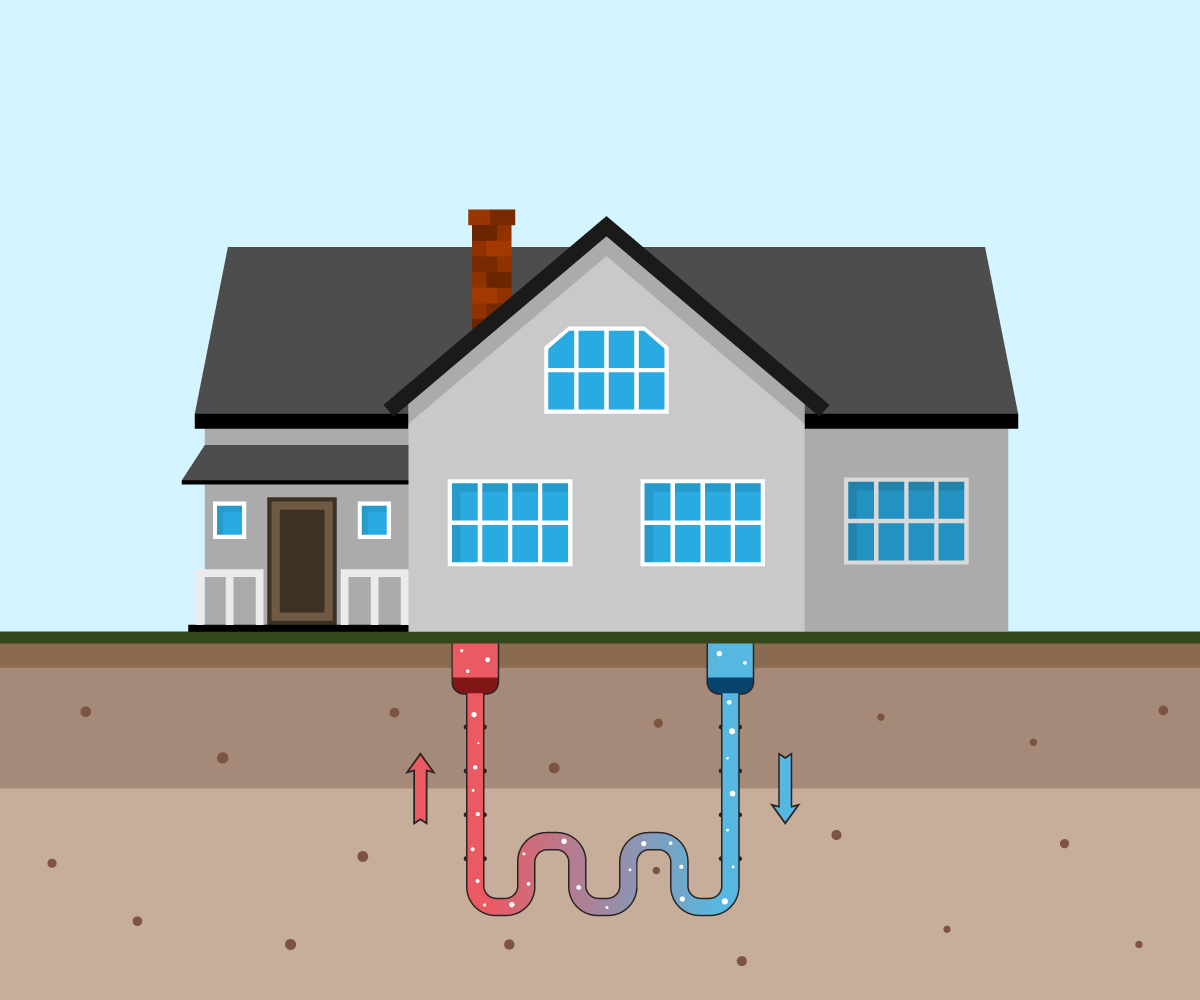
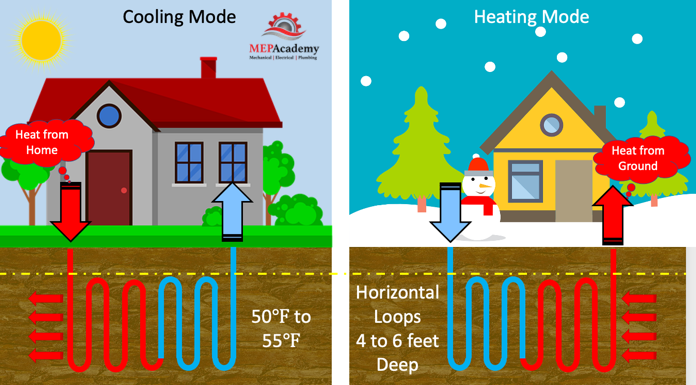
The process, in simplified terms, involves circulating a fluid through a network of underground pipes (called a ground loop). This fluid absorbs heat from the earth in the winter and transfers it to your home or building. In the summer, the process is reversed; heat is drawn from your home and transferred back into the cooler earth.
Here's a breakdown of the process in both heating and cooling modes:
Heating Mode (Winter):
- Ground Loop: A water-based solution (often with antifreeze) circulates through the underground pipes, absorbing heat from the surrounding earth.
- Heat Exchanger: The warm fluid is pumped to the heat pump unit inside your building. Here, the heat is transferred to a refrigerant.
- Refrigerant: The refrigerant, now warmer, is compressed, further increasing its temperature.
- Distribution: This high-temperature refrigerant releases its heat to the air or water circulating through your building's ductwork or radiant heating system.
- Back to the Loop: The refrigerant cools and the cycle repeats. The fluid in the ground loop, now slightly cooler, is pumped back underground to absorb more heat.
Cooling Mode (Summer):
- Reversed Process: The process is essentially reversed. Heat from your building is absorbed by the refrigerant.
- Heat Rejection: The heated refrigerant is pumped to the ground loop, where the heat is transferred to the cooler earth.
- Back to the Loop: The cooled refrigerant returns to your building to absorb more heat. The fluid in the ground loop, now slightly warmer, is pumped back underground to release more heat.
Think of it as a heat transfer process, not a heat generation process. The ground source heat pump isn't creating heat; it's simply moving it from one place to another.
Q: What are the different types of ground loops, and which is best for my property?
The type of ground loop system depends on factors such as available land, soil conditions, and budget. The main types are:
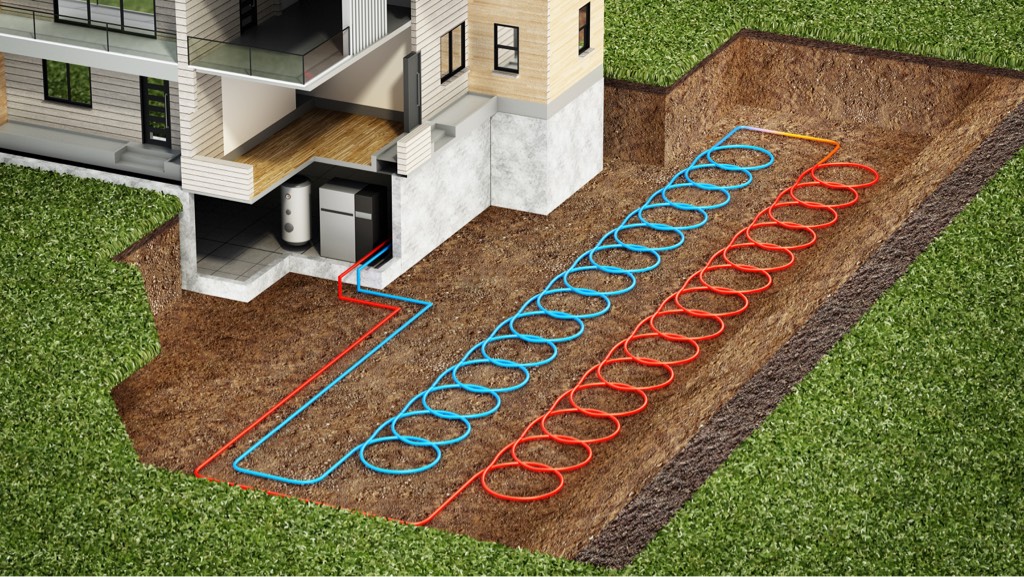
- Horizontal Loops: These are the most common and often the most cost-effective for residential applications. Pipes are buried horizontally in trenches typically 4-6 feet deep. This requires sufficient land area.
- Slinky Coil: A variation where the pipe is coiled in the trench to maximize heat exchange in a smaller area.
- Vertical Loops: These are used when land is limited. Deep, narrow boreholes (typically 100-400 feet deep) are drilled, and U-shaped loops of pipe are inserted. Vertical loops are more expensive to install due to the drilling required.
- Pond/Lake Loops: If you have a suitable body of water (deep and large enough), pipes can be submerged. This is often the most efficient and cost-effective option if available. The water temperature is relatively stable year-round. Regulations regarding discharge should be observed.
- Open-Loop Systems (Well Water Systems): These systems draw water directly from a well or other water source, pass it through the heat pump for heat exchange, and then discharge the water. Open-loop systems require a reliable water source and careful consideration of water quality and discharge regulations. These are less common and can have environmental impacts if not properly managed. Consider the long-term impact on the water source before investing in such a system.
Determining the best type for your property requires a site assessment by a qualified geothermal installer. They will consider factors such as soil type, available space, climate, and heating/cooling load to recommend the most suitable and cost-effective option.
Q: How efficient are ground source heat pumps? What kind of energy savings can I expect?
Ground source heat pumps are significantly more efficient than traditional heating and cooling systems. Their efficiency is measured by a coefficient of performance (COP). A COP of 4 means that for every unit of electricity used to operate the system, it delivers 4 units of heating or cooling energy.
Compared to conventional systems:
- Furnaces: Furnaces typically have efficiencies ranging from 80% to 98%. This means that for every dollar spent on fuel, 80 to 98 cents worth of heat is delivered.
- Air Conditioners: Air conditioners have Seasonal Energy Efficiency Ratios (SEER) typically ranging from 13 to 22.
- GSHPs: GSHPs can have COPs ranging from 3 to 5, depending on the system and ground conditions. This translates to significantly lower operating costs.
Energy Savings:
- Heating: You can typically expect to save 30-60% on your heating bills compared to traditional furnaces.
- Cooling: Savings on cooling bills are typically 20-50% compared to traditional air conditioners.
- Overall: Some homeowners report savings of 50-70% on their total energy bills.
Actual savings will vary depending on your climate, the size and insulation of your home, your usage habits, and the specific GSHP system installed. However, the potential for significant energy savings is a major benefit of ground source heat pumps.
Q: What are the upfront costs of installing a ground source heat pump, and what about long-term maintenance?
The initial cost of installing a ground source heat pump is typically higher than that of conventional heating and cooling systems. This is primarily due to the cost of the ground loop installation.
Cost Factors:
- Ground Loop Installation: This is the most significant cost component and varies depending on the type of loop (horizontal, vertical, pond), soil conditions, and the length of the loop required.
- Heat Pump Unit: The cost of the heat pump unit itself is comparable to that of a high-efficiency air conditioner or furnace.
- Ductwork Modifications: If you need to modify or install new ductwork, this will add to the cost.
- Labor: Installation labor costs can vary depending on your location and the complexity of the installation.
- Permitting and Inspections: Local permits and inspections may be required, adding to the overall cost.
Cost Estimates:
- Residential installations can range from $20,000 to $40,000 or more, depending on the factors mentioned above.
Long-Term Maintenance:
- GSHPs generally require less maintenance than conventional systems. The underground loop is buried and protected from the elements, minimizing the risk of damage.
- Regular maintenance typically includes:
- Changing air filters.
- Inspecting the unit for leaks.
- Checking refrigerant levels (though these are sealed systems).
- Flushing the ground loop every few years (depending on the system).
- The lifespan of a GSHP unit is typically 20-25 years or longer, and the ground loop can last for 50 years or more.
While the upfront cost is higher, the lower operating costs and longer lifespan can result in significant long-term savings. Also, be sure to research available rebates and tax credits, which can significantly offset the initial investment.
Q: Are ground source heat pumps environmentally friendly? What are the environmental benefits?
Yes, ground source heat pumps are considered a highly environmentally friendly heating and cooling option.
Environmental Benefits:
- Reduced Carbon Emissions: GSHPs use significantly less energy than fossil fuel-based systems, leading to lower carbon dioxide emissions. This helps to reduce your carbon footprint and contribute to mitigating climate change.
- Reduced Fossil Fuel Consumption: By using the earth's natural heat, GSHPs reduce our reliance on fossil fuels such as natural gas, oil, and propane.
- Renewable Energy Source: The earth's heat is a renewable resource, making GSHPs a sustainable energy solution.
- Reduced Air Pollution: GSHPs do not burn fossil fuels on-site, which reduces air pollution in your local community.
- Quiet Operation: GSHPs operate much more quietly than traditional air conditioners and furnaces.
By choosing a ground source heat pump, you are making a significant contribution to a cleaner and more sustainable future.
Q: Can a ground source heat pump be used for both heating and cooling, or do I need separate systems?
Yes! One of the key advantages of a ground source heat pump is its ability to provide both heating and cooling with a single system. This eliminates the need for separate furnaces and air conditioners, saving space and simplifying your home's HVAC system.
The system works by reversing the flow of refrigerant, as explained earlier, to either extract heat from the ground for heating or reject heat into the ground for cooling. This seamless transition between heating and cooling modes makes a GSHP a versatile and efficient solution for year-round comfort.
In addition to heating and cooling, some GSHP systems can also be used to heat domestic hot water, further increasing their efficiency and reducing your energy bills. Look for systems with a desuperheater for this added benefit.