How Do You Calculate Flow Rate
Many homeowners experience inconsistent heating or cooling throughout their homes. One room might be sweltering while another feels like an icebox, despite the thermostat being set at a comfortable temperature. This uneven temperature distribution often points to problems with air flow within your HVAC system. Understanding and even calculating your system's flow rate is a key step in diagnosing – and sometimes fixing – this common issue.
Diagnosing Uneven Heating/Cooling: A Step-by-Step Approach
Before calling a professional, let's explore some common causes and see what you can check yourself. We'll walk through a methodical process, starting with the simplest checks and moving towards more involved assessments.
Step 1: Initial Observation (No Tools Required)
Begin by simply observing your system in operation. Note the following:
- Air Vent Temperature: Does the air coming from each vent feel relatively consistent (considering proximity to the unit and duct run length)? Are some vents blowing warm air while others blow cold air, even when the system is supposed to be in a single mode (heating or cooling)?
- Air Vent Pressure: Place your hand near each vent. Does the air pressure feel the same from all vents? Noticeably weaker air flow from certain vents is a major red flag.
- Unusual Noises: Listen for any unusual noises coming from your furnace, air conditioner, or ductwork. Whistling, banging, or rattling sounds can indicate blockages or mechanical problems.
- Filter Condition: When was the last time you changed your air filter? A dirty air filter is a prime suspect in reduced air flow.
DIY Action: Replace your air filter. This is the most common cause of reduced air flow and the easiest thing to fix. Use the filter recommended by your system's manufacturer. A clogged filter restricts air flow, making your system work harder and less efficiently.
Step 2: Visual Inspection (No Tools Required)
Next, conduct a visual inspection of your system and ductwork.
- Ductwork Leaks: Look for obvious leaks in your ductwork. Pay close attention to seams and joints. You may be able to feel air escaping, even if you can't see the leak.
- Damaged Ductwork: Check for crushed, bent, or otherwise damaged sections of ductwork. This is especially important in accessible areas like basements or crawl spaces.
- Blocked Vents: Ensure that furniture, rugs, or other objects aren't blocking vents.
- Outdoor Unit Obstructions: Make sure the outdoor unit (condenser) is free of debris like leaves, branches, or snow. Adequate airflow around the unit is crucial for its proper operation.
DIY Action: Clear any obstructions blocking vents or the outdoor unit. Seal any minor ductwork leaks you find with duct tape (though for a long term fix, consider metal foil tape.)
Step 3: Zone Dampers (If Applicable – No Tools Required)
If your home has a zoned HVAC system, check the zone dampers. These are usually located near the furnace or air handler. Make sure the dampers are opening and closing properly according to the thermostat settings for each zone.
DIY Action: If you can manually adjust the dampers, try opening the damper for the room with poor air flow and closing dampers for rooms with good airflow to try to balance the system.
Step 4: Calculating Flow Rate (Basic Equipment Required)
Now, let's get into calculating flow rate. This will give you a more precise understanding of your system's performance. We'll focus on a simplified method suitable for homeowners.
What You'll Need:
- Anemometer (Air Flow Meter): You can purchase a relatively inexpensive handheld anemometer online or at a hardware store. These measure air velocity (speed).
- Measuring Tape: To measure the dimensions of your vents.
- Calculator: For calculations.
The Formula:
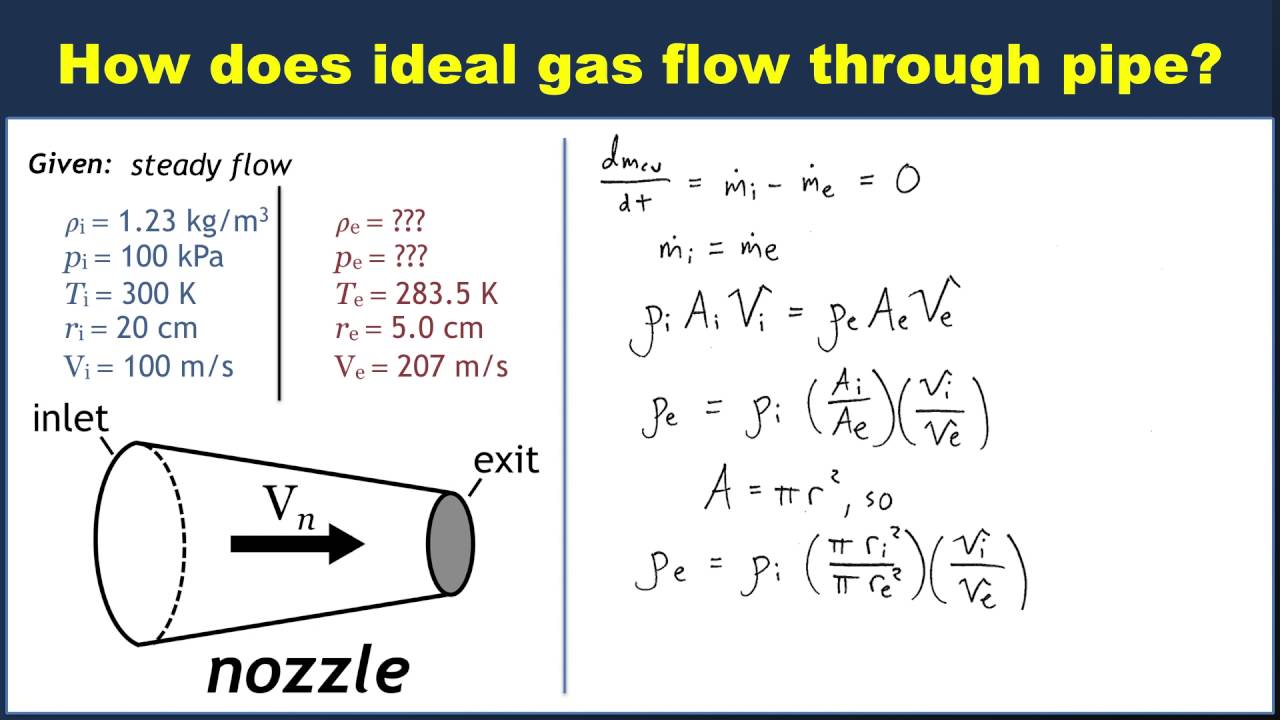
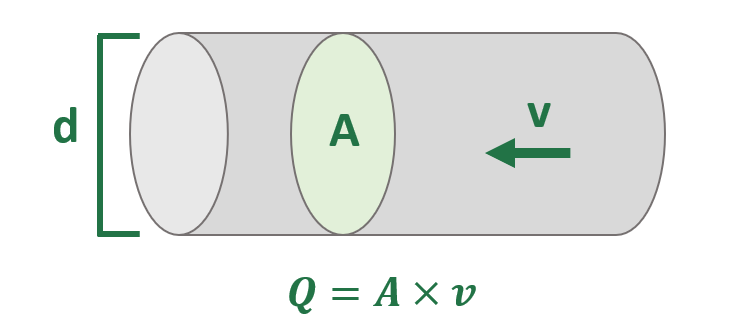
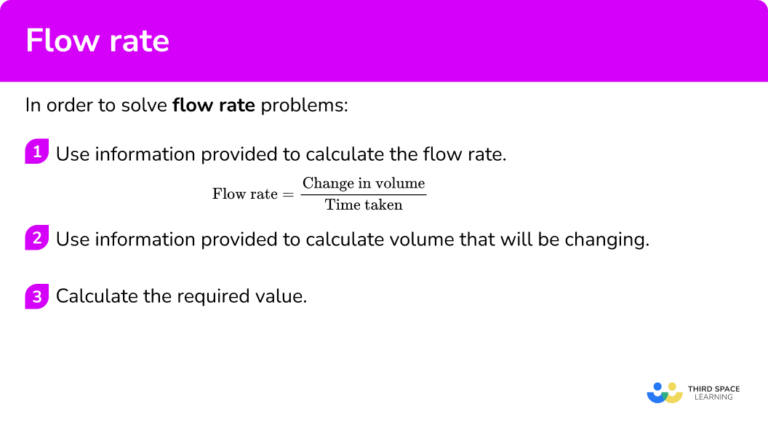
Flow Rate (CFM - Cubic Feet per Minute) = Air Velocity (Feet per Minute) x Area (Square Feet)
Steps:
- Measure Vent Dimensions: Measure the width and height of the vent opening in inches. If the vent is round, measure the diameter in inches.
- Calculate Vent Area:
- Rectangular Vent: Area (square inches) = Width (inches) x Height (inches)
- Round Vent: Area (square inches) = π (pi ≈ 3.14159) x (Diameter (inches) / 2)²
- Convert Area to Square Feet: Divide the area in square inches by 144 (since there are 144 square inches in a square foot). Area (square feet) = Area (square inches) / 144
- Measure Air Velocity: Turn on your HVAC system and set it to the desired mode (heating or cooling). Hold the anemometer in front of the vent opening for a few seconds, allowing it to measure the air velocity in feet per minute (FPM). Take several readings and average them for a more accurate result.
- Calculate Flow Rate: Plug the air velocity (FPM) and area (square feet) into the formula: Flow Rate (CFM) = Air Velocity (FPM) x Area (square feet)
Example:
Let's say you have a rectangular vent that is 12 inches wide and 6 inches high. The anemometer reads an average air velocity of 500 FPM.
- Area (square inches) = 12 inches x 6 inches = 72 square inches
- Area (square feet) = 72 square inches / 144 = 0.5 square feet
- Flow Rate (CFM) = 500 FPM x 0.5 square feet = 250 CFM
Repeat this process for several vents throughout your home. Compare the flow rates. Significant differences in flow rates between vents, especially those on the same duct run, may indicate a problem.
Interpreting Your Results:
It's difficult to provide a "target" CFM value for each vent, as this depends heavily on the size of your system, the size of the room, and the ductwork layout. However, you can use the following general guidelines:
- Consistency is Key: Focus on the relative flow rates. Vents serving similar-sized rooms should have relatively similar CFM values. Large discrepancies point to potential issues.
- Compare to System Specifications: Your HVAC system should have a specified total CFM rating (usually found on a sticker on the unit). Add up the CFM values of all your vents. The total should be reasonably close to the system's rating. A significantly lower total indicates a system-wide airflow problem.
Step 5: Identifying Potential Issues Based on Flow Rate Calculations
Once you've calculated the flow rates, consider the following potential causes for any imbalances:
- Ductwork Obstructions: If a particular vent has very low flow rate, check for obstructions within the ductwork leading to that vent. This could be anything from collapsed insulation to rodent nests.
- Ductwork Design Issues: Poorly designed ductwork can restrict airflow to certain areas. Long, convoluted duct runs with sharp bends are common culprits.
- Undersized Ductwork: If the ductwork is too small for the amount of air your system is trying to move, it will create resistance and reduce flow rates.
- Fan Motor Problems: A failing blower motor in your furnace or air handler can reduce overall airflow.
- Coil Obstructions: The evaporator coil (in your air conditioner) or the heating coil (in your furnace) can become clogged with dust and debris, restricting airflow.
When to Call a Professional
While many airflow problems can be addressed with simple DIY solutions, some situations require the expertise of a qualified HVAC technician. Here's when to call for professional help:
- You suspect a refrigerant leak: If your air conditioner is blowing warm air and you suspect a refrigerant leak, do not attempt to fix it yourself. Refrigerant is a hazardous substance, and repairs require specialized equipment and training.
- You suspect a carbon monoxide leak: If you have a gas furnace and suspect a carbon monoxide leak, evacuate the premises immediately and call your gas company or 911. Carbon monoxide is a deadly gas.
- You are uncomfortable working with electrical components: HVAC systems involve high-voltage electricity. If you are not comfortable working with electrical components, do not attempt to repair the system yourself.
- You are unsure about the cause of the problem: If you have followed the troubleshooting steps outlined above and are still unsure about the cause of the airflow problem, it is best to call a professional.
- The problem requires specialized tools or equipment: Some repairs, such as replacing a blower motor or repairing ductwork inside walls, require specialized tools and equipment that most homeowners do not have.
- You are not comfortable working in tight spaces: HVAC systems are often located in attics, crawl spaces, or other tight spaces. If you are not comfortable working in these spaces, it is best to call a professional.
- You find mold or other contaminants in your ductwork: If you find mold or other contaminants in your ductwork, do not attempt to clean it yourself. Call a professional duct cleaning company to remove the contaminants safely.
Specifically, if you suspect any of the following, call a professional:
- Fan motor problems
- Coil obstructions (requiring disassembly of the unit)
- Significant ductwork repairs (especially those involving asbestos or other hazardous materials)
- Refrigerant leaks
- Gas leaks
Boosting Your Confidence
Taking the time to understand your HVAC system and troubleshoot common problems like uneven heating and cooling can save you money and improve your home's comfort. By following these steps, you can confidently diagnose and address many airflow issues yourself. Remember to prioritize safety and call a professional when the situation is beyond your expertise. Even if you end up calling a technician, you'll be able to describe the problem more accurately and understand their recommendations better, which will help ensure you get the best possible service.
Understanding how to calculate flow rate and interpret those measurements empowers you to become a more informed homeowner and take control of your home's climate comfort. Start with the simple steps, observe carefully, and don't hesitate to seek professional assistance when needed. Happy troubleshooting!