
How Does A Home Air Conditioning System Work
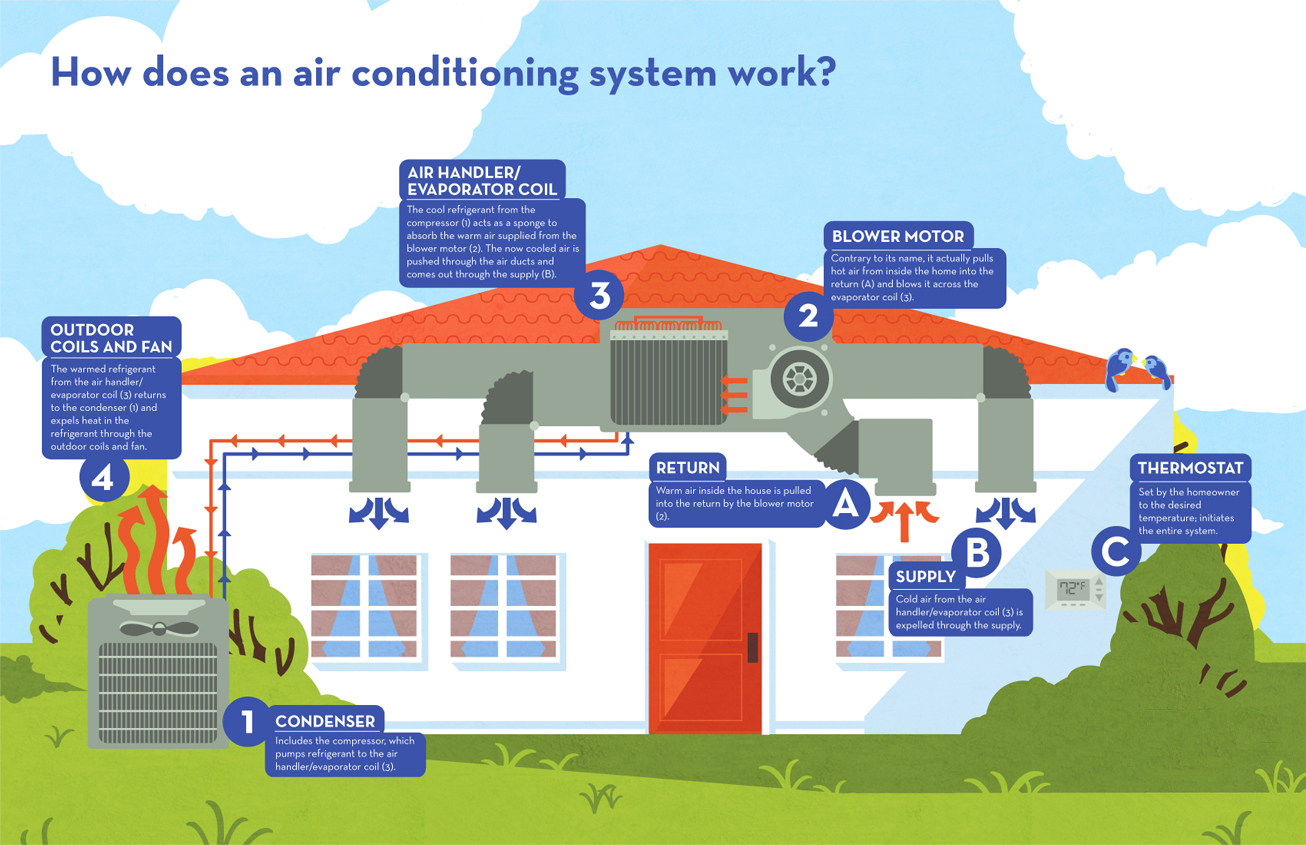
Understanding how your home air conditioning system works can empower you to make informed decisions about its maintenance, repair, and potential upgrades. This article provides a comprehensive breakdown of the components and processes involved in keeping your home cool and comfortable.
The Fundamental Principle: Heat Transfer
At its core, air conditioning relies on the principle of heat transfer. It doesn't actually "create" cold air; instead, it removes heat from inside your home and transfers it to the outside. This process utilizes a refrigerant, a chemical compound with properties that allow it to easily absorb and release heat.
The Main Components of an AC System
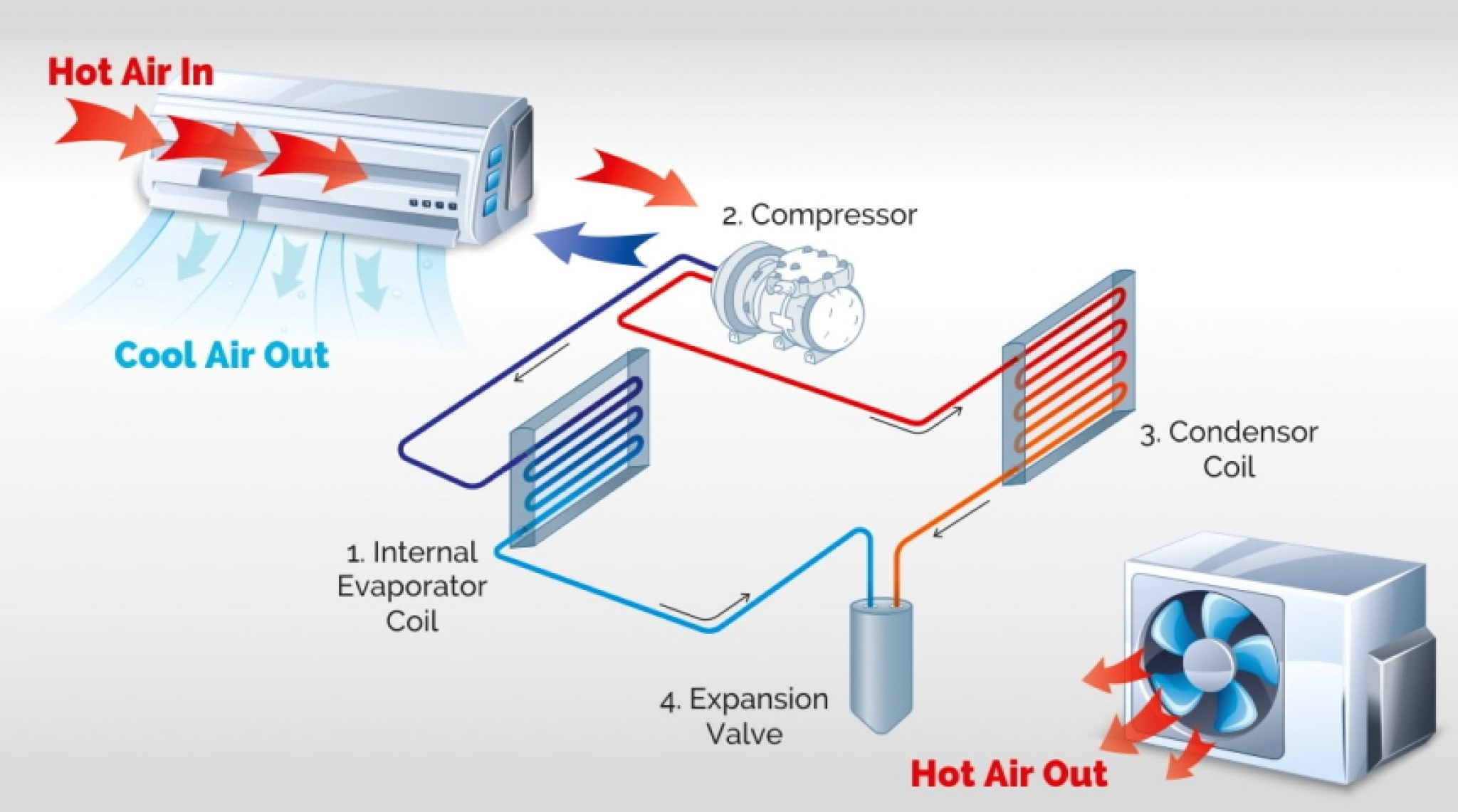
A typical residential AC system comprises four main components, working in a closed loop:
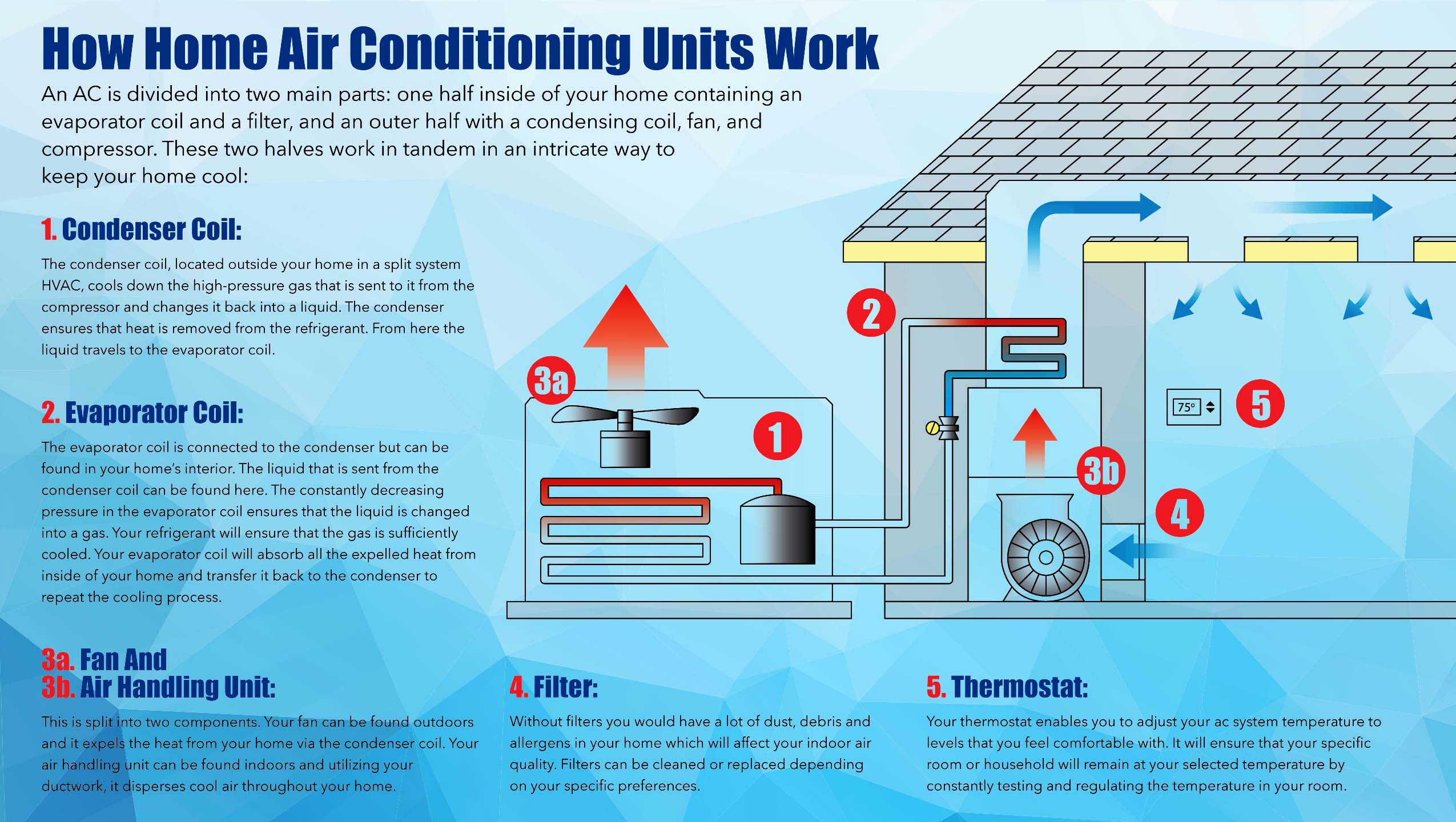
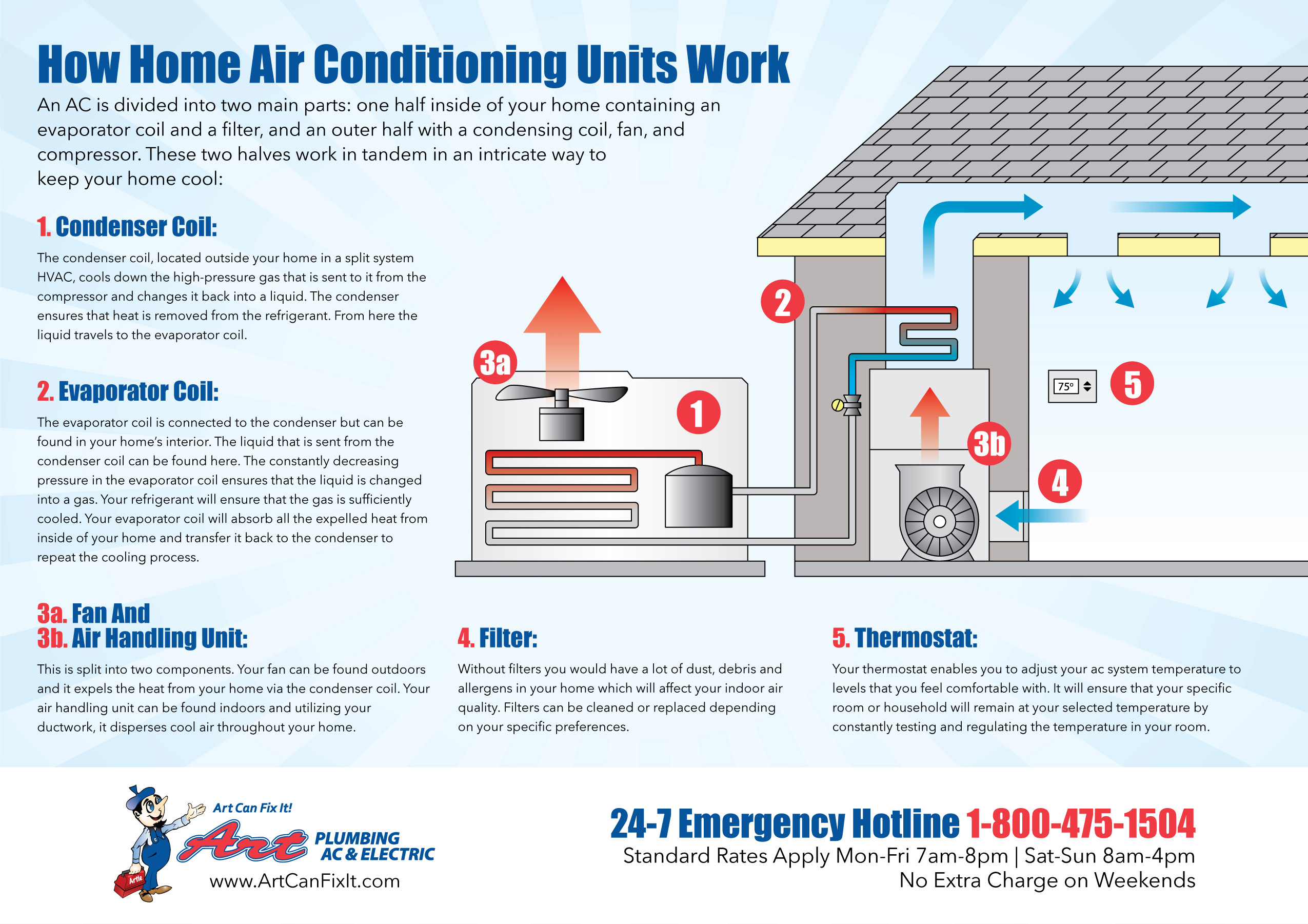
1. The Evaporator Coil
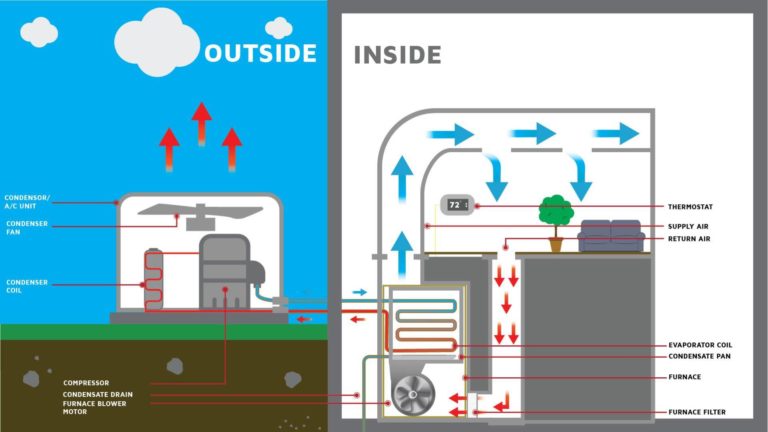
Located inside your indoor air handler (often part of your furnace or a dedicated unit), the evaporator coil is where the refrigerant absorbs heat from the indoor air. Warm air from your home is blown across the cold evaporator coil by a fan. As the air passes over the coil, the refrigerant absorbs the heat, cooling the air in the process. The cooled air is then circulated back into your home through the ductwork.
Condensation also occurs on the evaporator coil. As warm, humid air passes over the cold coil, moisture in the air condenses and drips into a drain pan. This water is then typically channeled outside or into a drain. Proper drainage is crucial to prevent mold growth and water damage.
2. The Compressor
The compressor, usually housed in the outdoor unit, is the heart of the AC system. It takes the low-pressure, gaseous refrigerant coming from the evaporator coil and compresses it into a high-pressure, high-temperature gas. This compression process increases the refrigerant's temperature, making it ready to release its heat in the next stage.
The compressor is a significant energy consumer in the AC system. Different types of compressors exist, including reciprocating, rotary, and scroll compressors. Scroll compressors are generally more efficient and quieter than reciprocating compressors, but they also tend to be more expensive.
3. The Condenser Coil
The condenser coil is also located in the outdoor unit. Here, the high-pressure, hot refrigerant releases its heat to the outside air. A fan blows air across the condenser coil, facilitating the heat transfer. As the refrigerant releases heat, it cools down and condenses into a high-pressure liquid.
The efficiency of the condenser coil depends on factors like its size, fin design, and airflow. Dirty condenser coils restrict airflow and reduce the system's ability to dissipate heat, leading to decreased efficiency and potentially higher energy bills. Regular cleaning of the condenser coil is an important maintenance task.
4. The Expansion Valve (or Metering Device)
The expansion valve, or metering device, is located between the condenser coil and the evaporator coil. Its function is to regulate the flow of refrigerant into the evaporator coil. It reduces the pressure of the high-pressure liquid refrigerant, turning it into a low-pressure, cool liquid ready to absorb heat in the evaporator.
There are different types of expansion valves, including thermostatic expansion valves (TXVs) and fixed orifice devices. TXVs are more efficient and can adjust the refrigerant flow based on the cooling load, while fixed orifice devices are simpler and less expensive but less adaptable.
The Refrigerant Cycle: A Step-by-Step Explanation
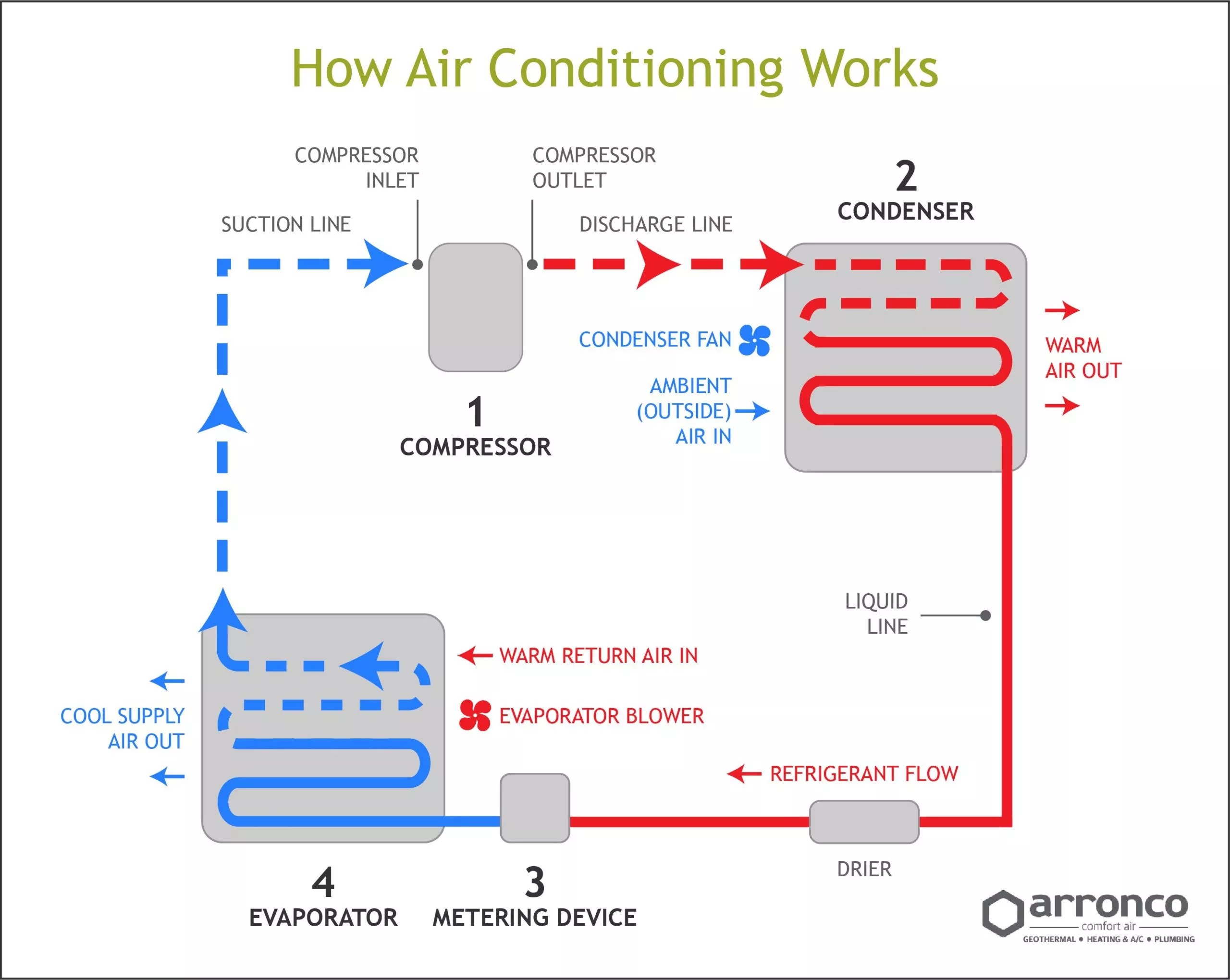
Now, let's trace the journey of the refrigerant through the entire cycle:
- Evaporation: Low-pressure, liquid refrigerant in the evaporator coil absorbs heat from the indoor air, turning into a low-pressure gas.
- Compression: The compressor increases the pressure and temperature of the refrigerant gas.
- Condensation: The high-pressure, hot refrigerant gas releases heat to the outside air in the condenser coil, turning into a high-pressure liquid.
- Expansion: The expansion valve reduces the pressure of the high-pressure liquid refrigerant, turning it into a low-pressure, cool liquid, ready to start the cycle again in the evaporator coil.
System Efficiency: SEER and EER
The efficiency of an AC system is measured by two primary ratings:
- SEER (Seasonal Energy Efficiency Ratio): This rating measures the cooling efficiency over an entire cooling season. A higher SEER rating indicates greater energy efficiency. Modern AC systems typically have SEER ratings ranging from 14 to 25 or higher. The minimum SEER rating currently mandated by the U.S. Department of Energy is 14 for most regions.
- EER (Energy Efficiency Ratio): This rating measures the cooling efficiency at a specific operating point, typically at a high outdoor temperature. EER is calculated by dividing the cooling output (in BTUs) by the electrical power input (in watts). A higher EER indicates better energy efficiency under those specific conditions.
When choosing an AC system, consider both SEER and EER ratings to determine its overall efficiency and performance in your specific climate.
Types of Air Conditioning Systems
While the fundamental principles remain the same, air conditioning systems come in various types to suit different needs:
Central Air Conditioning
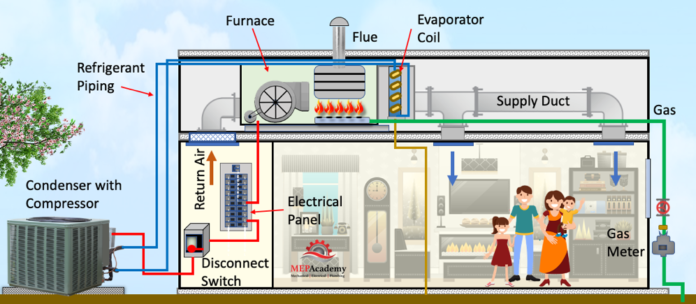
This is the most common type of AC system for homes. It uses a network of ducts to distribute cooled air throughout the house. Central AC systems typically consist of an outdoor unit (containing the compressor and condenser coil) and an indoor unit (containing the evaporator coil and air handler). They are effective for cooling entire homes but require existing ductwork or the installation of new ductwork.
Ductless Mini-Split Systems
Ductless mini-split systems consist of an outdoor unit connected to one or more indoor units (air handlers) mounted on walls or ceilings. They don't require ductwork, making them ideal for homes without existing ductwork or for cooling individual rooms or zones. Mini-splits are known for their energy efficiency and quiet operation. They often come with inverter technology, which allows the compressor to adjust its speed based on the cooling demand, further enhancing efficiency.
Window Air Conditioners
Window air conditioners are self-contained units that fit into a window opening. They are relatively inexpensive and easy to install, making them suitable for cooling small spaces or individual rooms. However, they are generally less energy-efficient and noisier than central AC or mini-split systems.
Portable Air Conditioners
Portable air conditioners are self-contained units that can be moved from room to room. They typically vent hot air through a window using a hose. While convenient, they are generally less energy-efficient than other types of AC systems.
Factors Affecting AC System Performance
Several factors can influence the performance and efficiency of your AC system:
- Insulation: Proper insulation in your walls, ceilings, and floors helps to keep heat out of your home, reducing the load on your AC system.
- Air Leaks: Sealing air leaks around windows, doors, and other openings prevents cooled air from escaping and warm air from entering, improving energy efficiency.
- Ductwork: Leaky or poorly insulated ductwork can result in significant energy losses. Ensure that your ductwork is properly sealed and insulated to maximize efficiency.
- Thermostat Settings: Setting your thermostat to a higher temperature when you're away from home can save energy. Programmable thermostats can automate these temperature adjustments.
- Maintenance: Regular maintenance, including cleaning the air filter and condenser coil, can help keep your AC system running efficiently.
Cost Considerations: Installation and Operation
The cost of an AC system includes both the initial installation cost and the ongoing operating costs. Central AC systems typically have higher installation costs due to the need for ductwork. Ductless mini-split systems can be more expensive to install per room than window units but offer greater energy efficiency and comfort. Operating costs depend on factors like energy efficiency, usage patterns, and electricity prices.
Consider the following when evaluating the cost of an AC system:
- Purchase Price: The initial cost of the equipment.
- Installation Costs: The cost of labor and materials for installation.
- Energy Efficiency: The SEER and EER ratings of the system.
- Maintenance Costs: The cost of regular maintenance and repairs.
- Lifespan: The expected lifespan of the system (typically 15-20 years for central AC systems).
Professional Maintenance and Repair
While some basic maintenance tasks, such as changing the air filter, can be performed by homeowners, more complex repairs and maintenance should be left to qualified HVAC technicians. Regular professional maintenance can help to extend the life of your AC system and ensure that it is operating efficiently.
Signs that your AC system may need professional attention include:
- Reduced cooling performance
- Unusual noises
- Leaks
- Increased energy bills
By understanding how your home air conditioning system works, you can take steps to optimize its performance, reduce energy consumption, and ensure your comfort throughout the cooling season. Remember to consult with a qualified HVAC professional for any maintenance, repair, or installation needs.

:max_bytes(150000):strip_icc()/what-are-central-air-conditioners-1152645_V2-390c6f1f6ca14b4ebc59426f226a78a8.png)
