How Does A Switching Relay Work
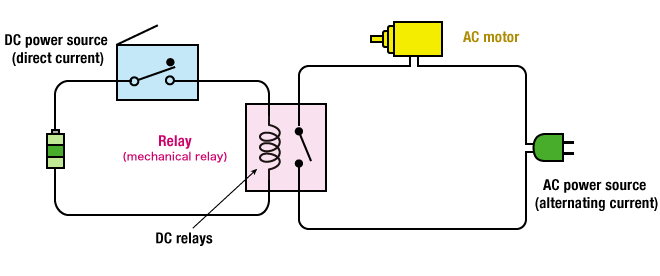
A switching relay is an electromagnetic switch that controls a circuit by opening or closing its contacts. Unlike a manual switch that you physically flip, a relay is activated by an electrical signal. This allows a low-power circuit to control a high-power circuit, providing isolation and control in various applications. Understanding how a switching relay works is crucial for anyone involved in electronics, automation, or electrical systems. This guide breaks down the process step-by-step.
Basic Components of a Switching Relay
To grasp the operational principles, let's first identify the core components of a typical relay:
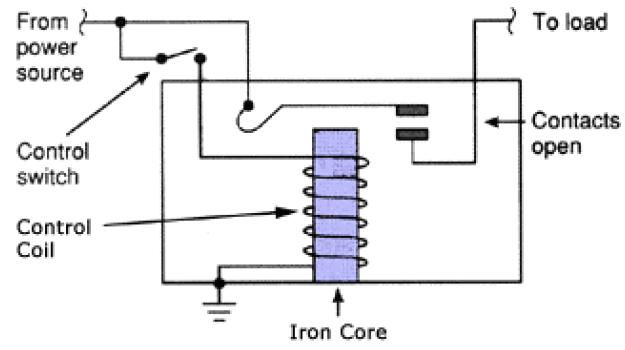
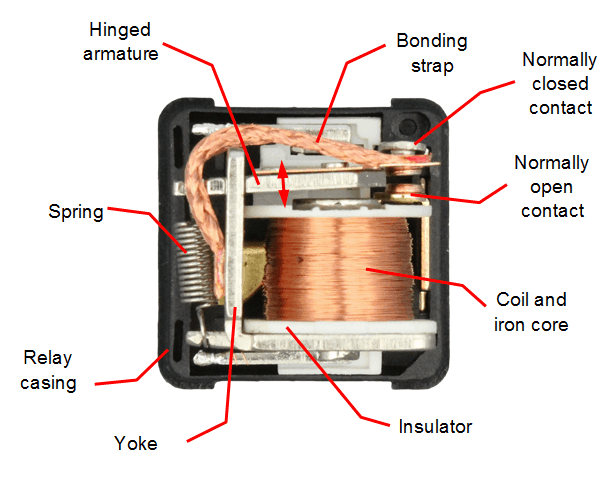
- Coil (Electromagnet): This is a winding of wire around a metal core. When an electrical current flows through the coil, it generates a magnetic field. This magnetic field is the driving force behind the relay's operation.
- Armature (Moving Contact): A movable metal component that is mechanically linked to one or more contacts. The armature moves when the coil is energized, either opening or closing the contacts.
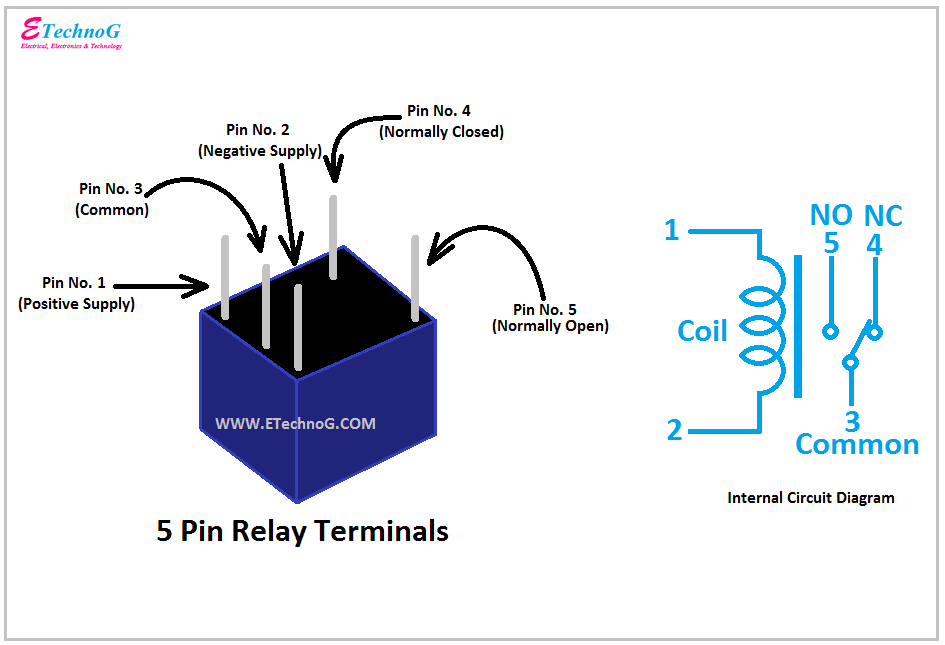
- Contacts: These are conductive surfaces that either touch or separate to make or break an electrical circuit. Relays typically have three types of contacts:
- Normally Open (NO): The circuit is open (disconnected) when the relay is not energized. When the relay is energized, the contacts close, completing the circuit.
- Normally Closed (NC): The circuit is closed (connected) when the relay is not energized. When the relay is energized, the contacts open, breaking the circuit.
- Common (COM): This is the common connection point that is connected to either the NO or NC contact, depending on the relay's state.
- Spring: A spring provides a return force, ensuring the armature returns to its original position (either NO or NC) when the coil is de-energized.
The Operational Sequence: Step-by-Step
The operation of a switching relay follows a clear and logical sequence:
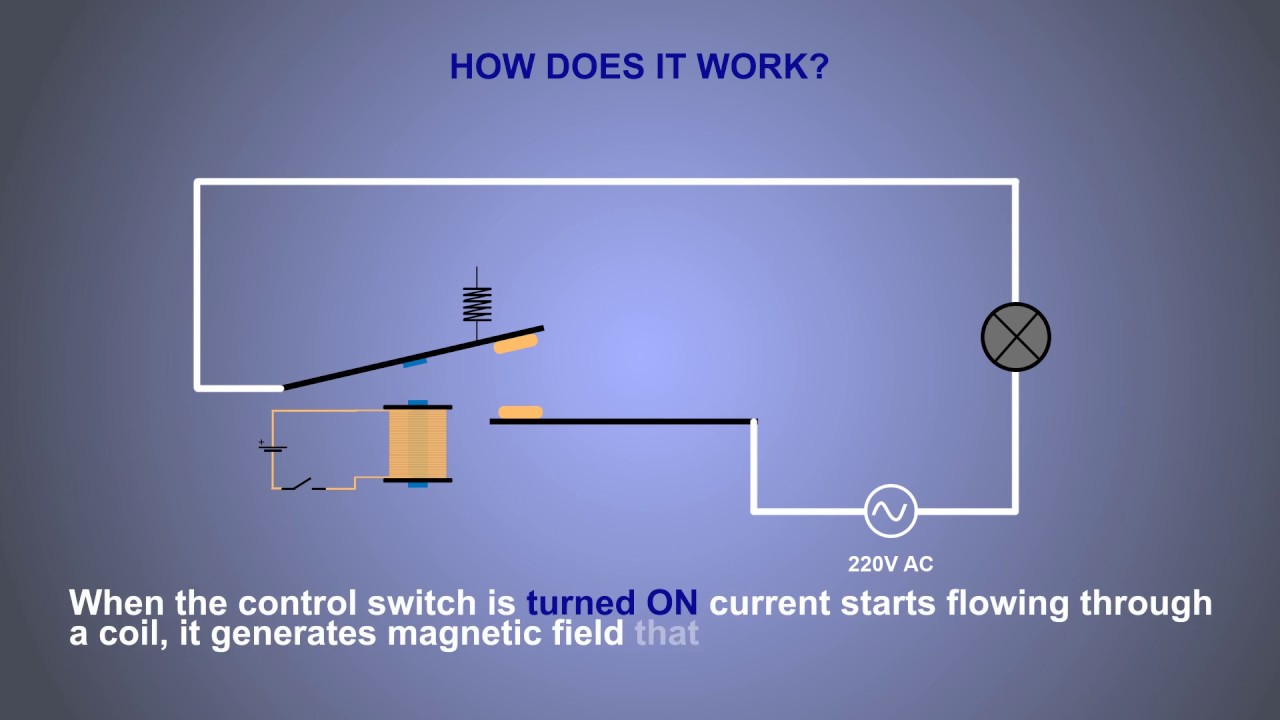
- Current Applied to the Coil: The process begins when an electrical current is applied to the relay's coil. This current comes from the control circuit, which could be a sensor, a microcontroller, or another relay.
- Electromagnetic Field Generation: As the current flows through the coil, it creates a magnetic field. The strength of this magnetic field is directly proportional to the current flowing through the coil. A larger current results in a stronger magnetic field.
- Armature Activation: The generated magnetic field exerts a force on the armature. This force overcomes the spring's resistance, causing the armature to move.
- Contact Switching: The movement of the armature causes the contacts to switch their state.
- The NO contacts close, completing the circuit connected to them.
- The NC contacts open, breaking the circuit connected to them.
- The COM contact switches its connection from the NC contact to the NO contact.
- Current Removed from the Coil: When the electrical current is removed from the coil (when the control signal is removed), the magnetic field collapses.
- Armature Returns to Original Position: With the magnetic field gone, the spring force pulls the armature back to its original position.
- Contacts Return to Original State: The contacts return to their original state:
- The NO contacts open, disconnecting the circuit.
- The NC contacts close, reconnecting the circuit.
- The COM contact switches its connection back from the NO contact to the NC contact.
Key Advantages of Using Switching Relays
Switching relays offer several advantages, making them essential components in many applications:
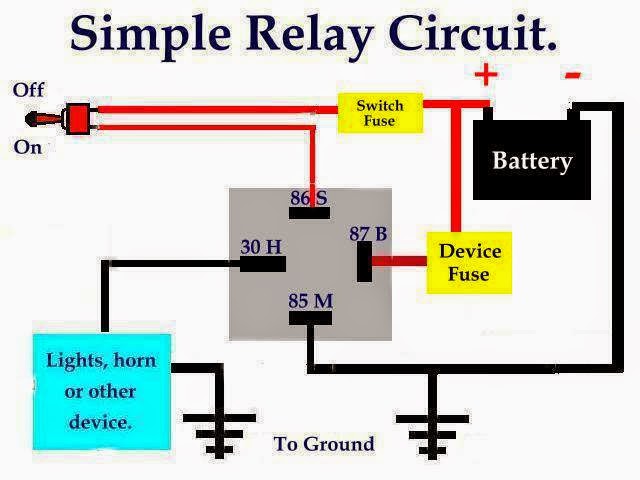
- Electrical Isolation: Relays provide electrical isolation between the control circuit (the coil circuit) and the controlled circuit (the contact circuit). This isolation prevents damage to the control circuit from high voltages or currents in the controlled circuit. Think of it as a safety barrier that protects sensitive electronics.
- Amplification: A low-power signal can control a high-power circuit. For example, a small signal from a temperature sensor can activate a relay that switches on a heating element.
- Remote Control: Relays allow you to control a circuit from a distance. This is particularly useful in automation systems where devices need to be controlled from a central location.
- Logic Functions: Relays can be used to implement basic logic functions such as AND, OR, and NOT. By combining multiple relays, you can create complex control circuits.
- Versatility: Relays come in various sizes, voltage ratings, and current ratings, making them suitable for a wide range of applications.
Types of Switching Relays
Relays are categorized based on various factors such as construction, application, and switching characteristics.
Electromechanical Relays (EMR)
These are the most common type of relay and operate based on the principles described above – using an electromagnet to move a mechanical armature.
Solid State Relays (SSR)
Instead of mechanical contacts, SSRs use semiconductor devices like transistors or thyristors to switch the circuit. This results in faster switching speeds, longer lifespan (no moving parts to wear out), and silent operation. However, they can be more susceptible to voltage spikes and may have a higher on-state resistance.
Reed Relays
Reed relays use a pair of ferrous reeds sealed in a glass tube filled with inert gas. When a magnetic field is applied, the reeds attract and close the circuit. Reed relays offer high switching speeds and low contact resistance, making them suitable for sensitive signal applications.
Latching Relays
Unlike standard relays, latching relays maintain their state (either on or off) even after the control signal is removed. They require a separate pulse to switch them to the opposite state. This is useful in applications where power consumption needs to be minimized.
Applications of Switching Relays
Switching relays are found in countless applications across various industries:
- Automotive: Controlling headlights, turn signals, starter motors, and other vehicle systems.
- HVAC Systems: Switching on and off compressors, fans, and other components in heating, ventilation, and air conditioning systems.
- Industrial Automation: Controlling motors, valves, pumps, and other industrial equipment.
- Consumer Electronics: Powering on and off devices, switching between different inputs (e.g., in a television), and controlling appliances.
- Telecommunications: Switching telephone lines and routing signals.
- Medical Equipment: Controlling various functions in medical devices, ensuring safety and reliability.
Considerations When Selecting a Switching Relay
Choosing the right relay for a specific application is crucial for optimal performance and reliability. Here are some important factors to consider:
- Voltage and Current Ratings: Ensure the relay's voltage and current ratings are sufficient for the circuit it will be controlling. Exceeding these ratings can damage the relay and create a safety hazard.
- Coil Voltage: The coil voltage must match the voltage of the control circuit.
- Contact Configuration: Choose a relay with the appropriate contact configuration (NO, NC, COM) for the desired switching action.
- Switching Speed: For applications requiring fast switching, consider solid-state relays or reed relays.
- Lifespan: Electromechanical relays have a finite lifespan due to mechanical wear. Solid-state relays generally have a longer lifespan.
- Isolation Voltage: The isolation voltage specifies the maximum voltage that can be safely applied between the coil and the contacts. This is important for safety in high-voltage applications.
- Environmental Conditions: Consider the operating temperature, humidity, and vibration levels of the environment where the relay will be used.
- Mounting Style: Relays are available in various mounting styles, such as PCB mount, DIN rail mount, and panel mount.
Troubleshooting Common Relay Problems
Like any electrical component, relays can sometimes fail. Here are some common problems and their potential causes:
- Relay Not Activating:
- Problem: The relay doesn't switch when the control signal is applied.
- Possible Causes: Faulty coil, insufficient voltage to the coil, broken wiring in the control circuit, or a problem with the control signal itself.
- Relay Chatter:
- Problem: The relay contacts rapidly open and close, causing a buzzing sound.
- Possible Causes: Low voltage to the coil, excessive vibration, or worn contacts.
- Contacts Sticking:
- Problem: The relay contacts remain closed even after the control signal is removed.
- Possible Causes: Welded contacts due to excessive current, contamination on the contact surfaces, or mechanical damage to the armature.
- Burnt or Damaged Coil:
- Problem: The coil is burnt or shows signs of damage.
- Possible Causes: Overvoltage to the coil, excessive current through the coil, or a short circuit in the coil windings.
When troubleshooting relay problems, always disconnect the power supply and use a multimeter to check the voltage and current levels. Inspect the relay for any signs of physical damage. If a relay is suspected to be faulty, it's generally best to replace it with a new one.
Conclusion
Switching relays are indispensable components in a vast array of electrical and electronic systems. Their ability to provide electrical isolation, amplification, and remote control makes them essential for controlling high-power circuits with low-power signals. By understanding the basic principles of how a switching relay works, as well as the different types of relays available and their respective applications, you can make informed decisions when selecting and using these versatile devices.