How Does A Wall Switch Work
:max_bytes(150000):strip_icc()/how-light-switches-work-2175162-2-V1-c86fba8610b14f178ad09d7ef8d3184c.jpg)
The humble wall switch, a ubiquitous fixture in every home and building, is more than just a convenient on/off button. For HVAC professionals, understanding its function is fundamental, not just for electrical troubleshooting but also for comprehending the control circuits that govern complex HVAC systems. This article breaks down the workings of a wall switch, its variations, and its significance in the broader context of the HVAC industry, appealing to students, experienced technicians, and employers alike.
The Basics: Completing the Circuit
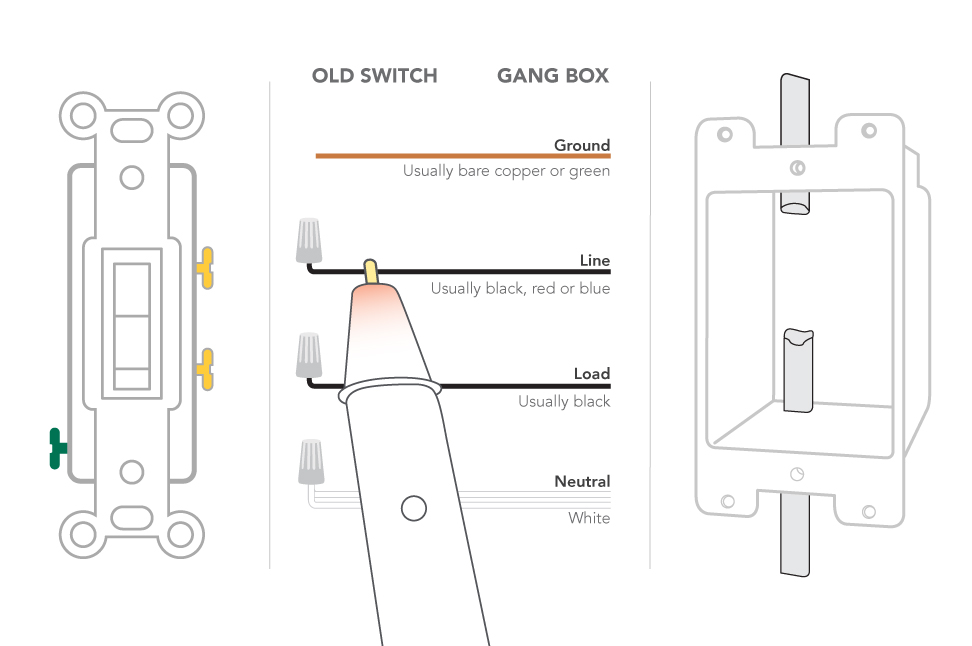
At its core, a wall switch is a simple electromechanical device. Its primary function is to either complete or break an electrical circuit. When the switch is in the "on" position, it creates a continuous path for electricity to flow from the power source (usually the electrical panel) to the load (a light fixture, an appliance, or, importantly, an HVAC component like a fan motor). Conversely, in the "off" position, the switch introduces a gap in the circuit, stopping the flow of electricity.
Most standard wall switches operate using a toggle mechanism. Inside the switch, a conductive metal bar (the "blade") moves to bridge or separate two contact points. When "on," the blade connects the two points, allowing current to flow. When "off," the blade is physically separated, creating an open circuit.
Types of Wall Switches Relevant to HVAC
While the basic principle remains the same, different types of wall switches serve specific purposes. Understanding these variations is crucial for HVAC technicians:
- Single-Pole Switch: This is the most common type, controlling a light or device from a single location. It has two terminals and is the workhorse of residential lighting.
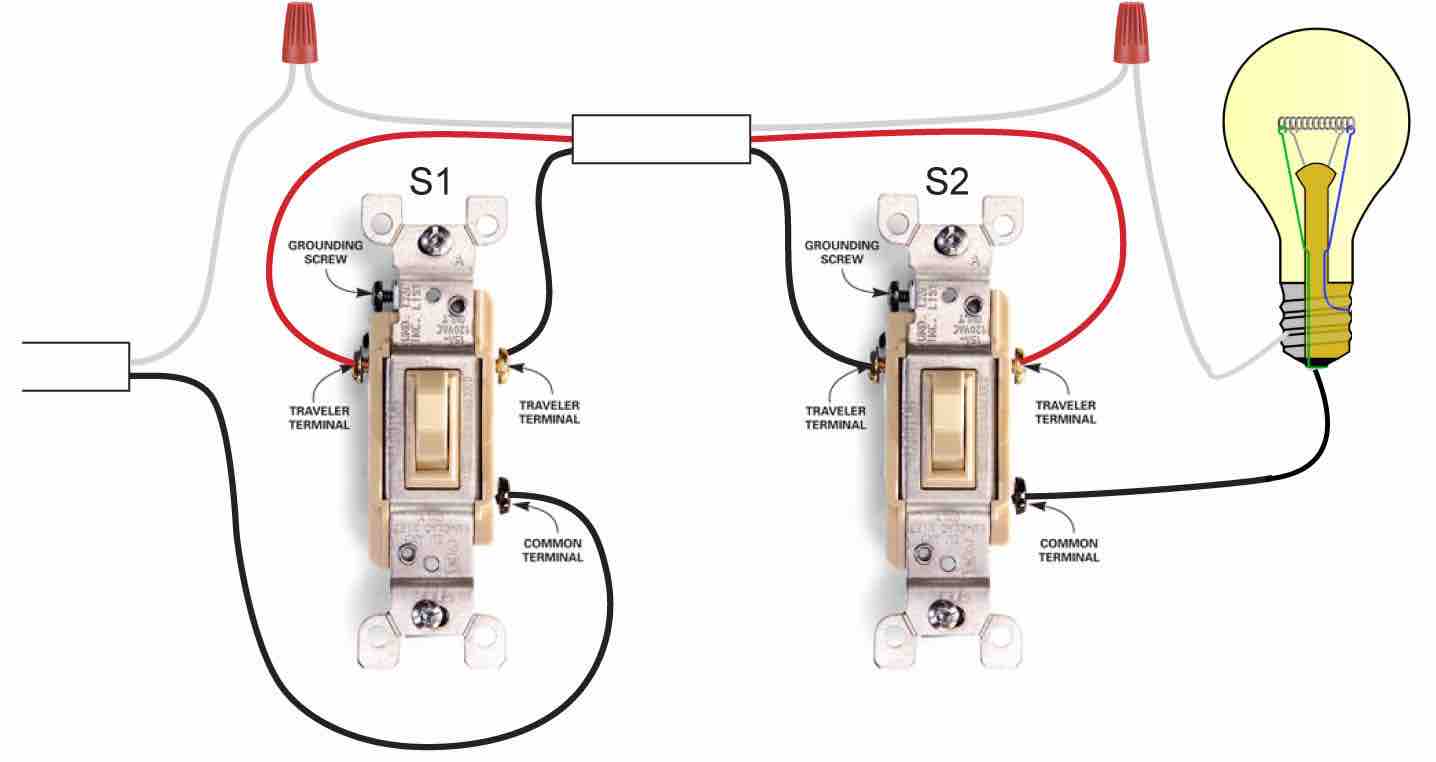
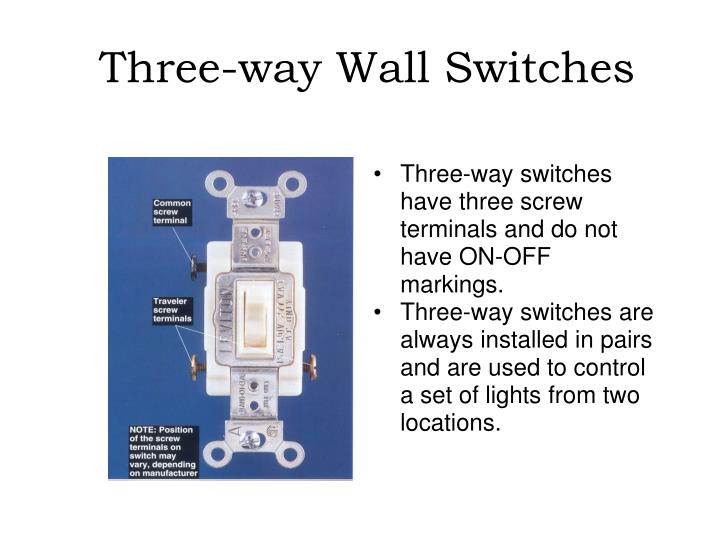
- Three-Way Switch: Used to control a light or device from two different locations. Think of a hallway light controlled by switches at both ends. These switches are more complex internally and require a different wiring configuration. They have three terminals (one common, two travelers).
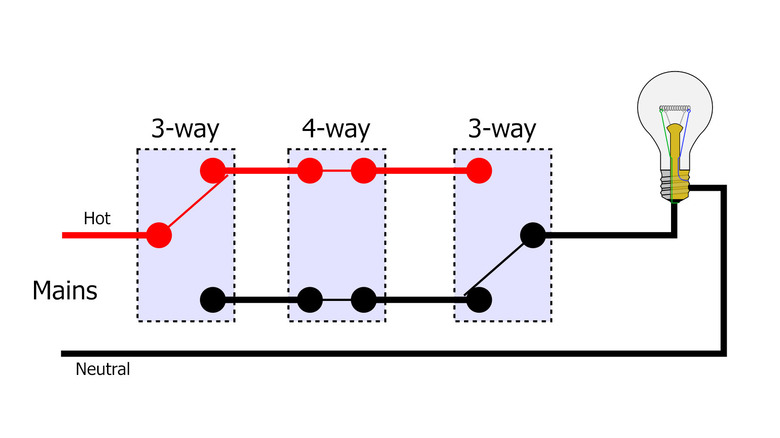
- Four-Way Switch: Used in conjunction with two three-way switches to control a light or device from three or more locations. It has four terminals and sits in the middle of the circuit between the two three-way switches.
- Dimmer Switch: Allows for variable control of the electrical current flowing to a light fixture, thereby adjusting its brightness. Some dimmer switches are designed specifically for LED lighting and may have different operational characteristics. While primarily for lighting, understanding dimming principles can be helpful when encountering variable-speed fan controls in some HVAC systems.
- Smart Switch: These switches connect to a home's Wi-Fi network and can be controlled remotely via a smartphone or voice assistant. They often include features like scheduling and energy monitoring. Their integration into HVAC systems is growing, allowing for remote control and automation of fans, dampers, and even zone control.
Wall Switches in HVAC Systems: Control and Safety
Wall switches, or their functional equivalents, play a vital role in HVAC systems. They're not just for turning on the air conditioner. Consider these applications:
- Disconnect Switches: These heavy-duty switches are used to completely isolate HVAC equipment from the power supply for maintenance or repair. They are crucial for safety and are often mandated by code.
- Fan Switches: Many HVAC systems use wall-mounted switches to control fan speed or to activate a fan-only mode, independent of heating or cooling.
- Emergency Shut-Off Switches: Strategically placed switches can quickly cut power to critical HVAC components in emergency situations.
- Thermostat Connections: While not directly a "wall switch" in the traditional sense, a thermostat acts as a sophisticated switch, activating heating or cooling based on temperature readings. Modern smart thermostats have extended functionalities, but the underlying principle remains the same: completing or breaking circuits to control HVAC equipment.
Troubleshooting Wall Switch Issues
Diagnosing problems with wall switches is a common task for HVAC technicians, particularly those specializing in electrical systems. Common issues include:
- Faulty Switch: The switch itself may be broken internally, preventing it from completing or breaking the circuit correctly.
- Loose Wiring: Connections at the switch terminals may have come loose, causing intermittent or complete failure.
- Incorrect Wiring: Especially with three-way and four-way switches, incorrect wiring can lead to the circuit not functioning as intended.
- Overloading the Circuit: Connecting too many devices to a single circuit can overload the switch and the circuit breaker.
Proper troubleshooting requires a multimeter to test for voltage and continuity, as well as a thorough understanding of electrical safety procedures. Always disconnect power before working on any electrical components.
HVAC Career Paths and the Importance of Electrical Knowledge
A strong understanding of electrical principles, including the function of wall switches and control circuits, is essential for success in many HVAC career paths. Here are a few examples:
- HVAC Technician: Entry-level technicians need to be able to diagnose and repair basic electrical issues, including problems with switches, wiring, and control circuits. According to the Bureau of Labor Statistics, the median annual wage for HVAC mechanics and installers was $51,390 in May 2022. The job outlook is projected to grow 6 percent from 2022 to 2032.
- HVAC Service Technician: Experienced service technicians handle more complex electrical troubleshooting and may work with sophisticated control systems. Their earning potential is often higher.
- HVAC Controls Specialist: These specialists focus on the design, installation, and maintenance of control systems, including those that incorporate smart switches and building automation. Demand for these specialists is growing due to the increasing complexity of HVAC systems.
- HVAC Electrician: Some electricians specialize in HVAC systems, handling all the electrical work associated with installation, maintenance, and repair.
Certifications and Professional Development
Several certifications can enhance your skills and career prospects in the HVAC industry:
- NATE (North American Technician Excellence): NATE certification demonstrates competence in specific HVAC areas and is highly valued by employers. NATE offers certifications in various specialties, including installation, service, and efficiency.
- EPA Section 608 Certification: Required for technicians who handle refrigerants. This certification covers proper refrigerant handling procedures and environmental regulations.
- Electrical Certifications: Obtaining an electrician's license or certifications from organizations like the Independent Electrical Contractors (IEC) can significantly boost your expertise and earning potential.
- Continuing Education: The HVAC industry is constantly evolving. Staying up-to-date with the latest technologies and best practices through continuing education courses is crucial for career advancement.
The Future of Wall Switches and HVAC
The future of wall switches in HVAC is intertwined with the growth of smart home technology and building automation. We can expect to see:
- Increased Integration with Smart Home Systems: Smart switches will become increasingly integrated with HVAC systems, allowing for remote control, energy monitoring, and automated adjustments based on occupancy and weather conditions.
- Advanced Control Algorithms: Sophisticated algorithms will use data from smart switches and sensors to optimize HVAC system performance and energy efficiency.
- Voice Control: Voice assistants will become increasingly common for controlling HVAC systems through smart switches and thermostats.
- Energy Efficiency Focus: Future switches will be designed to minimize energy consumption and provide detailed energy usage data.
For HVAC professionals, embracing these technological advancements is essential for staying competitive in the evolving job market. Understanding the basic principles of a simple wall switch provides a solid foundation for mastering the complexities of modern HVAC control systems. Consider specializing in smart HVAC systems to capitalize on this growing trend. According to recent market research, the smart HVAC controls market is projected to reach $XX billion by 20XX, indicating strong growth potential.
In conclusion, while seemingly simple, the wall switch exemplifies the fundamental electrical principles that underpin all HVAC systems. A thorough understanding of its function, variations, and role in control circuits is essential for HVAC professionals at all levels. By continuously learning and adapting to new technologies, HVAC technicians can ensure a successful and rewarding career in this dynamic industry.

:max_bytes(150000):strip_icc()/anatomy-of-a-three-way-switch-1152436-final-ddc55160d5cb47929688406fda972301.png)