How Does Conduction Differ From Convection
Frequently Asked Questions: Conduction vs. Convection
Understanding the differences between conduction and convection is crucial for optimizing heating and cooling systems, improving insulation, and generally making your home or building more energy-efficient. This FAQ addresses common questions about these two fundamental heat transfer methods.
Q1: What exactly are conduction and convection, and how do they transfer heat?
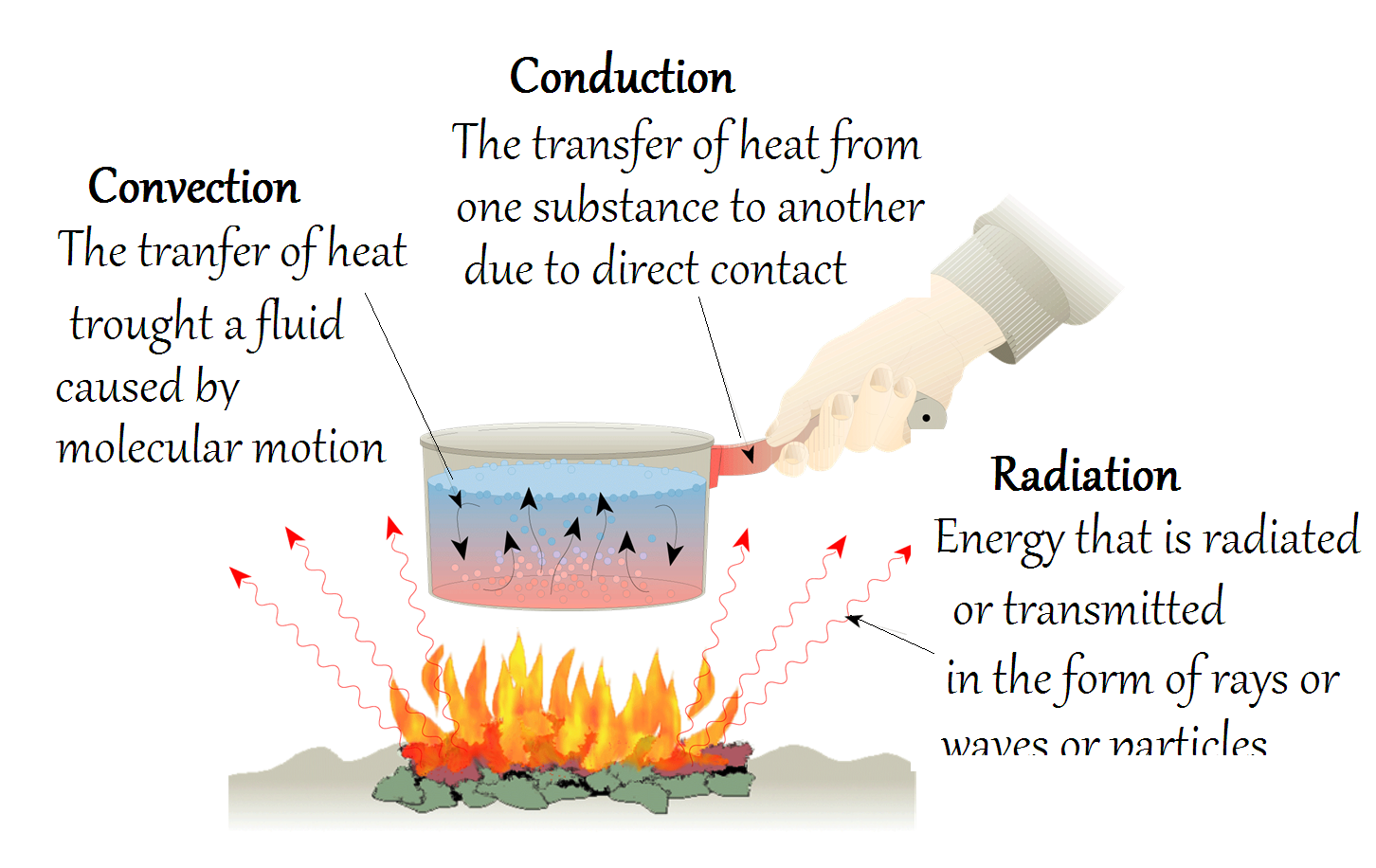
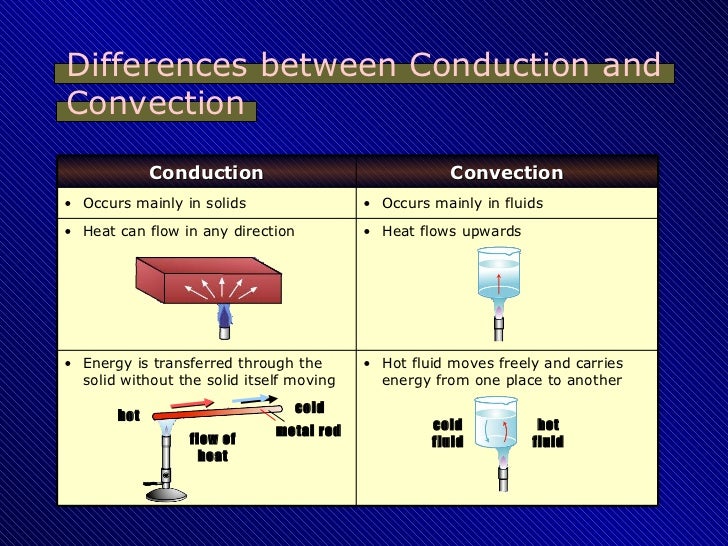
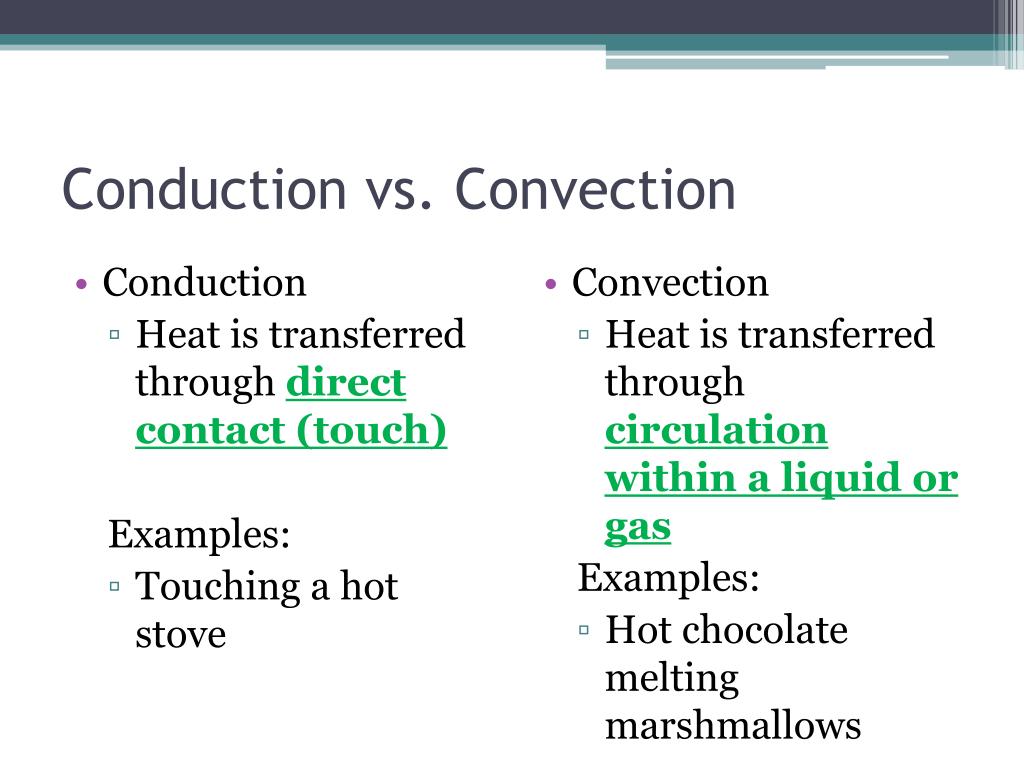
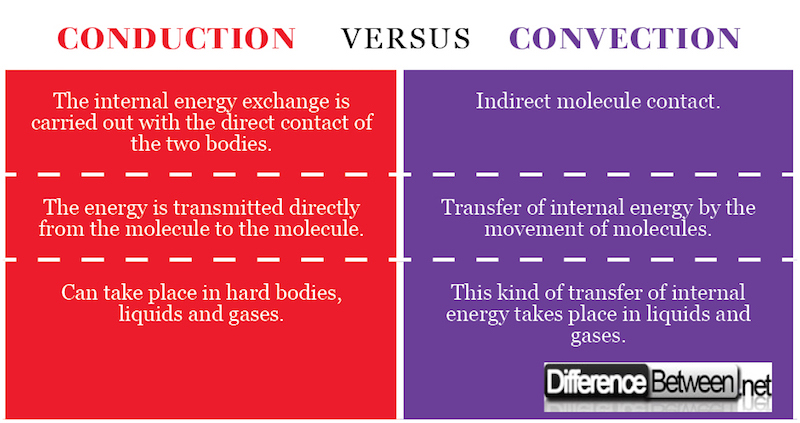
Conduction is the transfer of heat through a material without any movement of the material itself. Think of it as heat spreading from one molecule to another, like a chain reaction. It primarily occurs in solids. Imagine touching a hot metal pan – the heat travels through the metal and into your hand via conduction.
Convection, on the other hand, involves the transfer of heat through the movement of fluids (liquids or gases). Warm fluid rises, and cooler fluid sinks, creating currents that distribute heat. This movement is essential for convection. Examples include boiling water or a forced-air heating system.
- Conduction: Heat transfer through direct contact.
- Convection: Heat transfer through the movement of fluids.
Q2: So, conduction happens in solids and convection in fluids. Are there other key differences?
Yes, besides the medium (solid vs. fluid), several other key differences exist:
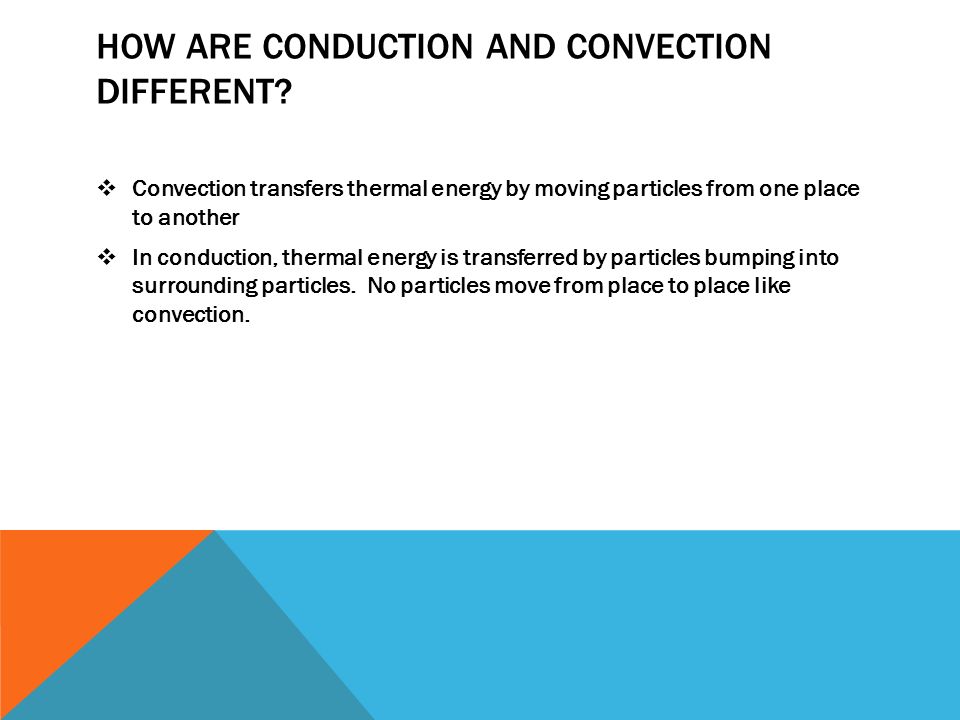
- Mechanism: Conduction relies on atomic or molecular vibrations and collisions. Convection relies on bulk fluid motion.
- Speed: Generally, conduction is slower than convection, especially in fluids. However, highly conductive solids (like metals) can conduct heat very quickly.
- Dependence on Material Properties: Conduction depends heavily on the thermal conductivity of the material. Materials with high thermal conductivity (like copper) transfer heat very efficiently. Convection depends on fluid properties like density, viscosity, and thermal expansion coefficient.
- Presence of Macroscopic Motion: Conduction doesn't involve any macroscopic movement of the substance. Convection, by definition, requires the bulk movement of the fluid.
- Boundary Layer: Convection often involves the formation of a boundary layer near a surface, where the fluid velocity changes rapidly. This boundary layer can significantly impact the rate of heat transfer. Conduction doesn't have a similar boundary layer effect.
In essence, conduction is a more localized, molecular process, while convection is a larger-scale, fluid-dynamic process.
Q3: Can both conduction and convection happen at the same time? How?
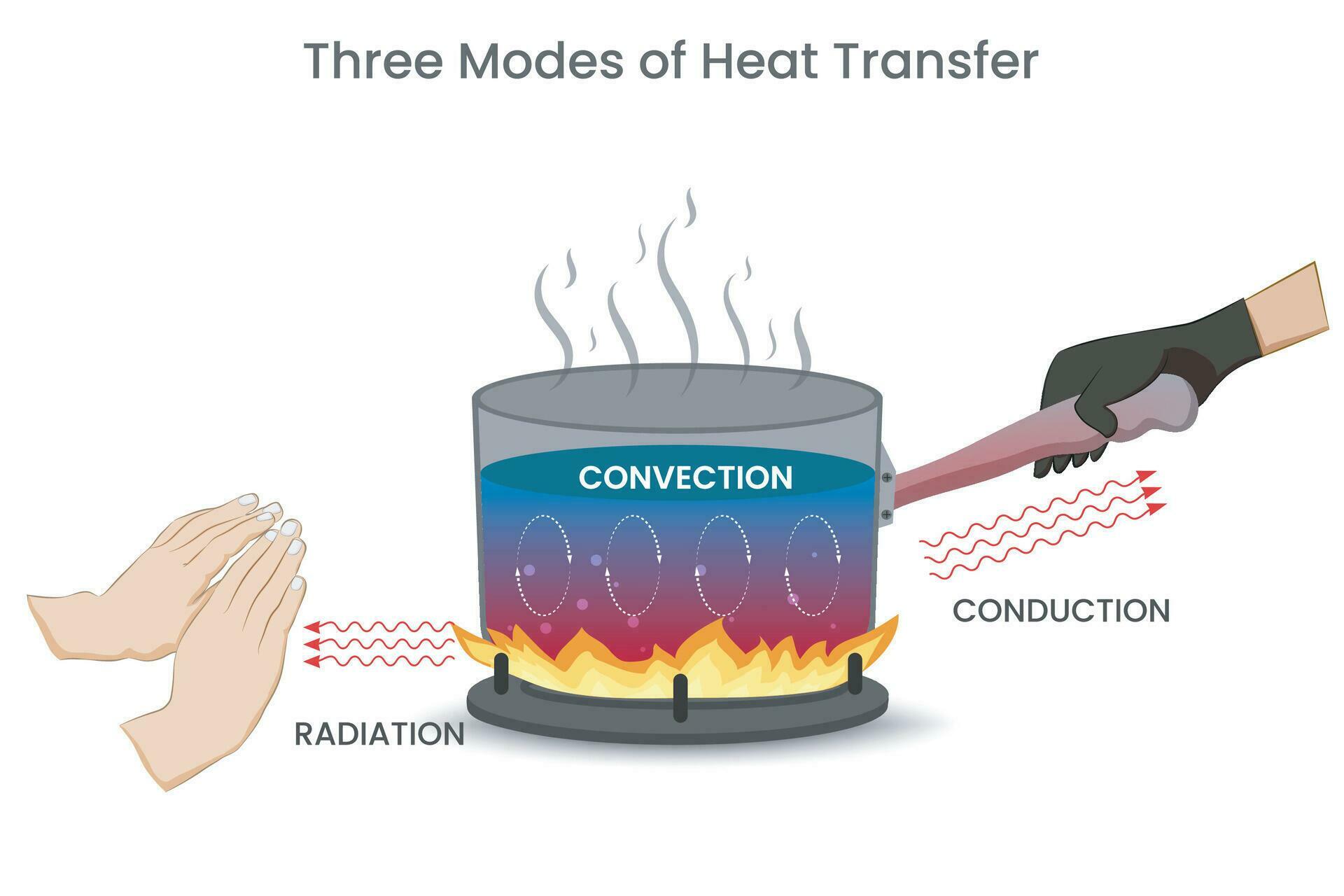
Absolutely! In fact, they often do happen simultaneously. Consider heating water in a pot on a stove.
- Conduction: The burner heats the bottom of the pot through conduction. The heat then travels through the pot's metal to the water touching it, also via conduction.
- Convection: The water at the bottom of the pot heats up, becomes less dense, and rises. Cooler water sinks to replace it, creating convection currents that circulate the heat throughout the water.
So, conduction heats the pot and the initial layer of water, while convection distributes that heat throughout the rest of the water. In many real-world scenarios involving fluids and solids, both processes contribute to heat transfer, often in a complex and interconnected manner.
Q4: How does this understanding help me manage heating and cooling in my home or facility? For example, what about insulation?
Understanding conduction and convection is critical for effective insulation and HVAC system design.
- Insulation: Insulation materials are designed to minimize heat transfer by conduction. They typically contain many small air pockets that trap air. Air is a poor conductor of heat, so it slows down the rate at which heat can pass through the material. Furthermore, by limiting air movement within the insulation, it also reduces heat transfer via convection. Therefore, good insulation minimizes both conduction and convection.
- HVAC Systems: Heating and cooling systems use convection to distribute warm or cool air throughout a space. Furnaces and air conditioners heat or cool air, and then fans or blowers circulate that air. Understanding convection patterns helps in optimizing the placement of vents for even temperature distribution.
- Window Design: Double-paned or triple-paned windows reduce heat transfer by creating air gaps between the panes of glass. These air gaps limit conduction. Some windows also have special coatings to reduce radiative heat transfer (another heat transfer method not discussed in detail here).
- Preventing Drafts: Sealing gaps around windows and doors prevents unwanted air movement, reducing heat loss or gain due to convection.
- Radiant Heaters: While primarily using radiation, radiant heaters also warm the air around them, which then distributes heat via convection.
By understanding these principles, you can make informed decisions about insulation, window selection, and HVAC system maintenance to improve energy efficiency and comfort.
Q5: What are some practical examples of how to minimize heat loss/gain based on this knowledge?
Here are some practical examples you can implement:
- Add Insulation: Adding insulation to your attic, walls, and crawl spaces can significantly reduce heat loss in the winter and heat gain in the summer by minimizing conduction.
- Seal Air Leaks: Caulk and weatherstrip around windows and doors to prevent drafts and minimize heat transfer by convection. This also reduces energy bills.
- Use Window Coverings: Close curtains or blinds during the hottest parts of the day to block sunlight and reduce heat gain. Insulated curtains can further reduce heat transfer.
- Proper Ventilation: Ensure proper ventilation in your attic and crawl spaces to prevent moisture buildup and reduce heat gain in the summer. A well-ventilated attic can stay significantly cooler.
- Maintain HVAC System: Regularly maintain your furnace and air conditioner to ensure they are operating efficiently. Clean or replace filters regularly to improve airflow and heat transfer.
- Consider Radiant Barriers: In hot climates, radiant barriers in attics can reflect sunlight and reduce heat gain, minimizing the need for air conditioning.
- Smart Thermostat: Use a smart thermostat to program your heating and cooling system to automatically adjust temperatures based on occupancy and time of day, saving energy and money.
These actions, based on the principles of conduction and convection, can lead to substantial energy savings and improved comfort in your home or building.
Q6: What are some common misconceptions about conduction and convection in the context of home energy efficiency?
Several misconceptions can hinder effective energy-saving efforts:
- "Insulation only prevents cold air from entering": Insulation works both ways. It prevents heat loss in the winter and heat gain in the summer by reducing conduction.
- "Sealing air leaks is only important in the winter": Air leaks cause heat loss in winter, but also heat gain in summer. Sealing them is beneficial year-round to reduce convection.
- "More insulation is always better": While increasing insulation typically improves energy efficiency, there's a point of diminishing returns. Adding excessively thick insulation may not provide a significant additional benefit and can even create problems if not installed correctly.
- "My windows are new, so I don't need to worry about heat loss": Even new windows can have air leaks or poor insulation. Double-check seals and consider adding window coverings for extra protection. Look for windows with low U-factors (measure of heat transfer).
- "If my furnace is running, my home is warm, so I don't have convection concerns": Improper vent placement can lead to uneven heating, even with a functioning furnace. Convection relies on air circulation, so ensure vents aren't blocked.
Avoiding these misconceptions and focusing on a holistic approach that addresses both conduction and convection will yield the best results for energy efficiency.
Q7: Are there any advanced techniques or technologies that leverage conduction and convection principles for even greater energy savings?
Yes, several advanced techniques and technologies build upon these fundamental principles:
- Phase-Change Materials (PCMs): PCMs absorb and release heat during phase transitions (e.g., solid to liquid), helping to regulate temperature fluctuations and reduce the need for active heating or cooling. They enhance thermal inertia and affect both conduction and convection near surfaces.
- Vacuum Insulation Panels (VIPs): VIPs offer extremely high thermal resistance by creating a vacuum between two rigid panels. This significantly reduces heat transfer by conduction and convection.
- Aerogels: Aerogels are extremely lightweight and porous materials with exceptional insulating properties. They minimize heat transfer by conduction and convection due to their unique structure.
- Heat Recovery Ventilation (HRV) and Energy Recovery Ventilation (ERV) Systems: These systems preheat or precool incoming fresh air using the exhaust air, reducing the energy required to condition the air. They exploit both conduction and convection in the heat exchange process. ERV systems also manage humidity, further enhancing comfort.
- Computational Fluid Dynamics (CFD) Modeling: CFD simulations can be used to model air flow patterns and heat transfer within buildings, allowing for the optimization of HVAC system design and vent placement to improve convection and energy efficiency.
- Geothermal Heat Pumps: Geothermal heat pumps utilize the stable temperature of the earth to heat and cool buildings. They use a fluid to transfer heat between the earth and the building, leveraging conduction and convection.
These advanced techniques represent ongoing innovation in energy efficiency, building upon a solid understanding of conduction and convection.
.jpg)