How Is The Airflow Adjusted On Most Commercial Air Handlers
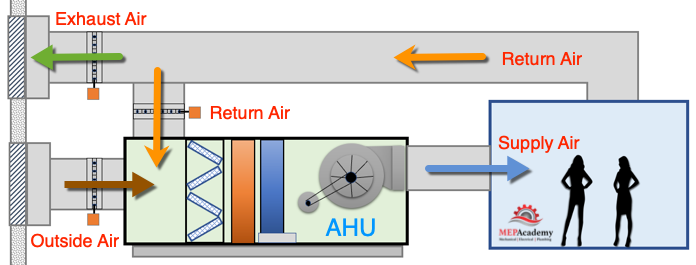
Understanding how to adjust airflow in a commercial air handler is crucial for maintaining efficient and comfortable building environments. This guide breaks down the common methods used to control airflow, helping you understand the principles involved and make informed decisions about your HVAC system.
Why is Airflow Adjustment Important?
Airflow adjustment is the process of modifying the amount of air circulating through your commercial air handler. Proper airflow is essential for several reasons:
- Comfort: Correct airflow ensures even temperature distribution, eliminating hot and cold spots.
- Efficiency: Optimal airflow helps your HVAC system operate efficiently, reducing energy consumption and lowering utility bills.
- Equipment Lifespan: Insufficient airflow can cause the system to work harder, leading to premature wear and tear and potentially costly repairs.
- Indoor Air Quality: Adequate airflow promotes better ventilation, helping to remove pollutants and maintain good indoor air quality.
Common Methods for Adjusting Airflow
Commercial air handlers offer several methods for airflow adjustment. The specific methods available depend on the design and features of your particular unit. Here are the most common approaches:
1. Variable Frequency Drives (VFDs)
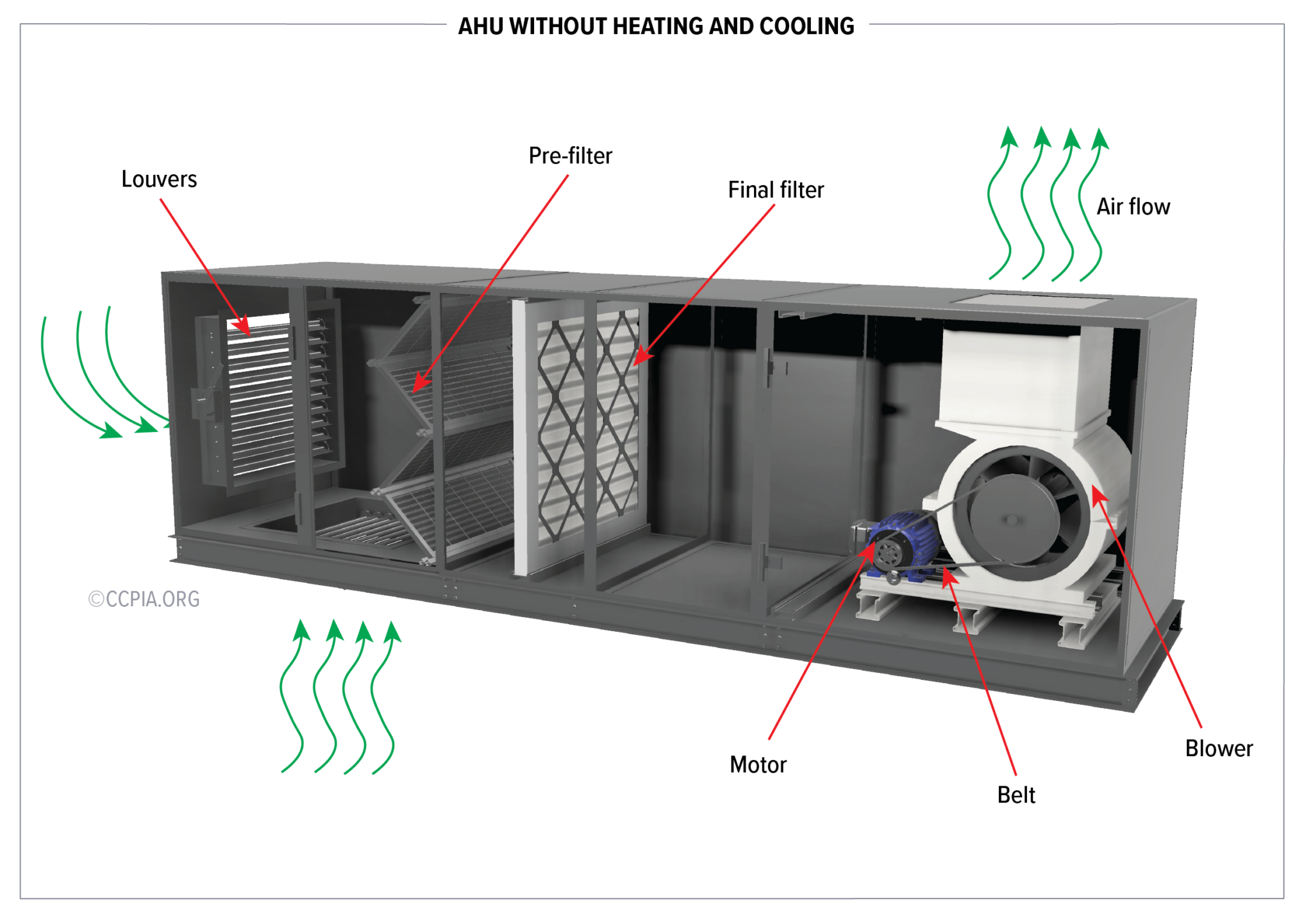
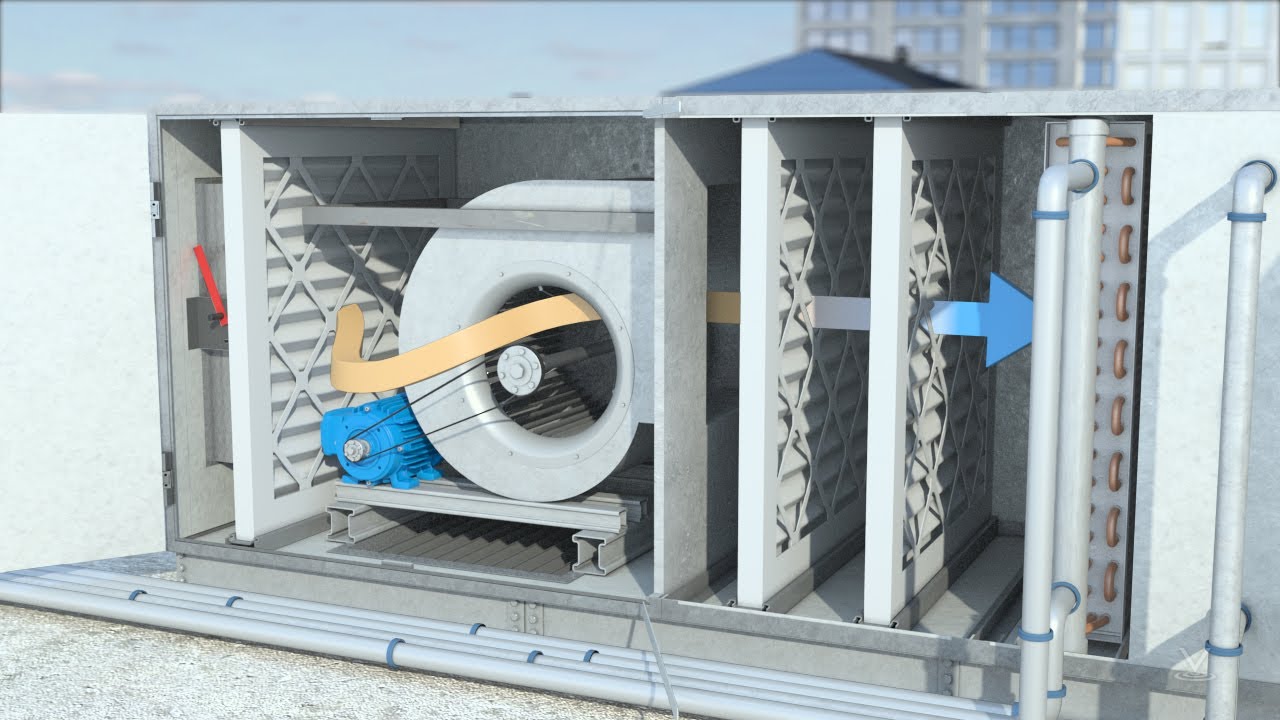
VFDs are one of the most energy-efficient methods for controlling airflow in commercial air handlers. Think of a VFD as a dimmer switch for the motor powering the blower fan. It allows you to precisely control the speed of the fan, and therefore the airflow, by adjusting the frequency of the electrical power supplied to the motor.
How it Works: VFDs change the frequency of the electrical current supplied to the motor. Lowering the frequency slows the motor and reduces airflow. Increasing the frequency speeds up the motor and increases airflow. This is far more efficient than simply throttling the airflow with dampers, as it directly reduces the energy consumed by the motor.
Benefits of VFDs:
- Energy Savings: Significant reductions in energy consumption compared to other methods.
- Precise Control: Fine-grained control over airflow allows for optimization based on real-time needs.
- Reduced Noise: Lower fan speeds can result in quieter operation.
- Soft Starting: VFDs can reduce stress on the motor by providing a "soft start," gradually increasing the motor speed rather than starting it abruptly.
2. Damper Adjustments
Dampers are adjustable plates or louvers within the ductwork that restrict or allow airflow. They are a more traditional method of airflow control. Adjusting dampers is like adjusting the flow of water through a pipe by partially closing a valve.
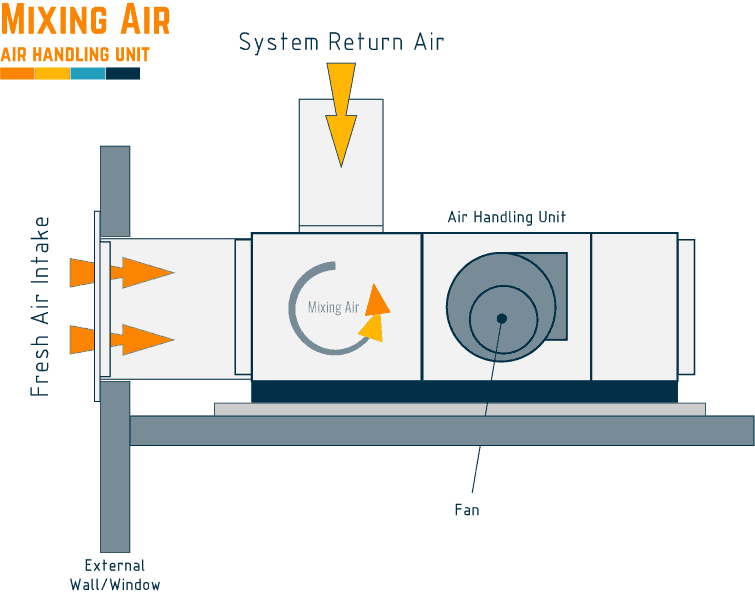
How it Works: Dampers are typically located at various points in the ductwork, such as at the supply or return ducts. By manually or automatically adjusting the position of the dampers, you can increase or decrease the amount of air flowing through a specific area.
Types of Dampers:
- Manual Dampers: Adjusted manually using a lever or screw. Often used for balancing airflow in different zones of a building.
- Motorized Dampers: Controlled by actuators connected to a building automation system (BAS). These dampers can be automatically adjusted based on temperature sensors, occupancy schedules, or other factors.
Benefits of Dampers:
- Zone Control: Effective for directing airflow to specific zones or areas of a building.
- Relatively Inexpensive: Simpler and less expensive to install than VFDs.
Drawbacks of Dampers:
- Less Energy Efficient: Restricting airflow with dampers forces the fan to work harder, consuming more energy.
- Manual Adjustment Required: Manual dampers require physical adjustment, which can be time-consuming and inconsistent.
3. Fan Speed Taps
Many commercial air handler motors have multiple speed taps. These are electrical connections that allow you to manually select different motor speeds, providing a limited number of airflow options. Think of it like a multi-speed ceiling fan where you can choose from low, medium, or high speeds.
How it Works: By changing the wiring connection on the motor, you can select a different voltage input, which results in a different motor speed and therefore a different airflow rate. This is typically done by a qualified HVAC technician.
Benefits of Fan Speed Taps:
- Simple to Implement: Easier to implement than VFDs.
- Lower Cost: Less expensive than installing a VFD.
Drawbacks of Fan Speed Taps:
- Limited Control: Only provides a few discrete airflow settings, not continuous adjustment.
- Requires Manual Adjustment: Changing the speed tap requires physically re-wiring the motor.
- Less Efficient than VFDs: Not as energy-efficient as VFDs.
4. Inlet Guide Vanes (IGVs)
Inlet Guide Vanes (IGVs) are adjustable vanes located at the inlet of the fan. They are used to control airflow by changing the angle at which air enters the fan impeller. Imagine them as adjustable shutters that direct the incoming air to optimize the fan's performance at different airflow rates.
How it Works: By adjusting the angle of the vanes, you can control the amount of swirl imparted to the incoming air. This swirl affects the fan's performance curve, allowing for some degree of airflow modulation. They are typically automated and controlled by the building's management system.
Benefits of IGVs:
- Improved Fan Efficiency: Can improve fan efficiency at reduced airflow rates compared to simple throttling.
- Relatively Simple Control: Easier to control than some other methods.
Drawbacks of IGVs:
- Limited Airflow Range: The range of airflow adjustment is limited compared to VFDs.
- Can be Noisy: Can generate noise at certain vane angles.
Factors to Consider When Adjusting Airflow
Before making any adjustments to the airflow in your commercial air handler, consider the following factors:
- Building Load: The amount of heating or cooling required by the building. This load varies depending on the time of day, occupancy levels, and weather conditions.
- System Design: The original design of the HVAC system, including the ductwork layout, fan size, and coil capacities. Altering the airflow significantly can affect the system's overall performance.
- Occupant Comfort: The comfort of the building's occupants is paramount. Ensure that airflow adjustments do not create uncomfortable drafts or temperature variations.
- Energy Efficiency: Aim to optimize airflow to minimize energy consumption while maintaining comfort.
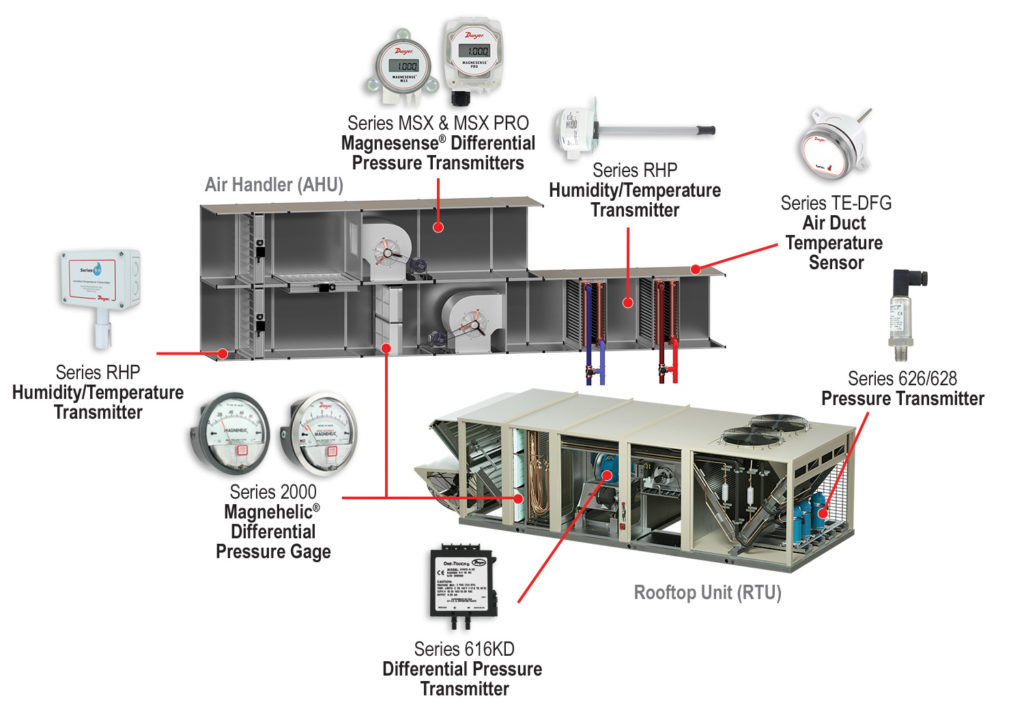
- Building Automation System (BAS): If your building has a BAS, it can be used to monitor and control airflow based on real-time conditions.
Safety Precautions
Working with commercial air handlers involves potential hazards. Always follow these safety precautions:
- Turn off the Power: Before performing any maintenance or adjustments, disconnect the power supply to the air handler to prevent electrical shock.
- Wear Appropriate PPE: Wear safety glasses, gloves, and other appropriate personal protective equipment (PPE).
- Follow Manufacturer's Instructions: Always refer to the manufacturer's instructions for specific guidance on airflow adjustment procedures.
- Qualified Personnel: Airflow adjustments should be performed by qualified HVAC technicians with experience in commercial HVAC systems. Improper adjustments can damage equipment or create safety hazards.
Working with a Professional
While understanding the principles of airflow adjustment is helpful, it is essential to work with a qualified HVAC professional for any significant changes. They can assess your specific needs, recommend the best approach, and ensure that the adjustments are made safely and effectively.
Benefits of Hiring a Professional:
- Expertise: Professionals have the knowledge and experience to properly diagnose and address airflow issues.
- Equipment: They have the tools and equipment needed to accurately measure airflow and make precise adjustments.
- Safety: They are trained to work safely with HVAC equipment and avoid potential hazards.
- Warranty Protection: Improper adjustments can void warranties. A professional can ensure that all work is performed in accordance with warranty requirements.
Troubleshooting Common Airflow Problems
Identifying common airflow problems is crucial for maintaining an efficient HVAC system. Here's a breakdown of potential issues and their solutions:
- Insufficient Airflow: Symptoms include uneven heating/cooling, rooms not reaching desired temperatures, and the system running constantly. Causes can be a dirty air filter, blocked ductwork, malfunctioning blower fan, or improperly sized ductwork. Solution: Check and replace the air filter regularly, inspect ductwork for obstructions, verify blower fan operation, and consult an HVAC professional to assess ductwork sizing.
- Excessive Airflow: Symptoms include drafts, excessive noise, and higher energy bills. Causes can be an oversized blower fan, improperly adjusted dampers, or leaks in the ductwork. Solution: Adjust dampers to reduce airflow, inspect ductwork for leaks and seal them, and consult an HVAC professional to assess blower fan sizing.
- Unbalanced Airflow: Symptoms include some rooms being too hot or cold while others are comfortable. Causes can be improperly adjusted dampers, blocked ductwork, or inadequate insulation. Solution: Adjust dampers to balance airflow, inspect ductwork for obstructions, and improve insulation as needed. A duct leakage test can help identify imbalances.
- Noisy Airflow: Symptoms include whistling, rattling, or rumbling noises coming from the ductwork or vents. Causes can be restrictions in the ductwork, loose ductwork connections, or a malfunctioning blower fan. Solution: Inspect ductwork for obstructions, tighten loose connections, and verify blower fan operation.
Regular Maintenance is the Key:
To ensure optimal airflow and system performance, regular maintenance is essential. This includes:
- Regularly replacing air filters.
- Inspecting and cleaning ductwork.
- Lubricating motor bearings.
- Checking and tightening electrical connections.
- Calibrating sensors and controls.
By understanding the principles of airflow adjustment and working with a qualified professional, you can optimize the performance of your commercial air handler, improve indoor comfort, and reduce energy consumption.