How Many Btus In A Gallon Of Gas

Understanding the energy content of different fuels is essential for making informed decisions about heating, appliances, and overall energy consumption. A common question revolves around the energy stored in gasoline: How many BTUs (British Thermal Units) are in a gallon of gas? This FAQ aims to provide clear and concise answers to help you understand the BTU content of gasoline and how it relates to your energy needs.
Frequently Asked Questions About BTUs in a Gallon of Gas
Question 1: What exactly is a BTU, and why should I care about it?
A BTU, or British Thermal Unit, is a unit of energy. Specifically, it's the amount of energy required to raise the temperature of one pound of water by one degree Fahrenheit. Think of it as a standard "energy unit" that allows us to compare the energy content of different fuels, like gasoline, natural gas, or propane.
You should care about BTUs because they allow you to:
- Compare fuels: Know which fuel provides more energy for your money.
- Estimate heating costs: Understand how much fuel you'll need to heat your home or run appliances.
- Evaluate appliance efficiency: Compare the BTU output of different appliances to see which is more energy-efficient.
Question 2: So, how many BTUs are typically in a gallon of gasoline?
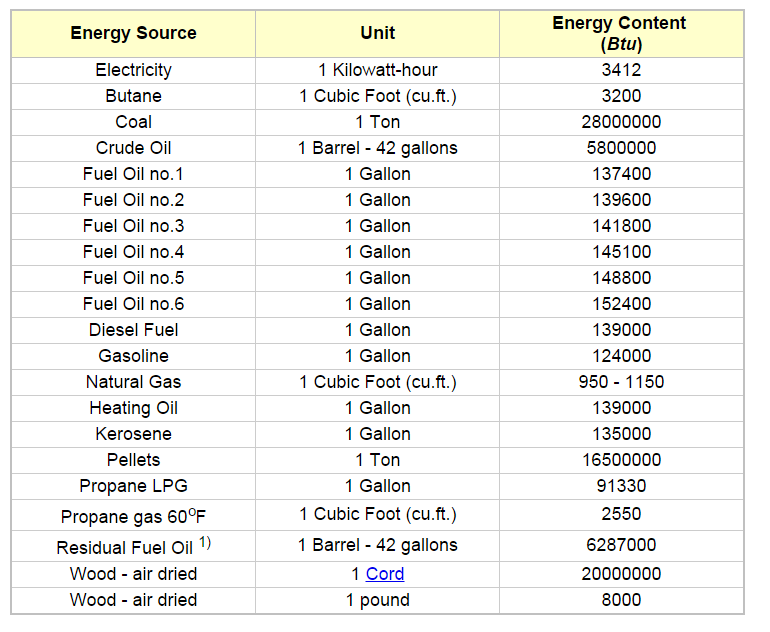
The energy content of gasoline can vary slightly depending on the blend and additives used, but a good rule of thumb is that a gallon of gasoline contains approximately 110,000 to 120,000 BTUs. A common accepted average is 115,000 BTUs. This is a key figure to remember when comparing the energy content of gasoline to other fuels.
Keep in mind that this is a gross heating value. This means it's the total amount of heat released when the gasoline is completely burned. The actual usable energy will be lower due to engine inefficiencies.
Question 3: What factors can affect the actual BTU content of a gallon of gasoline?
Several factors can influence the precise BTU content of a gallon of gasoline:
- Gasoline Grade (Octane Rating): Higher octane gasoline doesn't necessarily mean *more* BTUs. The octane rating indicates resistance to knocking or pre-ignition in the engine. While premium gasoline may have some subtle differences in formulation, the BTU difference is generally negligible.
- Fuel Additives: Additives are often blended into gasoline to improve performance, reduce emissions, or prevent corrosion. These additives can slightly affect the BTU content, but the impact is usually minimal.
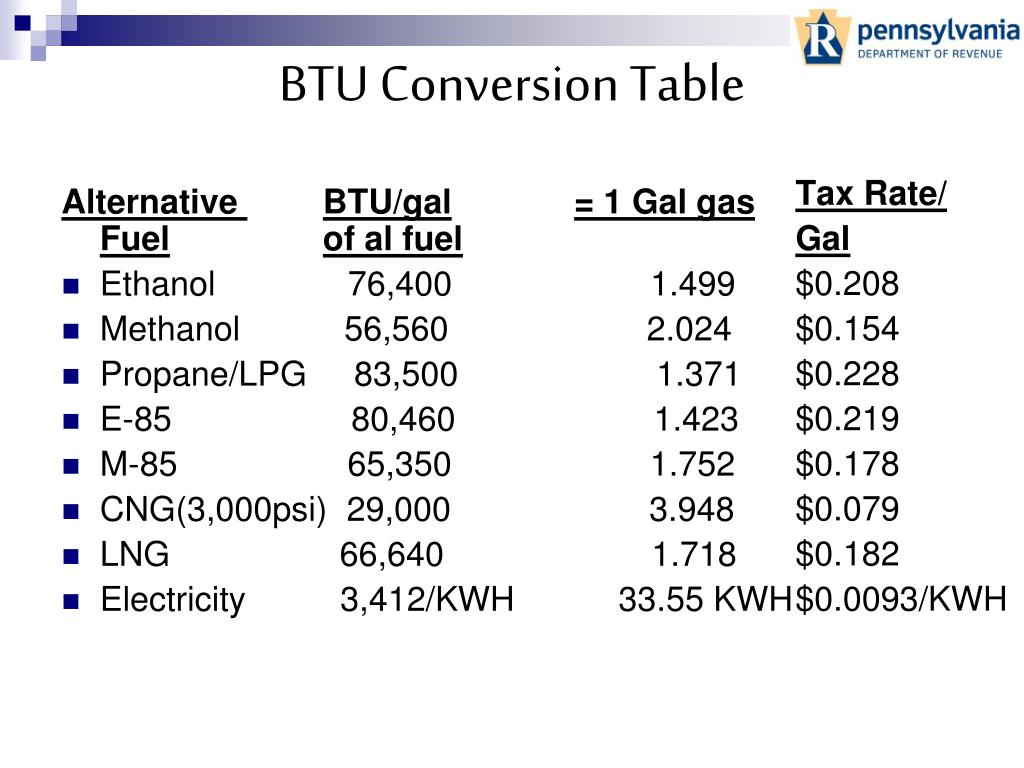
- Ethanol Content: Many gasoline blends contain ethanol, typically up to 10% (E10). Ethanol has a lower energy density than gasoline, so E10 gasoline will have slightly fewer BTUs per gallon compared to pure gasoline. For instance, E10 typically has about 3% less energy than pure gasoline.
- Seasonal Blends: Gasoline formulations often change seasonally to account for temperature variations and environmental regulations. Winter blends typically have a higher Reid Vapor Pressure (RVP) to aid cold starting, and this can affect the BTU content slightly.
- Storage Conditions: Improper storage, such as allowing gasoline to sit for extended periods, can lead to degradation and a reduction in BTU content.
While these factors can cause some variation, the range of 110,000 to 120,000 BTUs per gallon remains a reasonable estimate for most situations.
Question 4: How does the BTU content of gasoline compare to other fuels like diesel, natural gas, or propane?
Comparing the BTU content of different fuels is useful for understanding their relative energy value.
- Diesel: Diesel fuel has a higher energy density than gasoline, typically containing around 139,000 BTUs per gallon. This is one of the reasons why diesel engines generally offer better fuel economy than gasoline engines.
- Natural Gas: Natural gas is typically measured in cubic feet (cf). One cubic foot of natural gas contains approximately 1,000 BTUs. However, it's sold and billed in therms. One therm equals 100,000 BTUs. Therefore, you would need around 87 to 97 cubic feet of natural gas to match the energy in one gallon of gasoline.
- Propane: Propane contains approximately 91,500 BTUs per gallon. This is less than gasoline, but propane is often used for heating and cooking due to its clean-burning characteristics and availability.
- Heating Oil: Heating oil is very similar to diesel fuel, and also has a high BTU content of around 138,500 BTUs per gallon.
Understanding these differences helps you make informed choices about the most cost-effective and efficient fuel for your needs. For instance, you can calculate the cost per BTU for different fuels to determine which offers the best value.
Question 5: How can I use the BTU content of gasoline to estimate fuel consumption and costs?
Knowing the BTU content of gasoline can help you estimate fuel consumption and associated costs. Here's how:
- Determine your appliance's BTU requirements: Check the manufacturer's specifications for the BTU input or output of your gasoline-powered equipment. This information is usually found on a label or in the owner's manual.
- Calculate fuel consumption: Divide the appliance's BTU requirement by the BTU content of gasoline (approximately 115,000 BTUs/gallon). This will give you an estimate of how many gallons of gasoline the appliance will consume per hour (or other unit of time). For example, if a generator requires 23,000 BTUs per hour, it will consume approximately 0.2 gallons of gasoline per hour (23,000 / 115,000 = 0.2).
- Estimate fuel costs: Multiply the estimated fuel consumption by the current price of gasoline. This will give you an approximate cost for running the appliance for a specific period. Using the previous example, if gasoline costs $4.00 per gallon, running the generator for one hour would cost approximately $0.80 (0.2 gallons x $4.00/gallon = $0.80).
Keep in mind that these are just estimates. Actual fuel consumption can vary depending on factors such as load, operating conditions, and maintenance. However, this calculation provides a useful starting point for budgeting and planning.
Question 6: Does the BTU content of gasoline affect my vehicle's fuel efficiency (MPG)?
Yes, the BTU content of gasoline *does* influence your vehicle's fuel efficiency, although it's not the only factor. Since BTUs represent the amount of energy available in the fuel, gasoline with a higher BTU content *theoretically* provides more energy per gallon, potentially leading to better MPG.
However, several other factors significantly impact fuel efficiency, often overshadowing the subtle differences in BTU content between different gasoline blends:
- Driving Habits: Aggressive acceleration, hard braking, and speeding significantly reduce MPG.
- Vehicle Maintenance: Regular maintenance, such as proper tire inflation, oil changes, and air filter replacement, improves fuel efficiency.
- Vehicle Type: The size and weight of the vehicle, as well as the engine design and drivetrain, play a major role in MPG.
- Road Conditions: Hilly terrain, stop-and-go traffic, and headwinds all reduce fuel efficiency.
- Ethanol Content: As mentioned earlier, gasoline blends containing ethanol (e.g., E10) have slightly lower BTU content than pure gasoline. This can result in a small decrease in MPG, typically in the range of 3-4%.
In practical terms, while the BTU content of gasoline is a factor, focusing on good driving habits, proper vehicle maintenance, and choosing the right vehicle for your needs will have a much more significant impact on your MPG than worrying about minor variations in gasoline BTU content.
Question 7: Where can I find more precise information on the BTU content of specific gasoline blends?
Finding *exact* BTU information for specific gasoline blends can be challenging, as this data isn't always readily available to consumers. The precise BTU content is often considered proprietary information by gasoline refiners and distributors.
However, here are some resources that might help:
- Fuel Supplier Websites: Some fuel suppliers may publish information about their gasoline blends, including BTU content, on their websites or in technical specifications documents. Check the websites of major gasoline brands in your area.
- Government Agencies: Government agencies like the Environmental Protection Agency (EPA) or state energy offices may have general information about gasoline properties and regulations, which can indirectly provide insights into BTU content.
- Technical Literature: Engineering textbooks and technical publications related to combustion and fuel properties often discuss the typical BTU values for different types of gasoline.
- Fuel Testing Laboratories: If you need highly precise BTU information for a specific gasoline sample, you can send it to a certified fuel testing laboratory for analysis. However, this is generally only necessary for specialized applications.
- Material Safety Data Sheets (MSDS): While primarily focused on safety information, the MSDS for a gasoline product might contain some data related to its energy content.
Ultimately, remember that the generally accepted range of 110,000 to 120,000 BTUs per gallon provides a reliable approximation for most practical purposes. Unless you have a specific need for extremely precise BTU data, this range should be sufficient for estimating fuel consumption and comparing costs.