How Much Electricity Does Baseboard Heater Use
Baseboard heaters are a common and affordable way to provide supplemental or primary heating for homes and other spaces. But before you rely on them, it’s important to understand their electricity consumption. Here's a breakdown of common questions about the electrical usage of baseboard heaters.
Frequently Asked Questions: Baseboard Heater Electricity Usage
How much electricity does a typical baseboard heater use per hour?
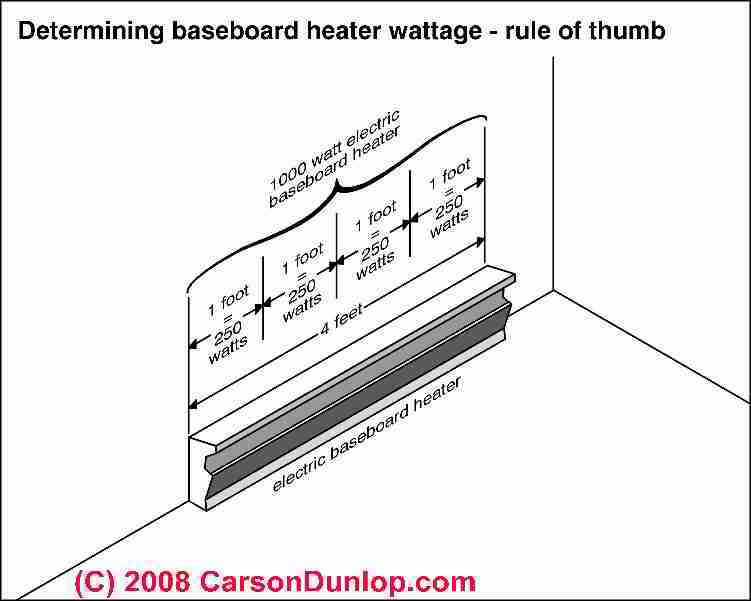
The electricity consumption of a baseboard heater depends primarily on its wattage and how long it runs. Most baseboard heaters range from 500 watts to 1500 watts per linear foot. To calculate hourly usage, you simply divide the wattage by 1000 to convert it to kilowatts (kW). So, a 1500-watt heater uses 1.5 kW per hour.
Example:
- 500-watt heater: 500 watts / 1000 = 0.5 kW per hour
- 750-watt heater: 750 watts / 1000 = 0.75 kW per hour
- 1000-watt heater: 1000 watts / 1000 = 1 kW per hour
- 1500-watt heater: 1500 watts / 1000 = 1.5 kW per hour
Keep in mind that the heater won't run continuously. A thermostat controls the heater, cycling it on and off to maintain the set temperature. Therefore, the actual hourly consumption will be less than the maximum wattage figure.
How much does it cost to run a baseboard heater for an hour?
The cost of running a baseboard heater depends on two factors: the heater's wattage (as discussed above) and the cost of electricity in your area. Electricity costs are measured in kilowatt-hours (kWh). You can find your local electricity rate on your utility bill.
To calculate the cost, multiply the heater's kilowatt usage per hour by the cost per kilowatt-hour.
Formula: (Heater Wattage / 1000) x Cost per kWh = Cost per Hour
Example:
- Let's say you have a 1500-watt heater and your electricity costs $0.15 per kWh.
- (1500 watts / 1000) x $0.15 = 1.5 x $0.15 = $0.225 per hour.
- So, it would cost approximately $0.225 to run the 1500-watt heater for one hour.
Electricity prices vary greatly. In some areas, it might be $0.10 per kWh, while in others it could be $0.30 per kWh or even higher. Always check your local rate for an accurate cost calculation.
How does thermostat setting affect electricity consumption?
The thermostat setting has a significant impact on how much electricity your baseboard heater uses. The thermostat controls when the heater turns on and off to maintain a desired temperature. The higher you set the thermostat, the longer the heater will run, and the more electricity it will consume.
Key Points:
- Lower Thermostat Setting: The heater runs less frequently, consuming less electricity.
- Higher Thermostat Setting: The heater runs more frequently and for longer periods, consuming more electricity.
- Consistent Temperature: Maintaining a constant temperature (instead of frequently adjusting the thermostat) can sometimes be more efficient. Continuously raising the temperature from a lower starting point can require more energy than maintaining a steady state.
A programmable thermostat can help you optimize energy usage by automatically lowering the temperature when you're asleep or away from home. This simple change can lead to considerable savings over time.
Are some baseboard heaters more energy-efficient than others?
While baseboard heaters are generally considered less energy-efficient than other heating options like heat pumps or forced-air furnaces, there are some differences in efficiency among different models and types.
Factors Affecting Efficiency:
- Proper Sizing: Ensure the heater is appropriately sized for the room. An oversized heater will cycle on and off frequently, wasting energy. An undersized heater will run constantly, also wasting energy.
- Quality of Construction: Well-built heaters with good insulation and efficient heating elements will generally perform better.
- Thermostat Accuracy: A more accurate thermostat will prevent the heater from overshooting the desired temperature, reducing energy waste. Digital thermostats are generally more accurate than manual ones.
- Convection Design: Look for heaters with a design that promotes efficient convection. This ensures that heat is distributed evenly throughout the room, reducing the need for the heater to run as long.
Newer models might incorporate features like electronic thermostats, which can be programmed for optimal energy savings. While the core technology of baseboard heating hasn't changed dramatically, improvements in materials and design can lead to small but noticeable improvements in energy efficiency.
How can I reduce the electricity consumption of my baseboard heaters?
There are several strategies you can implement to reduce the electricity consumption of your baseboard heaters and lower your energy bills:
- Lower the Thermostat: Even a degree or two can make a noticeable difference in energy consumption.
- Use a Programmable Thermostat: Set the thermostat to automatically lower the temperature when you're asleep or away.
- Improve Insulation: Properly insulating your home will reduce heat loss, allowing the heaters to run less frequently. Focus on walls, ceilings, floors, and windows.
- Seal Drafts: Seal any cracks or gaps around windows, doors, and other openings to prevent drafts.
- Close Off Unused Rooms: If you have rooms that you don't use regularly, close the doors and turn off the heaters in those rooms.
- Use Supplemental Heating Strategically: Consider using a space heater in smaller areas where you spend most of your time, rather than heating the entire house with baseboard heaters. Ensure the space heater is used safely.
- Regular Maintenance: Clean the fins of the baseboard heaters regularly to remove dust and debris, which can impede heat transfer.
- Optimize Furniture Placement: Don't block the baseboard heaters with furniture, as this will prevent the heat from circulating properly.
- Consider Alternative Heating Solutions: If you're renovating or replacing your heating system, explore more energy-efficient options like heat pumps, which can provide significant savings over time.
What is the difference in energy usage between oil-filled and electric baseboard heaters?
While both oil-filled and standard electric baseboard heaters use electricity to generate heat, there are some subtle differences in their energy usage and how they deliver heat.
Oil-Filled Baseboard Heaters:
- Heat Retention: Oil-filled heaters take longer to heat up initially because they first need to heat the oil inside. However, the oil retains heat for a longer period after the heater is turned off. This means they can radiate heat even when not actively consuming electricity, potentially leading to more consistent temperature and reduced cycling.
- Gentle Heat: They often provide a more gentle, radiant heat compared to the direct heat of standard electric baseboard heaters.
- Efficiency: The overall energy efficiency is often comparable to standard electric baseboard heaters. They are not inherently more or less efficient in terms of converting electricity to heat. The main difference lies in how the heat is distributed and retained.
Standard Electric Baseboard Heaters:
- Faster Heat Up: They heat up more quickly than oil-filled heaters, providing immediate warmth.
- Direct Heat: They provide a more direct, convective heat, which may feel different than the radiant heat of oil-filled heaters.
- Cycling: They tend to cycle on and off more frequently to maintain the set temperature.
Which is more energy efficient? The difference in energy usage is generally not significant. Both types of heaters convert electricity into heat with similar efficiency. The perception of efficiency may vary depending on individual preferences and how the heaters are used. Oil-filled heaters might *feel* more efficient because they continue to radiate heat after the thermostat shuts them off, but they also consume electricity for a longer period to initially heat the oil. The key to minimizing energy consumption with either type is proper thermostat control, insulation, and draft sealing as described previously.
Ultimately, the choice between oil-filled and standard electric baseboard heaters often comes down to personal preference regarding the type of heat they provide and how quickly they heat a room. Energy consumption will largely depend on how they are used and controlled.