How Old Is My Lennox Furnace
Determining the age of your Lennox furnace is crucial for several reasons. Knowing its age helps you estimate its remaining lifespan, understand its energy efficiency compared to newer models, and make informed decisions about potential repairs or replacements. This article will guide you through the process of finding your Lennox furnace's age and discuss related considerations.
Why Knowing Your Furnace Age Matters
Understanding the age of your furnace offers several advantages:
- Lifespan Estimation: Furnaces typically last between 15 and 20 years. Knowing the age helps you anticipate when a replacement might be necessary.
- Efficiency Assessment: Older furnaces are generally less efficient than newer models. Knowing the age allows you to compare its efficiency rating (AFUE) to modern standards and determine potential energy savings from an upgrade.
- Repair vs. Replace Decision: When facing a major repair, the furnace's age is a key factor. If it's nearing the end of its lifespan, investing in a new, more efficient unit might be more cost-effective.
- Home Value: A newer, well-maintained furnace can be a selling point when putting your house on the market.
Locating the Model and Serial Number
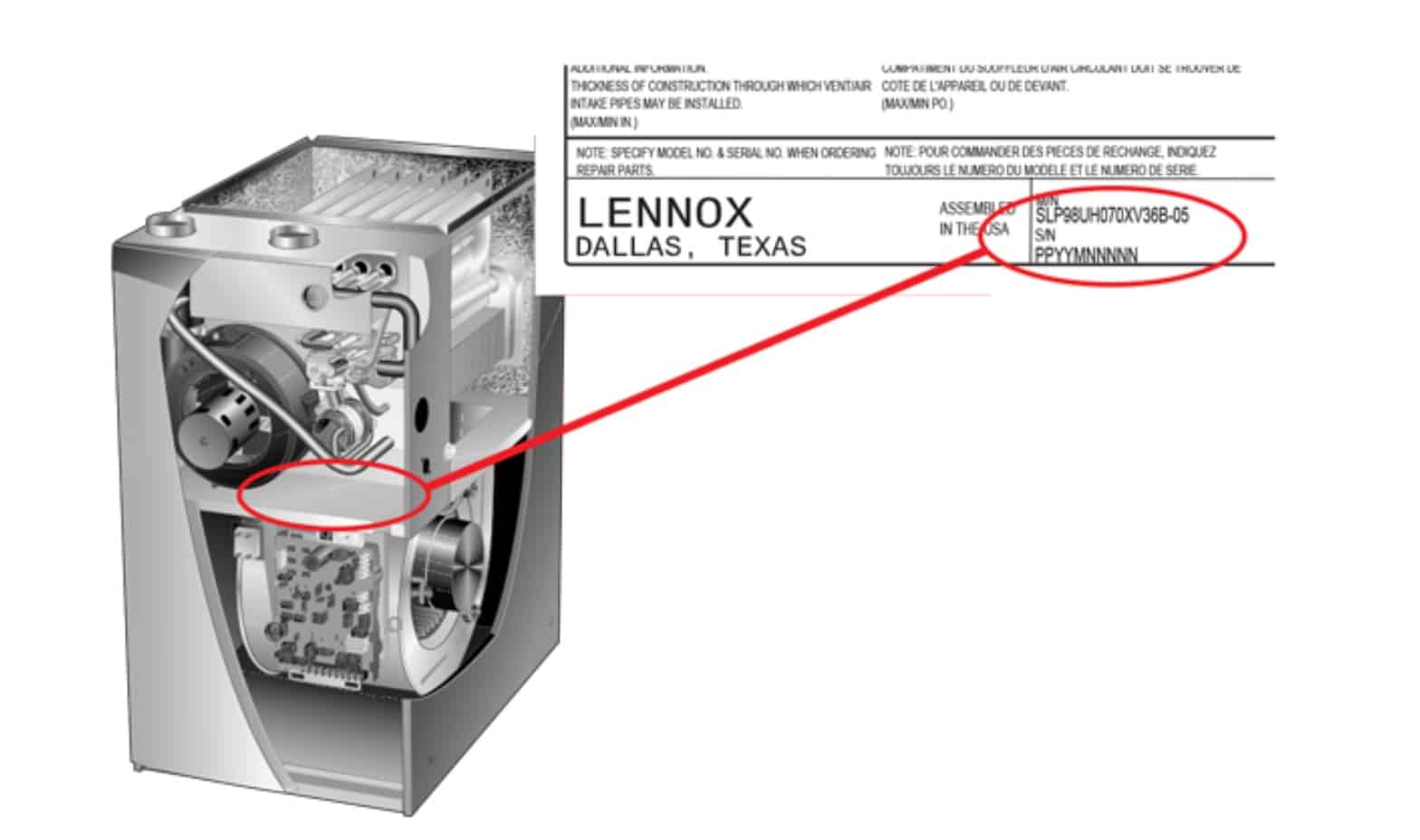
The key to determining your Lennox furnace's age lies in finding its model and serial number. These are usually located on a nameplate affixed to the furnace itself. The nameplate is often found inside the access panel or on the exterior casing. Always turn off the power to the furnace at the breaker box before opening any access panels to ensure safety.
Look for a metallic sticker or plate that contains information like:
- Model Number
- Serial Number
- Manufacturing Date (sometimes directly present)
- BTU Input/Output
- Electrical Specifications
The location of the nameplate can vary slightly depending on the furnace model. Check the following areas:
- Inside the blower compartment
- On the side of the furnace cabinet
- On the back of the furnace cabinet
- Inside the burner compartment (exercise caution when accessing this area)
Once you've located the nameplate, carefully note down the model and serial numbers. Taking a picture of the nameplate with your phone is also a good idea for future reference.
Decoding the Serial Number
Lennox uses a specific encoding system within its serial numbers to indicate the manufacturing date. This system has evolved over time, so understanding which system applies to your furnace is essential. Here's a breakdown of common Lennox serial number formats:
Modern Lennox Serial Number Format (Most Common)
Most Lennox furnaces manufactured in recent decades use a serial number format that includes the year and week of manufacture. A typical serial number might look like this: 'XXXX YYYY WW ZZZZ' where:
- XXXX: Represents a prefix or plant code (not relevant for determining age).
- YYYY: Represents the *year* of manufacture.
- WW: Represents the *week* of manufacture within that year (01-52).
- ZZZZ: Represents a sequential production number.
Example: A serial number of '1234 0508 5678' indicates that the furnace was manufactured in 2005, during the 8th week of the year (late February).
Older Lennox Serial Number Format
Older Lennox furnaces (primarily those manufactured before the 1990s) used a different serial number format. This format often included a single letter representing the year. Referencing a Lennox age chart is necessary to determine the specific year corresponding to that letter. These charts can be found online through Lennox service manuals or HVAC forums. For instance, the letter 'R' might correspond to 1985.
Important Note: The specific format and meaning of the serial number digits may vary slightly depending on the specific Lennox model and year. If you're unsure, consult a Lennox dealer or HVAC professional for assistance.
Using Online Resources
Several online resources can help you determine the age of your Lennox furnace using its model and serial number:
- Lennox Website: The official Lennox website might have a support section where you can input the model and serial number to access product information, including the manufacturing date.
- HVAC Forums: Online HVAC forums often have experienced technicians and homeowners who can help decipher the serial number and provide an estimated age. Be sure to provide both the model and serial number when asking for assistance.
- Third-Party Appliance Age Calculators: Some websites offer generic appliance age calculators that attempt to decode serial numbers. However, these may not be as accurate for Lennox furnaces due to their specific encoding systems.
Contacting a Lennox Dealer or HVAC Professional
The most reliable way to determine the age of your Lennox furnace is to contact a local Lennox dealer or qualified HVAC technician. They have access to Lennox's internal databases and can quickly and accurately determine the manufacturing date based on the model and serial number. Furthermore, they can assess the overall condition of your furnace and advise on its remaining lifespan and efficiency.
When contacting a professional, provide them with the following information:
- Model Number
- Serial Number
- Any other relevant information from the nameplate
Understanding AFUE Ratings and Energy Efficiency
AFUE (Annual Fuel Utilization Efficiency) is a measure of a furnace's efficiency in converting fuel (natural gas, propane, or oil) into usable heat. It's expressed as a percentage. A higher AFUE rating indicates a more efficient furnace. For example, an AFUE of 95% means that 95% of the fuel consumed is converted into heat, while the remaining 5% is lost through exhaust.
Older furnaces often have AFUE ratings in the range of 60% to 80%. Modern high-efficiency furnaces, on the other hand, can have AFUE ratings of 90% or higher. Replacing an older, less efficient furnace with a newer model can result in significant energy savings over time.
The minimum AFUE standard for new furnaces currently stands at 80% in most parts of the United States. However, many homeowners are opting for high-efficiency models with AFUE ratings of 90% or higher to maximize energy savings and reduce their carbon footprint.
Cost Considerations: Repair vs. Replace
When your Lennox furnace experiences a major breakdown, you'll need to decide whether to repair it or replace it. Several factors should be considered, including:
- Age of the Furnace: If the furnace is nearing the end of its expected lifespan (15-20 years), replacement is often the more sensible option.
- Cost of Repair: Obtain quotes from multiple HVAC technicians to assess the cost of the repair. If the repair cost is significant (e.g., more than 50% of the cost of a new furnace), replacement should be seriously considered.
- AFUE Rating: Compare the AFUE rating of your existing furnace to that of a new, high-efficiency model. The potential energy savings from a new furnace can offset the initial cost over time.
- Warranty: Check if your existing furnace is still under warranty. If so, the repair costs might be covered.
- Frequency of Repairs: If your furnace has required frequent repairs in recent years, it's a sign that it's nearing the end of its lifespan and should be replaced.
Example: Let's say your 18-year-old Lennox furnace requires a $1,500 repair. A new high-efficiency furnace might cost $4,000 installed but could save you $300-$500 per year in energy costs. In this scenario, replacement is likely the better long-term investment.
Extending the Lifespan of Your Lennox Furnace
Proper maintenance can significantly extend the lifespan and improve the efficiency of your Lennox furnace. Here are some key maintenance tasks:
- Regular Filter Changes: Change the furnace filter every 1-3 months, depending on the type of filter and the air quality in your home. A clogged filter restricts airflow and reduces efficiency.
- Annual Professional Tune-Up: Schedule an annual tune-up with a qualified HVAC technician. They will inspect and clean the furnace, check for any potential problems, and ensure that it's operating safely and efficiently.
- Clean the Blower: Periodically clean the blower fan to remove dust and debris. This improves airflow and prevents the motor from overheating.
- Inspect the Flue Pipe: Check the flue pipe for any signs of corrosion or damage. A damaged flue pipe can leak dangerous carbon monoxide into your home.
- Clear the Area Around the Furnace: Keep the area around the furnace clear of obstructions to ensure proper airflow.
By understanding the age of your Lennox furnace and implementing a proper maintenance plan, you can maximize its lifespan, improve its efficiency, and ensure the comfort and safety of your home.