How To Calculate Hvac Duct Size

Maintaining a comfortable home temperature is crucial, and the ductwork in your HVAC system plays a vital role in achieving that. Properly sized ducts ensure efficient airflow, even temperatures, and reduced energy costs. This guide provides a step-by-step approach to calculating HVAC duct size, empowering you to understand the fundamentals and potentially diagnose issues, though professional installation is always recommended.
Understanding the Basics
Before diving into calculations, let's grasp the core concepts:
- CFM (Cubic Feet per Minute): This measures the volume of air flowing through the ductwork. Your HVAC system's capacity, measured in BTUs, directly influences the required CFM.
- Velocity (Feet per Minute): This is the speed of the air traveling through the duct. Higher velocity can lead to noise and increased friction loss.
- Friction Rate: Represents the resistance to airflow within the duct. It's influenced by duct material, length, and the number of bends and fittings.
- Static Pressure: The pressure exerted by the air within the duct. An imbalance can affect the system's performance.
Step 1: Determine Your HVAC System's CFM Requirements
The first and most crucial step is to determine the CFM required by your HVAC system. This is directly related to the cooling and heating capacity of your unit.
Finding the CFM for Cooling (Air Conditioning)
Generally, a rule of thumb for cooling is 400 CFM per ton of air conditioning capacity. Here's how to calculate:
- Identify Your AC Unit's Tonnage: This is usually printed on the unit's nameplate, located on the outdoor condenser unit. It might be expressed as 1.5 tons, 2 tons, 3 tons, etc.
- Calculate Total CFM: Multiply the tonnage by 400. For example, a 3-ton AC unit would require 3 tons * 400 CFM/ton = 1200 CFM.
Example: If you have a 2.5-ton AC unit, your required CFM would be 2.5 * 400 = 1000 CFM.
Finding the CFM for Heating (Furnace)
The CFM for heating can be slightly different. You'll need to look at the furnace's BTU output and a temperature rise.
- Find the Furnace's BTU Output: This information is on the furnace's nameplate, usually listed as BTU/Hr (BTU per hour).
- Determine the Temperature Rise: This is the difference between the return air temperature and the supply air temperature. It's usually between 40-70 degrees Fahrenheit. Consult your furnace's manual for the recommended temperature rise.
- Calculate CFM: Use the following formula: CFM = BTU/Hr / (1.08 * Temperature Rise).
Example: A furnace with 80,000 BTU/Hr output and a recommended temperature rise of 60 degrees Fahrenheit would have a CFM of 80,000 / (1.08 * 60) = approximately 1235 CFM.
Step 2: Design Your Ductwork Layout
Before calculating duct sizes, you need a basic understanding of your ductwork layout. Consider these factors:
- Main Trunk Line: This is the largest duct extending from the furnace or air handler.
- Branch Ducts: These smaller ducts branch off from the main trunk and deliver air to individual rooms.
- Return Air Ducts: These ducts bring air back to the furnace or air handler to be conditioned.
- Fittings: Elbows, tees, reducers, and other fittings create resistance to airflow and must be considered.
Create a simple sketch of your ductwork layout, noting the approximate length of each duct run and the number and type of fittings.
Step 3: Determine Air Velocity
Choosing an appropriate air velocity is crucial for balancing airflow and noise. Higher velocities can lead to noisy ductwork, while lower velocities may result in insufficient airflow.
Here are some recommended air velocities:
- Main Trunk Lines: 700-900 feet per minute (FPM)
- Branch Ducts: 600-800 FPM
- Return Air Ducts: 500-700 FPM
For residential applications, staying within these ranges will typically provide a good balance between airflow and noise.
Step 4: Calculate Duct Size Using the Velocity Method
The velocity method is a common approach for calculating duct size. It involves using the CFM requirement and the chosen air velocity to determine the required duct area.
Calculating Duct Area
The formula for calculating duct area is:
Area (square feet) = CFM / Velocity (FPM)
Example: If you need 1000 CFM and choose a velocity of 800 FPM for a branch duct, the required duct area would be 1000 / 800 = 1.25 square feet.
Converting Duct Area to Duct Dimensions
Once you have the required duct area, you need to convert it into actual duct dimensions (e.g., diameter for round ducts or width and height for rectangular ducts).
Round Ducts
The formula to find the diameter of a round duct is:
Diameter (inches) = Square Root of (Area (square feet) * 144 / π) * 2
(Where π (pi) is approximately 3.14159)
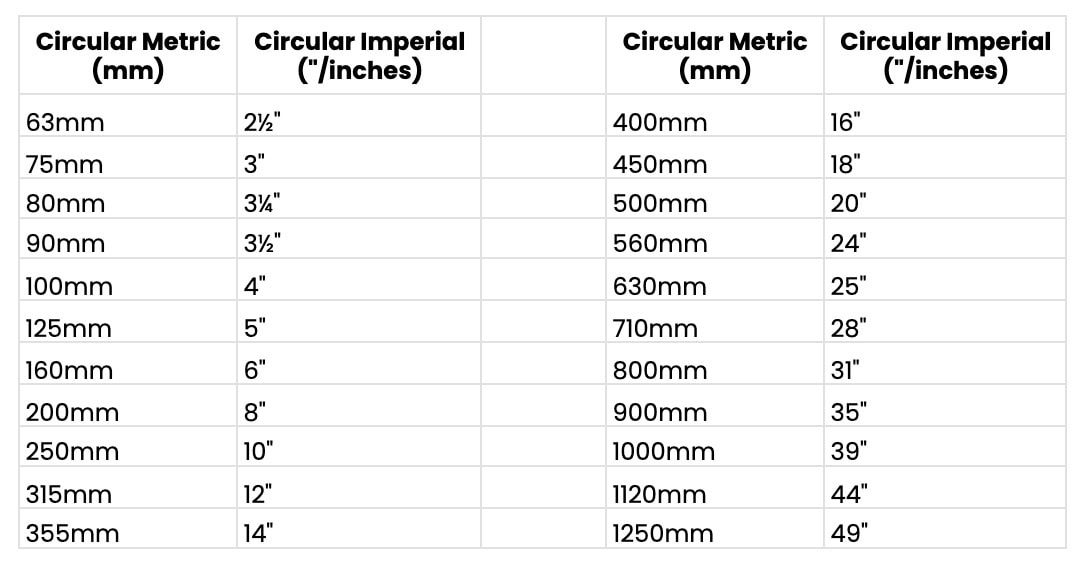
Example: Using the previous example with an area of 1.25 square feet, the diameter would be: Square Root of (1.25 * 144 / 3.14159) * 2 = approximately 15.1 inches. You would typically round this up to the nearest standard duct size, which might be 16 inches.
Rectangular Ducts
For rectangular ducts, you need to choose an aspect ratio (the ratio of width to height). A common aspect ratio is 3:1 or 4:1. Avoid very high aspect ratios, as they can lead to increased friction loss.
Let's say you want a duct with a 3:1 aspect ratio (width is three times the height). You can use these steps:
- Assume a Height (H): Start by assuming a height for the duct.
- Calculate the Width (W): Width = 3 * Height.
- Calculate the Area: Area = Width * Height. Make sure to convert the area to square feet. (divide square inches by 144)
- Adjust if Needed: Compare the calculated area to the required area from the velocity method. If the calculated area is too small, increase the assumed height and repeat steps 2 and 3. If the calculated area is too large, decrease the assumed height and repeat.
Example: You need 1.25 square feet, and want a 3:1 aspect ratio.
- Assume H = 6 inches. W = 3 * 6 = 18 inches.
- Area = 6 * 18 = 108 square inches.
- Area in square feet: 108 / 144 = 0.75 square feet. This is less than the required 1.25 square feet.
- Increase H to 8 inches. W = 3 * 8 = 24 inches.
- Area = 8 * 24 = 192 square inches.
- Area in square feet: 192 / 144 = 1.33 square feet. This is slightly larger than the required 1.25 square feet. You could adjust slightly smaller, or use this size, accounting for some minor loss.
- Therefore, an 8 inch by 24-inch rectangular duct would be a suitable size.
Step 5: Consider Friction Rate and Static Pressure (Advanced)
The previous steps provide a basic understanding of duct sizing. For more accurate calculations, especially in larger or more complex systems, you need to consider friction rate and static pressure.
Friction Rate
Friction rate is the pressure drop per 100 feet of duct length. It depends on the duct material (e.g., sheet metal, fiberglass), the number of bends and fittings, and the air velocity. HVAC design software or duct calculators typically provide friction rate charts based on these factors.
Static Pressure
Static pressure is the pressure exerted by the air within the ductwork. High static pressure can strain the HVAC system and reduce its efficiency. You need to ensure the total static pressure of the duct system is within the manufacturer's specifications for your equipment.
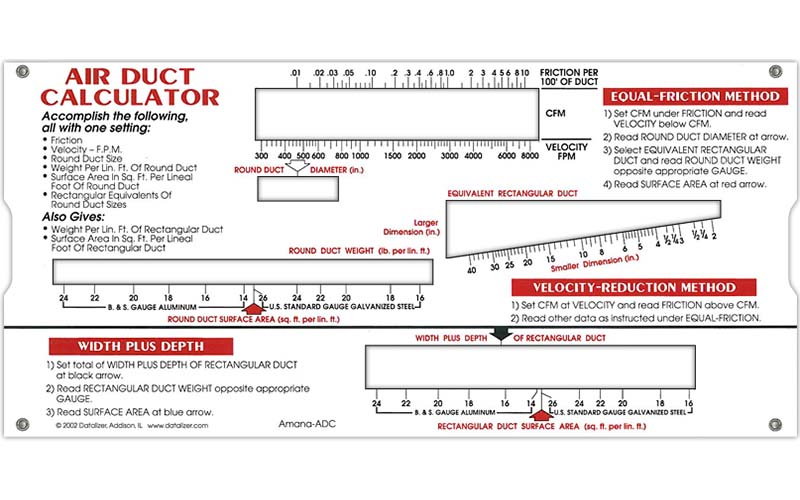
Calculating static pressure drop involves accounting for the friction rate in each duct section, plus the pressure drop across fittings and equipment (e.g., air filter, coils). This often involves using ductulator tools or specialized HVAC software.
Note: Friction rate and static pressure calculations can be complex and are best left to experienced HVAC professionals.
Important Considerations and When to Call a Professional
- Local Building Codes: Always check your local building codes for specific requirements regarding duct sizing and installation.
- Equipment Manufacturer's Specifications: Consult your HVAC equipment manufacturer's specifications for recommended duct sizes and static pressure limits.
- Complex Systems: For large homes, multi-zone systems, or complex duct layouts, it's highly recommended to consult a qualified HVAC professional.
- Insulation: Ensure that ducts are properly insulated, especially in unconditioned spaces, to minimize heat loss or gain.
- Sealing: Seal all duct joints and seams with duct sealant or foil tape to prevent air leaks. Leaks can significantly reduce system efficiency.
DIY vs. Professional Installation
While understanding duct sizing principles can empower you to diagnose issues and potentially make minor adjustments, complete ductwork design and installation are best left to experienced HVAC professionals. They have the expertise, tools, and knowledge to ensure proper sizing, efficient airflow, and compliance with building codes.
Attempting to install or modify ductwork without proper knowledge can lead to:
- Reduced System Efficiency: Improperly sized ducts can cause the system to work harder, increasing energy costs.
- Uneven Temperatures: Some rooms may be too hot or too cold.
- Increased Noise: High air velocity through undersized ducts can generate noise.
- Equipment Damage: Excessive static pressure can damage the HVAC equipment.
- Potential Safety Hazards: Poorly installed ductwork can contribute to carbon monoxide leaks or fire hazards.
This guide provides a foundation for understanding HVAC duct sizing. By understanding these principles, you can better communicate with HVAC professionals and make informed decisions about your home's comfort and energy efficiency. When in doubt, always consult with a qualified HVAC contractor.