How To Calculate Volume Of Room
Ever wondered how much space is *actually* in your living room? Knowing the volume of a room isn't just a random fact. It's surprisingly practical! From figuring out the right size air conditioner or dehumidifier to calculating paint needs or even optimizing your sound system, the room's volume is a key piece of information.
Why Calculate Room Volume?
Understanding room volume helps you make informed decisions in many areas:
- HVAC Sizing: Choosing the right BTU (British Thermal Units) for air conditioners and heaters depends directly on room volume. An undersized unit will struggle to cool or heat effectively, while an oversized unit will cycle on and off too frequently, wasting energy and potentially damaging the equipment.
- Humidifiers and Dehumidifiers: Similar to HVAC, these appliances are designed for specific room sizes. Volume helps ensure efficient moisture control.
- Painting and Wallpaper: While surface area is important for calculating the amount of paint or wallpaper, knowing the volume can help estimate primer needs and overall material quantities, especially for textured finishes.
- Soundproofing and Acoustics: Volume plays a crucial role in acoustic calculations for home theaters or music rooms.
- Gardening Indoors: If you are setting up indoor growing tents, you need to know the volume to ensure proper air exchange and ventilation.
The Basic Formula: Length x Width x Height
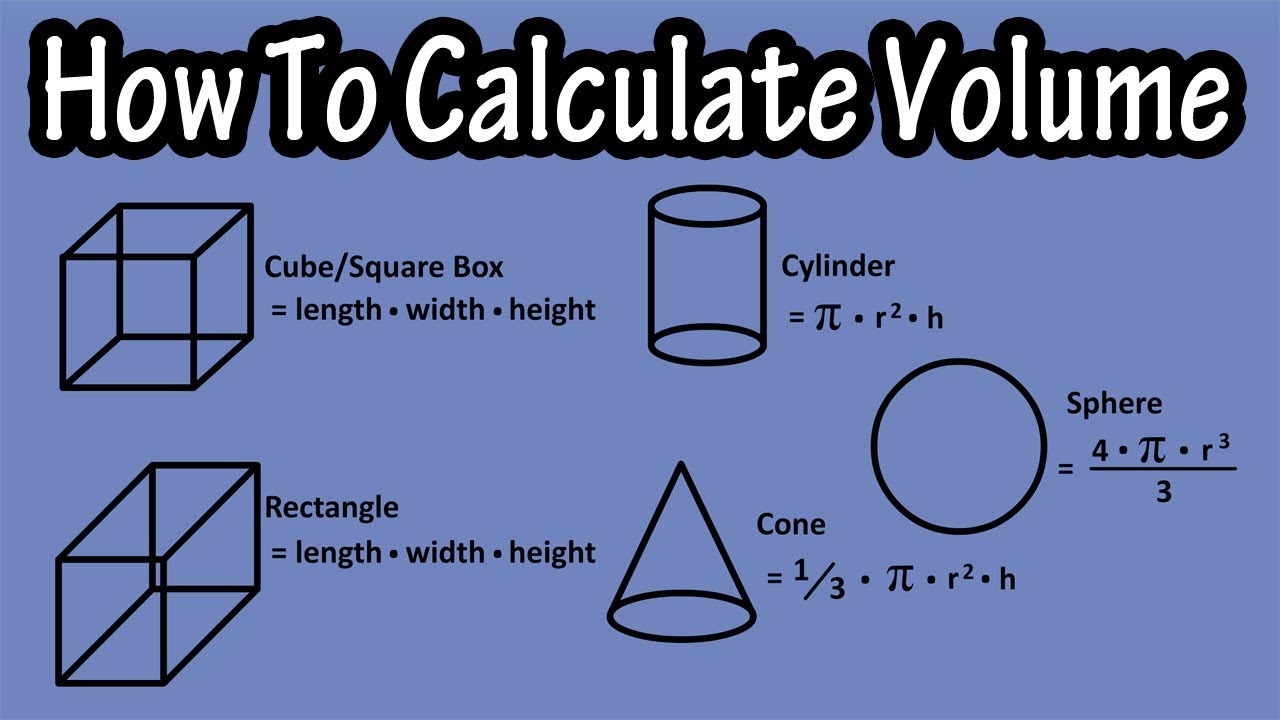
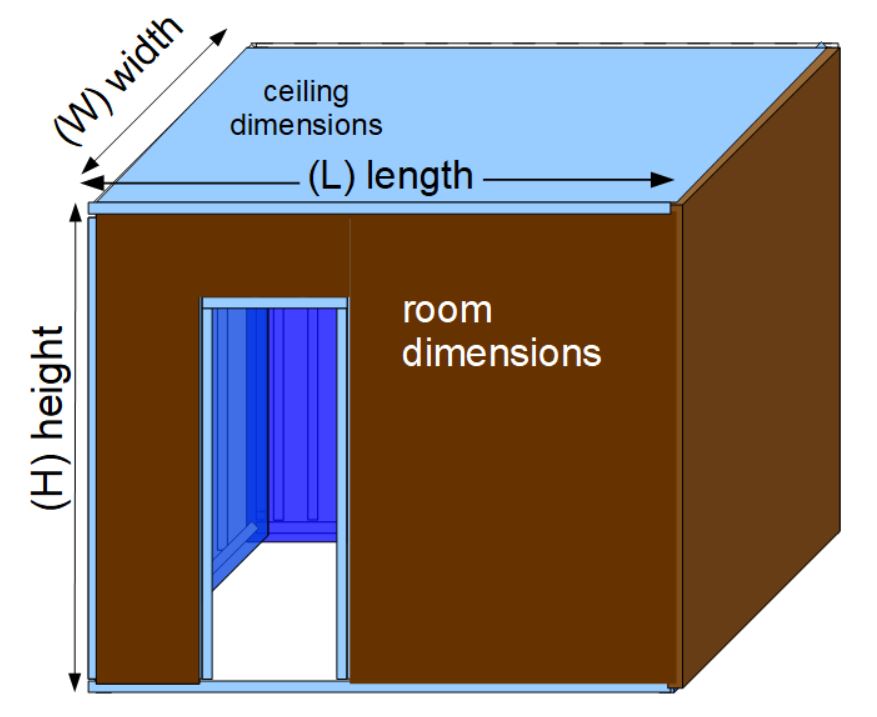
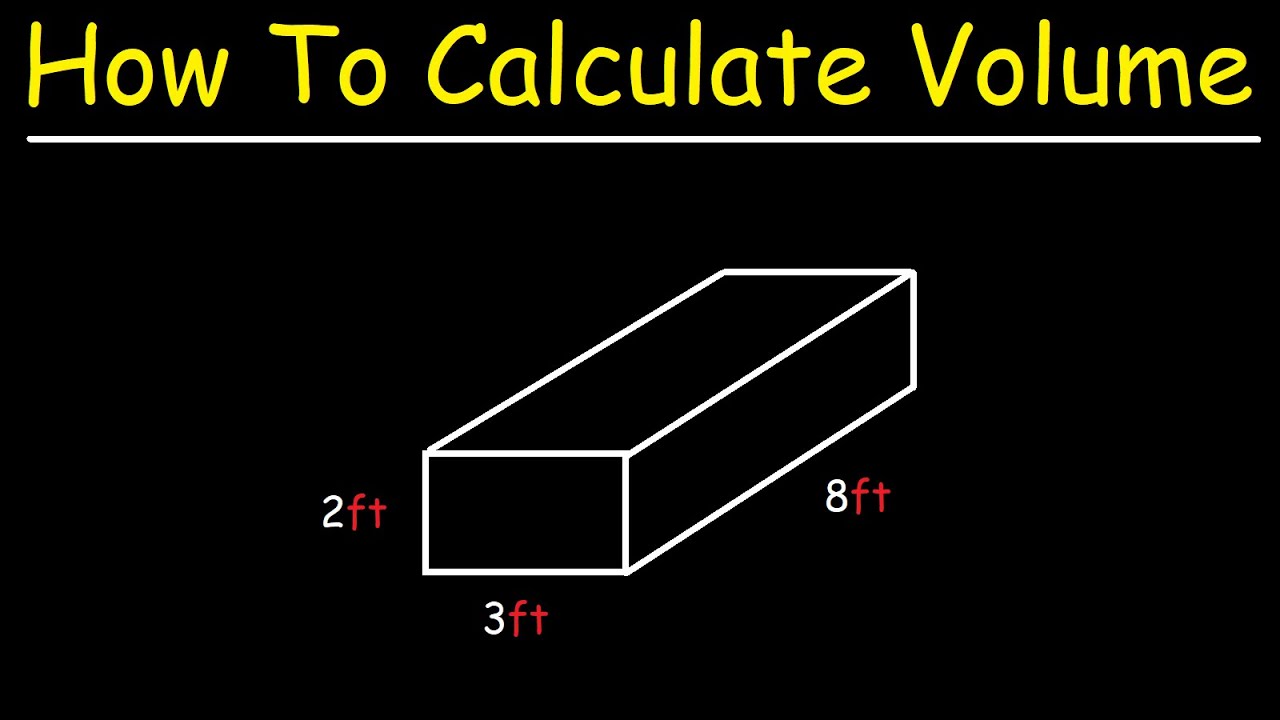
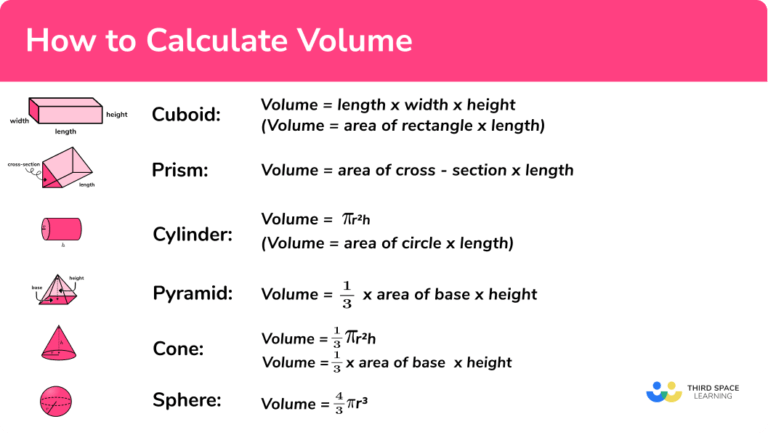
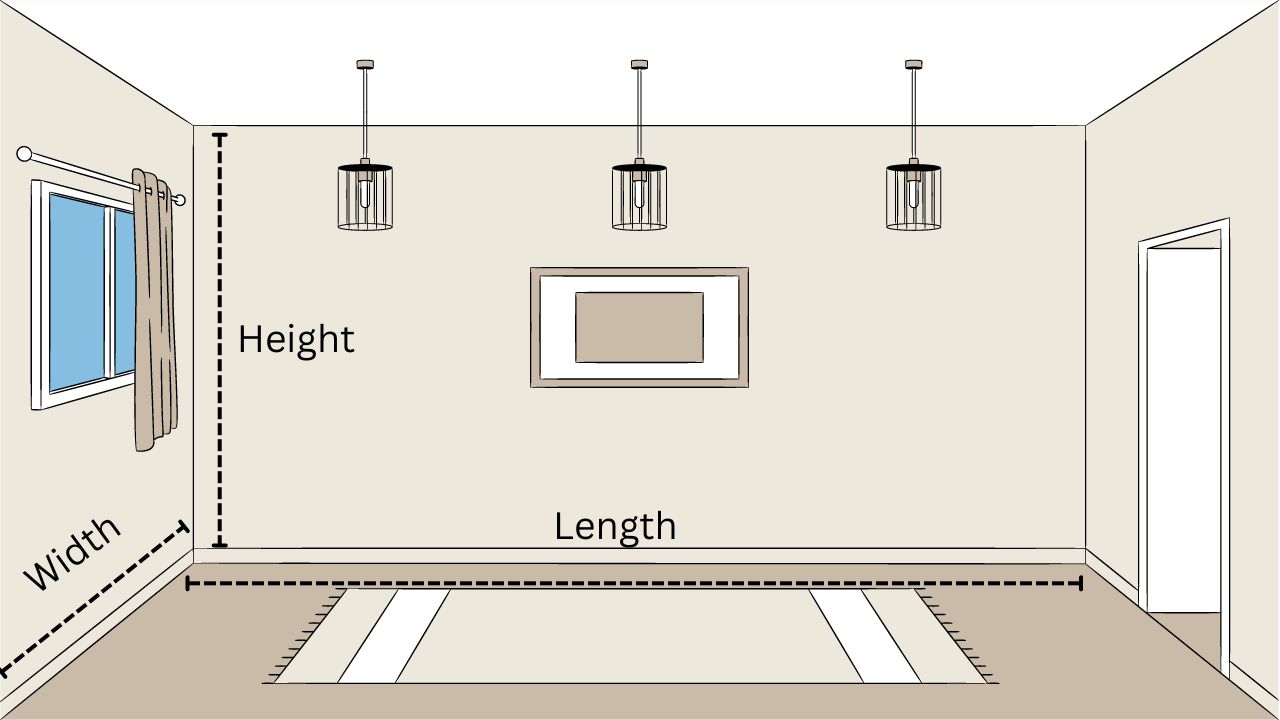
The most common and straightforward way to calculate room volume is using the formula: Volume = Length x Width x Height. Let's break down each step with a real-world example.
Step 1: Measure the Length
Use a measuring tape (a metal one is best for accuracy) to determine the length of the room. Measure from one wall to the opposite wall, making sure the tape is straight and level. Accuracy is key! Round to the nearest inch or centimeter, depending on your preferred unit of measurement.
Example: Let's say our living room is 15 feet long.
Step 2: Measure the Width
Next, measure the width of the room, again from one wall to the opposite wall, perpendicular to your length measurement. Ensure your measuring tape is straight and taut.
Example: Our living room is 12 feet wide.
Step 3: Measure the Height
Measure the height of the room from the floor to the ceiling. If the ceiling is not uniformly level, take several measurements in different spots and calculate the average height. This will provide a more accurate representation of the room's overall height.
Example: Our living room has a standard ceiling height of 8 feet.
Step 4: Calculate the Volume
Now, simply multiply the length, width, and height together:
Volume = 15 feet x 12 feet x 8 feet = 1440 cubic feet.
Therefore, the volume of our example living room is 1440 cubic feet.
Dealing with Irregular Room Shapes
Not all rooms are perfect rectangles! Many have alcoves, bay windows, or other irregular features. Here's how to handle those complexities:
Breaking Down Complex Shapes
The key is to divide the room into smaller, more manageable rectangular (or cubic) sections. Calculate the volume of each section separately, and then add the volumes together to get the total volume.
Example: Room with an Alcove
- Main Room: Measure the length, width, and height of the main rectangular portion of the room. Calculate its volume as described above.
- Alcove: Measure the length, width, and height of the alcove. Calculate its volume.
- Total Volume: Add the volume of the main room and the volume of the alcove to get the total room volume.
Dealing with Sloped Ceilings
Sloped ceilings add another layer of complexity. Here are a couple of methods to consider:
- Average Height Method: Measure the height at the tallest point of the ceiling and the height at the shortest point. Add these two measurements together and divide by 2 to get the average height. Use this average height in the standard volume formula. This method provides a reasonable approximation.
- Prism/Wedge Method (More Accurate): Imagine the sloped ceiling creates a triangular prism (or wedge) on top of a rectangular room. Calculate the volume of the rectangular portion as usual. Then, calculate the volume of the prism: Volume of Prism = 0.5 x Base Area x Height (where the base area is the triangular face of the prism and the height is the length of the room). Add the prism volume to the rectangular portion volume.
Bay Windows
Bay windows typically form a semi-circle or a polygon extending outwards from the main room. You can approximate their volume by:
- Estimating as a Rectangle: Measure the approximate length, width, and height of the bay window area as if it were a rectangular extension. This gives you a rough estimate.
- Breaking into Simpler Shapes: If the bay window has a distinct shape (e.g., a trapezoid), use the appropriate geometric formula to calculate its area, then multiply by the height to get the volume.
Using Online Volume Calculators
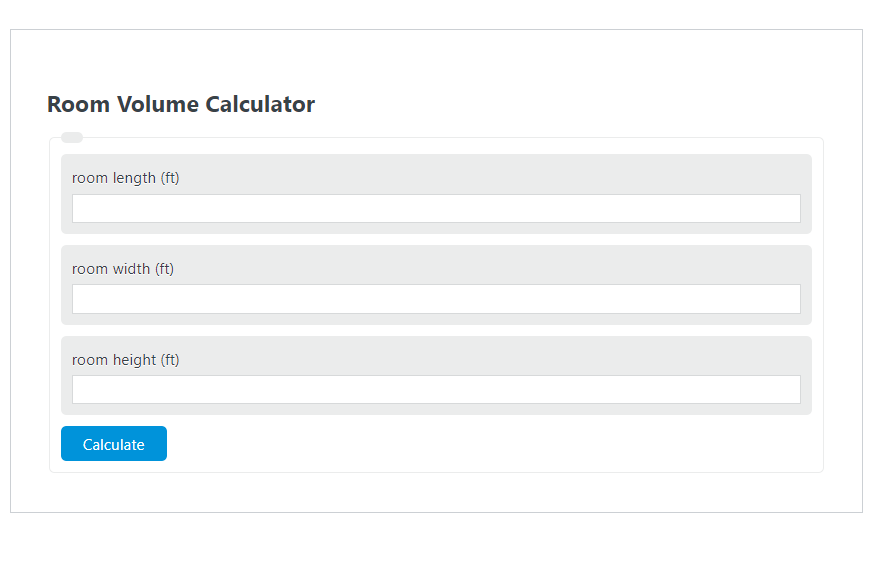
If math isn't your strong suit or you want to double-check your calculations, there are many free online room volume calculators available. Simply enter the length, width, and height measurements, and the calculator will do the rest. Remember to double-check that the calculator is using the correct units (feet, meters, etc.).
Units of Measurement: Cubic Feet vs. Cubic Meters
The unit of measurement for volume is always cubic – meaning length units cubed (raised to the power of 3). The most common units are:
- Cubic Feet (ft³): Predominantly used in the United States.
- Cubic Meters (m³): Widely used in countries that use the metric system.
Make sure you are using the correct unit for your application. If you need to convert between cubic feet and cubic meters, you can use an online unit converter.
1 cubic meter = 35.3147 cubic feet (approximately)
Practical Applications: Sizing Your Air Conditioner
Let's say you need to buy a new air conditioner for your living room. Air conditioners are rated in BTUs (British Thermal Units), which indicates their cooling capacity. A general rule of thumb is that you need about 20 BTUs per cubic foot of space.
Using our example living room with a volume of 1440 cubic feet:
Required BTU = 1440 cubic feet x 20 BTU/cubic foot = 28,800 BTU.
Therefore, you would need an air conditioner with a cooling capacity of approximately 28,800 BTUs. Note that this is a general guideline; factors like insulation, window size, and sun exposure can affect the actual BTU requirement. It's always wise to consult with an HVAC professional for personalized recommendations.
Tips for Accurate Measurements
Getting accurate measurements is crucial for accurate volume calculations. Here are some helpful tips:
- Use a good quality measuring tape: A metal measuring tape is more accurate and less likely to stretch than a cloth tape measure.
- Measure straight and level: Ensure the measuring tape is straight and level when taking measurements. Sagging or angled tapes will lead to inaccurate results.
- Take multiple measurements: For irregular surfaces, take several measurements and calculate the average.
- Round consistently: Choose a consistent rounding strategy (e.g., round to the nearest inch or centimeter) and stick to it throughout the process.
- Double-check your work: It's always a good idea to double-check your measurements and calculations to catch any errors.
Common Mistakes to Avoid
Here are some common pitfalls to watch out for when calculating room volume:
- Incorrect Units: Mixing feet and inches or meters and centimeters can lead to significant errors. Always ensure all measurements are in the same unit before calculating the volume.
- Ignoring Irregular Shapes: Failing to account for alcoves, bay windows, or sloped ceilings will result in an inaccurate volume calculation.
- Inaccurate Measurements: Careless or rushed measurements are a common source of error. Take your time and double-check your work.
- Using the Wrong Formula: Make sure you are using the correct formula for the shape of the room or section you are calculating.
- Forgetting About Obstacles: Large furniture, built-in structures, or other obstacles may slightly reduce the usable volume of the room. While usually not a major factor, consider this if precision is paramount.
Beyond Simple Calculations: When to Call a Professional
While calculating room volume is generally straightforward, there are situations where professional help is recommended:
- Complex Architectural Features: Rooms with highly irregular shapes, vaulted ceilings with intricate designs, or unconventional architectural elements may require specialized tools and expertise for accurate volume calculation.
- Critical Applications: If the volume calculation is for a critical application, such as designing a high-performance sound system or optimizing energy efficiency in a commercial building, it's best to consult with an expert.
- Uncertainty or Lack of Confidence: If you are unsure about any aspect of the calculation or lack confidence in your ability to obtain accurate results, don't hesitate to seek professional assistance.
In conclusion, calculating room volume is a valuable skill for any homeowner. By following the simple steps outlined in this guide and avoiding common mistakes, you can confidently determine the volume of your rooms and use this information to make informed decisions about HVAC, home improvement, and more.