How To Check A Capacitor With A Meter

Capacitors are essential components in many HVAC systems, playing a critical role in starting and running motors for compressors, fans, and pumps. A failing capacitor can lead to system inefficiencies, reduced performance, or complete system failure. Therefore, knowing how to properly test a capacitor with a meter is a crucial skill for HVAC technicians. This article provides a comprehensive guide on capacitor testing, relevant career information, and industry insights.
Understanding Capacitors in HVAC Systems
Capacitors store electrical energy and release it during motor startup, providing the extra "kick" needed to overcome initial inertia. They also help improve the power factor of the system, making it more energy-efficient. There are primarily two types of capacitors used in HVAC: start capacitors and run capacitors. Start capacitors provide a short burst of energy for starting motors and are quickly taken out of the circuit. Run capacitors, on the other hand, are continuously in the circuit, helping the motor run more efficiently. Identifying the type of capacitor is the first step in proper testing.
Tools and Safety Precautions
Before testing any capacitor, gather the necessary tools and understand the safety precautions. You will need:
- A digital multimeter with capacitance testing capabilities
- Insulated screwdrivers
- Safety glasses
- Insulated gloves
Safety First: Capacitors store electrical charge even when the power is off. Always discharge the capacitor before handling or testing it. Use an insulated screwdriver to short across the terminals. Exercise extreme caution to avoid electrical shock. Disconnect the power to the HVAC unit at the breaker box before beginning any work.
Testing a Capacitor with a Multimeter: Step-by-Step Guide
Here's a detailed guide to testing capacitors using a digital multimeter:
Step 1: Disconnect and Discharge
As mentioned, disconnect the power supply to the HVAC unit and locate the capacitor you want to test. Using an insulated screwdriver, carefully short across the capacitor terminals to discharge any stored energy. Repeat this step a couple of times to ensure full discharge.
Step 2: Visual Inspection
Before testing, visually inspect the capacitor for any signs of damage such as bulging, leaking, or cracking. A physically damaged capacitor is likely faulty and should be replaced regardless of meter readings.
Step 3: Setting Up the Multimeter
Turn on your digital multimeter and set it to the capacitance (µF or microfarads) setting. Some multimeters have an auto-ranging feature, while others require you to select the appropriate range manually. Refer to your multimeter's manual for specific instructions.
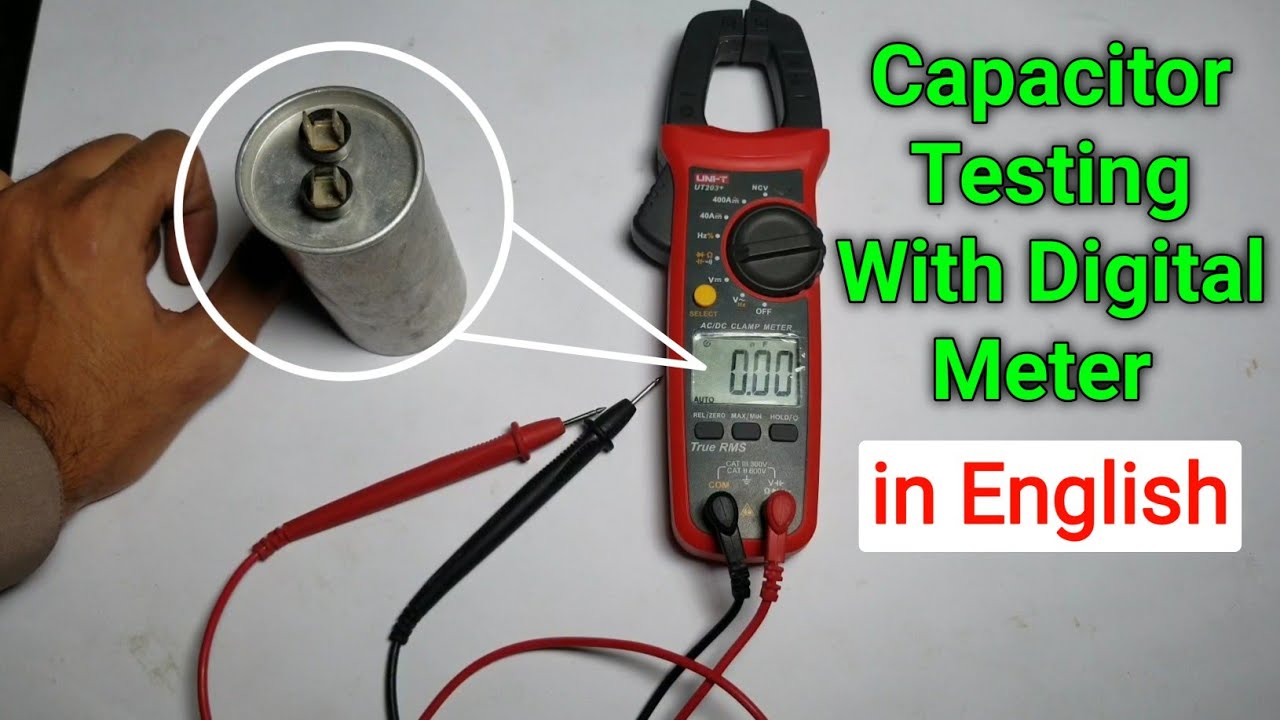
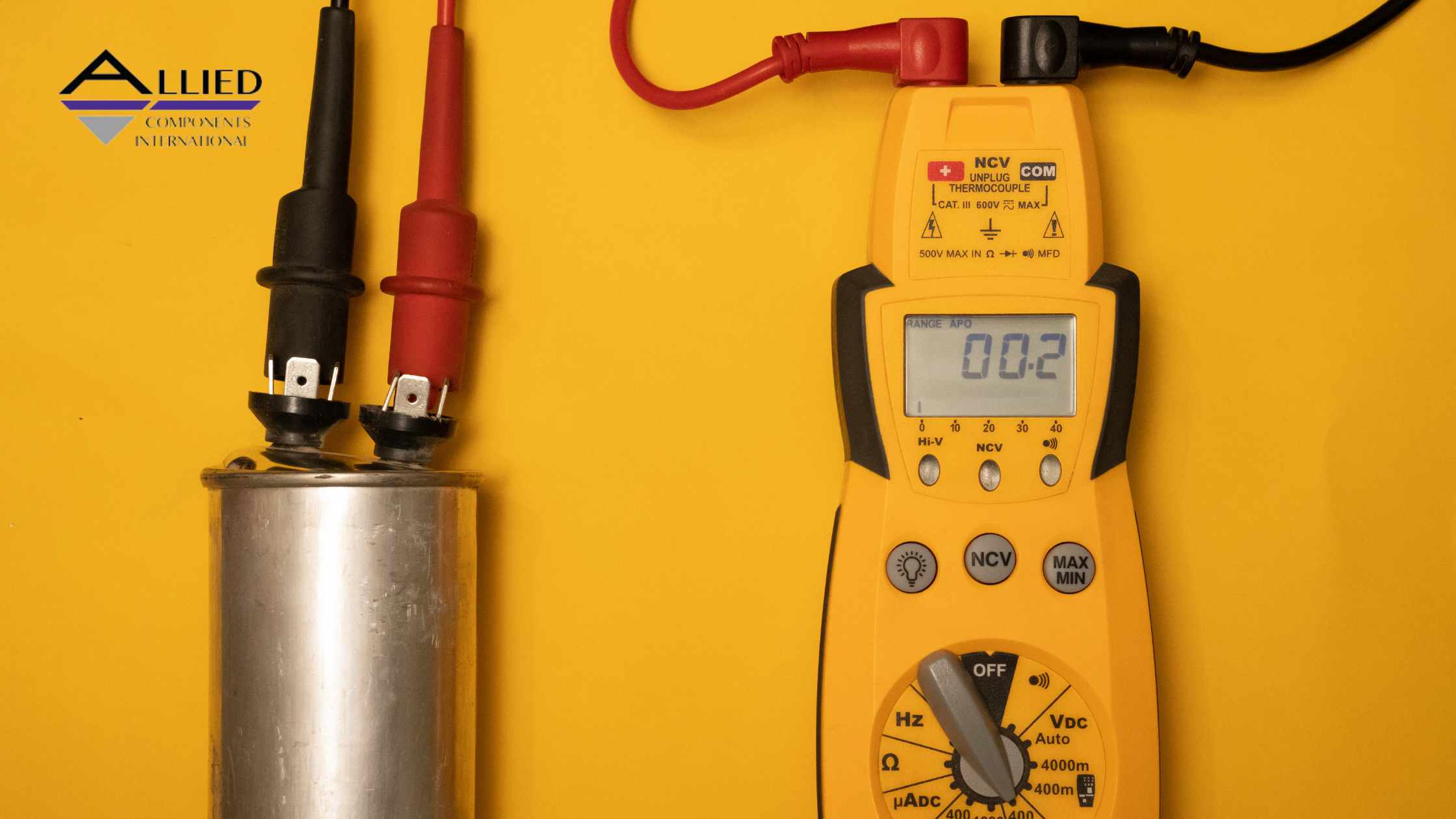
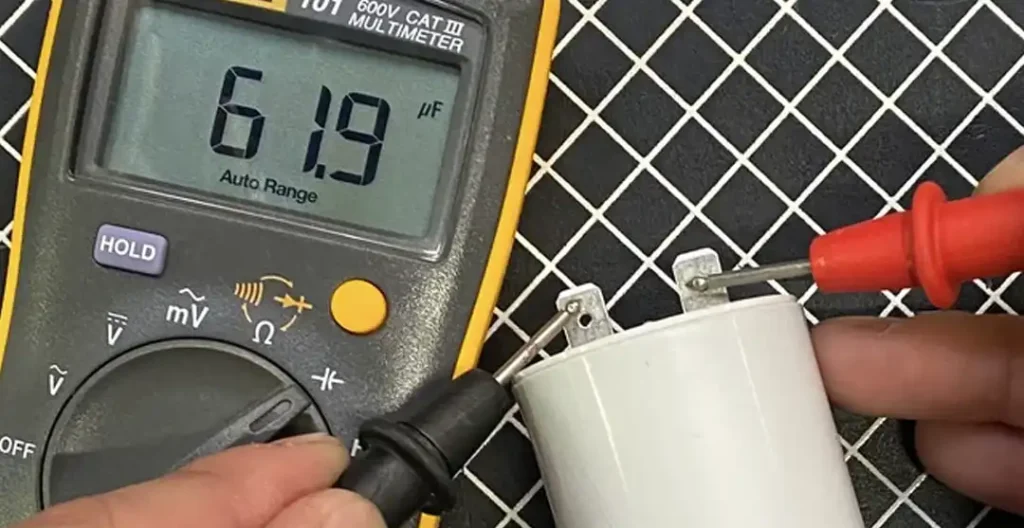
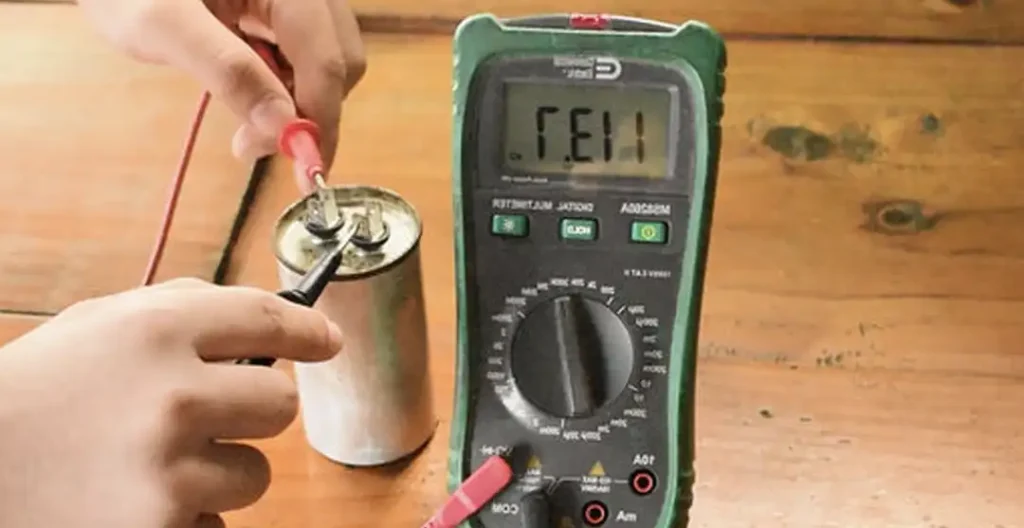
Step 4: Connecting the Meter
Disconnect the wires connected to the capacitor terminals. This is important to isolate the capacitor for accurate testing. Connect the multimeter probes to the capacitor terminals. Polarity doesn't matter for most HVAC capacitors, but be mindful of any specific markings on the capacitor itself.
Step 5: Reading the Measurement
Observe the reading on the multimeter. Compare the measured capacitance value to the rated capacitance printed on the capacitor label. Capacitors typically have a tolerance range, usually ±5% or ±10%. If the measured value falls within this range, the capacitor is likely good. If the reading is significantly outside the tolerance range, the capacitor is likely faulty and needs replacement.
Step 6: Interpreting the Results
A capacitor that reads significantly lower than its rated capacitance is weak and will not function correctly. A capacitor that reads zero is completely shorted and must be replaced. Some advanced multimeters also have the ability to measure ESR (Equivalent Series Resistance). A high ESR value indicates a degraded capacitor even if the capacitance reading is within the acceptable range.
Example: Suppose a capacitor is labeled 40/5 µF ±6%. This means it has two capacitors inside. The first one is rated at 40 microfarads, and the second is rated at 5 microfarads, with a tolerance of 6%. If the multimeter reading is 35 µF for the 40µF section, it’s outside the tolerance band and the capacitor should be replaced.
HVAC Career Paths and Job Outlook
The HVAC industry offers diverse career paths with promising job security. According to the Bureau of Labor Statistics, the job outlook for HVAC technicians is projected to grow 6 percent from 2022 to 2032, about as fast as the average for all occupations. About 38,000 openings for HVAC mechanics and installers are projected each year, on average, over the decade.
Entry-level positions often start with apprenticeships or vocational training programs. Experienced technicians can specialize in areas like commercial refrigeration, building automation, or energy management. Here are a few career examples:
- HVAC Installer: Installs new heating, ventilation, and air conditioning systems.
- HVAC Service Technician: Diagnoses and repairs existing HVAC systems.
- HVAC Maintenance Technician: Performs routine maintenance and inspections to prevent system failures.
- HVAC Design Engineer: Designs and plans HVAC systems for new construction or renovation projects.
- HVAC Sales Representative: Sells HVAC equipment and services to residential and commercial clients.
Salary Expectations and Earning Potential
The median annual wage for HVAC mechanics and installers was $59,620 in May 2023. The lowest 10 percent earned less than $36,870, and the highest 10 percent earned more than $87,340. Salaries can vary based on experience, location, certifications, and employer type. Technicians with specialized skills, such as those working with complex commercial systems or possessing advanced certifications, often command higher salaries.
Importance of Certifications
Certifications play a crucial role in career advancement and earning potential within the HVAC industry. NATE (North American Technician Excellence) certification is widely recognized as a mark of professional competence and is often preferred by employers. Other valuable certifications include:
- EPA Section 608 Certification: Required by the Environmental Protection Agency for technicians who handle refrigerants.
- HVAC Excellence Certifications: Offered by HVAC Excellence, these certifications validate skills in specific areas of HVAC technology.
- Manufacturer-Specific Certifications: Training and certifications offered by HVAC equipment manufacturers can provide a competitive edge.
Obtaining these certifications demonstrates a commitment to professional development and validates your skills to employers and clients alike. Employers increasingly seek certified technicians as it reflects a higher level of expertise and reduces the risk of errors.
Industry Trends and Future Outlook
The HVAC industry is constantly evolving, driven by technological advancements and changing energy efficiency standards. Some key trends shaping the future of the industry include:
- Smart HVAC Systems: Integration of smart thermostats, sensors, and cloud-based monitoring for enhanced control and efficiency.
- Energy Efficiency: Growing demand for high-efficiency HVAC systems that reduce energy consumption and lower utility bills.
- Refrigerant Regulations: Phasing out of ozone-depleting refrigerants and adoption of more environmentally friendly alternatives.
- Building Automation: Increased integration of HVAC systems into comprehensive building automation systems for optimized performance and energy management.
- Renewable Energy Integration: Combining HVAC systems with renewable energy sources such as solar thermal and geothermal.
Staying abreast of these trends and continuously updating your skills is essential for long-term success in the HVAC industry. Technicians who are proficient in working with new technologies and environmentally friendly refrigerants will be in high demand.
Conclusion
Testing capacitors is a fundamental skill for any HVAC technician. By following the steps outlined in this guide and prioritizing safety, you can accurately diagnose capacitor problems and ensure the reliable operation of HVAC systems. The HVAC industry offers a promising career path with opportunities for growth and advancement. Obtaining relevant certifications, staying updated on industry trends, and continually expanding your skills are key to maximizing your earning potential and achieving long-term success.