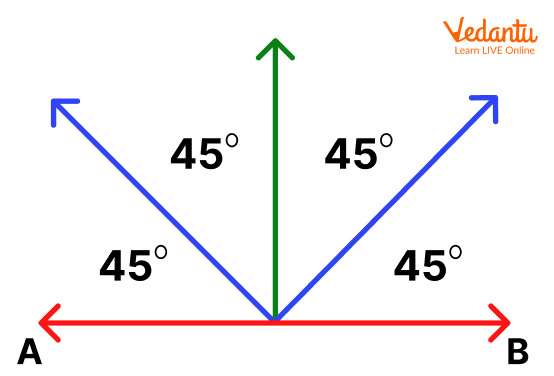
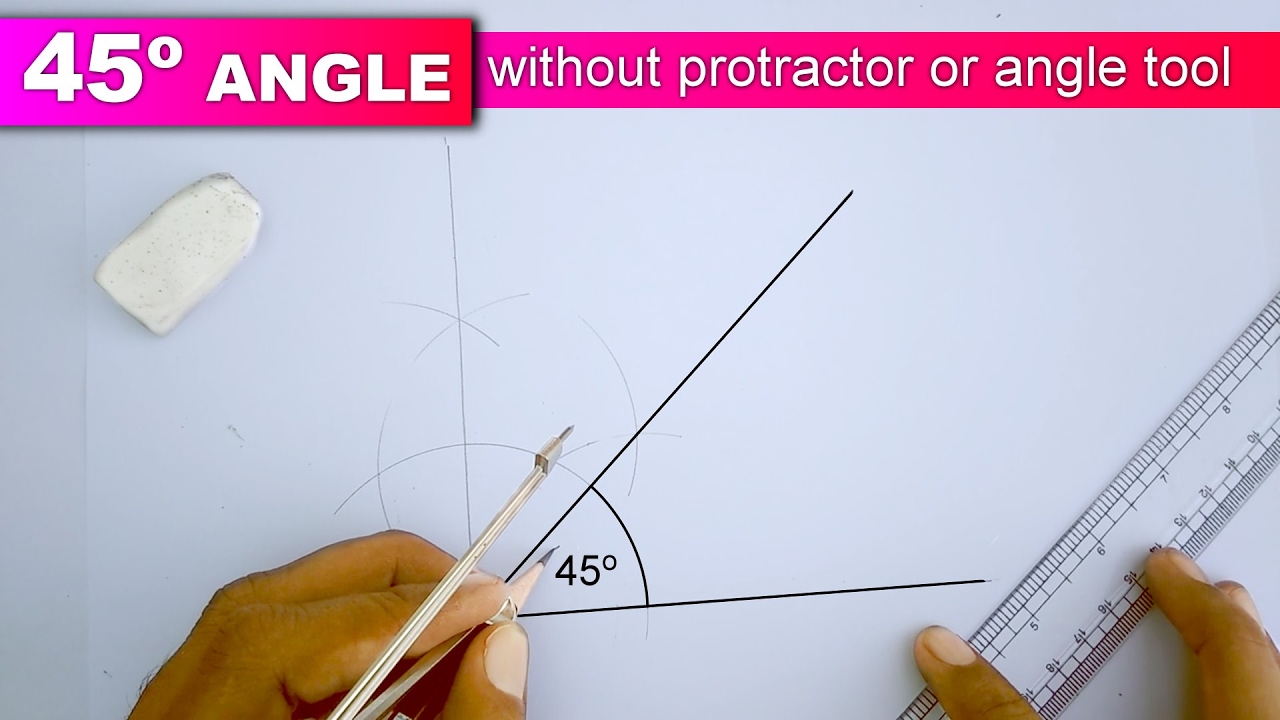
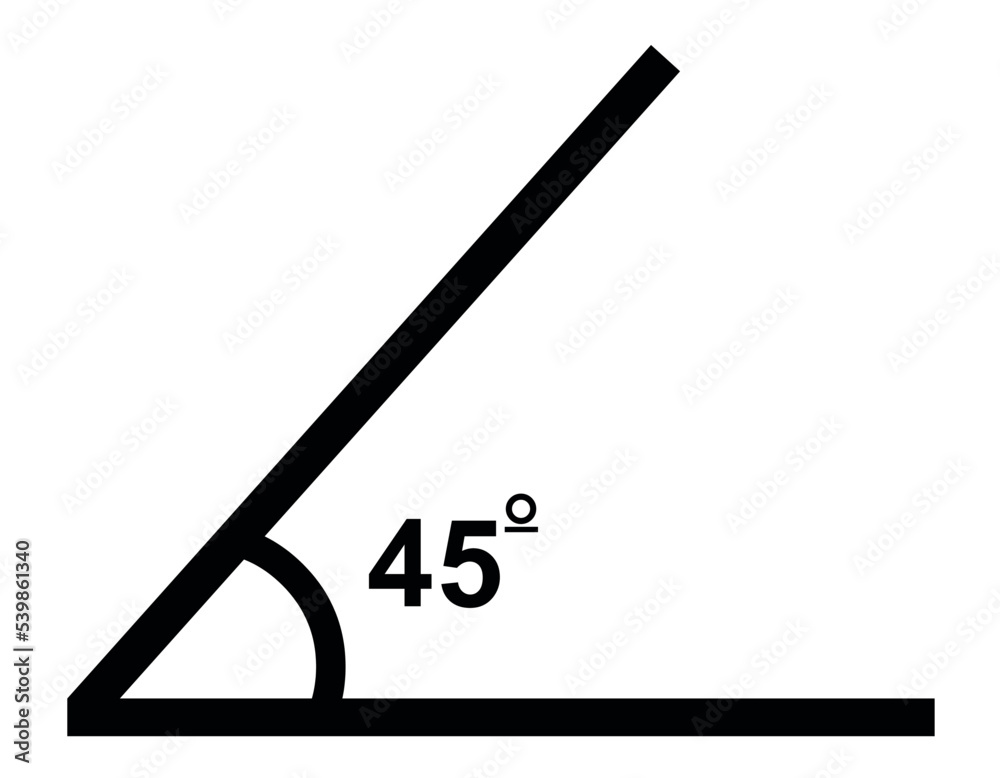
How To Determine A 45 Degree Angle

In the HVAC (Heating, Ventilation, and Air Conditioning) industry, accuracy is paramount. From ductwork installation to precise equipment placement, a solid understanding of angles is a fundamental skill. Among these, the 45-degree angle is particularly crucial. This article explores various methods for determining and achieving a 45-degree angle, valuable for HVAC students, seasoned technicians, and employers alike.
Why 45-Degree Angles Matter in HVAC
The 45-degree angle frequently appears in ductwork design to optimize airflow, minimize pressure drop, and facilitate smooth transitions. In residential and commercial systems, improperly angled ductwork can lead to reduced efficiency, increased energy consumption, and even equipment failure. Accurately determining a 45-degree angle is essential for:
- Ductwork Fabrication and Installation: Creating bends, offsets, and transitions.
- Equipment Placement: Ensuring proper clearances and airflow around units.
- Piping: Creating efficient condensate drain lines.
- Troubleshooting: Identifying incorrectly installed components.
Methods for Determining a 45-Degree Angle
Several methods can be employed to determine and create a 45-degree angle, ranging from simple manual techniques to sophisticated laser-based instruments.
1. Using a Speed Square (Rafter Square)
The speed square, also known as a rafter square, is a versatile tool commonly found in the HVAC technician's toolkit. Its primary function is to quickly and accurately mark angles, including 45 degrees.
- Positioning: Place the speed square against one edge of the material you're working with.
- Finding the Angle: Locate the 45-degree marking on the speed square.
- Marking: Use a pencil or marker to draw a line along the edge of the speed square, creating the 45-degree angle.
Pro-Tip: Ensure the speed square is firmly against the edge to prevent slippage and maintain accuracy.
2. The 3-4-5 Triangle Method
This method utilizes the Pythagorean theorem (a² + b² = c²) to create a right triangle, which can then be used to derive a 45-degree angle. However, it's more suited for creating larger angles or reference points. A modified version, using equal legs, is ideal for 45-degree angles.
- Equal Legs: Instead of the traditional 3-4-5, use equal measurements for sides 'a' and 'b'. For example, use 12 inches for both.
- Forming the Triangle: Measure 12 inches along one edge and 12 inches perpendicular to it.
- Connecting the Points: Connect the endpoints of the two 12-inch measurements. This creates a right triangle where the angle opposite each 12-inch side is 45 degrees.
Note: This method is more practical for setting up a larger reference angle than directly marking a small piece of material.
3. Angle Finders and Digital Levels
Digital angle finders and levels offer a precise and convenient way to measure angles. These tools often display the angle digitally, eliminating the need for manual calculations. Some advanced models can even store angle measurements for repeated use.
- Calibration: Ensure the angle finder or level is properly calibrated before use.
- Placement: Place the tool against the surface where you need to measure or create the angle.
- Reading the Angle: Read the angle displayed on the digital screen. Adjust the material or tool until the reading shows 45 degrees.
Benefit: Digital tools minimize human error and provide highly accurate measurements.
4. Using a Protractor
A protractor is a semicircular tool marked with degrees from 0 to 180. It's a straightforward method for measuring and marking angles.
- Placement: Align the protractor's base line with the edge of your material.
- Finding 45 Degrees: Locate the 45-degree mark on the protractor.
- Marking: Place a mark at the 45-degree point.
- Drawing the Line: Connect the mark to the vertex (the point where the angle originates) to create the 45-degree angle.
Advantage: Protractors are inexpensive and readily available.
5. Smartphone Apps
Several smartphone apps utilize the device's accelerometer and gyroscope to function as a digital level or angle finder. These apps can be surprisingly accurate and convenient for quick angle measurements.
- Download and Installation: Download a reputable angle finder app from your app store.
- Calibration: Calibrate the app according to the instructions provided.
- Measurement: Place your phone against the surface and read the angle displayed on the screen.
Caution: The accuracy of smartphone apps can vary depending on the device and calibration. It's recommended to double-check measurements with a physical tool when precision is critical.
Career Paths and the Importance of Precision
Mastering angle determination is crucial for success in various HVAC career paths. According to the Bureau of Labor Statistics, the median annual wage for HVACR mechanics and installers was $59,620 in May 2023. The job outlook is projected to grow 6 percent from 2022 to 2032, about as fast as the average for all occupations. About 38,000 openings for HVACR mechanics and installers are projected each year, on average, over the decade.
Here are a few examples:
- HVAC Installer: Responsible for installing ductwork, equipment, and piping according to specifications. Accurate angle determination ensures proper fit and function.
- HVAC Technician: Diagnoses and repairs HVAC systems. Understanding angles can help identify installation errors and optimize system performance.
- HVAC Design Engineer: Designs HVAC systems for buildings. Requires a thorough understanding of airflow dynamics and geometric principles, including angle calculations.
- Sheet Metal Worker: Fabricates ductwork and other metal components. Precision is critical to ensure proper fit and performance.
Certification Matters: Obtaining certifications such as NATE (North American Technician Excellence) can significantly enhance your career prospects. NATE certification demonstrates a technician's knowledge and skills, including the ability to accurately perform measurements and calculations.
Furthermore, handling refrigerants requires EPA Section 608 certification. While this doesn't directly relate to angle measurement, it's a crucial certification for anyone working with refrigerant-containing equipment, highlighting the importance of compliance and ongoing education in the HVAC field.
Employer Considerations: Hiring and Training
For employers in the HVAC industry, hiring skilled technicians with a strong understanding of angle determination is essential. When interviewing candidates, consider asking questions that assess their knowledge of the methods described above. Practical exercises, such as requiring candidates to measure and mark a 45-degree angle, can provide valuable insights into their abilities.
Investing in training programs for existing employees is also crucial. Providing regular training on new techniques and technologies can help ensure that your team stays up-to-date and maintains a high level of accuracy. Consider offering courses on blueprint reading, ductwork design, and advanced measurement techniques.
Investing in the Future: Apprenticeship programs are an excellent way to train new HVAC technicians. These programs provide on-the-job training under the supervision of experienced professionals, allowing apprentices to develop the skills and knowledge they need to succeed. Many apprenticeship programs lead to nationally recognized certifications, making them a valuable investment for both employers and employees.
Conclusion
Accurately determining a 45-degree angle is a fundamental skill for anyone working in the HVAC industry. By mastering the methods described in this article, HVAC students, technicians, and employers can ensure the efficient and reliable operation of HVAC systems. Continuous learning, professional development, and a commitment to precision are essential for success in this dynamic and rewarding field. The HVAC industry offers a stable career path with good earning potential, emphasizing the need for a dedicated workforce equipped with a strong foundation in core skills like angle determination.