How To Determine Gpm Of Pump

Understanding Pump GPM: A Guide for Homeowners and DIYers
Gallons Per Minute (GPM) is a crucial measurement for understanding the performance of your pumps, whether they are in your HVAC system, well, or pool. Knowing the GPM helps diagnose issues, ensure proper system function, and select the right replacement parts. This guide will walk you through how to determine the GPM of your pump.
Why is GPM Important?
GPM represents the flow rate of liquid moving through your pump. Too little flow can starve your system, causing overheating, inefficiency, and even damage. Too much flow can overwork the pump, leading to premature failure and energy waste. Therefore, knowing the correct GPM is paramount for efficient and reliable operation.
Safety First!
Before you start any work on your pump, remember safety:
- Turn off the power: Disconnect the power supply to the pump at the breaker box. Double-check with a non-contact voltage tester.
- Wear safety glasses: Protect your eyes from splashes and debris.
- Work in a dry area: Avoid working in wet conditions to prevent electrical shock.
- If unsure, call a professional: Dealing with pumps and electrical systems can be dangerous. If you're uncomfortable, it's best to call a qualified HVAC technician or plumber.
Methods for Determining Pump GPM
There are several methods for determining the GPM of your pump, each with its own level of accuracy and complexity. Here are a few common approaches:
1. Check the Pump's Nameplate
This is the simplest and most direct method. Most pumps have a nameplate or label that includes the GPM rating. This is the ideal GPM under specific conditions, usually at a certain pressure (head). Look for markings like "GPM," "Flow Rate," or "Capacity." The nameplate might also show a performance curve, indicating GPM at different head pressures.
Important Considerations:
- The nameplate GPM is a theoretical maximum. Real-world performance might be lower due to factors like pipe friction, elevation changes, and pump wear.
- If the nameplate is damaged or unreadable, you'll need to use another method.
2. Using a Flow Meter
A flow meter provides a direct and accurate measurement of the actual flow rate. There are several types of flow meters available, including:
- Inline Flow Meters: These are installed directly into the pipe and provide a continuous reading of the flow rate. They can be digital or analog.
- Ultrasonic Flow Meters: These clamp onto the outside of the pipe and use sound waves to measure the flow rate. They are non-invasive and easy to install.
- Paddlewheel Flow Meters: These use a rotating paddlewheel to measure the flow rate. They are relatively inexpensive and easy to install.
How to use a flow meter:
- Choose the right flow meter: Select a flow meter that is compatible with the pipe size and the type of fluid being pumped.
- Install the flow meter: Follow the manufacturer's instructions for installation. Inline flow meters require cutting the pipe, while ultrasonic flow meters simply clamp on.
- Read the flow rate: Once the flow meter is installed, turn on the pump and read the flow rate in GPM.
Tools Needed:
- Appropriate flow meter
- Pipe cutter (for inline flow meters)
- Pipe fittings (for inline flow meters)
- Wrench or pliers
- Thread sealant (for inline flow meters)
3. The Bucket and Stopwatch Method
This is a simple and inexpensive method for estimating the GPM. It involves measuring the time it takes to fill a container of known volume.
Steps:
- Gather your materials: You will need a bucket or container of known volume (e.g., a 5-gallon bucket), a stopwatch, and a hose or pipe connected to the pump outlet.
- Position the bucket: Place the bucket under the pump outlet.
- Start the timer: Start the stopwatch as you begin filling the bucket.
- Stop the timer: Stop the stopwatch when the bucket is full.
- Calculate the GPM: Divide the volume of the bucket (in gallons) by the time it took to fill it (in minutes).
Formula:
GPM = Volume (Gallons) / Time (Minutes)
Example:
If it takes 30 seconds (0.5 minutes) to fill a 5-gallon bucket, then the GPM is:
GPM = 5 Gallons / 0.5 Minutes = 10 GPM
Important Considerations:
- This method is less accurate than using a flow meter, but it can provide a reasonable estimate.
- Make sure the bucket is completely full before stopping the timer.
- Repeat the measurement several times and average the results to improve accuracy.
4. Using Pump Curves
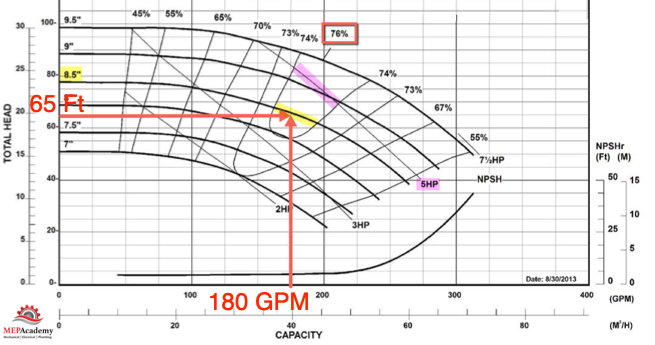
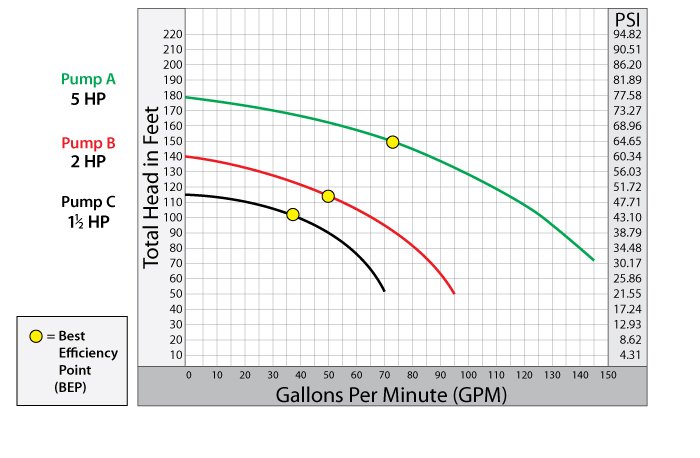
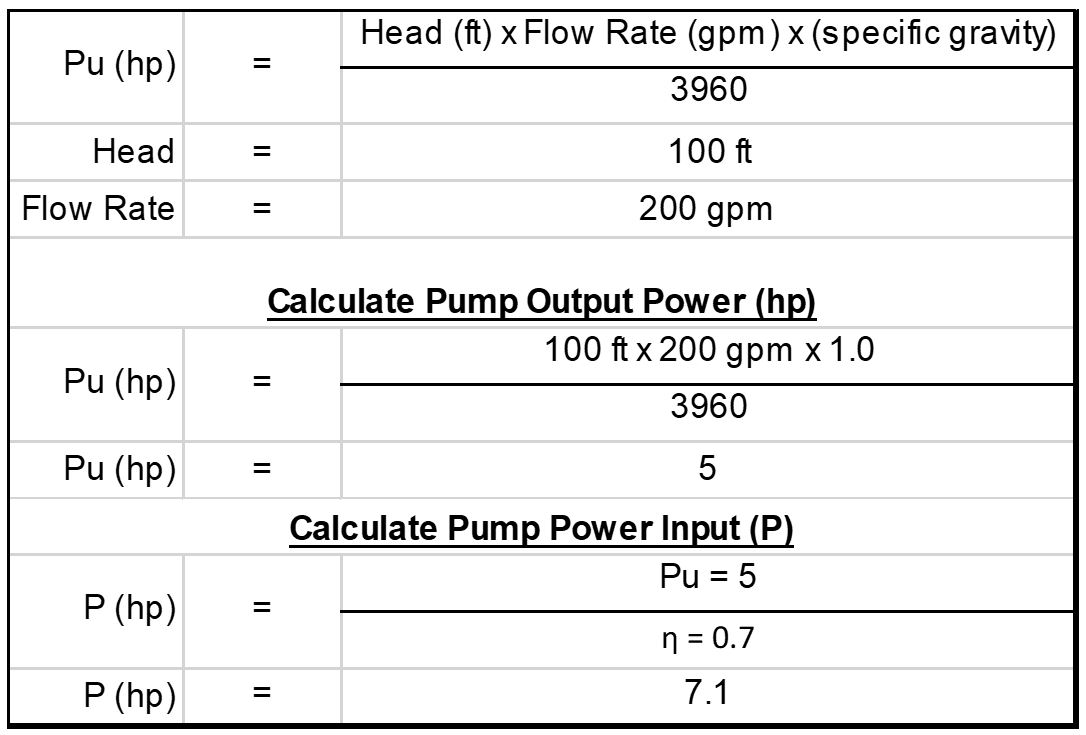
Pump manufacturers often provide performance curves that show the relationship between flow rate (GPM), head pressure (in feet of water), and pump efficiency. To use a pump curve, you need to measure the head pressure of your system.
Measuring Head Pressure:
Head pressure is the total pressure that the pump has to overcome to move the fluid. It includes static head (the vertical distance the fluid is lifted) and friction head (the pressure loss due to friction in the pipes and fittings).
You can measure head pressure using a pressure gauge installed at the pump outlet. Record the pressure reading in PSI (pounds per square inch). Then, convert PSI to feet of water using the following formula:
Feet of Water = PSI x 2.31
Using the Pump Curve:
- Obtain the pump curve: Get the pump curve from the pump manufacturer's website or product literature.
- Locate the head pressure: Find the point on the pump curve that corresponds to the head pressure you measured.
- Read the GPM: Read the GPM value at that point on the curve.
Important Considerations:
- Pump curves are based on ideal conditions. Actual performance may vary due to factors like pump wear and system conditions.
- You need to know the specific model number of your pump to find the correct pump curve.
Common Issues Affecting Pump GPM
Several factors can affect the GPM of your pump, leading to performance issues. Here are some common culprits:
- Clogged Impeller: Debris can accumulate in the pump impeller, reducing its efficiency. Clean the impeller regularly.
- Worn Impeller: Over time, the impeller can wear down, reducing its ability to move fluid. Replace the impeller if necessary.
- Air Leaks: Air in the suction line can reduce the pump's capacity. Check for leaks and seal them.
- Clogged Suction Line: A clogged suction line can restrict the flow of fluid to the pump. Clean the suction line.
- High Head Pressure: Excessive head pressure can reduce the pump's GPM. Check for obstructions or restrictions in the discharge line.
- Pump Cavitation: Cavitation occurs when vapor bubbles form in the fluid due to low pressure. It can damage the pump and reduce its efficiency. Ensure adequate suction pressure.
- Wrong Pump Size: If the pump is not sized correctly for your system, it may not provide the required GPM. Replace the pump with a properly sized unit.
When to Call a Professional
While some pump maintenance and troubleshooting tasks can be done DIY, certain situations require the expertise of a qualified professional:
- Complex Electrical Issues: If you're dealing with complex wiring or electrical components, it's best to call an electrician or HVAC technician.
- Pump Repairs: Internal pump repairs, such as replacing bearings or seals, often require specialized tools and knowledge.
- System Design Problems: If you're unsure about the proper pump size or system design, consult with an HVAC engineer or experienced technician.
- Unusual Noises or Vibrations: If your pump is making unusual noises or vibrating excessively, it could indicate a serious problem that requires professional attention.
Estimated Repair Costs
Repair costs can vary widely depending on the problem and the type of pump. Here are some rough estimates:
- Pump Cleaning: $50 - $150
- Impeller Replacement: $100 - $300
- Seal Replacement: $150 - $400
- Pump Replacement: $300 - $1500 (plus installation)
- Professional Diagnosis: $75 - $200 (service call fee)
These are just estimates, and the actual cost may be higher or lower depending on your location and the specific circumstances. Always get a quote from a qualified technician before proceeding with any repairs.
By understanding how to determine the GPM of your pump and recognizing potential problems, you can keep your HVAC system running smoothly and efficiently. Remember to prioritize safety and don't hesitate to call a professional when needed.